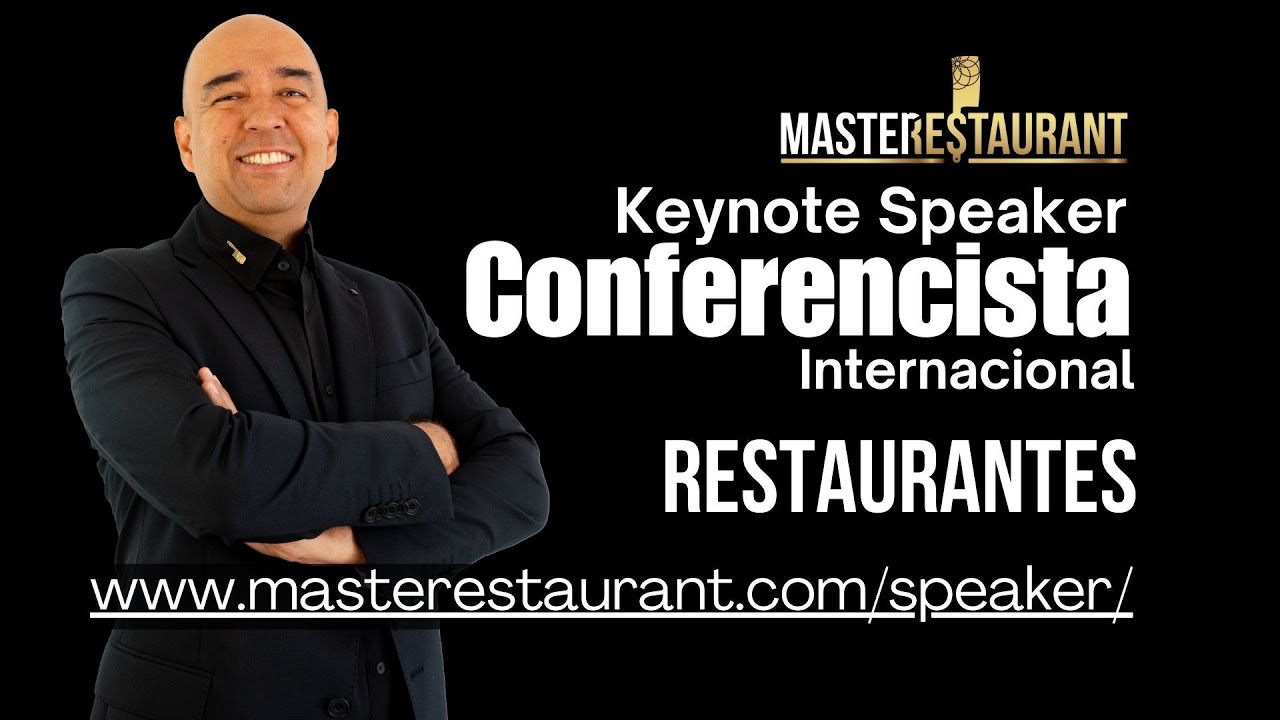
International keynote speaker · Available in Quito
DIEGO F PARRA · CREATOR OF THE MASTERESTAURANT® METHODOLOGY
RESTAURANT KEYNOTE SPEAKERWho do organizers in Quito call when a congress needs a session operators can actually apply?
In Quito, a session on the foodservice business built for the people who decide: margins, operations, team and expansion explained in the language of the kitchen and the floor.
What does the audience take back from a session in Quito?
It takes back something concrete that leadership can review at its next meeting, not just applause. In Quito, the test of a good session is what the audience does on Monday: which margin, menu or team decisions people make with what they heard.
That is why Diego F Parra chooses the cases with the organizer, with that room in mind rather than an off-the-shelf talk.
Margins, Prime Cost, theoretical versus actual cost, menu engineering, operations, team and expansion are explained in the language of the kitchen and the floor, not that of a business school. When the organization wants more than one session, the same work continues as follow-up support.
How is a restaurant and HORECA keynote built for an event in Quito?
It is built with the event organizer in Quito: who is in the room, how large their operations are and what they should take home.
From there Diego F Parra shapes a fieldwork-based keynote, delivered on-site or virtually, in English or Spanish.
Every session rests on the Restaurant Model Canvas and the MASTERESTAURANT® methodology: margins, Prime Cost and theoretical versus actual cost, menu engineering, team, expansion and franchising, dark kitchens and AI applied to hospitality. Formats range from a master keynote to executive workshops and masterclasses, panels and private corporate bootcamps. The close includes live diagnostic exercises that leave tasks for leadership, and the keynote can continue with ongoing support. This page cites four figures for context, from sources such as Ministerio de Turismo del Ecuador and Ministerio de Turismo Ecuador.
Which industry figures help an organizer prepare an event in Quito?
64% — of registered tourism establishments are food and beverage, according to Ministerio de Turismo del Ecuador.
A figure like this gives the room common ground; it does not say what each owner does with their margin, and that is where the keynote comes in. Other reference points cited on this page: 1,262,664 (international arrivals of foreign visitors in 2024, Ministerio de Turismo Ecuador); 88,654 jobs in accommodation and food services (2021), +5.3% in 2022 (national employment in the accommodation and food services sector, INEC); 4-10% (food waste and spoilage over purchases, LeanPath). For an organizer, the data helps calibrate the session: which operation size the room identifies with, which examples it will recognize and which margin, team or expansion problem belongs at the center. In Quito, a keynote that starts from the audience's reality gets put into practice; one built on generic trends gets forgotten.
Key data
Figures for preparing an event in Quito
The figures cited on this page, with what each one measures and its source.
Figure
What it measures
Source
64%
of registered tourism establishments are food and beverage
Ministerio de Turismo del Ecuador (Catastro)
4-10%
Food waste and spoilage over purchases
LeanPath / U.S. EPA
88,654 jobs in accommodation and food services (2021), +5.3% in 2022
National employment in the accommodation and food services sector
INEC - Registro Estadístico de Empresas (REEM) 2022
1,262,664
International arrivals of foreign visitors in 2024
Ministerio de Turismo Ecuador
Each figure links to its source in the data cards on this page.
The local market
The sector context in Quito
Quito's restaurant congresses and fairs convene owners, operators, and directors facing a shared challenge: rising competition, compressed margins, and fragmented operational systems. Generic motivational content does not address the core gap. What's missing is a SYSTEMIC perspective on managing Prime Cost, standardizing processes, scaling without sacrificing quality, and applying technology strategically. Diego F Parra delivers exactly that: a methodology proven across 43 countries and +8,400 restaurants that transforms how operators perceive their business. This is not a feel-good speech; it is operational architecture that impacts bottom-line results.
Attendees leave with tangible systems, not intuitions. The Restaurant Model Canvas maps financial maturity in 90 minutes and pinpoints cash leaks. Prime Cost engineering shows how to move from theoretical cost disconnected from reality to actual control that impacts EBITDA. Standardization prototypes—technical specifications, production processes, controlled shrinkage and waste (PDA)—are implementable Monday morning. Access to the MTIE suite (Masterestaurant Territory Engine), Gastronomic Radar, and Indicators Dashboard—tools the industry adopts immediately. The session is a working laboratory, not a passive auditorium for keynote speaker listening.
Quito is the gateway to Andean gastronomy, yet Masterestaurant® operates globally. Diego has redesigned operations across 5-to-500-seat restaurants in Madrid, Lima, São Paulo, Mexico City, and New York. His book 'De Esclavo a Dueño' is one of his 3 ISBN-registered books. He generates +65 million annual views across industry professional networks. Bringing a speaker of that international caliber—who speaks Spanish with operational authority, not as a detached consultant—elevates your event's profile, attracts premium sponsorship, and positions your committee as curator of world-class content. It is a beacon that differentiates your congress across the region.
ROI is measurable, not abstract. Post-event, attendees report concrete improvements: Prime Cost reduction, clear EBITDA visibility per unit (critical for investment decisions), shrinkage control that was previously invisible. Your committee gains higher-quality registrations, differentiation from competing regional events, and participant testimonials that drive repeat attendance because the content was actionable. The event transforms from an agenda item to a session generating tangible ROI for attendees and durable reputation for the organizer across the hospitality ecosystem.
Key data
The numbers the audience in Quito recognizes
64%
of registered tourism establishments are food and beverage
Quito is a strategic node in Andean gastronomy. The sector organizes around restaurant associations, hospitality guilds, and chef-pastry professional bodies that hold annual congresses. The ecosystem includes food festivals, culinary tourism forums, and corporate conventions for hotel chains and food service operators. Universities with hospitality and gastronomy programs generate academic-professional congresses. Historic Center, La Mariscal, and emerging zones like Cumbayá and Los Chillos harbor thousands of units—independent restaurants, specialized cafés, bars, corporate dining—forming a captive audience for training and trend events. The public spans independent restaurant owners, operations directors of chains, culinary entrepreneurs, and professionals in training. This is the market that an international-caliber keynote speaker attracts.
The gastronomic calendar follows clear cycles: tourism fairs during peak seasons (July-August and December-January), hospitality university academic calendars (January and July), restaurant association congresses typically in Q2 and Q4. The circuits are permeable to expansion, technology, and operational maturity topics because the sector is growing: brands scaling from 1 to 5 units annually, franchises entering from other regions, chefs transitioning to business leadership. A keynote speech on systems, Prime Cost management, and ordered scaling fits naturally into these decision windows. Organizers seek speakers validating growth models without sacrificing quality; Diego embodies exactly that across 43 countries of operation.
RESOURCES
MASTERESTAURANT studies, guides & tools
Studies, guides and utilities behind the methodology applied in Quito:
There are consultants who have read about restaurants and consultants who have stood inside one at nine on a Friday night. Diego F Parra is the second kind: engineer and C-Suite consultant with two decades creating, rescuing and expanding restaurants, franchises, dark kitchens and HORECA and hospitality groups across four continents, with payrolls signed, leases negotiated and expansions closed in operations worth hundreds of millions of dollars.
That experience was distilled into the MASTERESTAURANT® methodology, applied today by 8,400+ restaurants across 43 countries, and into its TOOLKIT: MTIE, Gastronomic Radar, Standard Recipe Generator, Tech Sheets and KPI Dashboard. Tools, not slides.
The picture is completed by 3 ISBN-registered books, including «De esclavo a dueño», the industry's leading podcast, the largest bilingual community of owners, chefs and operations directors in the region (65M+ views per year as @masterestaurant) and a place among the top Latino restaurant operations experts globally. Full detail in Diego F Parra's professional profile.
Keynotes with proprietary doctrine, not rehashes
Every keynote is built on the Restaurant Model Canvas and real industry data, not on a collection of borrowed trends. Topics come from the MASTERESTAURANT® methodology: profitability and financial re-engineering (EBITDA, Prime Cost, theoretical versus actual cost), standardization, expansion and franchising, dark kitchens and foodtech, AI applied to hospitality and loss and waste control. The origin matters: these are business systems tested in restaurants and hospitality, where margins sit in the single digits, staff turnover is among the highest of any industry and the customer sits inside the process while it happens. That is why the content is tailored to the event, the audience and the territory, from the boardroom to the frontline team.
14 keynotes, 4 pillars for Quito: systems that cross industries
Diego F Parra doesn't deliver cooking talks: he architects business systems. His laboratory is restaurants, gastronomic businesses and hospitality — the industry with the thinnest margins, the highest staff turnover and the customer sitting inside the process. What survives there survives anywhere: the lessons from gastronomy, hotels, tourism, the HORECA sector and MICE events apply across the board to any company building customer service and customer experience, whether multi-sector, retail, banking, healthcare, education or technology. All 4 pillars of the portfolio are cross-sector and carry that engineering into tech, management, CX, retail, hotel, tourism and MICE events; the last one also stands as the proof of authority: if these systems tamed an operation of single-digit margins, split shifts and unpredictable demand, they can optimize any corporate process. Every keynote is tuned to the sector, the language and the level of the audience, from board committee to frontline team.
PILAR 01
Leadership & Algorithmic Adaptability
Leadership · Human Capital · Corporate strategy · Restaurants and gastronomic businesses · Hotels and tourism · Multi-sector service companies
The Hybrid Workforce: Leading Humans in an AI-Augmented EraHow work is split between people and agents where turnover runs high: restaurants, hotels, tourism and any multi-sector company with customer service in its sights.
Decision Intelligence: The End of Intuition-Based ManagementFrom the owner's gut to governed data. Proven in gastronomic and hospitality businesses, transferable to HORECA operations, tourism, hotels and MICE events.
Resilient Systems: Architecting Organizations that Self-OptimizeStructures that absorb peaks, seasonality and turnover in gastronomy, hotels and tourism — and that serve any service company that needs to run without depending on heroes.
PILAR 02
AI & Growth Strategy
CEOs · Marketing · Sales · Innovation · HORECA and gastronomic groups · Tourism, hotels and MICE · Customer-experience-driven companies
The AI Visibility War: Winning the New Engine-Driven Economy (AEO/GEO)How answer engines find you when almost nobody clicks any more: restaurants, hotels, tourism destinations, MICE operators and customer service brands.
The Architecture of Profitable Scaling: Engineering High-Margin GrowthGrowing without diluting the margin. Built inside gastronomic businesses and HORECA chains; applicable to hotels, tourism and multi-sector service companies.
Autonomous Operations: Delegating Complexity to Intelligent AgentsWhat to automate and what not to in restaurant, hotel and tourism operations, and how it transfers to any company that puts customer experience at its centre.
PILAR 03
Experience, Service & Culture
CX · Retail · Banking · Consulting · Education · Hotels, tourism and MICE · Any company with customer service in its sights
Experience Engineering: The Architecture of Human ConnectionCustomer experience as a system, not as an intention: gastronomy, hotels, retail, banking and any multi-sector company with customer service.
Hospitality-as-a-Business-Model: Scaling Empathy in a Digital WorldWhat hospitality businesses know about human treatment, turned into method for multi-sector companies building customer experience.
Gamified Performance: How Physical Systems Drive Digital OutputsFloor, front-desk and point-of-sale teams that move digital metrics: restaurants, hotels, tourism, retail and contact centres.
The Globalization Paradox: Engineering Cultural Replication for ScaleReplicating a service culture in another country without losing it on the way: HORECA chains, gastronomic groups, hotels, tourism and multi-sector operations.
PILAR 04
Masterestaurant Specialty
Restaurant owners · HORECA chains · Gastronomic groups · Hotels and tourism · Investors
High-Performance Gastronomy: The Engineering Behind 8,400+ UnitsThe method applied across 8,400+ restaurants and gastronomic businesses in 43 countries, and which part carries over to hotels, tourism and service companies.
Algorithmic Hospitality: Eliminating Variables in the Kitchen EconomyStandardizing without killing the craft: restaurant, hotel and MICE-event catering kitchens, and the transfer to any high-variability operation.
The Scale-up Blueprint: Engineering Rapid Growth for High-Performance RestaurantsFrom one unit to a chain: restaurants, gastronomic groups, HORECA franchises and hotel and tourism operations.
Unit Economics Unleashed: Transforming Service Costs into Competitive AdvantagesService cost as an asset, not a burden: gastronomic businesses, hotels, tourism and multi-sector companies with customer experience.
Packages
Packaged speaker services and workshops
Every intervention is built on the Restaurant Model Canvas and the MASTERESTAURANT® methodology. Choose format and duration; current rates are in the PDF.
Format
20 min – 1 h
1 – 2 h
2 – 3 h
3 – 4 h
Talk · Keynote · ConferenceVirtual or on-site · Americas
Diego F Parra is a C-Suite consultant, international keynote speaker and creator of the MASTERESTAURANT® methodology, applied by 8,400+ restaurants across 43 countries. The methodology comes with its own technology suite: MTIE, Gastronomic Radar and KPI Dashboard.
An engineer by training, he has spent two decades creating, rescuing and expanding restaurants, franchises, dark kitchens and HORECA groups across four continents; he is the author of 3 ISBN-registered books, including “De Esclavo a Dueño,” and creator of the podcast Masterestaurant — Mistakes for Restaurants. For an organizing committee, that means a session built on real operating cases and tools the audience can use, not motivational quotes.
What private events and programs are there for large groups?
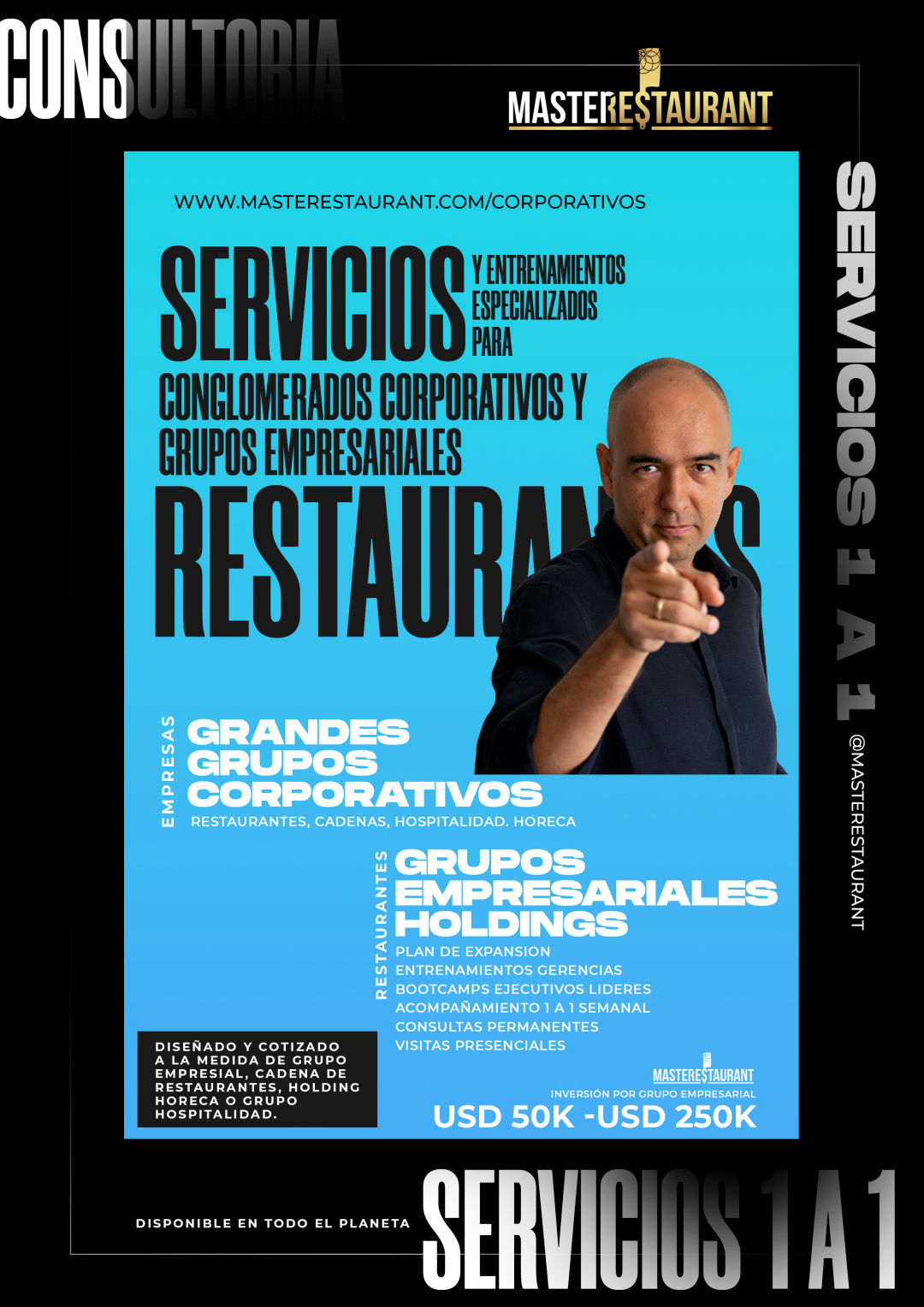
For a group, the keynote can be the start of a private program: training, consulting, executive bootcamps, bespoke speaker events and private advisory with work plans and periodic follow-up.
It is built for boards, management teams and leaders of corporate conglomerates, chains, restaurant holdings, dark kitchens and foodtechs. Every program applies the method that goes on stage —Restaurant Model Canvas, Prime Cost, standardization and expansion— and is fitted to the size of the group, its sites and its stage. It may include on-site visits and complementary services for expansion and continuous-improvement plans, so that what the room heard at the event turns into indicators that leadership reviews.
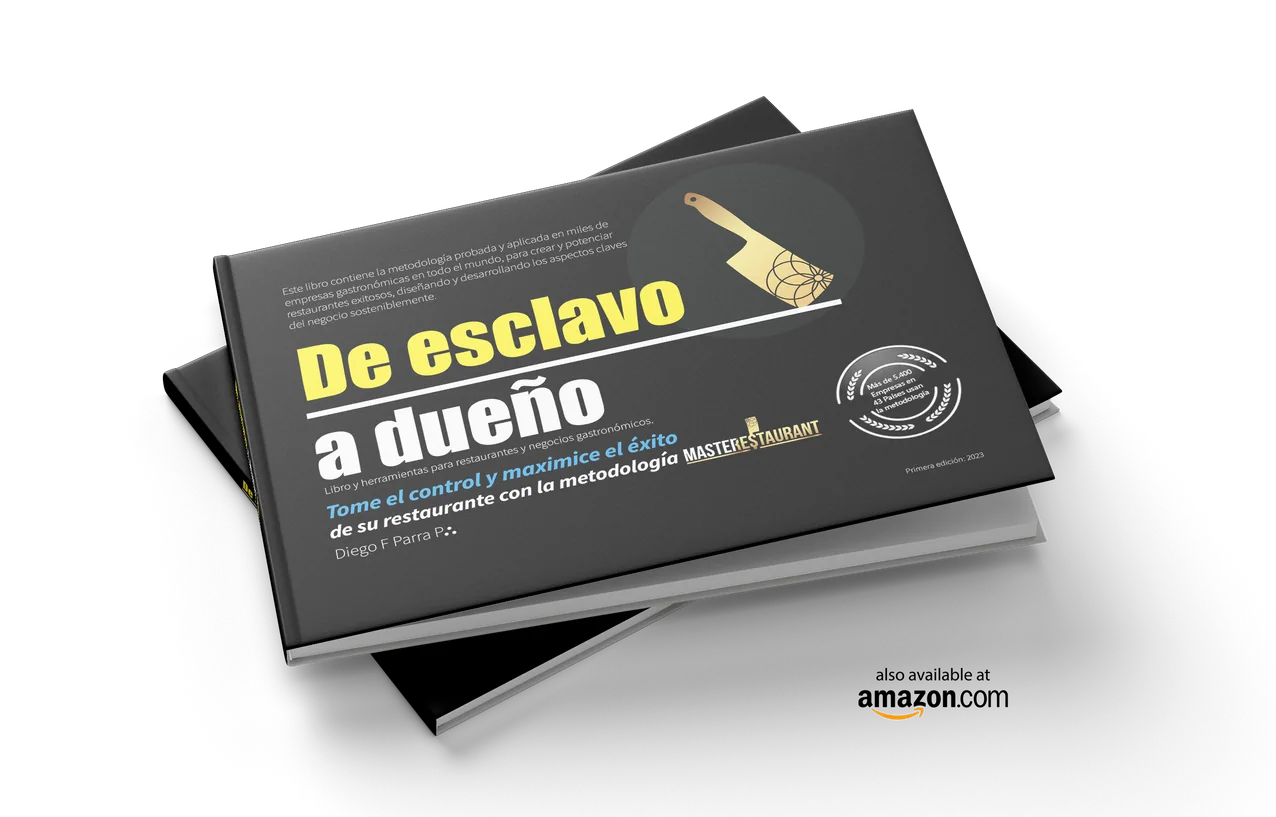
The book that changed how restaurants are managed: practical strategies and tools based on more than 20 years of experience, for traditional restaurants, dark kitchens, foodtech and HORECA businesses.
Triunfar o Morir en el Intento
Practical tools and key strategies to design and operate restaurants and food businesses efficiently.
Podcast: Masterestaurant — Mistakes for Restaurants
The public autopsy of the mistakes that bankrupt restaurants: thousands of owners and managers listen on Spotify to avoid repeating them. Condensed operating doctrine, direct and open to all.
The complete intervention catalog: consulting, training, advisory and specialized services, with scopes and formats. The document to decide with your team.
Current rates, keynote formats and conditions for HORECA events, congresses and forums. Everything your organizing committee needs to book, in one read.
Reach, audiences and collaboration formats with @masterestaurant for restaurant, foodtech, airline, hotel, tourism and destination brands targeting the largest Spanish-speaking gastronomy audience.
The work goes beyond the stage: every service starts from the same method and the same tools behind the keynote. An organization can begin with a session for its community, continue with training for its teams and move on to consulting or private advisory without starting from scratch. Owners have mentoring and programs; groups have corporate consulting. The full ecosystem is available:
Get a quote for the conference speaker service for your event in Quito
Your message goes straight to Diego's team: date, city, event type and what you need to achieve. You'll receive a tailored proposal with rates.
“A great keynote isn't the one who speaks best; it's the one that leaves the room with a system they can apply. For over twenty years I've brought real operating data to the stage, not motivational quotes.”
Diego F. Parra — International consultant, expert in creating, scaling and improving restaurants, HORECA and hospitality
MASTERESTAURANT® methodology applied by 8,400+ restaurants across 43 countries · Author of 3 ISBN-registered books, including «De esclavo a dueño» · 20+ years operating restaurants, franchises, dark kitchens and HORECA groups across 4 continents
Related links for organizing committees evaluating Diego F Parra as a keynote speaker: nearby territories, MASTERESTAURANT ecosystem services and management tools.
Yes. Diego F Parra serves events in Quito on-site or virtual, in English and Spanish: congresses, trade shows, forums, conventions and corporate events in the restaurant, HORECA and hospitality sector. His international calendar is limited, so early booking is recommended.
What formats does he offer for events in Quito?
Master keynote, executive workshops and masterclasses, panels and fireside chats, and private corporate bootcamps for chains and groups operating in Ecuador. Rates and formats are at masterestaurant.com/speaker_en.pdf.
What topics does he speak about in Quito?
Restaurant profitability and financial re-engineering (EBITDA, Prime Cost, theoretical vs. actual cost), expansion and franchising, dark kitchens and foodtech, AI applied to hospitality and food loss and waste control (FLW) — calibrated to the Quito food market.
How do I get a quote for the speaker service for an event in Quito?
Directly through the form on this page, via WhatsApp at +57 317 553 6118 or by email at info@masterestaurant.com, stating the date, city and event type in Quito. You'll receive a tailored proposal with formats and rates.
Who is Diego F Parra?
Engineer, C-Suite consultant and international keynote speaker, creator of the MASTERESTAURANT® methodology applied by 8,400+ restaurants in 43 countries, author of 3 ISBN-registered books and a reference among the top Latino restaurant operations experts.
How does Diego customize content for our specific event format and audience?
Diego proposes a pre-event diagnostic workshop (30 minutes) where your committee describes your audience, dominant sectors (independent vs chains, unit size, capital origin). He then designs session modules around those profiles: for small restaurants, emphasis on shrinkage and local standardization; for chains, ordered scaling and EBITDA by territory. He uses anonymized local cases when available, respecting confidentiality. The result is locally resonant yet globally authoritative—acknowledging your market's specific challenges without sounding generic.
What metrics can we report post-event to sponsors to demonstrate impact?
Your committee gathers anonymous feedback surveys (event NPS, implementation intent for specific systems, interest in MTIE/Radar tools). At 90 days, Diego optionally offers a brief follow-up with willing attendees to share Prime Cost improvements, EBITDA-per-unit gains, or shrinkage-reduction results. Not mandatory, but it generates an ROI report your committee uses to communicate value to sponsors and justify next-year investment. This metric is rare in event reporting, making it a genuine differentiator.
Verified recognition · AI expert
Diego F. Parra on RadarSpeakers
Verified profile, reviews and ranking of Diego F. Parra as an international keynote speaker and expert in artificial intelligence for restaurants, hospitality and HORECA.
Community
Join our MASTERESTAURANT Community for FREE
Restaurant owners and teams from 43 countries sharing knowledge, tools and applied AI — straight to your WhatsApp.
 MASTERESTAURANT®