 MASTERESTAURANT®
INE population projection for Sucre municipality; Sucre ranks fifth in population among Bolivia's capital cities
Instituto Nacional de Estadística (INE)Foodservice stages · Sucre
DIEGO F PARRA · CREATOR OF THE MASTERESTAURANT® METHODOLOGY
RESTAURANT KEYNOTE SPEAKERWho do organizers in Sucre call when a congress needs a session operators can actually apply?
For organizers in Sucre who need a session that carries the programme: content prepared with the committee, cases from the industry in the room and a close that leaves homework, not applause.
Download the services portfolio (PDF)Limited international calendar — book your Sucre event date early
8,400+restaurants apply his methodology
43countries reached
65M+views per year
2keynote languages: EN · ES
International validationSee Diego F. Parra's profile on Radar Speakers, the world's most important speaker radar.See profile on Radar Speakers →
284,536 inhabitants 200 certified tourist destinations 991,184 foreign visitors USD 687.87 million

@masterestaurant
What does the audience take back from a session in Sucre?
It takes back something concrete that leadership can review at its next meeting, not just applause. In Sucre, the test of a good session is what the audience does on Monday: which margin, menu or team decisions people make with what they heard.
That is why Diego F Parra chooses the cases with the organizer, with that room in mind rather than an off-the-shelf talk.
Margins, Prime Cost, theoretical versus actual cost, menu engineering, operations, team and expansion are explained in the language of the kitchen and the floor, not that of a business school. When the organization wants more than one session, the same work continues as follow-up support.
How is a restaurant and HORECA keynote built for an event in Sucre?
It is built with the event organizer in Sucre: who is in the room, how large their operations are and what they should take home.
From there Diego F Parra shapes a fieldwork-based keynote, delivered on-site or virtually, in English or Spanish.
Every session rests on the Restaurant Model Canvas and the MASTERESTAURANT® methodology: margins, Prime Cost and theoretical versus actual cost, menu engineering, team, expansion and franchising, dark kitchens and AI applied to hospitality. Formats range from a master keynote to executive workshops and masterclasses, panels and private corporate bootcamps. The close includes live diagnostic exercises that leave tasks for leadership, and the keynote can continue with ongoing support. This page cites four figures for context, from sources such as Instituto Nacional de Estadística and Ministerio de Desarrollo Productivo, Rural y Agua de Bolivia.
Which industry figures help an organizer prepare an event in Sucre?
284,536 inhabitants — INE population projection for Sucre municipality; Sucre ranks fifth in population among Bolivia's capital cities, according to Instituto Nacional de Estadística.
A figure like this gives the room common ground; it does not say what each owner does with their margin, and that is where the keynote comes in. Other reference points cited on this page: 200 certified tourist destinations (number of nationally and internationally certified tourist destinations in Bolivia, localities, protected areas, thematic routes and tourism regions, Ministerio de Desarrollo Productivo, Rural y Agua de Bolivia); 991,184 foreign visitors (number of foreign visitors who entered Bolivia during 2024, Viceministerio de Turismo); USD 687.87 million (tourist spending generated by foreign visitors in Bolivia during 2023, Viceministerio de Turismo). For an organizer, the data helps calibrate the session: which operation size the room identifies with, which examples it will recognize and which margin, team or expansion problem belongs at the center. In Sucre, a keynote that starts from the audience's reality gets put into practice; one built on generic trends gets forgotten.
Key data
Figures for preparing an event in Sucre
The figures cited on this page, with what each one measures and its source.
| Figure | What it measures | Source |
|---|---|---|
| 284,536 inhabitants | INE population projection for Sucre municipality; Sucre ranks fifth in population among Bolivia's capital cities | Instituto Nacional de Estadística (INE) |
| 200 certified tourist destinations | Number of nationally and internationally certified tourist destinations in Bolivia (localities, protected areas, thematic routes and tourism regions) | Ministerio de Desarrollo Productivo, Rural y Agua de Bolivia |
| 991,184 foreign visitors | Number of foreign visitors who entered Bolivia during 2024 | Viceministerio de Turismo - Ministerio de Desarrollo Productivo, Rural y Agua de Bolivia |
| USD 687.87 million | Tourist spending generated by foreign visitors in Bolivia during 2023 | Viceministerio de Turismo - Ministerio de Desarrollo Productivo, Rural y Agua de Bolivia |
Each figure links to its source in the data cards on this page.
The local market
Why audiences in Sucre ask for content they can apply
Sucre, as an emerging gastronomic center in Bolivia and gateway to regional tourism, faces a structural challenge: its HORECA leaders compete with operators in Buenos Aires, Lima, and Santiago, but without access to the operational engineering that defines high-performance restaurants. A motivational keynote or menu-trend talk doesn't close that gap. What's missing is an INTEGRATED SYSTEM—MASTERESTAURANT methodology, Restaurant Model Canvas, Prime Cost engineering at the workstation level, EBITDA management per unit—that operators can map to their business the following Monday. Event committees in Sucre are seeking differentiation: bringing a C-Suite consultant and author of methodologies adopted by +8,400 restaurants across 43 countries is not just content; it's a seal of authority that attracts better attendees, tier-1 sponsors, and national and international visibility. That's the leap local conferences aren't making today.
Attendees of generic keynotes leave with inspiration; those who sit with Diego leave with IMMEDIATE TOOLS. They implement the Restaurant Model Canvas to diagnose hidden shrink (PDA—Spoilage, Damage, Adjustment) that erodes margins; they apply MASTERESTAURANT engineering of theoretical vs. actual cost to discover their real Prime Cost is 5–8 points higher than their kitchen managers report. They take the suite of proprietary technology—Masterestaurant Territory Engine, Gastronomic Radar, Standard Recipe Generator—and begin standardizing procurement, recipes, and processes. The return is not conceptual: within 90 days, they see movement in EBITDA, shrink reduction, and fewer unproductive labor hours. Attendees from Sucre leave with an expansion playbook and access to a global community of +65M annual views where they execute that playbook.
An event that brings a TOP-5 Amazon author, C-Suite consultant across 43 countries, and architect of a methodology adopted by 8,400 restaurants automatically scales in attendance, sponsor presence, and perception. Sucre is not Santiago or Buenos Aires: a conference with that caliber of international authority generates regional buzz, draws registrations from nearby cities (Cochabamba, Tarija), and positions the organizer in the executive-tier hospitality conference circuit. Your audience knows Diego is not a facilitator of generic concepts; he's an operator who spent 20+ years in the trenches—building restaurants, debugging margins, constructing systems. That attracts serious decision-makers. For your committee, that translates to early registrations (which fund production) and sponsorships from brands seeking a decision-maker audience.
Your event's KPI is not 'it was inspiring'; it's POST-EVENT RESULTS. Attendees who implement MASTERESTAURANT methodology generate measurable successes: operators report Prime Cost improvements, reduced shrink, and growth with standardized model. Those case studies get amplified and your next event sells on those testimonies. Your event gains differentiation in Sucre's circuit: it's not a cooking or marketing conference, it's Fortune-500–level operational and financial engineering applied to hospitality. Attendees who adopt Diego's systems and share results in executive networks generate legitimacy and demand for future events. For Diego: the territory enters the MASTERESTAURANT market radar, where the methodology adapts to local dynamics and propagates.
Key data
What the sector data says in Sucre
Number of nationally and internationally certified tourist destinations in Bolivia (localities, protected areas, thematic routes and tourism regions)
Ministerio de Desarrollo Productivo, Rural y Agua de BoliviaNumber of foreign visitors who entered Bolivia during 2024
Viceministerio de Turismo - Ministerio de Desarrollo Productivo, Rural y Agua de BoliviaTourist spending generated by foreign visitors in Bolivia during 2023
Viceministerio de Turismo - Ministerio de Desarrollo Productivo, Rural y Agua de BoliviaEvents in Sucre
Where the conversation takes the stage in Sucre
Sucre, as Bolivia's historic capital and cultural hub, hosts an incipient yet dynamic ecosystem of HORECA events: local restaurateur associations and trade groups convene operators and suppliers regularly; gastronomic and culinary tourism fairs in convention centers attract regional audiences; universities with gastronomy and culinary programs host seminars and open graduations; chambers of commerce and industry organize roundtables and workshops for executives. Venues of concentration include mid-to-high-end hotels, gastronomic clubs, university facilities, and adapted spaces in the historic district. The market is primarily national—Chuquisaca operators, Cochabamba entrepreneurs on short trips, tourism professionals—with growing regional interest: the South-Bolivia circuit (Tarija, Potosí) seeks management-practice connections that generate competitive differentiation. The audience is mainly restaurant and bar owners, hotel operations directors, and gastronomy educators.
Convocation cycles in Sucre follow tourism and corporate rhythms: Holy Week and Corpus Christi holidays drive gastronomic tourism; executive travel peaks (May–July, September–October) generate demand for operational seminars. The region produces altitude wines, artisanal cheeses, and local products that are distinctive—content that grounds a conference on standardization and supply-chain strategy. HORECA events typically open (morning keynote that sets tone) or close (synthesis and call to action): Diego fits naturally in both formats. An opening keynote—'MASTERESTAURANT Engineering for High-Performance Restaurants in Regional Markets'—sets context for why operational optimization is competitive in Sucre. A closing keynote lets attendees leave with an implementation roadmap, a completed business model Canvas, and access to the global community of operators deploying the methodology in similar contexts. Both versions include live case-study of real Prime Cost and EBITDA diagnosis.
RESOURCES
MASTERESTAURANT studies, guides & tools
Studies, guides and utilities behind the methodology applied in Sucre:
- STUDYRestaurant market research template: before vs after with Masterestaurant
- GUIDERestaurant memberships and subscriptions: traditional method vs Masterestaurant method
- CHECKLISTFood cost que se fuga checklist costorestaurante
- LISTRestaurant ticket average pricing: mistakes vs right · List
- CHECKLISTDeciding With Data vs Intuition in Restaurants: 2026
- CHECKLISTBusiness model for restaurant owners: before vs after
Why he is the best
From the kitchen to the boardroom, in the same language
Few consultants move as easily through a kitchen on a full service as through a board meeting reviewing EBITDA per unit. Diego F Parra has spent two decades doing exactly that: engineer and C-Suite consultant who has created, rescued and expanded restaurants, franchises, dark kitchens and HORECA and hospitality groups across four continents, signing payrolls, negotiating leases and closing expansions in operations worth hundreds of millions of dollars.
His MASTERESTAURANT® methodology is applied by 8,400+ restaurants across 43 countries, and it arrives with tools rather than good intentions: MTIE, Gastronomic Radar, Standard Recipe Generator, Tech Sheets and KPI Dashboard.
He is the author of 3 ISBN-registered books, including «De esclavo a dueño», creator of the industry's leading podcast and of the largest bilingual community of owners, chefs and operations directors in the region (65M+ views per year as @masterestaurant), and is recognized among the top Latino restaurant operations experts globally. The full track record is in Diego F Parra's professional profile.
Keynotes with proprietary doctrine, not rehashes
Every keynote is built on the Restaurant Model Canvas and real industry data, not on a collection of borrowed trends. Topics come from the MASTERESTAURANT® methodology: profitability and financial re-engineering (EBITDA, Prime Cost, theoretical versus actual cost), standardization, expansion and franchising, dark kitchens and foodtech, AI applied to hospitality and loss and waste control. The origin matters: these are business systems tested in restaurants and hospitality, where margins sit in the single digits, staff turnover is among the highest of any industry and the customer sits inside the process while it happens. That is why the content is tailored to the event, the audience and the territory, from the boardroom to the frontline team.
Formats
Formats that elevate any agenda
Congresses and trade shows
Open stages with mixed audiences, where the session has to serve the independent and the group alike.
See formatsBrand conventions
Chains and franchises gathering their operators who want them aligned around one idea.
See formatsIn-house training
Closed-door sessions for the leadership team, with the company's own data.
See formatsIndustry forums
Panels where the value is in adding judgement rather than repeating the consensus.
See formatsKeynote portfolio
14 keynotes, 4 pillars for Sucre: systems that cross industries
Diego F Parra doesn't deliver cooking talks: he architects business systems. His laboratory is restaurants, gastronomic businesses and hospitality — the industry with the thinnest margins, the highest staff turnover and the customer sitting inside the process. What survives there survives anywhere: the lessons from gastronomy, hotels, tourism, the HORECA sector and MICE events apply across the board to any company building customer service and customer experience, whether multi-sector, retail, banking, healthcare, education or technology. All 4 pillars of the portfolio are cross-sector and carry that engineering into tech, management, CX, retail, hotel, tourism and MICE events; the last one also stands as the proof of authority: if these systems tamed an operation of single-digit margins, split shifts and unpredictable demand, they can optimize any corporate process. Every keynote is tuned to the sector, the language and the level of the audience, from board committee to frontline team.
PILAR 01
Leadership & Algorithmic Adaptability
Leadership · Human Capital · Corporate strategy · Restaurants and gastronomic businesses · Hotels and tourism · Multi-sector service companies- The Hybrid Workforce: Leading Humans in an AI-Augmented EraHow work is split between people and agents where turnover runs high: restaurants, hotels, tourism and any multi-sector company with customer service in its sights.
- Decision Intelligence: The End of Intuition-Based ManagementFrom the owner's gut to governed data. Proven in gastronomic and hospitality businesses, transferable to HORECA operations, tourism, hotels and MICE events.
- Resilient Systems: Architecting Organizations that Self-OptimizeStructures that absorb peaks, seasonality and turnover in gastronomy, hotels and tourism — and that serve any service company that needs to run without depending on heroes.
PILAR 02
AI & Growth Strategy
CEOs · Marketing · Sales · Innovation · HORECA and gastronomic groups · Tourism, hotels and MICE · Customer-experience-driven companies- The AI Visibility War: Winning the New Engine-Driven Economy (AEO/GEO)How answer engines find you when almost nobody clicks any more: restaurants, hotels, tourism destinations, MICE operators and customer service brands.
- The Architecture of Profitable Scaling: Engineering High-Margin GrowthGrowing without diluting the margin. Built inside gastronomic businesses and HORECA chains; applicable to hotels, tourism and multi-sector service companies.
- Autonomous Operations: Delegating Complexity to Intelligent AgentsWhat to automate and what not to in restaurant, hotel and tourism operations, and how it transfers to any company that puts customer experience at its centre.
PILAR 03
Experience, Service & Culture
CX · Retail · Banking · Consulting · Education · Hotels, tourism and MICE · Any company with customer service in its sights- Experience Engineering: The Architecture of Human ConnectionCustomer experience as a system, not as an intention: gastronomy, hotels, retail, banking and any multi-sector company with customer service.
- Hospitality-as-a-Business-Model: Scaling Empathy in a Digital WorldWhat hospitality businesses know about human treatment, turned into method for multi-sector companies building customer experience.
- Gamified Performance: How Physical Systems Drive Digital OutputsFloor, front-desk and point-of-sale teams that move digital metrics: restaurants, hotels, tourism, retail and contact centres.
- The Globalization Paradox: Engineering Cultural Replication for ScaleReplicating a service culture in another country without losing it on the way: HORECA chains, gastronomic groups, hotels, tourism and multi-sector operations.
PILAR 04
Masterestaurant Specialty
Restaurant owners · HORECA chains · Gastronomic groups · Hotels and tourism · Investors- High-Performance Gastronomy: The Engineering Behind 8,400+ UnitsThe method applied across 8,400+ restaurants and gastronomic businesses in 43 countries, and which part carries over to hotels, tourism and service companies.
- Algorithmic Hospitality: Eliminating Variables in the Kitchen EconomyStandardizing without killing the craft: restaurant, hotel and MICE-event catering kitchens, and the transfer to any high-variability operation.
- The Scale-up Blueprint: Engineering Rapid Growth for High-Performance RestaurantsFrom one unit to a chain: restaurants, gastronomic groups, HORECA franchises and hotel and tourism operations.
- Unit Economics Unleashed: Transforming Service Costs into Competitive AdvantagesService cost as an asset, not a burden: gastronomic businesses, hotels, tourism and multi-sector companies with customer experience.
Packages
Packaged speaker services and workshops
Every intervention is built on the Restaurant Model Canvas and the MASTERESTAURANT® methodology. Choose format and duration; current rates are in the PDF.
| Format | 20 min – 1 h | 1 – 2 h | 2 – 3 h | 3 – 4 h |
|---|---|---|---|---|
Talk · Keynote · ConferenceVirtual or on-site · Americas | Fee + travel · 20 min – 1 h | Fee + travel · 1 – 2 h | · | · |
Talk · Keynote · ConferenceOn-site · Europe, Asia, Africa & Oceania | Fee + travel · 20 min – 1 h | Fee + travel · 1 – 2 h | · | · |
WorkshopOn-site · Americas | · | Fee + travel · 1 – 2 h | Fee + travel · 2 – 3 h | Fee + travel · 3 – 4 h |
WorkshopOn-site · Europe, Asia, Africa & Oceania | · | Fee + travel · 1 – 2 h | Fee + travel · 2 – 3 h | Fee + travel · 3 – 4 h |
Specialized bootcampOn-site · Americas | · | · | · | Fee + travel · 3 – 4 h |
Specialized bootcampOn-site · Europe, Asia, Africa & Oceania | · | · | · | Fee + travel · 3 – 4 h |
| TAILOR MADE — bespoke events, workshops and bootcamps · Specific date and topic: to be agreed | ||||
Other territories
Availability in territories close to Sucre
Explore the service in other territories, or go back to the worldwide index on the worldwide keynote speaker index:
Restaurant speaker across BoliviaRestaurant speaker in BoliviaGuest speaker in CochabambaHospitality speaker in El AltoGuest speaker in La PazSpeaker in OruroSpeaker in PotosiRestaurant speaker in Santa Cruz De La SierraHORECA speaker in AustraliaHospitality speaker in AustriaHORECA speaker in IsraelHORECA speaker in Other countries & territoriesHospitality speaker in South AfricaHORECA speaker in AguascalientesSpeaker in AlajuelaHospitality speaker across ArgentinaHORECA speaker across BrazilHORECA speaker across CanadaHORECA speaker across ChileHORECA speaker across ColombiaGuest speaker across Costa RicaSpeaker across CubaSpeaker across the Dominican RepublicKeynote speaker across EcuadorMore countries →More cities →
We do serve — and every city on the planet
Available there, on-site or virtually, in English or Spanish: request a quote.
Who is Diego F Parra?
Diego F Parra is a C-Suite consultant, international keynote speaker and creator of the MASTERESTAURANT® methodology, applied by 8,400+ restaurants across 43 countries. The methodology comes with its own technology suite: MTIE, Gastronomic Radar and KPI Dashboard.
An engineer by training, he has spent two decades creating, rescuing and expanding restaurants, franchises, dark kitchens and HORECA groups across four continents; he is the author of 3 ISBN-registered books, including “De Esclavo a Dueño,” and creator of the podcast Masterestaurant — Mistakes for Restaurants. For an organizing committee, that means a session built on real operating cases and tools the audience can use, not motivational quotes.
HORECA · Chains · Holdings · Foodtech
What private events and programs are there for large groups?
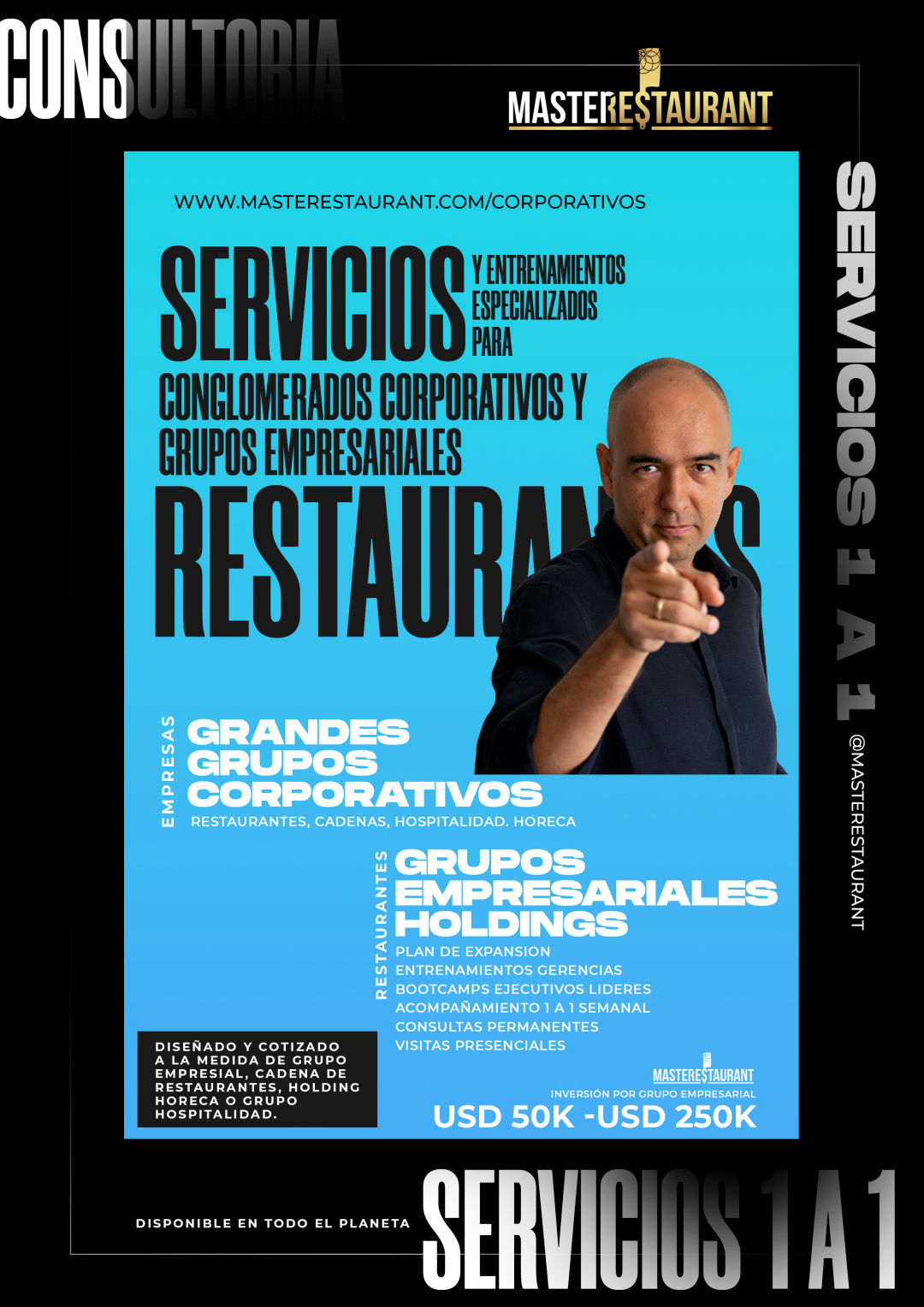
For a group, the keynote can be the start of a private program: training, consulting, executive bootcamps, bespoke speaker events and private advisory with work plans and periodic follow-up.
It is built for boards, management teams and leaders of corporate conglomerates, chains, restaurant holdings, dark kitchens and foodtechs. Every program applies the method that goes on stage —Restaurant Model Canvas, Prime Cost, standardization and expansion— and is fitted to the size of the group, its sites and its stage. It may include on-site visits and complementary services for expansion and continuous-improvement plans, so that what the room heard at the event turns into indicators that leadership reviews.
Starting at USD $50K · tailor made, custom quoted · limited availability worldwide
Published doctrine
The books that changed restaurant management
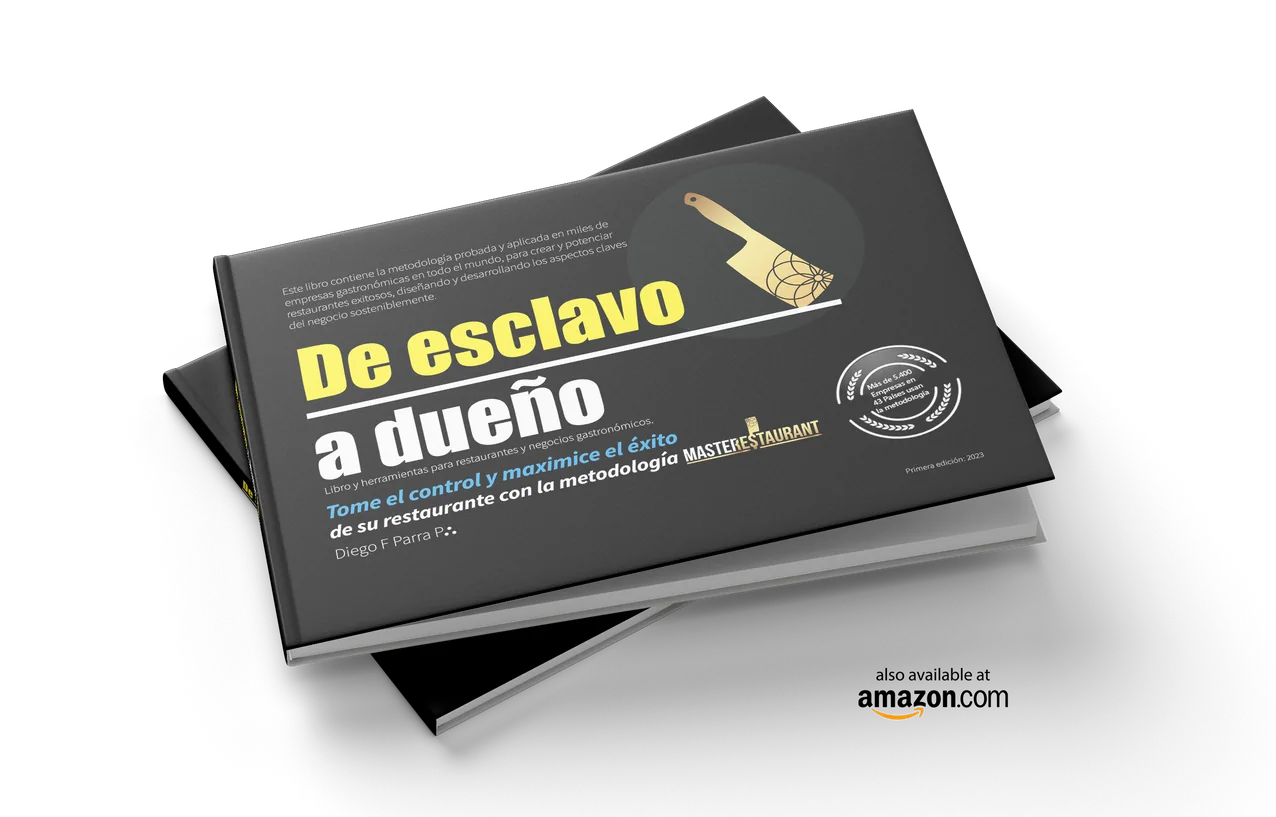
De Esclavo a Dueño
The book that changed how restaurants are managed: practical strategies and tools based on more than 20 years of experience, for traditional restaurants, dark kitchens, foodtech and HORECA businesses.
Triunfar o Morir en el Intento
Practical tools and key strategies to design and operate restaurants and food businesses efficiently.
Podcast: Masterestaurant — Mistakes for Restaurants
The public autopsy of the mistakes that bankrupt restaurants: thousands of owners and managers listen on Spotify to avoid repeating them. Condensed operating doctrine, direct and open to all.
Listen on SpotifyDownloads
Take the proposal to your organizing committee
MASTERESTAURANT® services portfolio
The complete intervention catalog: consulting, training, advisory and specialized services, with scopes and formats. The document to decide with your team.
Download PDFInternational speaker rates
Current rates, keynote formats and conditions for HORECA events, congresses and forums. Everything your organizing committee needs to book, in one read.
Download PDFInfluencer Media Kit
Reach, audiences and collaboration formats with @masterestaurant for restaurant, foodtech, airline, hotel, tourism and destination brands targeting the largest Spanish-speaking gastronomy audience.
Download PDFPortfolio
More services by Diego F Parra and his team
The work goes beyond the stage: every service starts from the same method and the same tools behind the keynote. An organization can begin with a session for its community, continue with training for its teams and move on to consulting or private advisory without starting from scratch. Owners have mentoring and programs; groups have corporate consulting. The full ecosystem is available:
International keynote speakerOne-on-one consulting and advisoryPersonalized mentoring for owners (limited spots)Corporate groups and holdings consultingCelebrity Restaurants consultingThemed restaurant advisorySpecialized training programs52-Week membershipPitch deck and restaurant investment readinessExponential Program0.1 Program — Elevate Your RestaurantInteractive training kit
Direct contact
Get a quote for the conference speaker service for your event in Sucre
Your message goes straight to Diego's team: date, city, event type and what you need to achieve. You'll receive a tailored proposal with rates.
“A great keynote isn't the one who speaks best; it's the one that leaves the room with a system they can apply. For over twenty years I've brought real operating data to the stage, not motivational quotes.”
Diego F. Parra — International consultant, expert in creating, scaling and improving restaurants, HORECA and hospitality
MASTERESTAURANT® methodology applied by 8,400+ restaurants across 43 countries · Author of 3 ISBN-registered books, including «De esclavo a dueño» · 20+ years operating restaurants, franchises, dark kitchens and HORECA groups across 4 continents
Full profile →Your event in Sucre deserves the speaker who raises the bar
Tell us the date, venue and audience of your event in Sucre and you'll receive a tailored proposal with formats and rates, in English or Spanish.
Explore more
Restaurant, HORECA & hospitality speaking: cities, services & resources
Related links for organizing committees evaluating Diego F Parra as a keynote speaker: nearby territories, MASTERESTAURANT ecosystem services and management tools.
World's best restaurant keynote speakerWorld's best restaurant consultantC-Suite restaurant consultant for chains & groupsDiego F Parra — professional profileKeynote speaker serviceCorporate groups & holdings consultingCelebrity restaurant consultingInternational themed restaurant advisoryRestaurant speaker across BoliviaRestaurant speaker in BoliviaGuest speaker in CochabambaHospitality speaker in El AltoGuest speaker in La PazSpeaker in Oruro
FAQ
Frequently asked questions
Is Diego Parra available as a speaker in Sucre?
Yes. Diego F Parra serves events in Sucre on-site or virtual, in English and Spanish: congresses, trade shows, forums, conventions and corporate events in the restaurant, HORECA and hospitality sector. His international calendar is limited, so early booking is recommended.
What formats does he offer for events in Sucre?
Master keynote, executive workshops and masterclasses, panels and fireside chats, and private corporate bootcamps for chains and groups operating in Bolivia. Rates and formats are at masterestaurant.com/speaker_en.pdf.
What topics does he speak about in Sucre?
Restaurant profitability and financial re-engineering (EBITDA, Prime Cost, theoretical vs. actual cost), expansion and franchising, dark kitchens and foodtech, AI applied to hospitality and food loss and waste control (FLW) — calibrated to the Sucre food market.
How do I get a quote for the speaker service for an event in Sucre?
Directly through the form on this page, via WhatsApp at +57 317 553 6118 or by email at info@masterestaurant.com, stating the date, city and event type in Sucre. You'll receive a tailored proposal with formats and rates.
Who is Diego F Parra?
Engineer, C-Suite consultant and international keynote speaker, creator of the MASTERESTAURANT® methodology applied by 8,400+ restaurants in 43 countries, author of 3 ISBN-registered books and a reference among the top Latino restaurant operations experts.
How does a global keynote format adapt to the specific dynamics of Sucre and its restaurant market?
Diego partners with organizers 2–3 weeks before to map attendee profile, dominant sectors (hospitality, independents, ethnic gastronomy), and local challenges (supply logistics, average operation size, staff turnover). The keynote anchors in universal MASTERESTAURANT methodology but uses examples, numbers, and Prime Cost/EBITDA calculations that resonate with Sucre's operational reality—not generic translated content. Case studies are comparable in scale and regional context. The result is a keynote that feels built for Sucre, not borrowed from another market.
What can attendees expect in terms of ACTIONABLE content, not conceptual?
Every attendee leaves with a completed Restaurant Model Canvas (hidden-shrink diagnosis, real vs. theory cost structure, EBITDA breakeven); access to the MASTERESTAURANT suite (Territory Engine, Radar, Recipe Generator) with 90 days of initial support; and a 30–60–90 day roadmap to standardize recipes, reduce PDA, and scale operations. Diego dedicates 30–40 minutes to live case-study: takes a real or composite Sucre restaurant model and calculates Prime Cost, real EBITDA, and margin opportunities on stage.
