 MASTERESTAURANT®
jobs sustained by the travel industry (2024)
U.S. Travel AssociationHORECA keynote speaker · Washington, North Carolina
DIEGO F PARRA · CREATOR OF THE MASTERESTAURANT® METHODOLOGY
BILINGUAL KEYNOTE SPEAKERExpert speaker in restaurants, hospitality and food tourism for events in Washington, North Carolina
A session for Washington, North Carolina that starts with the P&L rather than with motivation: what is happening in the industry, which decisions explain it and what the room can do on returning to their operation.
Download the services portfolio (PDF)Limited international calendar — book your Washington, North Carolina event date early
8,400+restaurants apply his methodology
43countries reached
65M+views per year
2keynote languages: EN · ES
International validationSee Diego F. Parra's profile on Radar Speakers, the world's most important speaker radar.See profile on Radar Speakers →
15 million 12.4 million 9 in 10 7 in 10

@masterestaurant
What does the audience take back from a session in Washington, North Carolina?
It takes back something concrete that leadership can review at its next meeting, not just applause.
In Washington, North Carolina, the test of a good session is what the audience does on Monday: which margin, menu or team decisions people make with what they heard. That is why Diego F Parra chooses the cases with the organizer, with that room in mind rather than an off-the-shelf talk.
Margins, Prime Cost, theoretical versus actual cost, menu engineering, operations, team and expansion are explained in the language of the kitchen and the floor, not that of a business school. When the organization wants more than one session, the same work continues as follow-up support.
How is a restaurant and HORECA keynote built for an event in Washington, North Carolina?
It starts with a conversation with the event organizer in Washington, North Carolina: who the audience is, how big their businesses are and what the room should walk away with.
That shapes the cases in a keynote delivered on-site or virtually, in English or Spanish.
The topics are drawn from the MASTERESTAURANT® methodology and the Restaurant Model Canvas: profitability (EBITDA, Prime Cost, theoretical versus actual cost), menu engineering, team, expansion and franchising, dark kitchens, waste control and AI applied to hospitality. The organizer picks the format: a master keynote, an executive workshop or masterclass, a panel or fireside chat, or a private corporate bootcamp. The session ends with a live diagnosis that leaves concrete tasks for leadership, and it can continue with follow-up support. This page cites four figures for context, from sources such as the National Restaurant Association and the U.S. Bureau of Labor Statistics.
Which industry figures help an organizer prepare an event in Washington, North Carolina?
9 in 10 — restaurantes tienen menos de 50 empleados, according to the National Restaurant Association. A figure like this gives the room common ground; it does not say what each owner does with their margin, and that is where the keynote comes in.
Other reference points cited on this page: 12.4 million (employment in food and beverage services, Jan 2026, the U.S. Bureau of Labor Statistics); 15 million (jobs sustained by the travel industry, 2024, the U.S. Travel Association); 7 in 10 (restaurants are single-location operations, the National Restaurant Association). For an organizer, the data helps calibrate the session: which operation size the room identifies with, which examples it will recognize and which margin, team or expansion problem belongs at the center. In Washington, North Carolina, a keynote that starts from the audience's reality gets put into practice; one built on generic trends gets forgotten.
Key data
Figures for preparing an event in Washington, North Carolina
The figures cited on this page, with what each one measures and its source.
| Figure | What it measures | Source |
|---|---|---|
| 15 million | jobs sustained by the travel industry (2024) | U.S. Travel Association |
| 12.4 million | employment in food and beverage services (Jan 2026) | U.S. Bureau of Labor Statistics |
| 9 in 10 | restaurantes tienen menos de 50 empleados | National Restaurant Association |
| 7 in 10 | restaurants are single-location operations | National Restaurant Association |
Each figure links to its source in the data cards on this page.
The local market
Why audiences in Washington, North Carolina ask for content they can apply
Event organizers in the HORECA space know their audience—restaurant owners and operations directors—seeks far more than corporate motivation. They face margin pressure, volatile labor costs, and intense competition for talent and clientele. A motivational keynote speaker doesn't solve that. The gap is actionable SYSTEMS: frameworks for operational and financial engineering that turn a talk into implementation by Monday. The sector expects global authority with the DNA of a real operator, not a textbook consultant. Diego F Parra, with +8,400 restaurants across 43 countries operating under his methodology, closes that gap. His presence raises the stakes: the committee isn't promising a talk—it's delivering a live system attendees can deploy in their unit that same month.
The transformation attendees leave with is operational, not motivational. The MASTERESTAURANT methodology ingests Prime Cost by source (theoretical vs. actual), visible by product line and supplier. Diego's Restaurant Model Canvas translates that into unit-economics visualization every owner understands. EBITDA stops being an annual number: it becomes monthly and unit-level, enabling expansion decisions grounded in reality rather than hope. Shrink and PDA (variance between input and output cost)—which in the industry robs margin invisibly—becomes quantifiable and controllable. Recipe and process standardization transforms expansion from a gamble into a playbook. Diego's suite (Territory Engine, keyword radar, technical specification generator) and tools are adopted post-event because the owner has seen them work live. It's not a promise of future AI: it's a system attendees carry out of the room and implement.
Diego's global authority—C-Suite consultant, author of 3 ISBN-registered books, founder of a methodology now operating in +8,400 restaurants across 43 countries—transforms the event into an international reference point. For the committee, that means higher initial registrations (attendees travel because they know who's in the room), better sponsor mix (brands seek alignment with heavyweight events), and durable positioning. In this market, where the HORECA scene is dynamic but regional, a speaker of that caliber elevates the event above local conventions into territory where regional and national executives want to be. Universities with culinary programs (Johnson & Wales, UNC) co-promote. State associations brand with the event. Multi-state franchise operators see it as mandatory. The committee shifts from regional organizer to a node in a national conversation.
The return for the committee and attendees is measurable and durable. Differentiation: the event stands apart in a crowded HORECA fair market. Post-event, attendees implement concrete improvements—Prime Cost reduction, EBITDA visibility by unit, shrink-control protocol—that get documented and shared. That creates use cases. Next year, higher registrations because the event is now a reference. Tailored content: Diego designs the keynote for the specific audience and territory (small and mid-size restaurants, local chains, regional suppliers), not generic. That resonates. The session stops being an agenda cost and becomes a documented investment: the committee can report ROI to sponsors (year-over-year registration growth, post-event NPS, MASTERESTAURANT adoption among attendees), and attendees return the following year because they saw results in their numbers.
Key data
Sector figures in Washington, North Carolina
employment in food and beverage services (Jan 2026)
U.S. Bureau of Labor Statisticsrestaurantes tienen menos de 50 empleados
National Restaurant Associationrestaurants are single-location operations
National Restaurant AssociationEvents in Washington, North Carolina
Where the conversation takes the stage in Washington, North Carolina
The state hosts a robust HORECA ecosystem without one unifying forum of reference. Annual state restaurant association congresses, tourism and gastronomy fairs in key cities (Asheville with international positioning in regional cuisine, Wilmington with seafood focus, Charlotte as a franchise hub), and sector conventions in Raleigh and Charlotte convention centers draw operations directors, independent owners, local chain executives, and executive chefs annually. Universities with recognized culinary programs (Johnson & Wales in Charlotte, gastronomy programs at UNC and Appalachian State) attract educators, central kitchen operators, and consultants. The state boasts consolidated culinary districts in Charlotte (South End, Uptown with emerging restaurants), Raleigh (Warehouse District), Asheville (West Village with farm-to-table focus), and Wilmington (Riverwalk). Target audience is independent restaurant owners and small chains, operations directors in national franchises, food and beverage managers, and chefs seeking management systems beyond the kitchen.
The sector calendar follows clear cycles. Spring marks peak convention and fair season (February through May), when committees execute events capitalizing on pre-summer tourism surge and restaurant capital-investment cycles. July-August is a pause (operator vacations) but internal preparation. Fall (September through November) concentrates pre-holiday preparation events: staff training, menu updates, investment decisions in operational improvements ahead of December peak. BBQ season (April through October) is a local symbol and draws specific events. Products like Outer Banks seafood (summer), Carolina wines (year-round with fall push), and regional produce drive seasonal emphasis on sourcing and menu engineering. A keynote at opening or closing (90 minutes + 30-min Q&A, structured networking) fits naturally into these circuits, typically Friday through Sunday. Audience is owners and directors under margin pressure seeking operational differentiation, not just recipes.
RESOURCES
MASTERESTAURANT studies, guides & tools
What a team in Washington, North Carolina can review to size the impact: sector studies, tools and cases:
- GUIDERestaurant Partners: Myth vs Reality in 2026
- STUDYRestaurant types & models: traditional method vs Masterestaurant method
- CHECKLISTCanal propio vs apps checklist restaurantecercademi
- GUIDEHow to use AI to cost and optimize your menu · Guide
- LIST7 signs your staff turnover is out of control · List
- LISTScaling a Restaurant: Myth vs Reality in the 2026 Expansion
Why he is the best
Why his judgment matters in this decision
When an owner hires restaurant and HORECA keynotes, what he is really buying is judgment: someone who has already watched the same plan fail three times and knows where it breaks. Diego F Parra has two decades of that material — engineer and C-Suite consultant, restaurants, franchises, dark kitchens and HORECA groups created, rescued and expanded across four continents, with payrolls signed, leases negotiated and expansions closed in operations worth hundreds of millions of dollars.
That judgment is written into the MASTERESTAURANT® methodology, used by 8,400+ restaurants across 43 countries, and into its TOOLKIT: MTIE, Gastronomic Radar, Standard Recipe Generator, Tech Sheets and KPI Dashboard. The goal is not for you to depend on the consultant, but on the system.
Author of 3 ISBN-registered books, including «De esclavo a dueño», creator of the industry's leading podcast and of the largest bilingual community of owners, chefs and operations directors in the region (65M+ views per year as @masterestaurant), recognized among the top Latino restaurant operations experts globally. More in Diego F Parra's professional profile.
Keynotes with proprietary doctrine, not rehashes
Every keynote is built on the Restaurant Model Canvas and real industry data, not on a collection of borrowed trends. Topics come from the MASTERESTAURANT® methodology: profitability and financial re-engineering (EBITDA, Prime Cost, theoretical versus actual cost), standardization, expansion and franchising, dark kitchens and foodtech, AI applied to hospitality and loss and waste control. The origin matters: these are business systems tested in restaurants and hospitality, where margins sit in the single digits, staff turnover is among the highest of any industry and the customer sits inside the process while it happens. That is why the content is tailored to the event, the audience and the territory, from the boardroom to the frontline team.
Formats
Formats that elevate any agenda
What happens beforehand
A conversation with the committee about audience, objectives and where the session sits in the programme.
See formatsWhat happens on stage
A diagnosis of the sector, applied cases and the decisions that separate operations that win from those that survive.
See formatsWhat the room takes away
A framework to review their own business and three things they can look at this week.
See formatsWhat can come next
Support, a bootcamp or consulting, if the organization wants to move from the idea to the execution.
See formatsKeynote portfolio
14 keynotes, 4 pillars for Washington, North Carolina: systems that cross industries
Diego F Parra doesn't deliver cooking talks: he architects business systems. His laboratory is restaurants, gastronomic businesses and hospitality — the industry with the thinnest margins, the highest staff turnover and the customer sitting inside the process. What survives there survives anywhere: the lessons from gastronomy, hotels, tourism, the HORECA sector and MICE events apply across the board to any company building customer service and customer experience, whether multi-sector, retail, banking, healthcare, education or technology. All 4 pillars of the portfolio are cross-sector and carry that engineering into tech, management, CX, retail, hotel, tourism and MICE events; the last one also stands as the proof of authority: if these systems tamed an operation of single-digit margins, split shifts and unpredictable demand, they can optimize any corporate process. Every keynote is tuned to the sector, the language and the level of the audience, from board committee to frontline team.
PILAR 01
Leadership & Algorithmic Adaptability
Leadership · Human Capital · Corporate strategy · Restaurants and gastronomic businesses · Hotels and tourism · Multi-sector service companies- The Hybrid Workforce: Leading Humans in an AI-Augmented EraHow work is split between people and agents where turnover runs high: restaurants, hotels, tourism and any multi-sector company with customer service in its sights.
- Decision Intelligence: The End of Intuition-Based ManagementFrom the owner's gut to governed data. Proven in gastronomic and hospitality businesses, transferable to HORECA operations, tourism, hotels and MICE events.
- Resilient Systems: Architecting Organizations that Self-OptimizeStructures that absorb peaks, seasonality and turnover in gastronomy, hotels and tourism — and that serve any service company that needs to run without depending on heroes.
PILAR 02
AI & Growth Strategy
CEOs · Marketing · Sales · Innovation · HORECA and gastronomic groups · Tourism, hotels and MICE · Customer-experience-driven companies- The AI Visibility War: Winning the New Engine-Driven Economy (AEO/GEO)How answer engines find you when almost nobody clicks any more: restaurants, hotels, tourism destinations, MICE operators and customer service brands.
- The Architecture of Profitable Scaling: Engineering High-Margin GrowthGrowing without diluting the margin. Built inside gastronomic businesses and HORECA chains; applicable to hotels, tourism and multi-sector service companies.
- Autonomous Operations: Delegating Complexity to Intelligent AgentsWhat to automate and what not to in restaurant, hotel and tourism operations, and how it transfers to any company that puts customer experience at its centre.
PILAR 03
Experience, Service & Culture
CX · Retail · Banking · Consulting · Education · Hotels, tourism and MICE · Any company with customer service in its sights- Experience Engineering: The Architecture of Human ConnectionCustomer experience as a system, not as an intention: gastronomy, hotels, retail, banking and any multi-sector company with customer service.
- Hospitality-as-a-Business-Model: Scaling Empathy in a Digital WorldWhat hospitality businesses know about human treatment, turned into method for multi-sector companies building customer experience.
- Gamified Performance: How Physical Systems Drive Digital OutputsFloor, front-desk and point-of-sale teams that move digital metrics: restaurants, hotels, tourism, retail and contact centres.
- The Globalization Paradox: Engineering Cultural Replication for ScaleReplicating a service culture in another country without losing it on the way: HORECA chains, gastronomic groups, hotels, tourism and multi-sector operations.
PILAR 04
Masterestaurant Specialty
Restaurant owners · HORECA chains · Gastronomic groups · Hotels and tourism · Investors- High-Performance Gastronomy: The Engineering Behind 8,400+ UnitsThe method applied across 8,400+ restaurants and gastronomic businesses in 43 countries, and which part carries over to hotels, tourism and service companies.
- Algorithmic Hospitality: Eliminating Variables in the Kitchen EconomyStandardizing without killing the craft: restaurant, hotel and MICE-event catering kitchens, and the transfer to any high-variability operation.
- The Scale-up Blueprint: Engineering Rapid Growth for High-Performance RestaurantsFrom one unit to a chain: restaurants, gastronomic groups, HORECA franchises and hotel and tourism operations.
- Unit Economics Unleashed: Transforming Service Costs into Competitive AdvantagesService cost as an asset, not a burden: gastronomic businesses, hotels, tourism and multi-sector companies with customer experience.
Packages
Packaged speaker services and workshops
Every intervention is built on the Restaurant Model Canvas and the MASTERESTAURANT® methodology. Choose format and duration; current rates are in the PDF.
| Format | 20 min – 1 h | 1 – 2 h | 2 – 3 h | 3 – 4 h |
|---|---|---|---|---|
Talk · Keynote · ConferenceVirtual or on-site · Americas | Fee + travel · 20 min – 1 h | Fee + travel · 1 – 2 h | · | · |
Talk · Keynote · ConferenceOn-site · Europe, Asia, Africa & Oceania | Fee + travel · 20 min – 1 h | Fee + travel · 1 – 2 h | · | · |
WorkshopOn-site · Americas | · | Fee + travel · 1 – 2 h | Fee + travel · 2 – 3 h | Fee + travel · 3 – 4 h |
WorkshopOn-site · Europe, Asia, Africa & Oceania | · | Fee + travel · 1 – 2 h | Fee + travel · 2 – 3 h | Fee + travel · 3 – 4 h |
Specialized bootcampOn-site · Americas | · | · | · | Fee + travel · 3 – 4 h |
Specialized bootcampOn-site · Europe, Asia, Africa & Oceania | · | · | · | Fee + travel · 3 – 4 h |
| TAILOR MADE — bespoke events, workshops and bootcamps · Specific date and topic: to be agreed | ||||
Other territories
Stages close to Washington, North Carolina
Explore the service in other territories, or go back to the worldwide index on the worldwide keynote speaker index:
Guest speaker across the United StatesKeynote speaker across KansasSpeaker across NevadaSpeaker across New JerseyRestaurant speaker across New MexicoSpeaker across New York StateHospitality speaker across TennesseeHospitality speaker in AnaheimHospitality speaker in ArlingtonSpeaker in AtlantaSpeaker in Atlantic City, New JerseyHORECA speaker in Augusta GeorgiaRestaurant speaker in Aurora IllinoisKeynote speaker in AustinHospitality speaker in Baltimore MarylandRestaurant speaker in Baton Rouge, LouisianaRestaurant speaker in Beverly HillsRestaurant speaker in Boca Raton FloridaKeynote speaker in BostonHORECA speaker in Brookhaven, New YorkKeynote speaker in Carson City NevadaRestaurant speaker in Charlotte, North CarolinaSpeaker in ChicagoRestaurant speaker in Columbia MarylandMore countries →More cities →
We do serve — and every city on the planet
Available there, on-site or virtually, in English or Spanish: request a quote.
Who is Diego F Parra?
Diego F Parra is a C-Suite consultant, international keynote speaker and creator of the MASTERESTAURANT® methodology, applied by 8,400+ restaurants across 43 countries. The methodology comes with its own technology suite: MTIE, Gastronomic Radar and KPI Dashboard.
An engineer by training, he has spent two decades creating, rescuing and expanding restaurants, franchises, dark kitchens and HORECA groups across four continents; he is the author of 3 ISBN-registered books, including “De Esclavo a Dueño,” and creator of the podcast Masterestaurant — Mistakes for Restaurants. For an organizing committee, that means a session built on real operating cases and tools the audience can use, not motivational quotes.
HORECA · Chains · Holdings · Foodtech
What private events and programs are there for large groups?
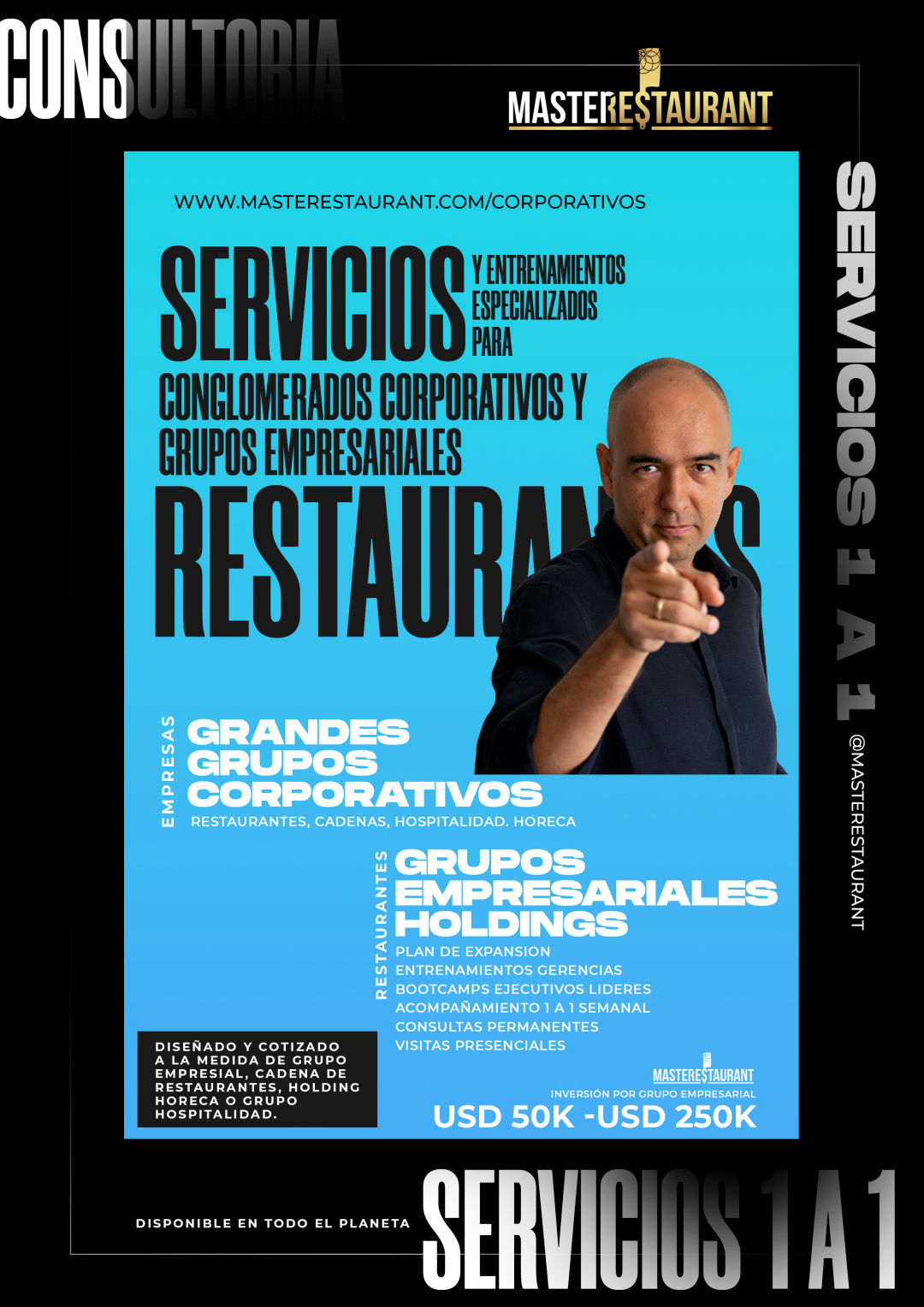
For a group, the keynote can be the start of a private program: training, consulting, executive bootcamps, bespoke speaker events and private advisory with work plans and periodic follow-up.
It is built for boards, management teams and leaders of corporate conglomerates, chains, restaurant holdings, dark kitchens and foodtechs. Every program applies the method that goes on stage —Restaurant Model Canvas, Prime Cost, standardization and expansion— and is fitted to the size of the group, its sites and its stage. It may include on-site visits and complementary services for expansion and continuous-improvement plans, so that what the room heard at the event turns into indicators that leadership reviews.
Starting at USD $50K · tailor made, custom quoted · limited availability worldwide
Published doctrine
The books that changed restaurant management
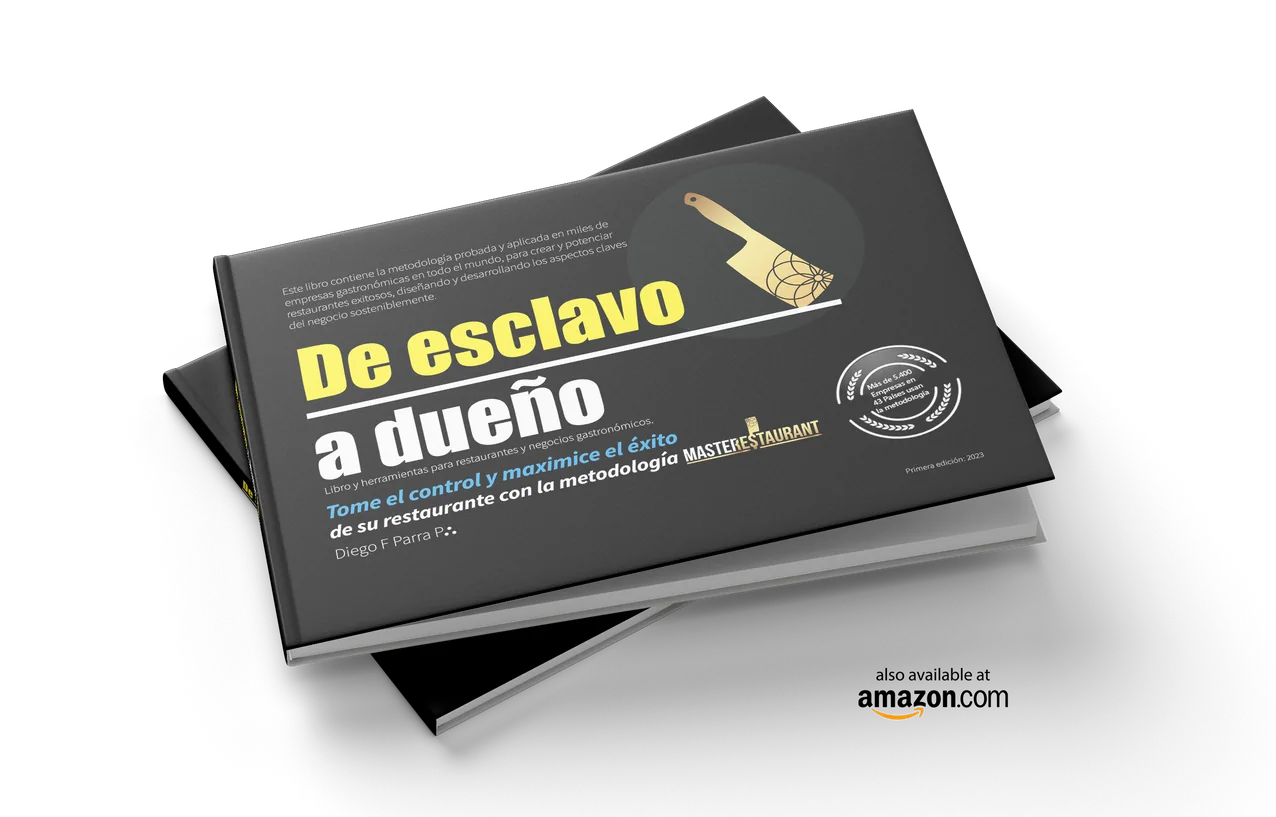
De Esclavo a Dueño
The book that changed how restaurants are managed: practical strategies and tools based on more than 20 years of experience, for traditional restaurants, dark kitchens, foodtech and HORECA businesses.
Triunfar o Morir en el Intento
Practical tools and key strategies to design and operate restaurants and food businesses efficiently.
Podcast: Masterestaurant — Mistakes for Restaurants
The public autopsy of the mistakes that bankrupt restaurants: thousands of owners and managers listen on Spotify to avoid repeating them. Condensed operating doctrine, direct and open to all.
Listen on SpotifyDownloads
Take the proposal to your organizing committee
MASTERESTAURANT® services portfolio
The complete intervention catalog: consulting, training, advisory and specialized services, with scopes and formats. The document to decide with your team.
Download PDFInternational speaker rates
Current rates, keynote formats and conditions for HORECA events, congresses and forums. Everything your organizing committee needs to book, in one read.
Download PDFInfluencer Media Kit
Reach, audiences and collaboration formats with @masterestaurant for restaurant, foodtech, airline, hotel, tourism and destination brands targeting the largest Spanish-speaking gastronomy audience.
Download PDFPortfolio
More services by Diego F Parra and his team
The work goes beyond the stage: every service starts from the same method and the same tools behind the keynote. An organization can begin with a session for its community, continue with training for its teams and move on to consulting or private advisory without starting from scratch. Owners have mentoring and programs; groups have corporate consulting. The full ecosystem is available:
International keynote speakerOne-on-one consulting and advisoryPersonalized mentoring for owners (limited spots)Corporate groups and holdings consultingCelebrity Restaurants consultingThemed restaurant advisorySpecialized training programs52-Week membershipPitch deck and restaurant investment readinessExponential Program0.1 Program — Elevate Your RestaurantInteractive training kit
Direct contact
Get a quote for the conference speaker service for your event in Washington, North Carolina
Your message goes straight to Diego's team: date, city, event type and what you need to achieve. You'll receive a tailored proposal with rates.
“A great keynote isn't the one who speaks best; it's the one that leaves the room with a system they can apply. For over twenty years I've brought real operating data to the stage, not motivational quotes.”
Diego F. Parra — International consultant, expert in creating, scaling and improving restaurants, HORECA and hospitality
MASTERESTAURANT® methodology applied by 8,400+ restaurants across 43 countries · Author of 3 ISBN-registered books, including «De esclavo a dueño» · 20+ years operating restaurants, franchises, dark kitchens and HORECA groups across 4 continents
Full profile →A session built for Washington, North Carolina
Tell us the programme and the audience and you'll receive a proposal with formats, length and rates.
Explore more
Restaurant, HORECA & hospitality speaking: cities, services & resources
Related links for organizing committees evaluating Diego F Parra as a keynote speaker: nearby territories, MASTERESTAURANT ecosystem services and management tools.
World's best restaurant keynote speakerWorld's best restaurant consultantC-Suite restaurant consultant for chains & groupsDiego F Parra — professional profileKeynote speaker serviceCorporate groups & holdings consultingCelebrity restaurant consultingInternational themed restaurant advisoryGuest speaker across the United StatesKeynote speaker across KansasSpeaker across NevadaSpeaker across New JerseyRestaurant speaker across New MexicoSpeaker across New York State
FAQ
Frequently asked questions
Is Diego Parra available as a speaker in Washington, North Carolina?
Yes. Diego F Parra serves events in Washington, North Carolina on-site or virtual, in English and Spanish: congresses, trade shows, forums, conventions and corporate events in the restaurant, HORECA and hospitality sector. His international calendar is limited, so early booking is recommended.
What formats does he offer for events in Washington, North Carolina?
Master keynote, executive workshops and masterclasses, panels and fireside chats, and private corporate bootcamps for chains and groups operating in the United States. Rates and formats are at masterestaurant.com/speaker_en.pdf.
What topics does he speak about in Washington, North Carolina?
Restaurant profitability and financial re-engineering (EBITDA, Prime Cost, theoretical vs. actual cost), expansion and franchising, dark kitchens and foodtech, AI applied to hospitality and food loss and waste control (FLW) — calibrated to the Washington, North Carolina food market.
How do I get a quote for the speaker service for an event in Washington, North Carolina?
Directly through the form on this page, via WhatsApp at +57 317 553 6118 or by email at info@masterestaurant.com, stating the date, city and event type in Washington, North Carolina. You'll receive a tailored proposal with formats and rates.
Who is Diego F Parra?
Engineer, C-Suite consultant and international keynote speaker, creator of the MASTERESTAURANT® methodology applied by 8,400+ restaurants in 43 countries, author of 3 ISBN-registered books and a reference among the top Latino restaurant operations experts.
How does a 90-minute keynote translate into real operational change in the months that follow?
Diego delivers a live system, not just concept. He presents a fully completed Restaurant Model Canvas using a local restaurant example, teaches Prime Cost audit (theoretical vs. actual) in 20 minutes, and shares shrink-control protocol. Post-event, attendees access the MASTERESTAURANT community, downloadable MTIE tools, and reference specifications. The committee can offer group office hours one month later. Measurable result: attendees report 5–15% Prime Cost reduction in the following Q1; the committee documents this for next year's marketing.
Why is Diego's focus on C-Suite and owners different from other keynote speakers we've hosted?
Because it touches operational finance, not plating technique. Other speakers teach culinary method, menu trends, diner experience. Diego addresses owner reality: margin, cost control, scalability without external capital, unit-economics engineering. Attendees leave knowing how to measure Prime Cost by product line, see EBITDA monthly, control the input variance that costs them 3–8% invisibly. That's why they return.
