 MASTERESTAURANT®
Estimated population of the city of Beverly Hills, California.
U.S. Census Bureau, QuickFactsCorporate consulting · Beverly Hills
DIEGO F PARRA · CREATOR OF THE MASTERESTAURANT® METHODOLOGY
MULTI-UNIT RESTAURANT CONSULTANTWho does a chain in Beverly Hills call when it opens faster than it documents?
A chain in Beverly Hills does not break by opening: it breaks by opening without having written down how it operates. Past a certain number of sites, the team's memory stops being a system.
Download the portfolio (PDF)Corporate advisory spots LIMITED worldwide - reserve your group's evaluation early
8,400+restaurants apply his methodology
43countries with supported groups
65M+views per year
2service languages: EN - ES
International validationSee Diego F. Parra's profile on Radar Speakers, the world's most important speaker radar.See profile on Radar Speakers →
30,764 inhabitants US$1.5 trillion 15 million 63% 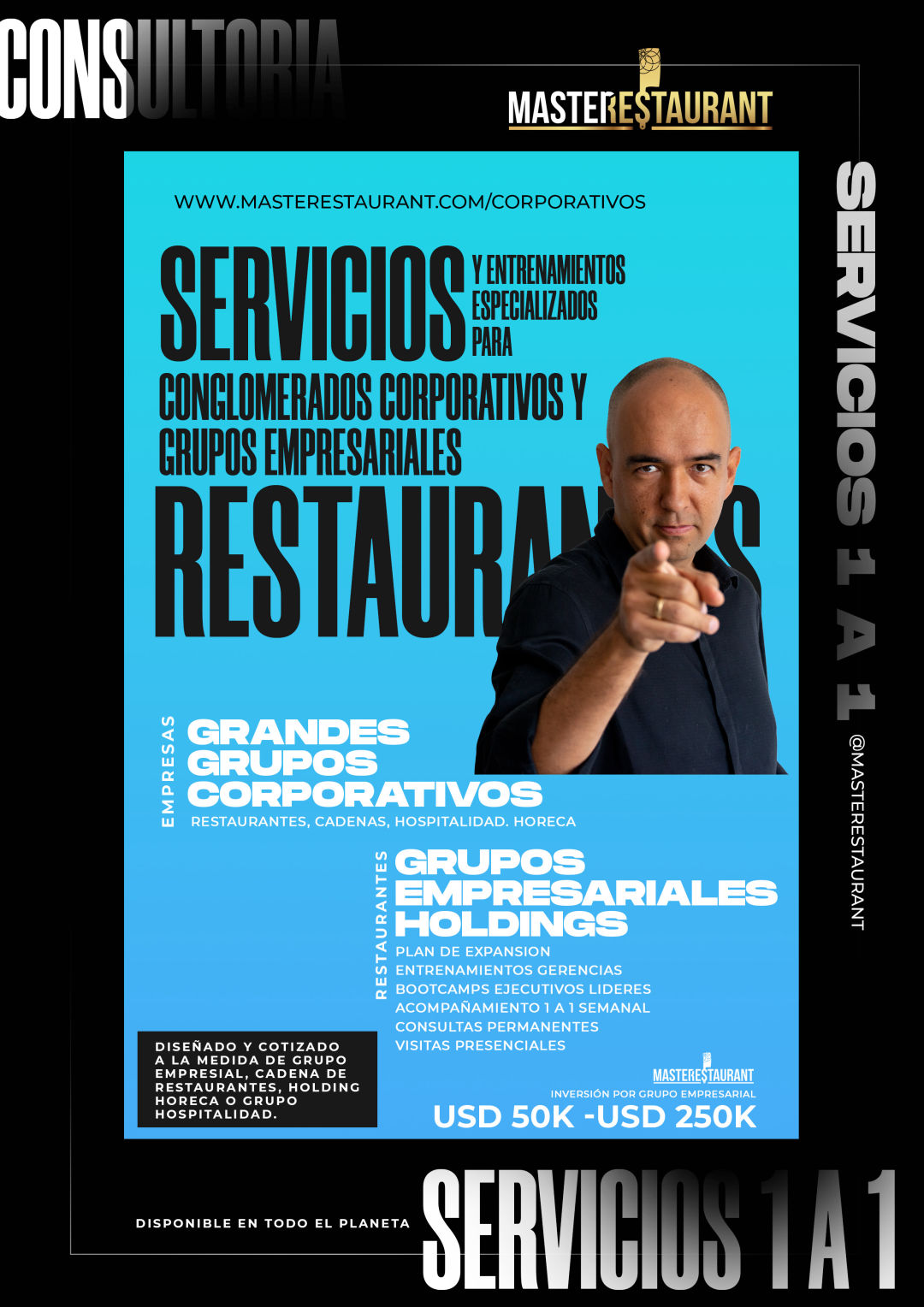

@masterestaurant
From founder to system, in Beverly Hills
The MASTERESTAURANT methodology and its TOOLKIT have been applied across 8,400+ restaurants in 43 countries, from three-site groups to networks with dozens of units. Growing a group is harder than opening a restaurant: each new site multiplies costs, standards, talent and complexity, and a group only scales when a system replicates per-unit profitability, not when it depends on founders or operational heroes.
In Beverly Hills, the method adapts to the size, stage and expansion model of each group, in an order that does not change: measure, standardize, and only then replicate. That means a corporate diagnosis brand by brand and site by site, standards and financial governance that hold across the network, and a decision on owned units, licensing or franchising based on the documented standard and the team available.
How does restaurant group consulting work in Beverly Hills?
It starts with a corporate diagnosis of every unit in Beverly Hills measured with the same yardstick: EBITDA per unit, Prime Cost, standards and the team that runs each site. From there the board decides what to open, convert or close.
MASTERESTAURANT's corporate consulting works on four fronts at once: portfolio strategy, multi-site standardization, financial governance and expansion. The diagnosis compares units on the same indicators, so the board sees which sites carry the group and which dilute it. Then come the systems that make growth repeatable: documented recipes and processes, a KPI dashboard reviewed on a fixed cadence and a leadership structure that does not depend on the founders. The work uses the group's own numbers, in person or remotely, in English or Spanish, and the scope is tailored to the number of units and the stage of the business. This page cites four verified figures for Beverly Hills, from sources such as the U.S. Census Bureau and the National Restaurant Association.
What do the numbers say about running a restaurant group in Beverly Hills?
30,764 inhabitants — estimated population of the city of Beverly Hills, California, according to the U.S. Census Bureau. A figure like this sizes the opportunity; it does not say whether each new unit will earn money.
Other reference points cited on this page: US$1.5 trillion (projected restaurant industry sales, 2025, the National Restaurant Association); 15 million (jobs sustained by the travel industry, 2024, the U.S. Travel Association); 63% (of adults worked in the restaurant industry, the National Restaurant Association). For a group, the useful reading is the unit economics behind each opening: Prime Cost under control, a theoretical food cost close to the real one and EBITDA measured site by site. That is what decides whether a new location in Beverly Hills multiplies profit or only multiplies complexity.
Data
Market figures for restaurant groups in Beverly Hills
The figures cited on this page, with what each one measures and its source.
| Figure | What it measures | Source |
|---|---|---|
| 30,764 inhabitants | Estimated population of the city of Beverly Hills, California | U.S. Census Bureau, QuickFacts |
| US$1.5 trillion | projected restaurant industry sales (2025) | National Restaurant Association |
| 15 million | jobs sustained by the travel industry (2024) | U.S. Travel Association |
| 63% | of adults worked in the restaurant industry | National Restaurant Association |
Each figure links to its source in the data cards on this page.
The local market
How a restaurant chain competes in Beverly Hills
A restaurant holding with 3 or 4 operational units functions on empirical criteria: the founder or core operations team manages each location, controls costs, and maintains margins because someone monitors every variable. But when the group aspires to 8, 15, 25 units—new locations, new markets, franchise expansion—that structure collapses. Each new unit multiplies (1) operational variability: what works in a premium location may not replicate in secondary markets without clear standardization, and every local manager reinvents processes; (2) financial complexity: Prime Cost of a unit, a brand, or the entire portfolio requires governance at group level, not manual reporting per site; (3) talent risk: turnover is higher, and the business cannot depend on key individuals. Thus, most groups that expand without corporate architecture see unit-level profitability erode as the portfolio grows. Specialized, tailor-made corporate consulting for restaurant groups addresses that structural erosion by designing the portfolio from the first day of expansion.
A corporate consulting program for restaurant chains and groups transforms an enterprise that grows on commercial impulse into a GOVERNED GASTRONOMIC BUSINESS. It begins with (1) portfolio diagnosis: which brands generate value, which erode profitability, where operational and financial risk concentrate; (2) growth strategy: which units to strengthen, which to restructure, how to allocate capital across new openings, renovations, and reinvestment; (3) multi-unit standardization: operational manuals, critical kitchen and service processes, control systems, POS configuration and reporting, variable and fixed cost structure per unit; (4) unit economics and Prime Cost governed at group level: each unit operates within clear financial windows, the group can forecast new-location profitability before signing leases; (5) dashboard indicators by brand, by manager, by operational cycle; (6) scalable organizational structure independent of founders or operational heroes. The MASTERESTAURANT® methodology and its toolkit integrate everything into a single tailor-made program for the Southern California region.
Diego F. Parra is a consultant specialized in restaurants and hospitality with genuine operational experience: he has met payroll, negotiated leases, structured partnerships, and closed expansions of restaurant groups with revenues in the hundreds of millions of dollars. His MASTERESTAURANT® methodology has been adopted by over 8,400 restaurants and groups across 43 countries; he designed the Restaurant Model Canvas (unit-level diagnostic tool), the MTIE—Masterestaurant Territory Engine—(territorial evaluation engine), the Radar Gastronómico (competitive mapping), and a suite of portfolio governance dashboards. His educational community reaches over 65 million annual views across platforms. When a restaurant group incorporates Diego as corporate consultant, it does not access a generic package or theory-only consulting: it accesses a system proven in markets as complex as Asia, Europe, Latin America, and the Caribbean, significantly reducing the risk inherent to accelerated expansion. Portfolio decisions are made on data and replicated business architecture, not intuition.
The ROI from this corporate program materializes in (1) replicated profitability per unit: new locations reach designed operating margins before opening; (2) protected margin in expansion: each new internal opening, franchise, or partnership is structured financially on realistic local-market scenarios; (3) data-driven portfolio decisions: the board has transparency on which brands to strengthen, which to consolidate, where to concentrate capital; (4) resilient operations independent of individuals: when an operations manager departs, the system maintains profitability because it is documented and standardized; (5) investment attraction: a structured, well-governed group is more valuable to corporate investors, private equity funds, or strategic buyers. For restaurant chains and hospitality holdings, this is the work that hospitality executives in developed markets outsource to global corporate consulting firms. Here it is executed by Diego, with gastronomic specialization that generic firms do not bring.
Market data
The numbers leadership decides on in Beverly Hills
projected restaurant industry sales (2025)
National Restaurant Associationjobs sustained by the travel industry (2024)
U.S. Travel Associationof adults worked in the restaurant industry
National Restaurant AssociationBeverly Hills as a market
Where the chain market is decided in Beverly Hills
Southern California concentrates a sophisticated corporate gastronomic ecosystem: from fine dining groups specialized in French, Italian, and Nikkei cuisine, to casual dining chains with multiple locations in Westwood, Century City, and the Sunset Boulevard corridor; dark kitchens and foodtech ventures expanding near distribution hubs in West Los Angeles; corporate holdings with mixed portfolios of premium brands and accessible concepts. The market attracts top-tier executive talent (world-class chefs, operations managers with hospitality and corporate sector experience), and commercial real estate availability varies dramatically: prime rents in luxury zones, accessible rents in Hollywood Boulevard plazas and nearby industrial zones. The regional consumer spends more per cover, demands premium experience, and has low tolerance for inconsistency: a chain that fails to replicate quality across locations rapidly loses reputation. Luxury international tourism is a permanent demand driver, and corporate events from technology, financial, and entertainment firms generate stable demand for catering and private events. Thus, growth in the market is not simply opening more units—it is maintaining standard under pressure.
The opportunity is clear: the region has high-volume demand, a premium-paying consumer, and talent rotation that allows new concepts to thrive if executed well. But structural risks are specific: (1) cost of operations: rent, senior talent compensation, and quality supplies are significantly higher than in secondary markets, eroding margins without standardization and cost discipline; (2) lack of standardization multiplies that risk: a kitchen without clear processes loses efficiency with each new opening; a non-integrated POS system across locations prevents portfolio visibility; ambiguous role structure generates management turnover; (3) expansion without mapped territory: opening a second unit in unfamiliar ground, without analyzing local competition, talent availability, or demand capacity, frequently results in margins below projections; (4) demanding and visible consumer on social networks: experience inconsistency across units amplifies publicly, damaging brand. The group that grows is the one that standardizes without losing identity, that analyzes territory before committing, and that governs each unit financially from before signing leases.
RESOURCES
MASTERESTAURANT studies, guides & tools
Actionable resources for restaurant teams in Beverly Hills — original studies, guides and tools, not theory:
- COMPARISONBusiness model: traditional method vs Masterestaurant method
- STUDYRestaurant Competitive Analysis: Myth vs Reality According to the Data
- CHECKLISTFranquiciar checklist
- CASE STUDYInconsistencia entre locales tradicional vs mr caso estudio
- DATARestaurant Business Model: Myth vs Reality in 2026
- ARTICLEAutomating restaurant permits: mistakes vs. the right method
The corporate consultant
Why his judgment matters in this decision
When an owner hires corporate restaurant consulting, what he is really buying is judgment: someone who has already watched the same plan fail three times and knows where it breaks. Diego F Parra has two decades of that material — engineer and C-Suite consultant, restaurants, franchises, dark kitchens and HORECA groups created, rescued and expanded across four continents, with payrolls signed, leases negotiated and expansions closed in operations worth hundreds of millions of dollars.
That judgment is written into the MASTERESTAURANT® methodology, used by 8,400+ restaurants across 43 countries, and into its TOOLKIT: MTIE, Gastronomic Radar, Standard Recipe Generator, Tech Sheets and KPI Dashboard. The goal is not for you to depend on the consultant, but on the system.
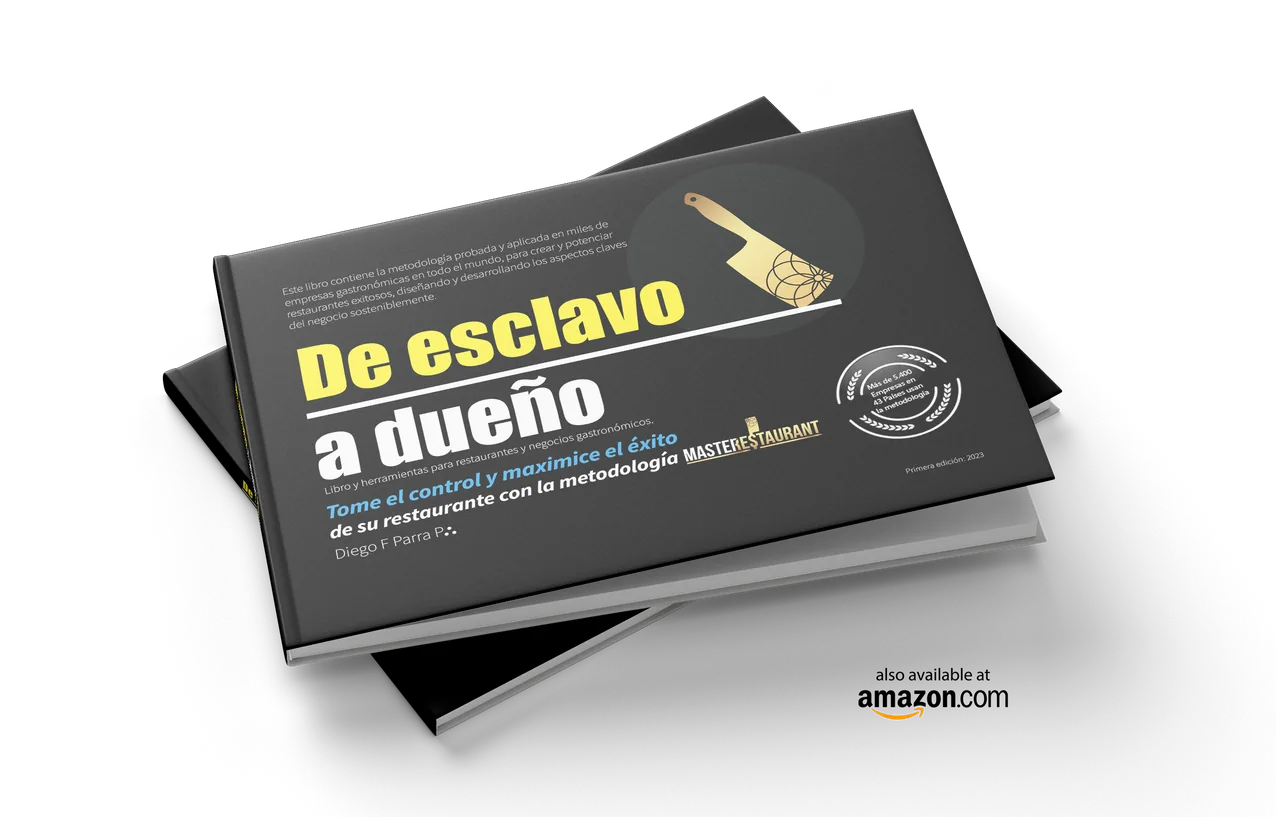
Author of 3 ISBN-registered books, including «De esclavo a dueño», creator of the industry's leading podcast and of the largest bilingual community of owners, chefs and operations directors in the region (65M+ views per year as @masterestaurant), recognized among the top Latino restaurant operations experts globally. More in Diego F Parra's professional profile.
Corporate consulting with its own doctrine, not generic frameworks
Consulting for restaurant groups is not solved with management theory. Every engagement is built on the Restaurant Model Canvas and real industry data—profitability, Prime Cost, cost structure, multi-site standardization and expansion—applied to the specific business model of a group, a chain or a holding. The goal is not to open more restaurants, but to build a business system that replicates per-unit profitability, governs the portfolio and sustains operations on clear rules rather than indispensable people. Every board decision rests on the group's own indicators, measured at each site.
Corporate consulting from start to finish
Advisory that covers the full restaurant-group lifecycle
What gets measured first
Unit economics per brand and per unit. Everything that follows rests on it.
Get a quoteWhat gets fixed first
Whatever returns margin in weeks: Prime Cost, waste and group fixed costs. The structural work comes next, and in writing.
Quote standardizationWhat gets written down
Manuals, indicator definitions and a structure of roles, which is what survives changes of team.
Quote expansionWhat gets measured again
The same figures from the diagnosis, at the close. That is the contract with leadership and what separates this from a report.
See the services portfolio (PDF)The methodology
Discover the MASTERESTAURANT methodology
Behind every group that scales profitably there is a system, not luck: tools, processes and models that turn impulse growth into governed expansion.
Who is it for?
Who a corporate engagement serves
1-on-1 consulting, no templates, for restaurants in any of these situations:
Enterprise groups and conglomerates
A hospitality portfolio governed with method: financial control, standardization and decision dashboards for the board and the C-Suite.
Restaurant chains
Profitable replication per unit: standards, Prime Cost and operations that deliver the same result at site one and at site fifty.
Hospitality holdings
Portfolio strategy: which brands to back, which to restructure and how to allocate capital to maximize group return.
Dark kitchens and foodtechs scaling up
Scaling without burning cash: unit economics, multi-node operations and expansion on data rather than growth instinct.
Family offices and funds
Operational due diligence, value thesis and support to management: enter or grow in foodservice with the MASTERESTAURANT methodology.
What's included
Key topics and elements your corporate program can include
Depending on the diagnosis, the engagement draws on some of these MASTERESTAURANT modules:
- Diagnosis brand by brand and site by site
- Portfolio strategy and capital allocation
- Multi-site standardization
- Financial governance and decision dashboards
- Menu engineering consistent across the network
- Talent, structure and leadership
- Readiness for franchising and licensing
- Entry into new markets
- Support through implementation
Investment: from USD $50K to USD $500K+ - tailor-made corporate programs, priced to the group's size and complexity - spots LIMITED worldwide.
Corporate programs
Tailor-made corporate consulting programs for groups and chains
Every corporate program is 100% personalized and tailor-made to the group. It starts with a strategic portfolio diagnosis and works through the key elements of the business model in the MASTERESTAURANT Restaurant Canvas, from portfolio strategy and standardization to per-unit profitability and expansion. Priced to the group's size and complexity (from USD $50K to USD $500K+), with limited spots worldwide to ensure dedicated attention and discretion for each client. The diagnosis sets the scope and the phases (strategic planning, standardization and implementation, and support through operations and expansion), working from the group's own numbers, on site or remote, in English or Spanish.
Corporate coverage
Territories close to Beverly Hills
Explore other territories or the worldwide index:
Restaurant chain expansion in AnaheimCorporate hospitality consulting in ArlingtonRestaurant group consultant in AtlantaRestaurant chain expansion in Atlantic City, New JerseyCorporate hospitality consulting in Augusta GeorgiaCorporate hospitality consulting in Aurora IllinoisRestaurant chain expansion in AustinRestaurant chain expansion in Baltimore MarylandRestaurant group consultant in Baton Rouge, LouisianaRestaurant group consulting in Boca Raton FloridaRestaurant chain consulting in BostonRestaurant group consulting in Brookhaven, New YorkRestaurant group consultant in Carson City NevadaRestaurant group consultant in Charlotte, North CarolinaCorporate hospitality consulting in ChicagoCorporate hospitality consulting in Columbia MarylandRestaurant group consultant in Coral Gables FloridaRestaurant group consulting in Corpus ChristiAdvisory for restaurant groups in Cupertino CaliforniaAdvisory for restaurant groups in DallasRestaurant group consulting in Delray Beach FloridaRestaurant group consulting in El PasoRestaurant chain expansion in State of ArizonaRestaurant chain consulting in State of CaliforniaMore countries →More cities →
We do serve — and every city on the planet
Served on site or virtually, in English and Spanish.
Who is Diego F Parra?
Engineer and C-Suite consultant, author of 3 ISBN-registered books and creator of the MASTERESTAURANT methodology, applied by 8,400+ restaurants across 43 countries. The method comes with its own technology suite: MTIE, Gastronomic Radar and KPI Dashboard.
He is the consultant that business groups, chains, holdings and family offices choose to grow, standardize and expand their restaurant portfolio with profitability and governance. His method comes from two decades operating, rescuing and expanding restaurants, franchises, dark kitchens and HORECA groups across four continents, and it arrives with instruments proven in real operations, not generic templates. He works in English or Spanish, on site or remote.
HORECA · Chains · Holdings · Foodtech
Private programs for boards and family offices
Consulting, bootcamps and private advisory for boards and family offices.
From USD $50K, priced to the group; limited spots worldwide.
Published doctrine
The books that changed restaurant management
De Esclavo a Dueño
The book that changed how restaurants are managed: practical strategies and tools based on more than 20 years of experience, for traditional restaurants, dark kitchens, foodtech and HORECA businesses.
Triunfar o Morir en el Intento
Practical tools and key strategies to design and operate restaurants and food businesses efficiently.
Podcast: Masterestaurant — Mistakes for Restaurants
The public autopsy of the mistakes that bankrupt restaurants: thousands of owners and managers listen on Spotify to avoid repeating them.
Listen on SpotifyDownloads
The documents your board will ask for
MASTERESTAURANT services portfolio
The complete corporate intervention catalog: consulting, executive bootcamps, advisory and specialized services, with scopes and formats. The document to decide with your board.
Download PDFBook: From Slave to Owner
The full doctrine behind the methodology: how to structure restaurants that run without depending on the owner. Ideal pre-reading before your group's diagnosis.
View on AmazonPortfolio
More services by Diego F Parra and his team
As the group grows, every new site needs managers trained to the same standard. That is why the ecosystem's services start from the same method and tools as the corporate consulting: training and courses for managers in each market, the membership to keep learning going and the Pitch Deck and investment service when expansion needs capital. The full ecosystem is available:
International keynote speakerOne-on-one consulting and advisoryPersonalized mentoring for owners (limited spots)Corporate groups and holdings consultingCelebrity Restaurants consultingThemed restaurant advisorySpecialized training programs52-Week membershipPitch deck and restaurant investment readinessExponential Program0.1 Program — Elevate Your RestaurantInteractive training kit
Direct contact
Get a quote for corporate consulting for your group in Beverly Hills
Your message goes straight to Diego's team: group or chain, number of sites, stage and what you need to achieve in Beverly Hills.
“A restaurant group does not scale or dilute by its rate of openings—it scales or dilutes by the quality of its business system. If your cost architecture, processes, financial governance, and talent are designed to replicate, each new unit adds value. If they are not designed, each new unit multiplies risk and erodes what you already have. That is what separates a holding that grows with profitability from one that grows with operational stress.”
Diego F. Parra — International consultant, expert in creating, scaling and improving restaurants, HORECA and hospitality
MASTERESTAURANT® methodology applied by 8,400+ restaurants across 43 countries · Author of 3 ISBN-registered books, including «De esclavo a dueño» · 20+ years operating restaurants, franchises, dark kitchens and HORECA groups across 4 continents
Full profile →Your restaurant group in Beverly Hills deserves a system worthy of its ambition
Tell us how many units the network runs and which decision the board has to make.
Explore more
Restaurant groups: territories, services and ecosystem resources
Related links for boards, C-Suite and teams evaluating Diego F Parra's corporate consulting for restaurant groups and chains: nearby territories, sister services in the MASTERESTAURANT ecosystem and management tools, all built on the same method.
World's best restaurant keynote speakerWorld's best restaurant consultantC-Suite restaurant consultant for chains & groupsDiego F Parra — professional profileKeynote speaker serviceCorporate groups & holdings consultingCelebrity restaurant consultingInternational themed restaurant advisoryRestaurant chain expansion in AnaheimCorporate hospitality consulting in ArlingtonRestaurant group consultant in AtlantaRestaurant chain expansion in Atlantic City, New JerseyCorporate hospitality consulting in Augusta GeorgiaCorporate hospitality consulting in Aurora Illinois
FAQ
Frequently asked questions
Our group just closed two new units with operating margin 8 points below projections. How does Diego's consulting ensure new locations will replicate profitability without repeating the same error?
The diagnosis begins with an audit of current units: actual Prime Cost vs. budget, variable and fixed cost structure, and specific profitability drains in each location (kitchen inefficiency, oversized staff, misconfigured POS, uncontrolled purchasing). Once consulting identifies where current operations lose profitability, the MASTERESTAURANT methodology uses that learning to structure new units with controls from day one. Before signing leases, territory is validated (competition, talent availability, local demand capture), Prime Cost specific to local market is estimated, and an operational structure is designed that avoids previous errors. New units are not repetitions of past mistakes—they are applications of diagnosis that correct trajectory.
How does corporate consulting for restaurant chains differ from generic operations consulting? Isn't it the same?
No. Generic operations consulting applies standard frameworks: reduce costs, improve processes, optimize headcount. Corporate consulting specialized in restaurant groups is gastronomic-focused: it understands that kitchen profitability depends on recipes, portion yield, seasonal purchasing, and offer rotation; that customer experience impacts retention and average check. Diego operates from within that gastronomic complexity, not above it. When he designs standardization or cost structure, he preserves what makes a brand valuable while eliminating waste. That is why his clients scale profitability, not just volume.
We open fast and document slowly. How is that fixed?
By writing down the standard the operation already follows and measuring compliance site by site. It is not a new manual: it is putting on paper what the best location already does, so it stops depending on who is on shift.
How many sites does this need to make sense?
It usually shows from the third or fourth, when the founder stops reaching everything. But a two-site group about to open five gains more doing it before than after.
What does unit economics per unit mean?
Knowing what each site leaves on its own: sales, Prime Cost, its own fixed costs and EBITDA. Without it, leadership does not know which location carries which and decides on the one it remembers best.
Do you work with the board or with the managers?
With both. The board decides capital and portfolio; the managers hold the standard. A plan that reaches only one of them does not last a financial year.
What is the investment for a corporate program?
Corporate programs range from USD $50K to USD $500K+ and are priced to the group's size and complexity, number of sites and scope of the engagement. They are quoted tailor-made after the diagnosis.
