 MASTERESTAURANT®
Forecast US restaurant industry employees for 2025
National Restaurant AssociationCorporate governance · Pensacola Florida
DIEGO F PARRA · CREATOR OF THE MASTERESTAURANT® METHODOLOGY
RESTAURANT GROUP CONSULTANTWho does a chain in Pensacola Florida call when it opens faster than it documents?
For boards and leadership in Pensacola Florida choosing between opening, converting or closing: the corporate diagnosis puts those three options against every unit with the same yardstick.
Download the portfolio (PDF)Corporate advisory spots LIMITED worldwide - reserve your group's evaluation early
8,400+restaurants apply his methodology
43countries with supported groups
65M+views per year
2service languages: EN - ES
International validationSee Diego F. Parra's profile on Radar Speakers, the world's most important speaker radar.See profile on Radar Speakers →
15.9 million US$1.3 trillion 4% 31.7% 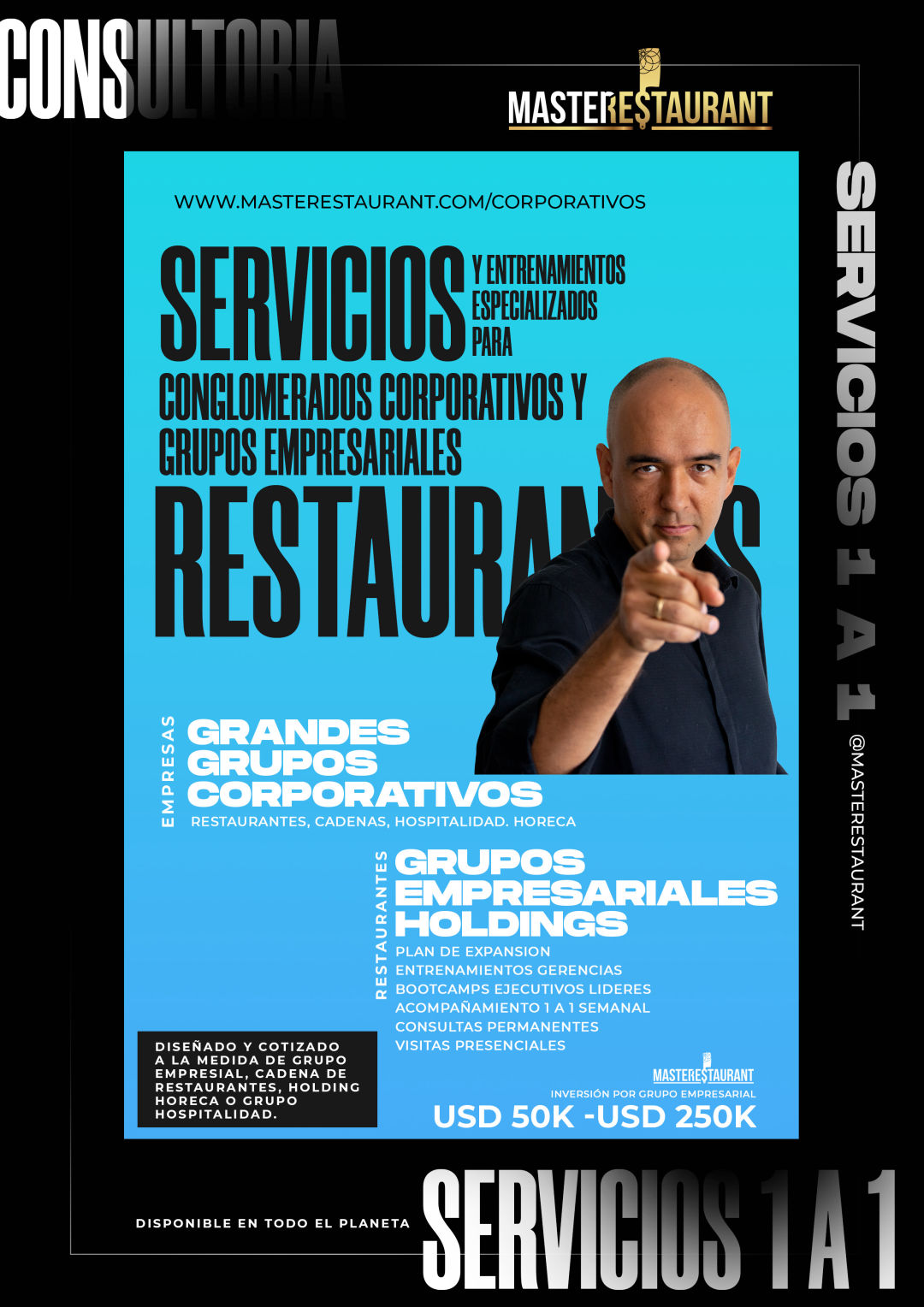

@masterestaurant
Why restaurant groups and chains in Pensacola Florida hire him
The MASTERESTAURANT methodology and its TOOLKIT have been applied across 8,400+ restaurants in 43 countries, from three-site groups to networks with dozens of units. Growing a group is harder than opening a restaurant: each new site multiplies costs, standards, talent and complexity, and a group only scales when a system replicates per-unit profitability, not when it depends on founders or operational heroes.
In Pensacola Florida, the method adapts to the size, stage and expansion model of each group, in an order that does not change: measure, standardize, and only then replicate. That means a corporate diagnosis brand by brand and site by site, standards and financial governance that hold across the network, and a decision on owned units, licensing or franchising based on the documented standard and the team available.
How does restaurant group consulting work in Pensacola Florida?
It begins by measuring each unit in Pensacola Florida with one yardstick (EBITDA per site, Prime Cost, operating standards and the team in charge) so the board can decide what to open, convert or close on evidence.
The diagnosis turns into four workstreams: portfolio, multi-site standards, financial governance and expansion. The aim is a group that can grow without the founders in every decision: documented recipes and processes, a KPI dashboard with a fixed review cadence and managers who own their numbers. The engagement uses the group's own data, runs in person or remotely, in English or Spanish, and is sized to the number of units and the stage of the business. This page cites four verified figures for Pensacola Florida, from sources such as the National Restaurant Association and the U.S. Travel Association.
What do the numbers say about running a restaurant group in Pensacola Florida?
15.9 million — Forecast US restaurant industry employees for 2025, according to the National Restaurant Association. A figure like this sizes the opportunity; it does not say whether each new unit will earn money.
Other reference points cited on this page: US$1.3 trillion (direct travel spending in 2024, the U.S. Travel Association); 4% (global foodservice market growth in 2025, Euromonitor International); 31.7% (Off-premise revenue of the growing restaurant, Masterestaurant). For a group, the useful reading is the unit economics behind each opening: Prime Cost under control, a theoretical food cost close to the real one and EBITDA measured site by site. That is what decides whether a new location in Pensacola Florida multiplies profit or only multiplies complexity.
Data
Market figures for restaurant groups in Pensacola Florida
The figures cited on this page, with what each one measures and its source.
| Figure | What it measures | Source |
|---|---|---|
| 15.9 million | Forecast US restaurant industry employees for 2025 | National Restaurant Association |
| US$1.3 trillion | direct travel spending in 2024 | U.S. Travel Association |
| 4% | Global foodservice market growth in 2025 | Euromonitor International |
| 31.7% | Off-premise revenue of the growing restaurant | Masterestaurant - Indice de Diversificacion de Ingresos 2026 |
Each figure links to its source in the data cards on this page.
The local market
Why opening fast in Pensacola Florida does not guarantee earning more
Restaurant groups and chains expanding in coastal markets face a critical structural break between local operation and corporate governance. With two or three units, a founder or strong operator manages everything—purchasing, talent, standards, pricing, financial controls. By the time a group reaches five, ten, or twenty locations, that model collapses: costs multiply without clear economies of scale, standardization evaporates (each location improvises its processes), Prime Cost balloons in some units while others generate margins that don't replicate across the network, and quality operational talent disperses or churns without leaving codified instruction. Most groups grow by commercial impulse—open one location, it works, open another without yet having a system—rather than by deliberate strategic design. Result: expansion that looks successful in aggregate top-line revenue but erodes unit profitability, weakens consolidated cash flow, and leaves the board without real visibility into what the true business is and which units generate actual value. Specialized corporate consulting for restaurant chains fills this critical void.
The transformation a bespoke consulting program delivers is converting an impulse-driven group into a governed hospitality enterprise managed from the C-Suite. In concrete terms: portfolio diagnostics (real mapping of which brands to scale, which to restructure, where to deploy growth capital), multi-unit standardization with living operational manuals (purchasing processes, cost controls, talent reception and training, process audits), unit economics and Prime Cost governed not by local manager inspiration but as group-level rule, real-time performance dashboards (EBITDA %, Prime Cost %, labor %, occupancy by unit with deviation alerts), scalable organizational structure that doesn't depend on the founder, and financial governance the CFO understands and the board can supervise. The MASTERESTAURANT methodology and its toolkit (Restaurant Model Canvas for business modeling, MTIE for territorial analysis, Technical Operations Specs, Gastronomic Radar for strategic keywords, Indicators Dashboard) are designed precisely for this challenge: not generic process consulting, but specialized business engineering for restaurant operations adapted to your group's actual structure, local competition, and real expansion opportunities.
Diego F. Parra is an internationally recognized consultant 100% specialized in restaurants and hospitality: creator of the MASTERESTAURANT methodology applied by 8,400+ restaurants and hospitality groups across 43 countries; C-Suite consultant with real operating-company experience—has managed payroll, negotiated six-figure monthly leases, structured corporate entities, managed corporate credit lines, and closed expansions in operations worth hundreds of millions of dollars; published author recognized by Amazon (From Slave to Owner) with 65+ million annual views across his global community. He has guided groups from 5 to 300+ units in markets as diverse as Lima, Barcelona, Dubai, Mexico City, and Toronto, where he faced identical expansion challenges. That global authority doesn't just reduce expansion risk for a corporate board—it eliminates the uncertainty of scaling a system already proven replicable in comparable contexts, so your group doesn't have to learn by trial-and-error on the market.
The concrete return a specialized corporate consulting program generates for a group is multifaceted and measurable: predictable, replicable unit profitability across your portfolio (each new opening isn't a gamble but a replica of a working model), Prime Cost and EBITDA governed and protected at group level (even during aggressive expansion phases), data-driven portfolio decisions—which brands warrant increased investment, which need restructuring, where to allocate growth capital—, operations that don't depend on the founder or a heroic operator (critical element for institutional investors or strategic exits), business health indicators the board and CFO understand in real time and can supervise, and ultimately, a significantly more valuable and attractive group for external investors, acquirers, or strategic partners in future consolidation processes. For holdings in aggressive expansion phase or wealth consolidation for succession, this is differentiating.
Market data
Chain figures in Pensacola Florida
direct travel spending in 2024
U.S. Travel AssociationGlobal foodservice market growth in 2025
Euromonitor InternationalOff-premise revenue of the growing restaurant
Masterestaurant - Revenue Diversification Index 2026Pensacola Florida as a market
Trade fairs, congresses and season in Pensacola Florida
The restaurant ecosystem in central Florida's coastal region is heterogeneous and expanding: comprises local casual-dining chains through to established independents with track record, specialist premium-seafood operators, strong-brand steakhouses, and Latin dining concepts with proven traction. The districts with highest expansion potential include the Downtown corridor (post-pandemic revitalization with significant real-estate investment and densification), the beach zone with strong seasonality and tourism consumption (second homes, corporate travel, leisure), and the northern suburban arc where middle-to-upper-income demographics are growing and seeking quality dining options. Lease costs are moderate compared to Miami or Tampa but accelerating in prime locations (main commercial corridors, upscale plazas, beachfront spaces). Operational talent is available but exhibits notably high turnover—affected by Pensacola Naval Base presence (military mobility cycles), marked seasonal tourism patterns, and aggressive inter-sector competition. A chain scaling in this market must structure its talent approach not for 10-year retention but for rapid on-boarding, quick development, and delegated unit operations in shorter cycles, with consistency codified in processes and systems, not dependent on heroic individuals.
Real and specific expansion opportunity exists on three fronts: ordered penetration of demographically growing suburbs (north and east), consolidation of the beach zone as a differentiated dining destination (tourism consumption + second homes + premium experience), and Downtown as a premium/casual corridor with growing corporate market. Predictable, measurable risks that erode profitability as groups scale here include: multiplication of fixed costs (rent, services, supervisory payroll) without unit volumes justifying them in the first 12-24 months; absent robust operational standardization (each local manager solves differently, generates duplication and waste); operational talent turnover that weakens product and service consistency; uncontrolled Prime Cost because there's no consolidated multi-month tracking—each location 'manages itself' independently; and weak corporate governance the board either doesn't know about or discovers too late. The local consumer is heterogeneous by zone: highly price and consistency-sensitive in suburban neighborhoods; willing to pay premium at beach and Downtown if clear differentiation and consistent product are present.
RESOURCES
MASTERESTAURANT studies, guides & tools
A selection of MASTERESTAURANT studies, comparisons and tools to decide better in Pensacola Florida:
- AI PROMPTMulti-Location Inventory Dashboard Builder for Restaurants
- CONCEPTRestaurant Business Model: Real Definition, Before vs After with Masterestaurant
- COMPARISONBusiness model: traditional method vs Masterestaurant method
- CASE STUDYArtificial intelligence in restaurants: data and impact
- COMPARISONDark kitchen vs restaurante tradicional comparativa restaurantecercademi
- CHECKLISTFranquiciar checklist
- GUIDERestaurant partners: traditional method · Guide
The corporate consultant
Why his judgment matters in this decision
When an owner hires corporate restaurant consulting, what he is really buying is judgment: someone who has already watched the same plan fail three times and knows where it breaks. Diego F Parra has two decades of that material — engineer and C-Suite consultant, restaurants, franchises, dark kitchens and HORECA groups created, rescued and expanded across four continents, with payrolls signed, leases negotiated and expansions closed in operations worth hundreds of millions of dollars.
That judgment is written into the MASTERESTAURANT® methodology, used by 8,400+ restaurants across 43 countries, and into its TOOLKIT: MTIE, Gastronomic Radar, Standard Recipe Generator, Tech Sheets and KPI Dashboard. The goal is not for you to depend on the consultant, but on the system.
Author of 3 ISBN-registered books, including «De esclavo a dueño», creator of the industry's leading podcast and of the largest bilingual community of owners, chefs and operations directors in the region (65M+ views per year as @masterestaurant), recognized among the top Latino restaurant operations experts globally. More in Diego F Parra's professional profile.
Corporate consulting with its own doctrine, not generic frameworks
Consulting for restaurant groups is not solved with management theory. Every engagement is built on the Restaurant Model Canvas and real industry data—profitability, Prime Cost, cost structure, multi-site standardization and expansion—applied to the specific business model of a group, a chain or a holding. The goal is not to open more restaurants, but to build a business system that replicates per-unit profitability, governs the portfolio and sustains operations on clear rules rather than indispensable people. Every board decision rests on the group's own indicators, measured at each site.
Corporate consulting from start to finish
Advisory that covers the full restaurant-group lifecycle
Turning over more is not earning more
A network can grow in sales and lose margin per site. That is not growth, it is dilution, and only EBITDA per unit shows it.
Get a quoteThe standard is the asset
Written, measured and held. Without it, the group's value depends on who happens to be on shift at each location.
Quote standardizationThe system replaces the hero
Structure and processes that work without depending on two or three indispensable people across the whole network.
Quote expansionGrowth is a decision, not a drift
Opening because a site came up is the most expensive way to expand. The staged plan exists to prevent it.
See the services portfolio (PDF)The methodology
Discover the MASTERESTAURANT methodology
Behind every group that scales profitably there is a system, not luck: tools, processes and models that turn impulse growth into governed expansion.
Who is it for?
For chains that already grew and now need order
A specialized, personalized 1-on-1 service for new and existing restaurants of:
Organized foodservice
Quick-service, fast-casual and full-service chains, where the standard is as much the product as the menu.
Dark kitchens and delivery
Multi-node operations where margin is decided by packaging, ticket time and channel mix.
Franchisors
Those already selling a model who need what they hand over to be a system rather than an expectation.
Investment and portfolio
Funds and family offices with foodservice assets that need an operational reading, not only a financial one.
What's included
What the work with leadership includes
The scope is defined with you; these are the MASTERESTAURANT methodology modules available:
- Corporate diagnosis and portfolio strategy
- Multi-site standardization and manuals
- Per-unit profitability and financial governance
- Consistent menu engineering
- Organizational structure and leadership
- Indicator dashboards for the board
- Readiness for franchising and licensing
- Expansion into new markets
- Training for the leadership team
Investment: from USD $50K to USD $500K+ - tailor-made corporate programs, priced to the group's size and complexity - spots LIMITED worldwide.
Corporate programs
Tailor-made corporate consulting programs for groups and chains
Every corporate program is 100% personalized and tailor-made to the group. It starts with a strategic portfolio diagnosis and works through the key elements of the business model in the MASTERESTAURANT Restaurant Canvas, from portfolio strategy and standardization to per-unit profitability and expansion. Priced to the group's size and complexity (from USD $50K to USD $500K+), with limited spots worldwide to ensure dedicated attention and discretion for each client. The diagnosis sets the scope and the phases (strategic planning, standardization and implementation, and support through operations and expansion), working from the group's own numbers, on site or remote, in English or Spanish.
Corporate coverage
Territories close to Pensacola Florida
Explore other territories or the worldwide index:
Restaurant chain expansion in AnaheimCorporate hospitality consulting in ArlingtonRestaurant group consultant in AtlantaRestaurant chain expansion in Atlantic City, New JerseyCorporate hospitality consulting in Augusta GeorgiaCorporate hospitality consulting in Aurora IllinoisRestaurant chain expansion in AustinRestaurant chain expansion in Baltimore MarylandRestaurant group consultant in Baton Rouge, LouisianaCorporate hospitality consulting in Beverly HillsRestaurant group consulting in Boca Raton FloridaRestaurant chain consulting in BostonRestaurant group consulting in Brookhaven, New YorkRestaurant group consultant in Carson City NevadaRestaurant group consultant in Charlotte, North CarolinaCorporate hospitality consulting in ChicagoCorporate hospitality consulting in Columbia MarylandRestaurant group consultant in Coral Gables FloridaRestaurant group consulting in Corpus ChristiAdvisory for restaurant groups in Cupertino CaliforniaAdvisory for restaurant groups in DallasRestaurant group consulting in Delray Beach FloridaRestaurant group consulting in El PasoRestaurant chain expansion in State of ArizonaMore countries →More cities →
We do serve — and every city on the planet
Served on site or virtually, in English and Spanish.
Who is Diego F Parra?
Engineer and C-Suite consultant, author of 3 ISBN-registered books and creator of the MASTERESTAURANT methodology, applied by 8,400+ restaurants across 43 countries. The method comes with its own technology suite: MTIE, Gastronomic Radar and KPI Dashboard.
He is the consultant that business groups, chains, holdings and family offices choose to grow, standardize and expand their restaurant portfolio with profitability and governance. His method comes from two decades operating, rescuing and expanding restaurants, franchises, dark kitchens and HORECA groups across four continents, and it arrives with instruments proven in real operations, not generic templates. He works in English or Spanish, on site or remote.
HORECA · Chains · Holdings · Foodtech
Private programs for boards and family offices
Consulting, bootcamps and private advisory for boards and family offices.
From USD $50K, priced to the group; limited spots worldwide.
Published doctrine
The books that changed restaurant management
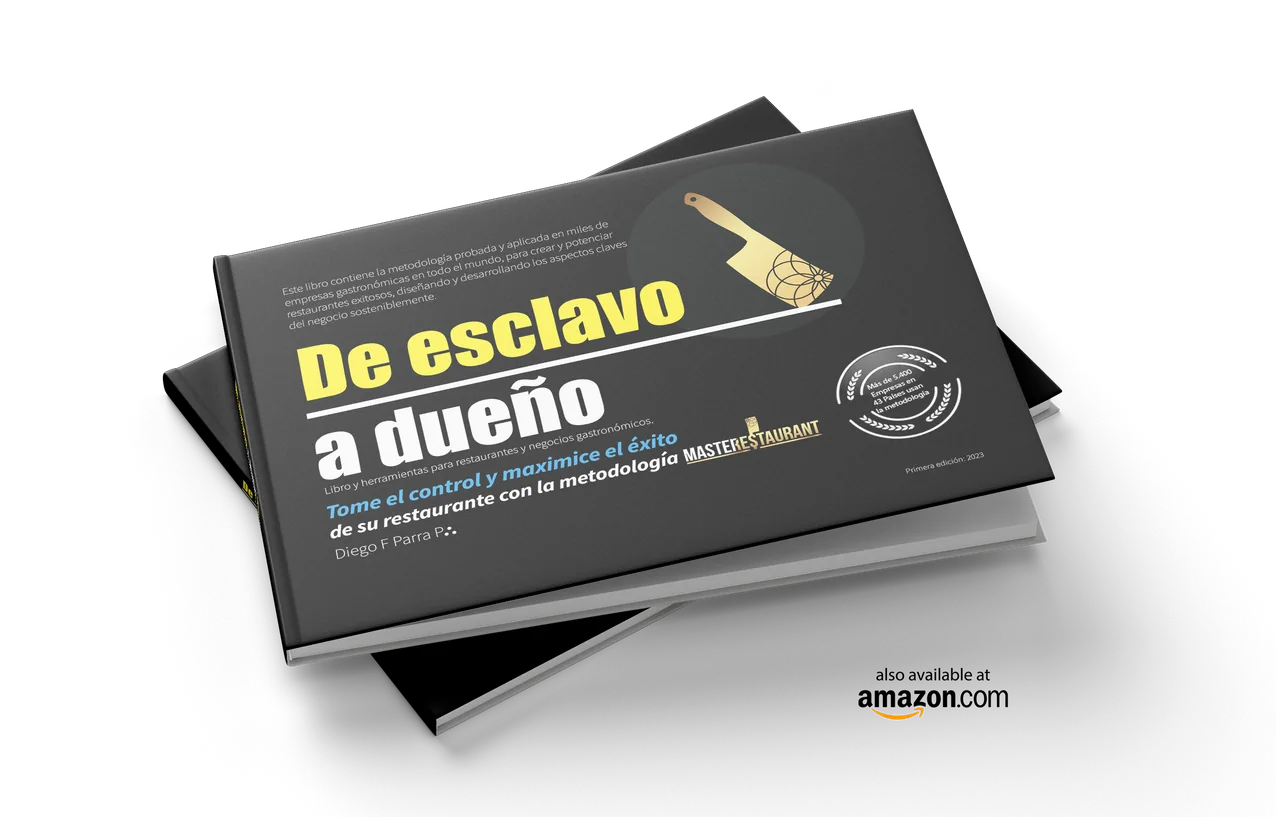
De Esclavo a Dueño
The book that changed how restaurants are managed: practical strategies and tools based on more than 20 years of experience, for traditional restaurants, dark kitchens, foodtech and HORECA businesses.
Triunfar o Morir en el Intento
Practical tools and key strategies to design and operate restaurants and food businesses efficiently.
Podcast: Masterestaurant — Mistakes for Restaurants
The public autopsy of the mistakes that bankrupt restaurants: thousands of owners and managers listen on Spotify to avoid repeating them.
Listen on SpotifyDownloads
The documents your board will ask for
MASTERESTAURANT services portfolio
The complete corporate intervention catalog: consulting, executive bootcamps, advisory and specialized services, with scopes and formats. The document to decide with your board.
Download PDFBook: From Slave to Owner
The full doctrine behind the methodology: how to structure restaurants that run without depending on the owner. Ideal pre-reading before your group's diagnosis.
View on AmazonPortfolio
More services by Diego F Parra and his team
As the group grows, every new site needs managers trained to the same standard. That is why the ecosystem's services start from the same method and tools as the corporate consulting: training and courses for managers in each market, the membership to keep learning going and the Pitch Deck and investment service when expansion needs capital. The full ecosystem is available:
International keynote speakerOne-on-one consulting and advisoryPersonalized mentoring for owners (limited spots)Corporate groups and holdings consultingCelebrity Restaurants consultingThemed restaurant advisorySpecialized training programs52-Week membershipPitch deck and restaurant investment readinessExponential Program0.1 Program — Elevate Your RestaurantInteractive training kit
Direct contact
Get a quote for corporate consulting for your group in Pensacola Florida
Your message goes straight to Diego's team: group or chain, number of sites, stage and what you need to achieve in Pensacola Florida.
“A group that opens five locations with the same system that worked for one is gambling, not managing for profitability. I've seen operations scale from a hundred million to a billion in revenue where others diluted in the first expansion—the difference was never speed of openings, it was the rigor of a system that replicates exactly in every single unit.”
Diego F. Parra — International consultant, expert in creating, scaling and improving restaurants, HORECA and hospitality
MASTERESTAURANT® methodology applied by 8,400+ restaurants across 43 countries · Author of 3 ISBN-registered books, including «De esclavo a dueño» · 20+ years operating restaurants, franchises, dark kitchens and HORECA groups across 4 continents
Full profile →Your restaurant group in Pensacola Florida deserves a system worthy of its ambition
Tell us how many units the network runs and which decision the board has to make.
Explore more
Restaurant groups: territories, services and ecosystem resources
Related links for boards, C-Suite and teams evaluating Diego F Parra's corporate consulting for restaurant groups and chains: nearby territories, sister services in the MASTERESTAURANT ecosystem and management tools, all built on the same method.
World's best restaurant keynote speakerWorld's best restaurant consultantC-Suite restaurant consultant for chains & groupsDiego F Parra — professional profileKeynote speaker serviceCorporate groups & holdings consultingCelebrity restaurant consultingInternational themed restaurant advisoryRestaurant chain expansion in AnaheimCorporate hospitality consulting in ArlingtonRestaurant group consultant in AtlantaRestaurant chain expansion in Atlantic City, New JerseyCorporate hospitality consulting in Augusta GeorgiaCorporate hospitality consulting in Aurora Illinois
FAQ
Frequently asked questions
How do we guarantee unit margins don't erode as we scale from three to eight locations in new territories?
Margin erosion is a governance symptom, not market saturation. Specialized consulting maps true Prime Cost per unit (not manager intuition), identifies where money leaks (fragmented purchasing, overpaid labor, unmeasured waste, inefficient processes), and establishes replication rules: your best unit's operating model gets codified into manuals, processes, and controls deployed at each new opening. We add consolidated monthly KPI visibility (EBITDA %, Prime Cost %, labor %, occupancy) by unit so deviations surface before they compound.
What organizational and control structure makes aggressive growth not depend on the founder being Superman at every location?
Proper structure clearly separates three roles: portfolio strategy (C-Suite/board), operational standardization and control (corporate operations), and local execution (unit manager). This only works with a living, audited operational manual, non-negotiable KPIs (Prime Cost max X%, EBITDA min Y%), robust process audit system, and manager compensation tied to standard compliance, not sales alone. Every new unit then replicates successfully without the founder operationally present. That's true scalability.
We open fast and document slowly. How is that fixed?
By writing down the standard the operation already follows and measuring compliance site by site. It is not a new manual: it is putting on paper what the best location already does, so it stops depending on who is on shift.
How many sites does this need to make sense?
It usually shows from the third or fourth, when the founder stops reaching everything. But a two-site group about to open five gains more doing it before than after.
What does unit economics per unit mean?
Knowing what each site leaves on its own: sales, Prime Cost, its own fixed costs and EBITDA. Without it, leadership does not know which location carries which and decides on the one it remembers best.
Do you work with the board or with the managers?
With both. The board decides capital and portfolio; the managers hold the standard. A plan that reaches only one of them does not last a financial year.
What is the investment for a corporate program?
Corporate programs range from USD $50K to USD $500K+ and are priced to the group's size and complexity, number of sites and scope of the engagement. They are quoted tailor-made after the diagnosis.
