 MASTERESTAURANT®
Estimated population of the city of Miami, 2024
U.S. Census Bureau, QuickFactsMulti-site and franchise · Miami
Diego F. Parra · CREATOR OF THE MASTERESTAURANT® METHODOLOGY
RESTAURANT FRANCHISE CONSULTANTWho is the most sought-after consultant to grow, standardize and expand restaurant groups and chains in Miami?
Franchise, licence or owned site are three different risks. This consulting works in Miami on the decision before that one: whether the model survives replication exactly as it stands today.
Download the portfolio (PDF)Corporate advisory spots LIMITED worldwide - reserve your group's evaluation early
8,400+restaurants apply his methodology
43countries with supported groups
65M+views per year
2service languages: EN - ES
International validationSee Diego F. Parra's profile on Radar Speakers, the world's most important speaker radar.See profile on Radar Speakers →
487,014 inhabitants 72.4 million 12.4 million US$1.5 trillion
@masterestaurant
Why restaurant groups and chains in Miami hire him
The MASTERESTAURANT methodology and its TOOLKIT have been applied across 8,400+ restaurants in 43 countries, from three-site groups to networks with dozens of units. Growing a group is harder than opening a restaurant: each new site multiplies costs, standards, talent and complexity, and a group only scales when a system replicates per-unit profitability, not when it depends on founders or operational heroes.
In Miami, the method adapts to the size, stage and expansion model of each group, in an order that does not change: measure, standardize, and only then replicate. That means a corporate diagnosis brand by brand and site by site, standards and financial governance that hold across the network, and a decision on owned units, licensing or franchising based on the documented standard and the team available.
How does restaurant group consulting work in Miami?
The first step is a corporate diagnosis: every unit the group runs in Miami is measured on EBITDA, Prime Cost, standards and the team behind it. With that map the board decides which sites to open, convert or close.
The work runs on four fronts together: portfolio strategy, standards that hold across every site, financial governance and a clear expansion rule. Units are compared on the same indicators, so the board sees which locations carry the group and which ones drain it. Then come the systems that make growth repeatable: recipes and processes on paper, a KPI dashboard reviewed on a fixed calendar and a leadership layer that runs without the founders in the room.
Everything is built on the group's own numbers, on site or remote, in English or Spanish. This page cites four verified figures for Miami, from sources such as the U.S. Census Bureau and the National Travel and Tourism Office.
What do the numbers say about running a restaurant group in Miami?
487,014 inhabitants — estimated population of the city of Miami, 2024, according to the U.S. Census Bureau. A figure like this sizes the opportunity; it does not say whether each new unit will earn money.
Other reference points cited on this page: 72.4 million (international visitor arrivals, 2024, +9.1%, the National Travel and Tourism Office); 12.4 million (employment in food and beverage services, Jan 2026, the U.S. Bureau of Labor Statistics); US$1.5 trillion (projected restaurant industry sales, 2025, the National Restaurant Association).
For a group, the useful reading is the unit economics behind each opening: Prime Cost under control, a theoretical food cost close to the real one and EBITDA measured site by site. That is what decides whether a new location in Miami multiplies profit or only multiplies complexity.
Data
Market figures for restaurant groups in Miami
The figures cited on this page, with what each one measures and its source.
| Figure | What it measures | Source |
|---|---|---|
| 487,014 inhabitants | Estimated population of the city of Miami, 2024 | U.S. Census Bureau, QuickFacts |
| 72.4 million | international visitor arrivals (2024, +9.1%) | National Travel and Tourism Office |
| 12.4 million | employment in food and beverage services (Jan 2026) | U.S. Bureau of Labor Statistics |
| US$1.5 trillion | projected restaurant industry sales (2025) | National Restaurant Association |
Each figure links to its source in the data cards on this page.
The local market
What to know about Miami before the next unit opens
A restaurant group or chain faces a critical challenge: each new location multiplies operational complexity, costs, standards and dependencies without proportional growth in per-unit profitability. What worked with two or three locations collapses at twenty: misaligned manuals, inconsistent processes, weak controls, fragmented talent, eroded margins. Most groups grow by commercial impulse—they see opportunity and open—but without design: no portfolio diagnosis, no brand strategy, no standardization, no group-level financial governance.
Opening more locations is accessible; replicating profitability in each one is what distinguishes a scaling group from a diluted one. Specialized corporate consulting for restaurant chains fills that gap: it is not operational coaching for a single unit, it is business system redesign to govern complex portfolios.
The restaurant chain consulting service Diego delivers transforms an impulse-driven group into a governed gastronomic enterprise. It begins with deep portfolio diagnosis: which brands to expand, which to restructure, where real profitability exists and where losses hide. From there, clear expansion strategy: priority markets, unit models, capital investment, timeline. Then multi-location standardization: manuals, processes, KPIs, operational controls that work on autopilot.
At the core, manageable unit economics: Prime Cost per operational line, EBITDA per unit, safety margin, elasticity of fixed and variable costs. Organizational structure that doesn't depend on the founder. Integrated dashboards for the board. And a clear roadmap for expansion and franchise. All 100% customized to your group.
Diego's authority in corporate restaurant expansion dramatically reduces risk. He is a C-Suite consultant with real experience: he has signed payrolls in operations worth hundreds of millions of dollars, negotiated leases, structured partnerships, closed international expansions. The MASTERESTAURANT® methodology is applied in over 8,400 restaurants in 43 countries, verifiable in his community of +65 million annual views. It is not academic theory: it is proven business engineering in real contexts.
When the board wants to scale on tested data and systems—not founder intuition or faith in a heroic operator—that verifiable authority is differentiating.
The concrete return for your group is measurable. First: profitability replicated per unit, margins protected in each new opening, because you know exactly what each model costs to operate. Second: portfolio decisions with data, not intuition: which brands to scale, which to restructure, how to allocate capital for maximum ROI. Third: operations that don't depend on the founder or heroic operators—the system is transferable.
Fourth: the board has real financial visibility of the group: consolidated EBITDA, governed Prime Cost, clear risks and opportunities. Fifth: your group is more valuable and attractive to investors or potential buyers, because it has a replicable system, not just profitable units today. That is what changes in a governed expansion.
Market data
The restaurant-group and chain market in Miami in figures
international visitor arrivals (2024, +9.1%)
National Travel and Tourism Officeemployment in food and beverage services (Jan 2026)
U.S. Bureau of Labor Statisticsprojected restaurant industry sales (2025)
National Restaurant AssociationMiami as a market
What drives chains in Miami
The corporate gastronomic ecosystem is robust but fragmented. There are mid-sized casual dining groups (10-25 units) distributed across Brickell, Design District, Wynwood and Coral Gables; quick-service operators in shopping centers (Dadeland Mall, Aventura Mall); restobar and nightlife chains in South Beach and Brickell; and vertical fine dining holdings. The market attracts international management talent but with high turnover (the region is a hub of people, not always stable teams).
Rents are significantly higher than alternative cities (Guadalajara, Mexico City, São Paulo), making each new location require immediate commercial volume. Consumption is multiethnic, high purchasing power but trend-sensitive; corporate and leisure tourism pulse demand. It is a market of active expansion where groups want to grow without loss of control.
The opportunity to expand a group in the region is real: stable HNW population, Fortune 500 corporate market, emerging gastronomic tourism. But the risk of erosion is also real. When a group scales without standardization, Prime Cost per unit rises (suppliers don't negotiate volume, each location reinvents processes), talent turnover accelerates (management practices don't replicate consistently across locations), operating margin drops.
The board loses financial visibility: they don't really know which unit is profitable and which subsidizes another. The founder or operations director becomes a bottleneck. Many groups face that inflection point today: they grew fast, but don't know if they are truly profitable unit by unit, or if total volume hides inefficiency.
RESOURCES
MASTERESTAURANT studies, guides & tools
Support material to raise operations in Miami — MASTERESTAURANT research, real cases and tools:
- CASE STUDYInconsistency between locations: real case of a 6-site group, before and after
- CHECKLISTFranchising Mistakes vs the Right Masterestaurant Method (2026)
- GUIDEHow to use AI to cost and optimize your menu · Guide
- ARTICLERestaurant Permits & Licenses: Traditional
- CASE STUDYStandardize Before Scaling: Real 2026 Case Study
- CASE STUDYRestaurant Menu Pricing 2026: Traditional Method
The corporate consultant
Why his judgment matters in this decision
When an owner hires corporate restaurant consulting, what he is really buying is judgment: someone who has already watched the same plan fail three times and knows where it breaks. Diego F. Parra has two decades of that material — engineer and C-Suite consultant, restaurants, franchises, dark kitchens and HORECA groups created, rescued and expanded across four continents, with payrolls signed, leases negotiated and expansions closed in operations worth hundreds of millions of dollars.
That judgment is written into the MASTERESTAURANT® methodology, used by 8,400+ restaurants across 43 countries, and into its TOOLKIT: MTIE, Gastronomic Radar, Standard Recipe Generator, Tech Sheets and KPI Dashboard. The goal is not for you to depend on the consultant, but on the system.
Author of 3 ISBN-registered books, including «De esclavo a dueño», creator of the industry's leading podcast and of the largest bilingual community of owners, chefs and operations directors in the region (65M+ views per year as @masterestaurant), recognized among the top Latino restaurant operations experts globally. More in Diego F. Parra's professional profile.
Corporate consulting with its own doctrine, not generic frameworks
Consulting for restaurant groups is not solved with management theory. Every engagement is built on the Restaurant Model Canvas and real industry data—profitability, Prime Cost, cost structure, multi-site standardization and expansion—applied to the specific business model of a group, a chain or a holding. The goal is not to open more restaurants, but to build a business system that replicates per-unit profitability, governs the portfolio and sustains operations on clear rules rather than indispensable people. Every board decision rests on the group's own indicators, measured at each site.
Corporate consulting from start to finish
Advisory that covers the full restaurant-group lifecycle
Diagnosis and portfolio strategy
Corporate diagnosis brand by brand and unit by unit, with each one's unit economics on the table before anything is decided.
Get a quoteStandardization and multi-site control
Manuals, processes and operational control so site fifty delivers what site one delivers.
Quote standardizationProfitability and financial governance
Prime Cost governed corporately, EBITDA per unit and dashboards leadership decides on without commissioning a report.
Quote expansionExpansion, franchise and new markets
Owned unit, licence or franchise are three different risks. The choice depends on the documented standard and the team available.
See the services portfolio (PDF)The methodology
Discover the MASTERESTAURANT methodology
Behind every group that scales profitably there is a system, not luck: tools, processes and models that turn impulse growth into governed expansion.
Who is it for?
Who this corporate consulting is for
Private, made-to-measure support, for whoever is creating and for whoever is correcting:
Chains that opened fast
More sites than manuals. Every location running its own version of the standard and nobody able to compare them.
Multi-brand groups
Several banners under one house, each defending its numbers with different indicators.
Networks restructuring
When it is time to decide what to close, what to convert and what to hold, on judgement rather than seniority.
Groups about to franchise
The moment documentation stops being a pending task and becomes the product being sold.
What's included
Contents of the corporate program
These are the MASTERESTAURANT methodology modules your tailor-made programme is built from:
- Corporate diagnosis and portfolio strategy
- Multi-site standardization and manuals
- Per-unit profitability and financial governance
- Consistent menu engineering
- Organizational structure and leadership
- Indicator dashboards for the board
- Readiness for franchising and licensing
- Expansion into new markets
- Training for the leadership team
Investment: from USD $50K to USD $500K+ - tailor-made corporate programs, priced to the group's size and complexity - spots LIMITED worldwide.
Corporate programs
Tailor-made corporate consulting programs for groups and chains
Every corporate program is 100% personalized and tailor-made to the group. It starts with a strategic portfolio diagnosis and works through the key elements of the business model in the MASTERESTAURANT Restaurant Canvas, from portfolio strategy and standardization to per-unit profitability and expansion. Priced to the group's size and complexity (from USD $50K to USD $500K+), with limited spots worldwide to ensure dedicated attention and discretion for each client.
The diagnosis sets the scope and the phases (strategic planning, standardization and implementation, and support through operations and expansion), working from the group's own numbers, on site or remote, in English or Spanish.
Corporate coverage
Where else we support restaurant groups near Miami
Explore other territories or the worldwide index:
Restaurant chain expansion in AnaheimCorporate hospitality consulting in ArlingtonRestaurant group consultant in AtlantaRestaurant chain expansion in Atlantic City, New JerseyCorporate hospitality consulting in Augusta GeorgiaCorporate hospitality consulting in Aurora IllinoisRestaurant chain expansion in AustinRestaurant chain expansion in Baltimore MarylandRestaurant group consultant in Baton Rouge, LouisianaCorporate hospitality consulting in Beverly HillsRestaurant group consulting in Boca Raton FloridaRestaurant chain consulting in BostonRestaurant group consulting in Brookhaven, New YorkRestaurant group consultant in Carson City NevadaRestaurant group consultant in Charlotte, North CarolinaCorporate hospitality consulting in ChicagoCorporate hospitality consulting in Columbia MarylandRestaurant group consultant in Coral Gables FloridaRestaurant group consulting in Corpus ChristiAdvisory for restaurant groups in Cupertino CaliforniaAdvisory for restaurant groups in DallasRestaurant group consulting in Delray Beach FloridaRestaurant group consulting in El PasoRestaurant chain expansion in State of ArizonaMore countries →More cities →
We do serve — and every city on the planet
Served on site or virtually, in English and Spanish.
Who is Diego F. Parra?
Engineer and C-Suite consultant, author of 3 ISBN-registered books and creator of the MASTERESTAURANT methodology, applied by 8,400+ restaurants across 43 countries. The method comes with its own technology suite: MTIE, Gastronomic Radar and KPI Dashboard.
He is the consultant that business groups, chains, holdings and family offices choose to grow, standardize and expand their restaurant portfolio with profitability and governance. His method comes from two decades operating, rescuing and expanding restaurants, franchises, dark kitchens and HORECA groups across four continents, and it arrives with instruments proven in real operations, not generic templates. He works in English or Spanish, on site or remote.
HORECA · Chains · Holdings · Foodtech
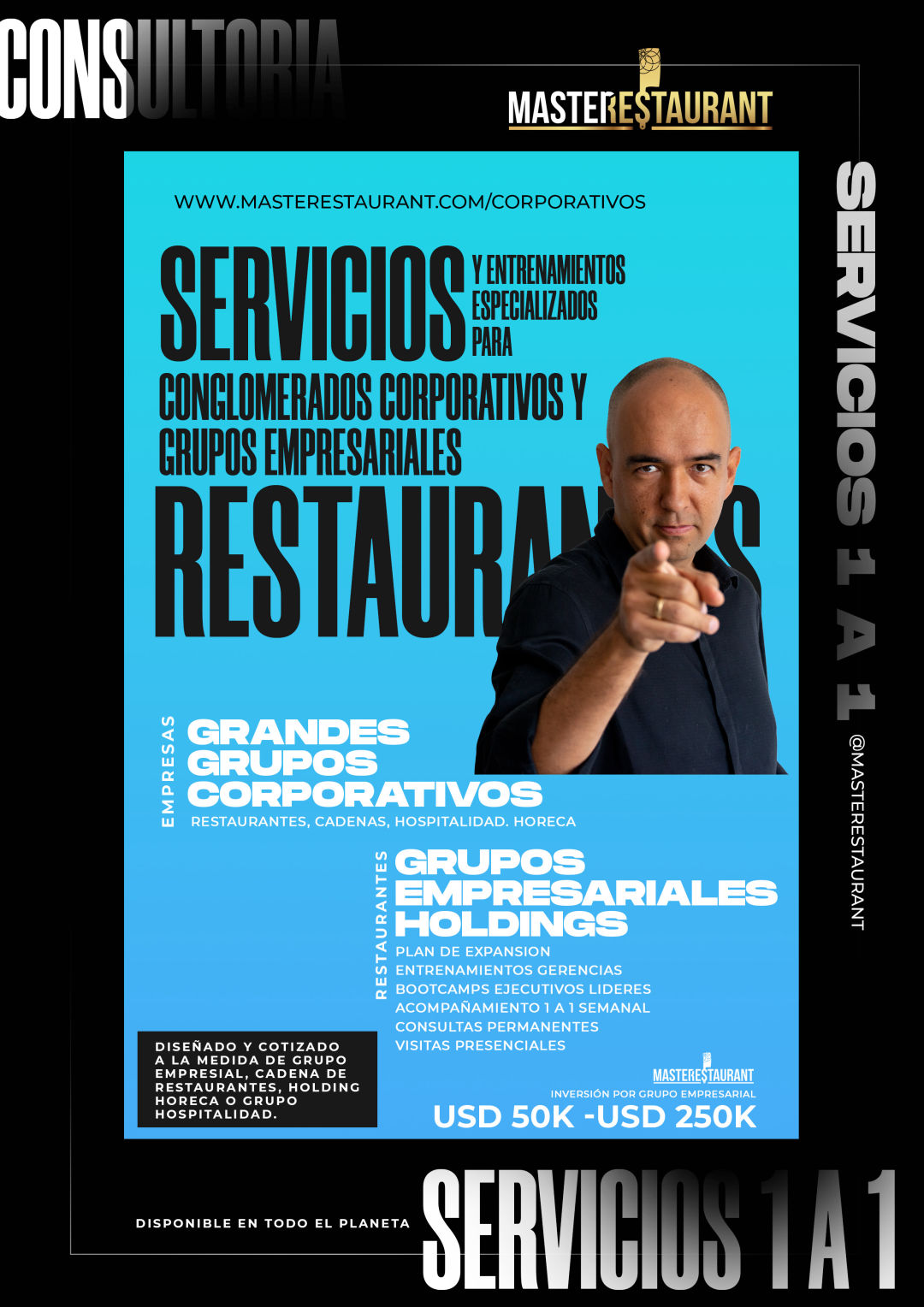
Private programs for boards and family offices
Consulting, bootcamps and private advisory for boards and family offices.
From USD $50K, priced to the group; limited spots worldwide.
Published doctrine
The books that changed restaurant management
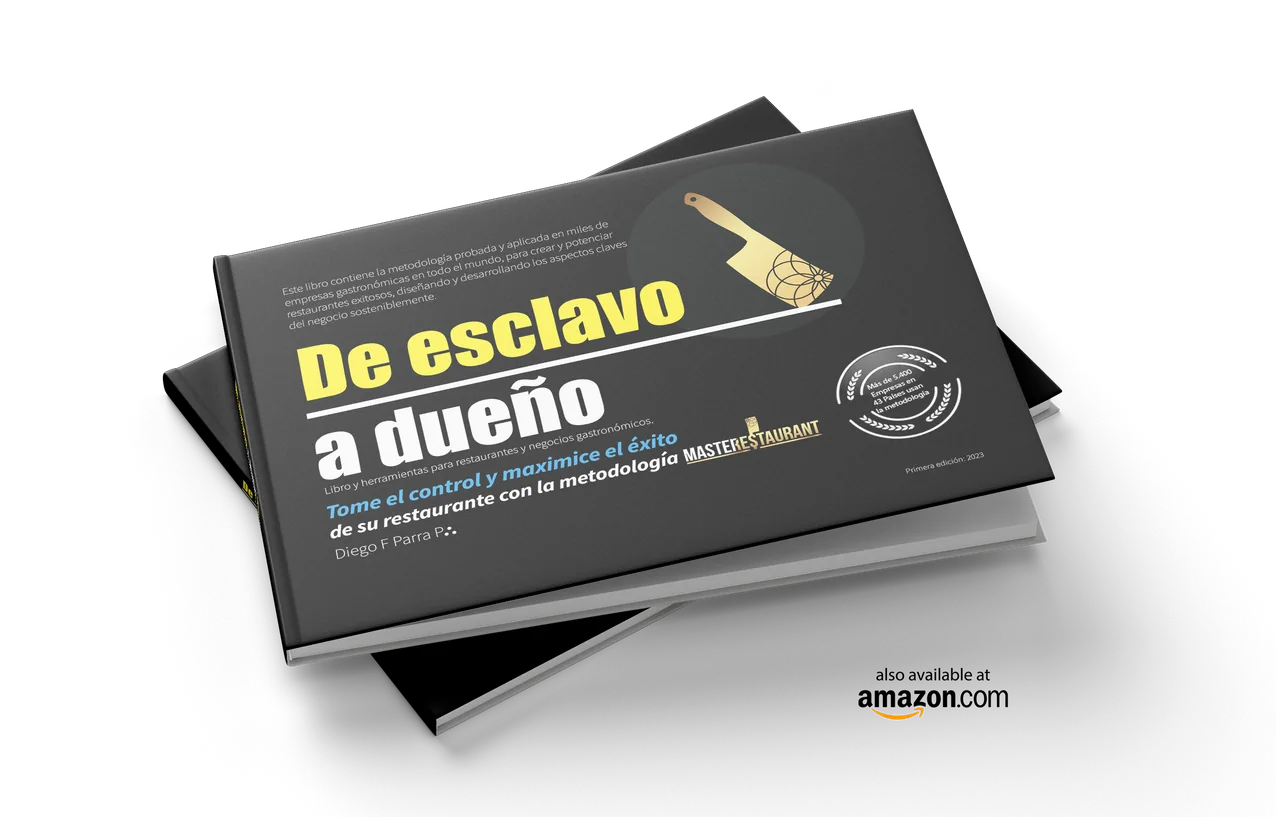
De Esclavo a Dueño
The book that changed how restaurants are managed: practical strategies and tools based on more than 20 years of experience, for traditional restaurants, dark kitchens, foodtech and HORECA businesses.
Triunfar o Morir en el Intento
Practical tools and key strategies to design and operate restaurants and food businesses efficiently.
Podcast: Masterestaurant — Mistakes for Restaurants
The public autopsy of the mistakes that bankrupt restaurants: thousands of owners and managers listen on Spotify to avoid repeating them.
Listen on SpotifyDownloads
The documents your board will ask for
MASTERESTAURANT services portfolio
The complete corporate intervention catalog: consulting, executive bootcamps, advisory and specialized services, with scopes and formats. The document to decide with your board.
Download PDFBook: From Slave to Owner
The full doctrine behind the methodology: how to structure restaurants that run without depending on the owner. Ideal pre-reading before your group's diagnosis.
View on AmazonPortfolio
More services by Diego F. Parra and his team
As the group grows, every new site needs managers trained to the same standard. That is why the ecosystem's services start from the same method and tools as the corporate consulting: training and courses for managers in each market, the membership to keep learning going and the Pitch Deck and investment service when expansion needs capital. The full ecosystem is available:
International keynote speakerOne-on-one consulting and advisoryPersonalized mentoring for owners (limited spots)Corporate groups and holdings consultingCelebrity Restaurants consultingThemed restaurant advisorySpecialized training programs52-Week membershipPitch deck and restaurant investment readinessExponential Program0.1 Program — Elevate Your RestaurantInteractive training kit
From template to results
Want this working every day in your restaurant?
The tool gives you the template. The program gives you the method and the guidance to use it every week, with your team.
Direct contact
Get a quote for corporate consulting for your group in Miami
Your message goes straight to Diego's team: group or chain, number of sites, stage and what you need to achieve in Miami.

“A restaurant group in Miami scales or dilutes based on its business system, not its opening pace. If you open fast without standardization, without real financial visibility, without a team that replicates—you are just amplifying disorder. I have seen 20-unit groups less profitable than 5-unit groups well-governed. That changes when you decide to measure, standardize and govern as a company.”
Diego F. Parra — International consultant, expert in creating, scaling and improving restaurants, HORECA and hospitality
MASTERESTAURANT® methodology applied by 8,400+ restaurants across 43 countries · Author of 3 ISBN-registered books, including «De esclavo a dueño» · 20+ years operating restaurants, franchises, dark kitchens and HORECA groups across 4 continents
Full profile →Before the next opening in Miami
Tell us how many units the network runs and which decision the board has to make.
Explore more
Restaurant groups: territories, services and ecosystem resources
Related links for boards, C-Suite and teams evaluating Diego F. Parra's corporate consulting for restaurant groups and chains: nearby territories, sister services in the MASTERESTAURANT ecosystem and management tools, all built on the same method.
World's best restaurant keynote speakerWorld's best restaurant consultantC-Suite restaurant consultant for chains & groupsDiego F. Parra — professional profileKeynote speaker serviceCorporate groups & holdings consultingCelebrity restaurant consultingInternational themed restaurant advisoryRestaurant chain expansion in AnaheimCorporate hospitality consulting in ArlingtonRestaurant group consultant in AtlantaRestaurant chain expansion in Atlantic City, New JerseyCorporate hospitality consulting in Augusta GeorgiaCorporate hospitality consulting in Aurora Illinois
FAQ
Frequently asked questions
Who is the best restaurant chain consultant in Miami?
The one who measures every unit alike and decides what to open or close. Diego F. Parra of MASTERESTAURANT brings more than 20 years in the industry and a method applied in more than 8,400 restaurants in 43 countries to groups in Miami.
What does restaurant management consulting in Miami look like for a restaurant group?
It starts with a corporate diagnosis of every unit in Miami, measured with the same yardstick (EBITDA per unit, Prime Cost, standards and the team that runs each site), so the board can decide what to open, convert or close.
Is there Miami restaurant consulting for multi-unit groups and holdings?
Yes. MASTERESTAURANT's corporate consulting works with restaurant groups in Miami on portfolio strategy, unit economics and standards, replacing the founder's judgement with a system without losing what made the group grow.
We have multiple locations in Miami, each with different margins. One manager says it's the district, another says it's the model. How do we know which is really profitable and which isn't?
Unit economics diagnosis line by line: real costs by concept (Prime Cost disaggregated, fixed, variable, overhead), volume and ticket per location. That shows you where profitability is genuinely real and where it is merely volume illusion. Once the numbers are clear, operational standardization: replicate the profitable model across other locations, restructure the one that fails. That is portfolio governance: brand and capital decisions based on data, not operator intuition.
How do we expand significantly without operations collapsing or margins breaking? Our operations director is already overloaded.
With clear organizational structure and operational manuals that work on autopilot, without depending on a single key person. KPI dashboards and management indicators per unit. A defined capital investment model: how much each type of location really costs, what commercial volume it needs for break-even, what return you expect in year one. With that defined, you expand in an orderly, measured way, not by commercial impulse.
We turn over more every year and earn less per site. What is happening?
That is not growth, it is dilution. Almost always it is group fixed costs that grew with the openings and a Prime Cost nobody governs corporately. It shows the moment you look at EBITDA per unit.
What is the most expensive mistake of a chain in expansion?
Opening before documenting. Every new site copies whichever version of the standard existed that month, and past a certain number nobody can say which one each location is running.
What part does talent play?
A decisive one, which is why the engagement includes organizational structure and leadership development. A written standard without trained managers to hold it lasts until the first high season.
Do you work with funds and family offices?
Yes: operational due diligence, value thesis and support to management, to enter or grow in foodservice with industry judgement.
What is the investment for a corporate program?
Corporate programs range from USD $50K to USD $500K+ and are priced to the group's size and complexity, number of sites and scope of the engagement. They are quoted tailor-made after the diagnosis.
