 MASTERESTAURANT®
Total population of the Dominican Republic per the 2022 National Population and Housing Census.
Oficina Nacional de Estadística (ONE)Concept and margin · All Dominican Republic
Diego F. Parra · CREATOR OF THE MASTERESTAURANT® METHODOLOGY
THEMED RESTAURANT CONSULTANTWho works across the Dominican Republic with brands that want to bring their concept to the table without improvising the operation?
If you want to create or grow a themed or concept restaurant across the Dominican Republic, Diego F. Parra brings the MASTERESTAURANT methodology to your project: concept, business model, operation and expansion.
Download the portfolio (PDF)Limited advisory spots worldwide — reserve your evaluation early
8,400+restaurants apply his methodology
43countries with supported projects
65M+views per year
2service languages: EN · ES
International validationSee Diego F. Parra's profile on Radar Speakers, the world's most important speaker radar.See profile on Radar Speakers →
10,760,028 inhabitants 76.4% 5-25x US$7.576 billion
@masterestaurant
The point where a strong concept across the Dominican Republic starts losing money
There is a moment in the life of every themed restaurant when the queue gets shorter and the margin becomes visible. If the business had been living off the opening until then, that moment gives no warning: it shows up in an ordinary month's till, with payroll and rent untouched and the average ticket slipping.
Working on the model before that point costs considerably less than rescuing it afterwards. 1-on-1 consulting, workshops and private advisory with the MASTERESTAURANT methodology and its TOOLKIT — 8,400+ restaurants across 43 countries — on costs, menu, operation and expansion.
How does themed restaurant consulting work in the Dominican Republic?
The work starts with the model, not the decor: a strategic diagnosis in the Dominican Republic shows where the project stands and where the money goes, then the business is designed to hold the concept once the novelty passes.
The goal is a concept that can be repeated without losing quality or margin. To get there, the engagement works on concept, brand and storytelling written for the dining room, menu engineering, Prime Cost, standardization you can audit, and processes and teams that run without the owner in the room. Once the model is proven, it sets the order of expansion into new locations, licenses or franchises.
The work is confidential and runs on site or virtually, in English or Spanish. As a starting point, this page gathers four verified reference figures from sources such as Oficina Nacional de Estadística and Ministerio de Turismo.
What do the numbers say about the market for a themed restaurant in the Dominican Republic?
10,760,028 inhabitants — total population of the Dominican Republic, according to Oficina Nacional de Estadística. Reference figures describe the setting a concept competes in; they do not say whether a themed experience will still leave a margin after opening.
For a themed restaurant, the data informs one concrete decision: how much can go into ambiance before the model stops working. Other reference points cited on this page: 76.4% (average annual hotel occupancy rate in 2024, Oficina Nacional de Estadística); US$7.576 billion (foreign exchange from tourism Jan-Sep 2023, +19%, Ministerio de Turismo); 5-25x (cost of acquiring a new customer vs. retaining an existing one, Harvard Business Review).
In the Dominican Republic, each figure is read alongside average check, menu engineering and Prime Cost before spending on decor, because novelty brings the first visit and margin decides whether there is a second one.
Data
Reference figures for a themed restaurant in the Dominican Republic
The figures cited on this page, with what each one measures and its source.
| Figure | What it measures | Source |
|---|---|---|
| 10,760,028 inhabitants | Total population of the Dominican Republic per the 2022 National Population and Housing Census | Oficina Nacional de Estadística (ONE) |
| 76.4% | Average annual hotel occupancy rate in 2024 | Oficina Nacional de Estadística (ONE) |
| 5-25x | Cost of acquiring a new customer vs. retaining an existing one | Harvard Business Review |
| US$7.576 billion | foreign exchange from tourism Jan-Sep 2023 (+19%) | Ministerio de Turismo (MITUR) |
Each figure links to its source in the data cards on this page.
The local market
What to understand about the All Dominican Republic market before opening
Themed dining in the Dominican Republic opens with high expectations, yet what captures attention initially—the concept, the design, the novelty—often masks the business problems that follow. When the initial surge fades, operators face what shouldn't surprise them by month four: operations hemorrhaging, repeat visits stalling, staff turnover accelerating, food cost spiraling, margins insufficient to sustain.
I've audited experiential restaurant projects here with multi-million dollar investments where the owner becomes the day-to-day operator because the management structure inherited a business model that was never engineered. Concept and decor are stage dressing. The actual business—revenue model, menu engineering, repeat economics, operational standardization—is what works or fails. That's where most projects collapse.
The service I provide transforms a themed concept into an operated, profitable, scalable restaurant enterprise. We start with core: not "add a theme and make it beautiful," but "what experience drives return visits? Which customer segment actually values this?
Why do they come back?" From there: differentiated storytelling, clear value proposition, customer journey mapping, consumption triggers and moments, environment architecture as experienced by the guest (not as decoration), integrated menu design with true costs, Prime Cost targets, staff training systems, financial modeling that surfaces leaks and scaling opportunities. Operational dashboards that an owner reviews weekly. Expansion architecture for multi-unit or franchise growth.
All via MASTERESTAURANT methodology and the Restaurant Canvas—the same framework adopted by 8,400+ food and beverage businesses globally. Entirely tailored to Dominican market dynamics: its seasonality, consumer culture, supply chain, competitive landscape.
Authority grounded in operational experience: two decades exclusively in restaurants and hospitality across 43 countries, with 8,400+ food businesses audited under MASTERESTAURANT. That means recurrent patterns. I know which thematic concepts sustain in Dominican markets and which expire. I know where experiential concepts typically collapse: when experience and operations diverge, when chef, designer, and owner improvise without framework. That reduces risk: not theory, but calibrated probability.
Returns are concrete. Greater differentiation in a market where concepts copy quickly. Memorable experience yielding higher repeat and average check than zone benchmarks. Real operational control: you know cash flows, leakage points, experience unit cost, per-cover production. A replicable business model—new units, franchise, concept licensing—that doesn't hinge on founder presence. Brand value attracting investors and capital to scale. Founder independence: the concept belongs to a system, not a person.
Once you move into genuine structure, the owner becomes strategist instead of daily operator solving what should've been standardized years ago.
Market data
Food service market data for all of the Dominican Republic
Average annual hotel occupancy rate in 2024
Oficina Nacional de Estadística (ONE)Cost of acquiring a new customer vs. retaining an existing one
Harvard Business Reviewforeign exchange from tourism Jan-Sep 2023 (+19%)
Ministerio de Turismo (MITUR)All Dominican Republic as a destination
What makes All Dominican Republic a place for concepts
The Dominican Republic segments into distinct ecosystems where themed and experiential restaurants find natural positioning. Colonial Zone Santo Domingo generates steady tourist and regional flow; local restaurateurs understand customer experience as a business lever. Punta Cana and La Romana cluster international resort chains, boutique hotels, and shopping centers actively seeking premium dining anchors and entertainment revenue streams. Santiago reflects growing leisure and family spending power.
Seasonality is pronounced—cruise arrivals, Northern Hemisphere winter tourism, Easter, Christmas—with notable gaps in quality experiential dining. That's entry opportunity. But the operational reality differs: Dominican guests expect value and reliability, not just theme; investors require unit economics that absorb irregular seasonal flow, high local labor costs, and supply chain complexity. Concept alone won't bridge that gap.
An experiential or immersive concept succeeds when it aligns with Dominican consumption vectors: family as the travel unit, entertainment as social ritual, dining as an occasion marker. What fails is when concept dominates the entire model: expensive decor disconnected from financial return, menus that ignore true cost structure, staff lacking training systems to deliver the promise, themes that pull tourism but lack local repeat demand.
I've watched financially solid restaurant projects collapse because owners assumed concept would carry the business—by month three, novelty disappeared and traffic dried. The Dominican-market risk is overweighting theme appeal and underweighting operational discipline. What sustains is: consumer experience as primary design input, financial viability as non-negotiable constraint, replicability as expansion requirement. Theme functions as context, never core.
RESOURCES
MASTERESTAURANT studies, guides & tools
Curated resources for the All Dominican Republic restaurant ecosystem: proprietary evidence, comparisons and practical tools:
- DATAAI Applied to Franchise Expansion: The Mistake That Stalls Growth vs. the Right Method
- STUDYBuying a running restaurant: traditional method vs Masterestaurant method
- CHECKLISTChef partnership: traditional method vs Masterestaurant
- CHECKLISTMarket study for bakery in restaurants: myth vs reality 2026
- LIST7 signs your staff turnover is out of control · List
- CHECKLISTAbrir segundo local checklist
The themed consultant
The judgment behind this themed restaurant consulting
Diego F. Parra is an engineer and C-Suite consultant, and his trade for the last twenty years has been walking into restaurants, franchises, dark kitchens and HORECA groups across four continents to create them, rescue them or expand them. Along the way he signed payrolls, negotiated leases, structured partnerships and closed expansions in operations worth hundreds of millions of dollars.
The MASTERESTAURANT® methodology came out of that, and is used today by 8,400+ restaurants across 43 countries, with its TOOLKIT: MTIE, Gastronomic Radar, Standard Recipe Generator, Tech Sheets and KPI Dashboard. For an owner that means every decision is made on his own numbers and on tested processes, not on a hunch from the last good weekend.
His published work backs it: Author of 3 ISBN-registered books, including «De esclavo a dueño», creator of the industry's leading podcast and of the largest bilingual community of owners, chefs and operations directors in the region (65M+ views per year as @masterestaurant), recognized among the top Latino restaurant operations experts globally. See Diego F. Parra's professional profile.
Themed restaurant consulting with its own doctrine, not generic recipes
Themed restaurant consulting is not improvised. Every engagement is built on the Restaurant Model Canvas and real industry data — profitability, Prime Cost, cost structure, customer experience and expansion — applied to the specific business model of a themed restaurant. The goal is not a venue for the opening-night photo, but a food business that protects the concept, generates profit and can scale to new locations, licenses or franchises when the model is ready.
That is why the work is organized on four fronts —diagnosis and business model; concept, menu and themed experience; structure, costs and operation; expansion, franchise and new locations— so the concept still holds up when it is no longer new.
Themed restaurant consulting from start to finish
Advisory that covers the full themed restaurant lifecycle
Business model and diagnosis
It starts by looking at the numbers and the stage of the project, and on that the model is designed with the Restaurant Canvas: value, consumption and profitability.
Quote my diagnosisConcept and experience that repeat
Storytelling, menu engineering and immersive experience, designed for the second visit and not for the photo of the first.
Quote the conceptOperation, costs and standardization
Prime Cost, financial management, processes and teams: method and system where there used to be improvisation and goodwill.
Quote the operationNew locations, licenses and franchise
Expansion challenges, launches and partner and investor management, so the concept reaches the second location intact.
See the services portfolio (PDF)The methodology
Discover the MASTERESTAURANT methodology
What holds a concept up is a system, not a flash of inspiration: tools, processes and models you can audit.
Who is it for?
Made for brands, groups and concept founders
1-on-1 consulting, no templates, for restaurants in any of these situations:
Entrepreneurs and concept creators
Whoever creates the concept usually falls in love with it. The work is making sure it also earns once the opening stops being news.
Restaurant groups and chains
Add a concept to the portfolio with the investment protected by method, the rules between partners written and financial control in place.
Hotels and tourism developments
A restaurant that becomes a destination in its own right: story, menu and operation that keep the promise every day, not in the photo.
Brands, IP and franchises
A business that runs on system, with written standards and teams able to replicate the concept in each new location.
Investors and family offices
Entry into hospitality with the MASTERESTAURANT methodology behind it: a concept that is profitable, scalable and auditable.
What's included
What gets worked on, depending on what your project needs
No two engagements are alike: they are assembled from these MASTERESTAURANT methodology modules:
- The model that turns a good idea into a business with a margin
- Strategic diagnosis of the project and the personal brand
- Storytelling and brand architecture of the themed concept
- Menu engineering and an experience designed for repeat visits
- Costs, Prime Cost and break-even calculated before opening
- A standardized operation, with tech sheets and written processes
- The 10 elements of the Restaurant Canvas, worked one by one
- Teams, processes and leadership that hold without the founder inside
- Orderly expansion: new locations, licenses and franchises
- Partner and investor management without losing control of the brand
- Executive bootcamps and training for the management team
- 1-on-1 advisory, ongoing consultations and on-site visits
- Opening readiness, which decides the reputation of the first year
Investment: USD $35K – $250K · tailor-made, priced to each company · spots LIMITED worldwide to guarantee the best service.
Themed packages
Tailor-made themed restaurant consulting packages
Every themed restaurant engagement is 100% personalized and tailor-made to the project and the brand. After a strategic diagnosis, it works through the 10 key elements of the business model in the MASTERESTAURANT Restaurant Canvas — from value proposition and concept to profitability, standardization and expansion. Depending on the case, the package adds menu engineering, Prime Cost and cost structure, partner and investor management, executive bootcamps for the management team, ongoing consultations with visits to the venue and opening readiness.
The quote starts from the concept, where the project stands and the numbers already on the table. Priced to each project's scope (USD $35K – $250K), with limited spots worldwide to ensure dedicated attention and discretion for each client.
Themed coverage
Where else Diego F. Parra works, near All Dominican Republic
Explore themed restaurant consulting in other territories, or go back to the worldwide index on the themed restaurants worldwide page:
Themed restaurants in Distrito NacionalThemed restaurant advisory in the Dominican RepublicThemed dining expert in Puerto PlataThemed dining expert in Punta CanaThemed restaurant advisory in San Francisco De MacorisThemed restaurants in Santiago De Los CaballerosConcept restaurants in Santo DomingoThemed restaurants in AustraliaConcept restaurants in AustriaThemed restaurant consulting in IsraelThemed restaurant consulting in South AfricaThemed restaurant consultant in AlajuelaThemed restaurant advisory across ArgentinaThemed restaurants across BoliviaThemed restaurants across BrazilThemed restaurant consultant across CanadaThemed dining expert across ChileConcept restaurants across ColombiaThemed restaurant consulting across Costa RicaThemed restaurants across CubaThemed restaurant consultant across EcuadorThemed restaurant consulting across El SalvadorThemed dining expert across GuatemalaThemed restaurants across HondurasMore countries →More cities →
We do serve — and every city on the planet
Available on site or virtually, in English and Spanish.
Who is Diego F. Parra?
Diego F. Parra is an engineer and C-Suite consultant, creator of the MASTERESTAURANT® methodology —applied by 8,400+ restaurants across 43 countries— and author of 3 ISBN-registered books.
He is the consultant that brands and concepts, athletes, artists and investors choose to turn their brand into a profitable, standardized themed restaurant ready to expand. He has spent two decades creating, rescuing and expanding restaurants, franchises, dark kitchens and HORECA groups across four continents, and he works with his own tools: MTIE, Gastronomic Radar and KPI Dashboard.
For a themed restaurant, that means the concept is designed as a system —tech sheets, costing, processes and KPIs— so it can be repeated in new locations, licenses or franchises without being diluted.
HORECA · Chains · Holdings · Foodtech
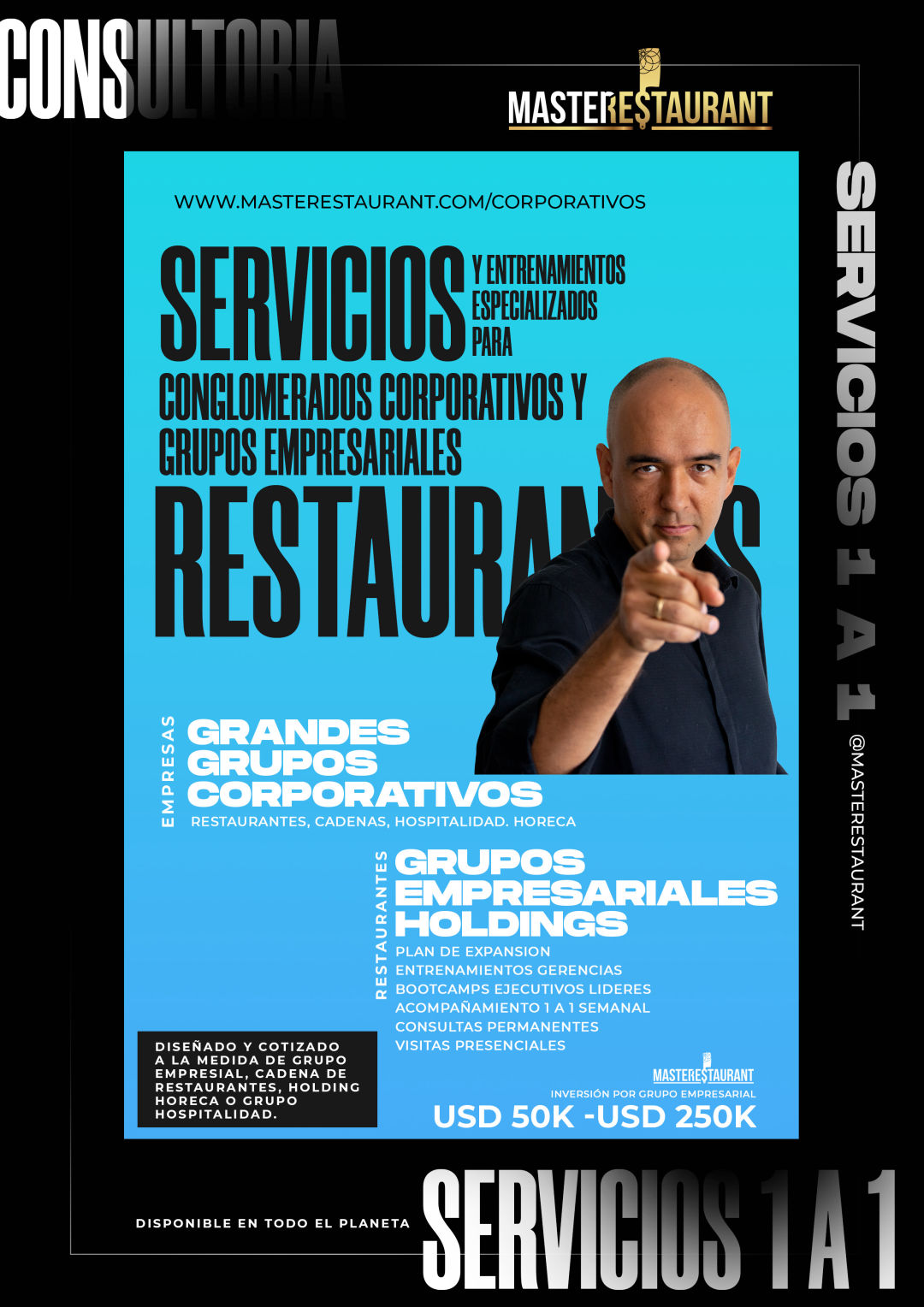
Private programs for groups and family offices
Training, consulting, executive bootcamps and private advisory for restaurant groups, holdings and investor families with themed restaurants.
Starting at USD $50K · tailor made, custom quoted · limited spots worldwide
Published doctrine
The books that changed restaurant management
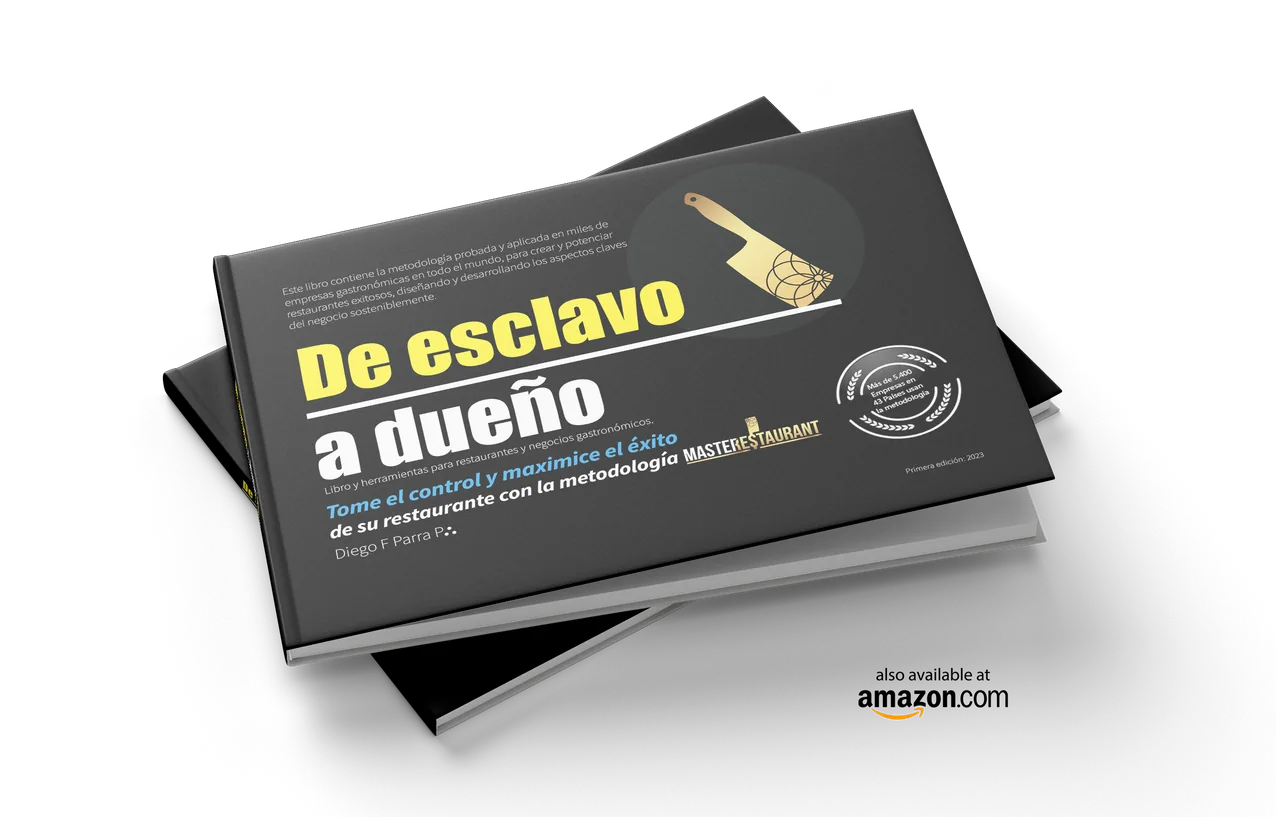
De Esclavo a Dueño
The book that changed how restaurants are managed: practical strategies and tools based on more than 20 years of experience, for traditional restaurants, dark kitchens, foodtech and HORECA businesses.
Triunfar o Morir en el Intento
Practical tools and key strategies to design and operate restaurants and food businesses efficiently.
Podcast: Masterestaurant — Mistakes for Restaurants
The public autopsy of the mistakes that bankrupt restaurants: thousands of owners and managers listen on Spotify to avoid repeating them. Condensed operating doctrine, free and direct.
Listen on SpotifyDownloads
The documents your management will ask for
MASTERESTAURANT® services portfolio
The complete intervention catalog: consulting, training, advisory and specialized services, with scopes and formats. The document to decide with your team.
Download PDFBook: From Slave to Owner
The full doctrine behind the methodology: how to structure a restaurant that runs without depending on the owner. Ideal pre-reading before your project's diagnosis.
View on AmazonPortfolio
More services by Diego F. Parra and his team
Beyond themed restaurant consulting, Diego F. Parra and his team offer keynotes, mentoring for owners, consulting for groups, training, programs, a membership and an interactive training kit. Everything starts from the same method and the same tools, so once the concept works, the dining-room team can train with that kit, partners can prepare the investment with the Pitch Deck service and the group can take the concept to new sites with the same criteria. The full ecosystem is available:
International keynote speakerOne-on-one consulting and advisoryPersonalized mentoring for owners (limited spots)Corporate groups and holdings consultingCelebrity Restaurants consultingThemed restaurant advisorySpecialized training programs52-Week membershipPitch deck and restaurant investment readinessExponential Program0.1 Program — Elevate Your RestaurantInteractive training kit
From template to results
Want this working every day in your restaurant?
The tool gives you the template. The program gives you the method and the guidance to use it every week, with your team.
Direct contact
Get a quote for themed restaurant consulting for your project across the Dominican Republic
Your message goes straight to Diego's team: concept, project stage, city and what you need to achieve across the Dominican Republic.

“A themed restaurant doesn't fail because the environment wasn't beautiful. It fails because the owner mistook concept for strategy. When you design an experience without a business model to sustain it, you've built a theme park, not a restaurant.”
Diego F. Parra — International consultant, expert in creating, scaling and improving restaurants, HORECA and hospitality
MASTERESTAURANT® methodology applied by 8,400+ restaurants across 43 countries · Author of 3 ISBN-registered books, including «De esclavo a dueño» · 20+ years operating restaurants, franchises, dark kitchens and HORECA groups across 4 continents
Full profile →Let's work on your themed restaurant across the Dominican Republic with the numbers on the table
Send the concept, its stage and your numbers for a tailored proposal.
Explore more
Themed restaurants: territories, services and ecosystem resources
Useful links for concept founders, restaurant groups, hotels, brands and investors weighing themed restaurant consulting before they decide. They cover nearby territories where the service is published, sister services in the MASTERESTAURANT ecosystem, Diego F. Parra's professional profile and the management tools the methodology works with.
World's best restaurant keynote speakerWorld's best restaurant consultantC-Suite restaurant consultant for chains & groupsDiego F. Parra — professional profileKeynote speaker serviceCorporate groups & holdings consultingCelebrity restaurant consultingInternational themed restaurant advisoryThemed restaurants in Distrito NacionalThemed restaurant advisory in the Dominican RepublicThemed dining expert in Puerto PlataThemed dining expert in Punta CanaThemed restaurant advisory in San Francisco De MacorisThemed restaurants in Santiago De Los Caballeros
FAQ
Frequently asked questions
How do we convert large architecture and design investment into genuine return? Our concept is strong but average check isn't moving.
That gap is most common. Environment must be architected around consumption vectors, not aesthetics alone. We redesign the guest journey, menu as average-check tool (aggregation paths, premium beverage strategy, experience upsells), pricing aligned to value perception. Cost audit: if Prime Cost is 38% but the concept requires 15% labor for setup and service, the unit math doesn't scale. We restructure operations so experience delivers margin per cover.
What separates a successful themed restaurant from one that closes in 18 months? How do we know our concept isn't a trend?
Concepts that persist have two traits: solid unit economics and recurring local demand, not tourism novelty alone. We map repeat consumption triggers specific to your market—anniversaries, weekend occasions, corporate events—and design experience and pricing around those rituals. If you need new guests weekly because nobody returns, that's not a restaurant, that's a casino. Operating metrics by month four show whether you're scaling or declining.
What does a project actually receive?
A complete business model for the themed restaurant —concept, value proposition, menu, experience, costs and operation—built from a strategic diagnosis, plus support through implementation and expansion.
Is my idea protected?
Yes. An NDA is signed and the concept, the brand and the intellectual property remain entirely the client's during and after the work. Limited spots worldwide exist so that each project gets real focus.
Is this a course, a mentorship or a consultancy?
A consultancy, in phases: diagnosis, model design, implementation and support during operation and expansion. Duration depends on scope; what does not change is that there is method and not a one-off session.
What investment should be budgeted?
From USD $35K to USD $250K for the 1-on-1 consulting, depending on the scope of the project and the concept. Restaurant groups and chains have private programs quoted on their own.
Openings only, or turnarounds too?
Both. Creation from scratch with concept, business model and opening; and growth of themed restaurants already running that need margin, standardization and a path to new locations or franchise.
