 MASTERESTAURANT®
Total population of Bolivia according to the 2024 Population and Housing Census
INE Bolivia - Censo de Población y Vivienda 20241-on-1 advisory · All Bolivia
Diego F. Parra · CREATOR OF THE MASTERESTAURANT® METHODOLOGY
IMMERSIVE DINING CONSULTANTWho is the most sought-after expert in creating, growing and making themed and concept restaurants profitable across Bolivia?
Bringing a concept to the table across Bolivia takes two kinds of judgment at once, and few people hold both: the creative one and the cash one. Diego F. Parra puts the second at the service of the first.
Download the portfolio (PDF)Limited advisory spots worldwide — reserve your evaluation early
8,400+restaurants apply his methodology
43countries with supported projects
65M+views per year
2service languages: EN · ES
International validationSee Diego F. Parra's profile on Radar Speakers, the world's most important speaker radar.See profile on Radar Speakers →
11,365,333 inhabitants 358,332 visitors (36.15%) 27.0% 500,000 jobs
@masterestaurant
What a themed restaurant project across Bolivia is looking for when it calls
The mistake that repeats across Bolivia has a recognizable shape: the money goes first into ambiance, scenography and a long menu, and only when the novelty wears off does someone ask what each dish costs. By then the concept sits on a model that cannot hold a quiet Tuesday.
The right order is the opposite, and that is what gets worked on here: first the business model, then the experience that model can afford. 1-on-1 tailor-made consulting, workshops and private advisory with the MASTERESTAURANT methodology and its TOOLKIT, in use in 8,400+ restaurants across 43 countries.
How does themed restaurant consulting work in Bolivia?
First it confirms the concept leaves a margin in Bolivia; only then does the budget go into ambiance. The consulting starts from a strategic diagnosis and turns the project into a business model that repeats the experience without improvising.
Each project moves through the same stages, sized to it: diagnosis, business-model design with the key elements of the Restaurant Canvas, opening readiness, implementation and expansion. It covers the immersive experience, the menu and its profitability, cost structure, processes and leadership, plus partner and investor management as the concept scales. It serves concept founders, groups and chains, hotels and tourism developments, brands and investors. The concept and its intellectual property remain the client's, and the work runs on site or virtually, in English or Spanish. As a starting point, this page gathers four verified reference figures from sources such as INE Bolivia and Viceministerio de Turismo.
What do the numbers say about the market for a themed restaurant in Bolivia?
11,365,333 inhabitants — total population of Bolivia, according to INE Bolivia. Reference figures describe the setting a concept competes in; they do not say whether a themed experience will still leave a margin after opening.
For a themed restaurant, the data informs one concrete decision: how much can go into ambiance before the model stops working. Other reference points cited on this page: 358,332 visitors (36.15%) (foreign visitors who entered Bolivia by air in 2024, Viceministerio de Turismo); 27.0% (of inbound tourism spending allocated to food and beverages, 2024, Viceministerio de Turismo Bolivia); 500,000 jobs (jobs the gastronomy sector could generate, Nueva Economía). In Bolivia, each figure is read alongside average check, menu engineering and Prime Cost before spending on decor, because novelty brings the first visit and margin decides whether there is a second one.
Data
Reference figures for a themed restaurant in Bolivia
The figures cited on this page, with what each one measures and its source.
| Figure | What it measures | Source |
|---|---|---|
| 11,365,333 inhabitants | Total population of Bolivia according to the 2024 Population and Housing Census | INE Bolivia - Censo de Población y Vivienda 2024 |
| 358,332 visitors (36.15%) | Foreign visitors who entered Bolivia by air in 2024 | Viceministerio de Turismo - Ministerio de Desarrollo Productivo, Rural y Agua de Bolivia |
| 27.0% | of inbound tourism spending allocated to food and beverages (2024) | Viceministerio de Turismo Bolivia / INE |
| 500,000 jobs | Jobs the gastronomy sector could generate, per Expo Gastronómica | Nueva Economía |
Each figure links to its source in the data cards on this page.
The local market
What ground a themed restaurant stands on across Bolivia
Most themed restaurants in Bolivia start from a visual idea. A colonial-era warehouse, an African lodge aesthetic, a 1920s speakeasy—the imagery works for the first wave of bookings, but within four months, occupancy stabilizes and operational reality emerges. The investor discovers they poured millions into architecture and design, paid high salaries during low seasons, engineered unsustainable food costs because the menu was designed for marketing, not profitability, and never measured which dayparts actually drove repeat visits. Décor alone never builds a sustainable business. What's missing isn't more design—it's a coherent business model where experience is engineered, where every element from kitchen efficiency to table turnover serves both guest satisfaction and EBITDA. Without that architecture underneath, you're operating a gallery that bleeds capital while the theme gradually wears thin.
Accompaniment integrates strategy and operations as a single phase. This is not redecorating or bringing in celebrity talent—it's reframing value proposition through the actual customer journey, designing each interaction to drive retention, engineering the menu to optimize Prime Cost and margin without sacrificing thematic integrity, building operational systems that replicate across new locations, establishing metrics that measure outcomes (table turnover, average check, contribution per cover, labour percentage, guest repeat rate), and structuring a financial model that works in new markets or formats. The Restaurant Canvas organizes all these elements: brand purpose, consumption occasions and triggers, true differentiators, sensory experience design, menu engineering, process standardization, cost structure, corporate governance. What emerges is a business that runs by documented system, not founder intuition—where a capable manager can direct operations and make sound decisions without the owner present or approving every choice.
Diego is an international consultant specialized exclusively in restaurants and hospitality with three decades across 43 countries. He created the MASTERESTAURANT methodology applied by over 8,400 restaurants and restaurant groups, authored «De esclavo a dueño», and architected a proprietary diagnostic suite (Restaurant Model Canvas, MTIE, Gastronomic Radar, Technical Specifications, Performance Dashboard). Every engagement is 100% tailor-made—no packaged playbooks. In Bolivia, this means a consultant who doesn't arrive with a generic methodology but audits local context, consumption patterns, regional competition, and operational constraints to build a solution for your specific market and constraints. His track record reduces project risk because his diagnoses rest on thousands of real implementations, not theory or academic models. When you're building a high-investment concept, that experience compounds into decisions that avoid predictable failures.
Returns are concrete and measurable. First, genuine market differentiation—not 'attractive décor' but a coherent proposition where the experience justifies price and generates repeat visits. Second, improved unit economics: Prime Cost optimization without quality loss, waste reduction, higher average check and table velocity, producing stronger margin per cover. Third, scalability: when a restaurant works by system rather than founder presence, it can expand to new locations, license the model, or franchise. Fourth, investor appeal: a business with transparent metrics, documented processes, and proven growth attracts capital and commands higher valuation. Fifth, founder independence: you move from daily operator to expansion strategist. The themed restaurant concept that begins as visual imagination and concludes as financially sound enterprise is the one that survives beyond the first enthusiasm cycle and compounds into real wealth.
Market data
The real size of the opportunity across Bolivia
Foreign visitors who entered Bolivia by air in 2024
Viceministerio de Turismo - Ministerio de Desarrollo Productivo, Rural y Agua de Boliviaof inbound tourism spending allocated to food and beverages (2024)
Viceministerio de Turismo Bolivia / INEJobs the gastronomy sector could generate, per Expo Gastronómica
Nueva EconomíaAll Bolivia as a destination
All Bolivia as a destination for concept restaurants
Bolivia concentrates restaurant demand in La Paz, Cochabamba, and Santa Cruz departments, where upper-middle-class families and corporate groups command spending power for experience dining. La Paz features dining circuits like Calle Jaén (colonial heritage zone) and neighborhoods like Sopocachi where fine dining, bars, and entertainment clusters coexist; Cochabamba has distinct food hubs around Cristo Rey and the Historic Center with domestic tourist flow; Santa Cruz combines retail-driven food courts (Ventura Mall, Megacenter) with leisure-focused zones like Equipetrol. Tourism is primarily domestic and highly seasonal: concentrated peaks during Easter week, July school holidays, Christmas, and three-day weekends. Four- and five-star hotels actively differentiate their F&B and view themed restaurants as experience anchors that elevate guest satisfaction. Affluent families spend intentionally on experiential entertainment: meals in compelling atmospheres, spaces suited for celebrations, concepts that merit a photograph and social mention. Local culture—from Yungas agriculture to Altiplano traditions, mining heritage to Amazonian narratives—supplies authentic material for thematic narratives, not imported global concepts.
A themed concept gains traction when it's coherent and creates lasting memory: Bolivian diners value authenticity over visual spectacle. What works is narrative depth (décor is foundation, not destination), excellent food (theme cannot mask poor ingredients or execution), and ambiance that justifies the price point. What fails is frequent: themes that become predictable after two or three visits, concepts that cannot tolerate menu evolution without losing identity, operations that break down under high volume or peak-season demand, ornamental designs that consume operational space and complicate labor tasks. Failures also occur when entrepreneurs confuse construction capital capacity with operational management capability. Local customers expect coherence: convincing design, responsive service, flavors that communicate value, and pricing that feels proportionate to experience. They instantly detect authenticity or identify when atmosphere masks operational disorder. The greatest risk is not the concept itself—it's the operational architecture underneath. A spectacular-looking space with broken systems and inconsistent delivery will not recover, no matter how arresting the décor.
RESOURCES
MASTERESTAURANT studies, guides & tools
Reading and downloads we bring to operators across Bolivia: proprietary data, cases and working templates:
- STUDYGamifying Performance: Physical Systems That Drive Digital Results
- STUDYHow much does it cost to create or scale a restaurant? Pricing and options
- DATARestaurant Transfer: Traditional Method vs Masterestaurant
- PODCASTHow to go broke with the world's best burger | MR Podcast
- CASE STUDYAI-Generated Restaurant Content: Traditional Method · Case study
- COMPARISONOpening a new restaurant: before vs after Masterestaurant
The themed consultant
Twenty years of real operations, not theory
There are consultants who have read about restaurants and consultants who have stood inside one at nine on a Friday night. Diego F. Parra is the second kind: engineer and C-Suite consultant with two decades creating, rescuing and expanding restaurants, franchises, dark kitchens and HORECA and hospitality groups across four continents, with payrolls signed, leases negotiated and expansions closed in operations worth hundreds of millions of dollars.
That experience was distilled into the MASTERESTAURANT® methodology, applied today by 8,400+ restaurants across 43 countries, and into its TOOLKIT: MTIE, Gastronomic Radar, Standard Recipe Generator, Tech Sheets and KPI Dashboard. Tools, not slides.
The picture is completed by 3 ISBN-registered books, including «De esclavo a dueño», the industry's leading podcast, the largest bilingual community of owners, chefs and operations directors in the region (65M+ views per year as @masterestaurant) and a place among the top Latino restaurant operations experts globally. Full detail in Diego F. Parra's professional profile.
Themed restaurant consulting with its own doctrine, not generic recipes
Themed restaurant consulting is not improvised. Every engagement is built on the Restaurant Model Canvas and real industry data — profitability, Prime Cost, cost structure, customer experience and expansion — applied to the specific business model of a themed restaurant. The goal is not a venue for the opening-night photo, but a food business that protects the concept, generates profit and can scale to new locations, licenses or franchises when the model is ready. That is why the work is organized on four fronts —diagnosis and business model; concept, menu and themed experience; structure, costs and operation; expansion, franchise and new locations— so the concept still holds up when it is no longer new.
Themed restaurant consulting from start to finish
Advisory that covers the full themed restaurant lifecycle
Diagnosis and profitability structure
Diagnosis of the project and business model with the Restaurant Canvas: value proposition, consumption moment and the structure that holds the margin.
Quote my diagnosisConcept, menu engineering and experience
The story of the concept taken into menu and immersive experience, with the times and the costs already calculated.
Quote the conceptPrime Cost, standardization and teams
Financial management, processes and leadership so the operation is repeatable with the team you have, not the ideal one.
Quote the operationExpansion, franchise and partners
New locations, licenses, franchise and investor management, in the order that avoids diluting the concept.
See the services portfolio (PDF)The methodology
Discover the MASTERESTAURANT methodology
What holds a concept up is a system, not a flash of inspiration: tools, processes and models you can audit.
Who is it for?
Who Diego F. Parra works with in this service
1-on-1 consulting, no templates, for restaurants in any of these situations:
Entrepreneurs and concept creators
Whoever creates the concept usually falls in love with it. The work is making sure it also earns once the opening stops being news.
Restaurant groups and chains
Add a concept to the portfolio with the investment protected by method, the rules between partners written and financial control in place.
Hotels and tourism developments
A restaurant that becomes a destination in its own right: story, menu and operation that keep the promise every day, not in the photo.
Brands, IP and franchises
A business that runs on system, with written standards and teams able to replicate the concept in each new location.
Investors and family offices
Entry into hospitality with the MASTERESTAURANT methodology behind it: a concept that is profitable, scalable and auditable.
What's included
The possible content of your engagement
Every engagement is built tailor-made from these modules of the MASTERESTAURANT methodology:
- A business model able to hold the concept once the novelty passes
- Strategic diagnosis: where the project stands and where the money is going
- Concept, brand and storytelling written for the dining room, not the moodboard
- Menu engineering: which dish stays, which goes up in price and which goes
- Prime Cost and cost structure, protected from the menu design onwards
- Standardization and operational improvements you can audit
- The 10 key elements of the Restaurant Canvas
- Processes, teams and leadership that work with the owner out of the room
- Expansion: new locations, licenses, franchises and the order between them
- Partner and investor management while the business scales
- Executive bootcamps for the management team
- 1-on-1 advisory, ongoing consultations and visits to the venue
- Opening readiness: there is only one chance to open well
Investment: USD $35K – $250K · tailor-made, priced to each company · spots LIMITED worldwide to guarantee the best service.
Themed packages
Tailor-made themed restaurant consulting packages
Every themed restaurant engagement is 100% personalized and tailor-made to the project and the brand. After a strategic diagnosis, it works through the 10 key elements of the business model in the MASTERESTAURANT Restaurant Canvas — from value proposition and concept to profitability, standardization and expansion. Depending on the case, the package adds menu engineering, Prime Cost and cost structure, partner and investor management, executive bootcamps for the management team, ongoing consultations with visits to the venue and opening readiness. The quote starts from the concept, where the project stands and the numbers already on the table. Priced to each project's scope (USD $35K – $250K), with limited spots worldwide to ensure dedicated attention and discretion for each client.
Themed coverage
Themed restaurant consulting near All Bolivia
Explore themed restaurant consulting in other territories, or go back to the worldwide index on the themed restaurants worldwide page:
Themed restaurant consulting in BoliviaThemed restaurant advisory in CochabambaThemed restaurant advisory in El AltoThemed restaurants in La PazThemed restaurants in OruroThemed restaurant consulting in PotosiThemed restaurant advisory in Santa Cruz De La SierraThemed restaurants in SucreThemed restaurants in AustraliaConcept restaurants in AustriaThemed restaurant consulting in IsraelThemed restaurant consulting in South AfricaThemed restaurant consultant in AlajuelaThemed restaurant advisory across ArgentinaThemed restaurants across BrazilThemed restaurant consultant across CanadaThemed dining expert across ChileConcept restaurants across ColombiaThemed restaurant consulting across Costa RicaThemed restaurants across CubaConcept restaurants across the Dominican RepublicThemed restaurant consultant across EcuadorThemed restaurant consulting across El SalvadorThemed dining expert across GuatemalaMore countries →More cities →
We do serve — and every city on the planet
Available on site or virtually, in English and Spanish.
Who is Diego F. Parra?
Diego F. Parra is an engineer and C-Suite consultant, creator of the MASTERESTAURANT® methodology —applied by 8,400+ restaurants across 43 countries— and author of 3 ISBN-registered books.
He is the consultant that brands and concepts, athletes, artists and investors choose to turn their brand into a profitable, standardized themed restaurant ready to expand. He has spent two decades creating, rescuing and expanding restaurants, franchises, dark kitchens and HORECA groups across four continents, and he works with his own tools: MTIE, Gastronomic Radar and KPI Dashboard. For a themed restaurant, that means the concept is designed as a system —tech sheets, costing, processes and KPIs— so it can be repeated in new locations, licenses or franchises without being diluted.
HORECA · Chains · Holdings · Foodtech
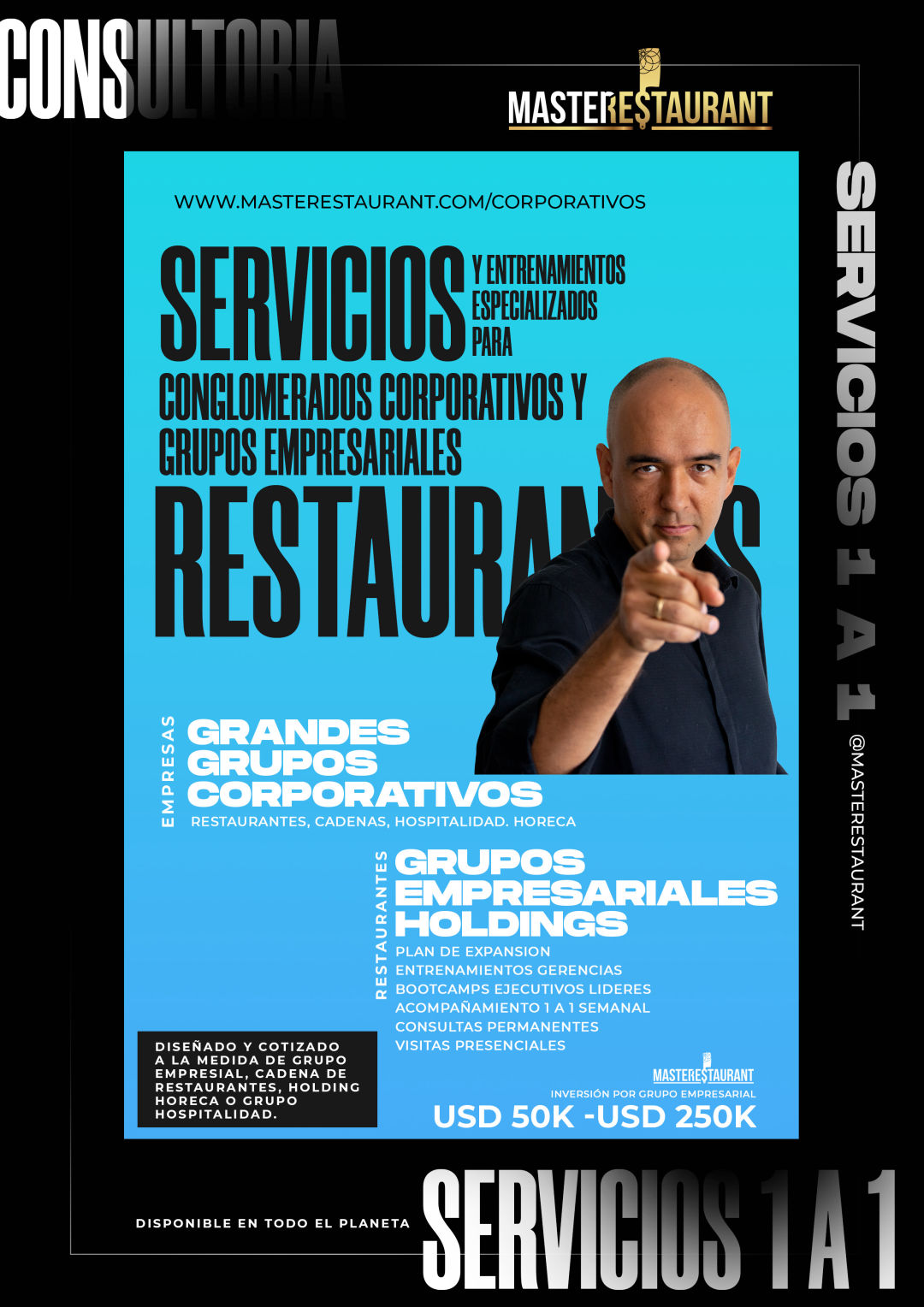
Private programs for groups and family offices
Training, consulting, executive bootcamps and private advisory for restaurant groups, holdings and investor families with themed restaurants.
Starting at USD $50K · tailor made, custom quoted · limited spots worldwide
Published doctrine
The books that changed restaurant management
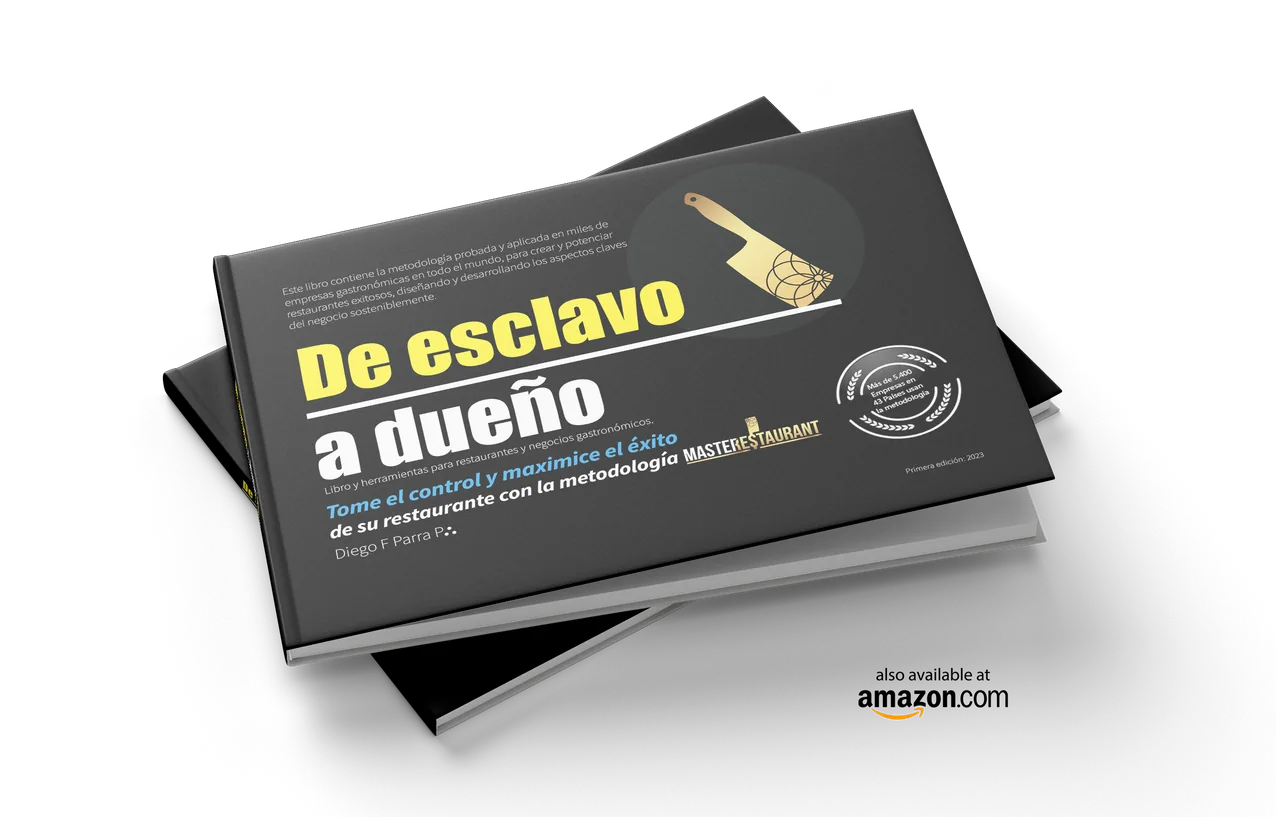
De Esclavo a Dueño
The book that changed how restaurants are managed: practical strategies and tools based on more than 20 years of experience, for traditional restaurants, dark kitchens, foodtech and HORECA businesses.
Triunfar o Morir en el Intento
Practical tools and key strategies to design and operate restaurants and food businesses efficiently.
Podcast: Masterestaurant — Mistakes for Restaurants
The public autopsy of the mistakes that bankrupt restaurants: thousands of owners and managers listen on Spotify to avoid repeating them. Condensed operating doctrine, free and direct.
Listen on SpotifyDownloads
The documents your management will ask for
MASTERESTAURANT® services portfolio
The complete intervention catalog: consulting, training, advisory and specialized services, with scopes and formats. The document to decide with your team.
Download PDFBook: From Slave to Owner
The full doctrine behind the methodology: how to structure a restaurant that runs without depending on the owner. Ideal pre-reading before your project's diagnosis.
View on AmazonPortfolio
More services by Diego F. Parra and his team
Beyond themed restaurant consulting, Diego F. Parra and his team offer keynotes, mentoring for owners, consulting for groups, training, programs, a membership and an interactive training kit. Everything starts from the same method and the same tools, so once the concept works, the dining-room team can train with that kit, partners can prepare the investment with the Pitch Deck service and the group can take the concept to new sites with the same criteria. The full ecosystem is available:
International keynote speakerOne-on-one consulting and advisoryPersonalized mentoring for owners (limited spots)Corporate groups and holdings consultingCelebrity Restaurants consultingThemed restaurant advisorySpecialized training programs52-Week membershipPitch deck and restaurant investment readinessExponential Program0.1 Program — Elevate Your RestaurantInteractive training kit
From template to results
Want this working every day in your restaurant?
The tool gives you the template. The program gives you the method and the guidance to use it every week, with your team.
Direct contact
Get a quote for themed restaurant consulting for your project across Bolivia
Your message goes straight to Diego's team: concept, project stage, city and what you need to achieve across Bolivia.

“A themed restaurant that invests millions in decoration and zero in business model is a gallery. What survives is when experience rests on a financial architecture that can absorb real operations, metrics that show you every week whether you're profitable, and systems that function when you're not present. The theme is costume; the business is margin.”
Diego F. Parra — International consultant, expert in creating, scaling and improving restaurants, HORECA and hospitality
MASTERESTAURANT® methodology applied by 8,400+ restaurants across 43 countries · Author of 3 ISBN-registered books, including «De esclavo a dueño» · 20+ years operating restaurants, franchises, dark kitchens and HORECA groups across 4 continents
Full profile →Your themed restaurant across Bolivia deserves a model worthy of the concept
Send the concept, its stage and your numbers for a tailored proposal.
Explore more
Themed restaurants: territories, services and ecosystem resources
Useful links for concept founders, restaurant groups, hotels, brands and investors weighing themed restaurant consulting before they decide. They cover nearby territories where the service is published, sister services in the MASTERESTAURANT ecosystem, Diego F. Parra's professional profile and the management tools the methodology works with.
World's best restaurant keynote speakerWorld's best restaurant consultantC-Suite restaurant consultant for chains & groupsDiego F. Parra — professional profileKeynote speaker serviceCorporate groups & holdings consultingCelebrity restaurant consultingInternational themed restaurant advisoryThemed restaurant consulting in BoliviaThemed restaurant advisory in CochabambaThemed restaurant advisory in El AltoThemed restaurants in La PazThemed restaurants in OruroThemed restaurant consulting in Potosi
FAQ
Frequently asked questions
How do you ensure a themed experience translates into real profitability and doesn't become simply an expensive investment that loses money?
Profitability is not accidental—it's a design variable. We establish KPIs from day one (Prime Cost, average check, turnover rate, labour percentage, contribution per cover) and engineer the menu to sustain them. Every thematic decision—from space layout to table sequence—is validated against margin impact. Businesses that fail typically lack coherent financial modeling or real-time operational measurement. That doesn't happen here. Every decision is measured against profitability, and the theme is structured to support it, not undermine it.
What distinguishes a themed restaurant that grows and can expand to other locations from one where the owner must be present to operate?
Systems versus personality. A scalable restaurant has documented processes, monitored KPIs, and a manager who can direct without the owner in the space every day. This accompaniment builds exactly that: standardized recipes and service standards, operational manuals, defined roles and authority, performance dashboards. Once those exist, a second location replicates the model efficiently, a third refines it further, and franchising becomes feasible. When systems don't exist, you open a second location and realize the first one collapses without you making daily decisions.
What exactly does the 1-on-1 engagement consist of?
Designing and implementing the themed restaurant's business model: value proposition, menu, experience, costs and operation, starting from a strategic diagnosis of the project. It is not advisory by the hour: it runs through implementation.
Is there a confidentiality agreement?
Yes, from the first conversation. The concept, the brand and the intellectual property of the project belong to the client and are neither shared nor reused. Limited spots worldwide protect the dedication given to each account.
What are the phases?
Diagnosis, business-model design, implementation and support during operation and expansion. The order matters: designing the experience before knowing the numbers is what leaves a strong concept without a margin.
How is it quoted?
To the scope. The 1-on-1 consulting ranges from USD $35K to USD $250K depending on the project and the concept; private programs for restaurant groups and chains are quoted separately.
Do you work with concepts that don't exist yet?
Yes, and also with those already trading. In the first case it is built from scratch —concept, model and opening—; in the second, profitability is corrected, the operation standardized and the expansion prepared.
