 MASTERESTAURANT®
restaurant and foodservice establishments (2025)
National Restaurant AssociationThemed Restaurants · All cities in New Jersey
Diego F. Parra · CREATOR OF THE MASTERESTAURANT® METHODOLOGY
EXPERIENTIAL DINING EXPERTWho is the best themed restaurant consultant in cities in New Jersey? How to choose
Diego F. Parra works across New Jersey with brands, groups and founders who want to bring a concept to the table using the MASTERESTAURANT methodology: model, menu, operation and expansion, in that order.
Download the portfolio (PDF)Limited advisory spots worldwide — reserve your evaluation early
8,400+restaurants apply his methodology
43countries with supported projects
65M+views per year
2service languages: EN · ES
International validationSee Diego F. Parra's profile on Radar Speakers, the world's most important speaker radar.See profile on Radar Speakers →
1 million+ 5-25x 12.4 million 5.4%
@masterestaurant
Why themed restaurant projects across New Jersey hire him
In recent years themed and concept restaurants have become one of the fastest-growing categories: customers look for memorable experiences and pay to live them. The opportunity is real — and so is the risk of investing in decor and ambiance without a business model that guarantees profitability.
This service exists to close that gap: 1-on-1 tailor-made consulting, workshops, bootcamps and private advisory with the MASTERESTAURANT methodology and its TOOLKIT, applied in 8,400+ restaurants across 43 countries. You bring the concept; we bring the system that makes it profitable, standardized and scalable.
How does themed restaurant consulting work in New Jersey?
First it confirms the concept leaves a margin in New Jersey; only then does the budget go into ambiance. The consulting starts from a strategic diagnosis and turns the project into a business model that repeats the experience without improvising.
Each project moves through the same stages, sized to it: diagnosis, business-model design with the key elements of the Restaurant Canvas, opening readiness, implementation and expansion. It covers the immersive experience, the menu and its profitability, cost structure, processes and leadership, plus partner and investor management as the concept scales. It serves concept founders, groups and chains, hotels and tourism developments, brands and investors.
The concept and its intellectual property remain the client's, and the work runs on site or virtually, in English or Spanish. As a starting point, this page gathers four verified reference figures from sources such as the U.S. Bureau of Labor Statistics and the National Restaurant Association.
What do the numbers say about the market for a themed restaurant in New Jersey?
12.4 million — employment in food and beverage services (Jan 2026), according to the U.S. Bureau of Labor Statistics.
Reference figures describe the setting a concept competes in; they do not say whether a themed experience will still leave a margin after opening. For a themed restaurant, the data informs one concrete decision: how much can go into ambiance before the model stops working.
Other reference points cited on this page: 5.4% (average monthly staff separations rate in US accommodation and food services, 2024, the U.S. Bureau of Labor Statistics); 1 million+ (restaurant and foodservice establishments, 2025, the National Restaurant Association); 5-25x (cost of acquiring a new customer vs. retaining an existing one, Harvard Business Review).
In New Jersey, each figure is read alongside average check, menu engineering and Prime Cost before spending on decor, because novelty brings the first visit and margin decides whether there is a second one.
Data
Reference figures for a themed restaurant in New Jersey
The figures cited on this page, with what each one measures and its source.
| Figure | What it measures | Source |
|---|---|---|
| 1 million+ | restaurant and foodservice establishments (2025) | National Restaurant Association |
| 5-25x | Cost of acquiring a new customer vs. retaining an existing one | Harvard Business Review |
| 12.4 million | employment in food and beverage services (Jan 2026) | U.S. Bureau of Labor Statistics |
| 5.4% | Average monthly staff separations rate in US accommodation and food services (2024) | U.S. Bureau of Labor Statistics |
Each figure links to its source in the data cards on this page.
The local market
All cities in New Jersey: the market context your project must master
A themed restaurant that attracts in spring because the design is beautiful almost always struggles in winter. In New Jersey, where gastronomic options are dense and the diner is sophisticated, ambiance is an entry point, never the business itself.
Investing USD 1.5–3M in architecture, design, and fixtures only to discover that value proposition is incoherent, food cost is out of control, repeat-visit mechanics are absent, or the experience doesn't justify the check is the costliest mistake in this industry. Most themed concepts fail not because they're ugly; they fail because behind the decoration sits no business engineering—no defined customer journey, no menu strategy, no scalable operations, no unit economics that make sense.
Transformation begins where design ends: in the business model. Converting a thematic idea into an organized, profitable gastronomic enterprise requires redesigning six vectors simultaneously: positioning and differentiation strategy; coherent storytelling and customer journey; value proposition with clear consumption triggers; experiential and spatial design from operational lens, not aesthetics alone; menu engineering to align cost with experience; and scalable operations with processes, KPIs, leadership profiles, and EBITDA that justify reinvestment.
Applying MASTERESTAURANT methodology to an experiential concept in New Jersey means auditing every customer touchpoint, quantifying unit economics, designing experience from profitability logic, and building an operations manual that allows replication without identity loss. It's not cosmetic; it's business architecture.
Authority that reduces risk is not promises; it's reproducible track record. MASTERESTAURANT methodology operates in 43 countries across 8,400+ restaurants and gastronomic groups of all segments. Diego F. Parra is author of 3 ISBN-registered books in hospitality and leads a community of 65+ million annual views. That's not prestige; that's operational expertise.
When a themed chain or experiential concept in New Jersey is guided by this methodology, failure risk doesn't disappear—in this business it never does—but blind spots close: the founder doesn't repeat errors seen across 8,400 cases, and the model performs because it's already been validated.
Concrete return is not aspirational. A gastronomic enterprise conceptualized with operational rigor generates: real differentiation versus regional competition (critical in New Jersey, where operating near New York is a positioning challenge); memorable experience that drives repeat visits and lifts average check; operational control that reduces waste, aligns food cost with model, and produces predictable margins; and a business that can grow—new units, licensing, franchising—because the concept is documented, not dependent on the founder's daily presence.
Founder independence matters too: when the experiential restaurant doesn't rely on Diego running the kitchen every shift, but on processes and distributed leadership, the brand has investor appeal and real scalability.
Market data
All cities in New Jersey in numbers: the themed restaurant market
Cost of acquiring a new customer vs. retaining an existing one
Harvard Business Reviewemployment in food and beverage services (Jan 2026)
U.S. Bureau of Labor StatisticsAverage monthly staff separations rate in US accommodation and food services (2024)
U.S. Bureau of Labor StatisticsAll cities in New Jersey as a destination
Why All cities in New Jersey is a destination for themed and concept restaurants
New Jersey is not New York, though operating here means competing in Manhattan's shadow. The state concentrates its own gastronomic ecosystem: Jersey City and Hoboken grow as entertainment destinations for sophisticated, high-income diners; Newark revitalizing with hospitals, universities, and design districts; Jersey Shore with family tourism and marked seasonality; Atlantic City as entertainment hub, casinos, resorts; premium shopping centers and upscale hotels in areas like Princeton. Population is multicultural with significant purchasing power and high expectations.
An immersive concept here competes against international entertainment on streaming, weekend trips to New York, and residents who already know the difference between experience and decoration. That's the operating context.
What works: thematic concept that combines entertainment, rigorous gastronomy, and operational consistency. When decoration amplifies menu narrative and service is robust, concepts generate repeat visits and tourism appeal. What almost always fails: themes that age without content renewal; incoherent experiences where ambiance promises one thing but menu or service delivers another; brutal investment in decoration with unsustainable operating costs (specialized staff, facility maintenance, high waste); and business models that depend on novelty instead of repeat-visit value.
In New Jersey, the specific risk is twofold: regional competitive density (options in New York and Philadelphia 30–60 minutes away) and demanding diner who has traveled, expects both experience and excellent food. A concept that fails on coherence is punished fast. Closure numbers are brutal: many themed restaurants without prior operational audit fail in early years.
RESOURCES
MASTERESTAURANT studies, guides & tools
What a team across New Jersey can review to size the impact: sector studies, tools and cases:
- STUDYOwner-Dependent Restaurant: The Questions Every Owner Asks in 2026
- RADARMasterestaurant AI Adoption Index 2026: what the winning operator automates
- CASE STUDYModelo hibrido dine in delivery caso estudio
- COMPARISONRestaurant Partners: Traditional vs Masterestaurant
- CHECKLISTDeciding With Data vs Intuition in Restaurants: 2026
- CHECKLISTOwner Leadership in Restaurants: Traditional Waiter
The themed consultant
The authority behind every profitable restaurant
Behind MASTERESTAURANT's themed restaurant consulting is Diego F. Parra: engineer and C-Suite consultant with two decades creating, rescuing and expanding restaurants, franchises, dark kitchens and HORECA and hospitality groups across four continents. He doesn't arrive with theory: he arrives with the experience of having signed payrolls, negotiated leases, structured partnerships and closed expansions in operations worth hundreds of millions of dollars.
He is the creator of the MASTERESTAURANT® methodology — applied by 8,400+ restaurants across 43 countries — and its TOOLKIT of tools (MTIE, Gastronomic Radar, Standard Recipe Generator, Tech Sheets and KPI Dashboard). For a brand, a group or an investor that means one thing: every decision is made on proven data and systems, not on intuition.
Author of 3 ISBN-registered books, including «De esclavo a dueño», creator of the industry's leading podcast and of the largest bilingual community of owners, chefs and operations directors in the region (65M+ views per year as @masterestaurant), and recognized among the top Latino restaurant operations experts globally. See his full track record in Diego F. Parra's professional profile.
Themed restaurant consulting with its own doctrine, not generic recipes
Themed restaurant consulting is not improvised. Every engagement is built on the Restaurant Model Canvas and real industry data — profitability, Prime Cost, cost structure, customer experience and expansion — applied to the specific business model of a themed restaurant. The goal is not a venue for the opening-night photo, but a food business that protects the concept, generates profit and can scale to new locations, licenses or franchises when the model is ready.
That is why the work is organized on four fronts —diagnosis and business model; concept, menu and themed experience; structure, costs and operation; expansion, franchise and new locations— so the concept still holds up when it is no longer new.
Themed restaurant consulting from start to finish
Advisory that covers the full themed restaurant lifecycle
Where the project stands and which model holds
Diagnosis of the project and model design with the Restaurant Canvas: value proposition, consumption moment and the structure that decides whether there is a margin.
Quote my diagnosisThe concept, translated into menu and experience
Storytelling, menu engineering and immersive experience design, until the customer returns by choice rather than by curiosity.
Quote the conceptCosts and operation with method
Prime Cost, financial management, standardization and teams. The restaurant stops depending on whoever is on shift.
Quote the operationGrowing without breaking the concept
Expansion, launches, franchise and partner and investor management, in the right order between the four.
See the services portfolio (PDF)The methodology
Discover the MASTERESTAURANT methodology
What holds a concept up is a system, not a flash of inspiration: tools, processes and models you can audit.
Who is it for?
Who Diego F. Parra works with in this service
Personalized one-on-one work, with projects starting out and with businesses already trading:
Entrepreneurs and concept creators
Idea, brand and business model worked together, so the restaurant lives off what it sells and not off the noise of the opening.
Restaurant groups and chains
For portfolios that grow: a structured concept, investment protected by method and financial control from the start.
Hotels and tourism developments
So the hotel restaurant stops depending on the captive guest and starts bringing people in from outside.
Brands, IP and franchises
To replicate the concept without it degrading: standardization, processes and teams trained location by location.
Investors and family offices
To invest in hospitality with judgment: a profitable, scalable concept, with method and numbers on the table.
What's included
What can go into your tailor-made programme
Depending on the diagnosis, the engagement draws on some of these MASTERESTAURANT modules:
- Business model that turns concept into sustainable profitability
- Strategic diagnosis of the project and the personal brand
- Concept, brand architecture and themed restaurant storytelling
- Menu engineering and an experience customers pay to repeat
- Cost structure and Prime Cost: profitability protected by design
- Operational improvement and profitable standardization
- The 10 key elements of the Restaurant Canvas, optimized
- Processes, teams and leadership that run without the founder
- Expansion strategy: new locations, licenses and franchises
- Partner and investor management to scale without diluting the brand
- Executive bootcamps and training for the management team
- 1-on-1 advisory, ongoing consultations and on-site visits
- Opening readiness that protects the concept's reputation
Investment: USD $35K – $250K · tailor-made, priced to each company · spots LIMITED worldwide to guarantee the best service.
Themed packages
Tailor-made themed restaurant consulting packages
Every themed restaurant engagement is 100% personalized and tailor-made to the project and the brand. After a strategic diagnosis, it works through the 10 key elements of the business model in the MASTERESTAURANT Restaurant Canvas — from value proposition and concept to profitability, standardization and expansion. Depending on the case, the package adds menu engineering, Prime Cost and cost structure, partner and investor management, executive bootcamps for the management team, ongoing consultations with visits to the venue and opening readiness.
The quote starts from the concept, where the project stands and the numbers already on the table. Priced to each project's scope (USD $35K – $250K), with limited spots worldwide to ensure dedicated attention and discretion for each client.
Themed coverage
Themed restaurant consulting near All cities in New Jersey
Explore themed restaurant consulting in other territories, or go back to the worldwide index on the themed restaurants worldwide page:
Themed dining expert in AnaheimConcept restaurants in ArlingtonThemed restaurants in AtlantaThemed restaurant advisory in Atlantic City, New JerseyConcept restaurants in Augusta GeorgiaThemed restaurant consultant in Aurora IllinoisThemed dining expert in AustinThemed dining expert in Baltimore MarylandThemed restaurants in Baton Rouge, LouisianaThemed dining expert in Beverly HillsThemed restaurant consultant in Boca Raton FloridaThemed dining expert in BostonThemed restaurant consulting in Brookhaven, New YorkThemed restaurant consulting in Carson City NevadaThemed restaurants in Charlotte, North CarolinaThemed restaurant consultant in ChicagoThemed restaurant consulting in Columbia MarylandThemed restaurant advisory in Coral Gables FloridaThemed restaurant consultant in Corpus ChristiThemed dining expert in Cupertino CaliforniaConcept restaurants in DallasThemed dining expert in Delray Beach FloridaThemed restaurant consultant in El PasoThemed dining expert in State of ArizonaMore countries →More cities →
We do serve — and every city on the planet
Available on site or virtually, in English and Spanish.
Who is Diego F. Parra?
Diego F. Parra is an engineer and C-Suite consultant, creator of the MASTERESTAURANT® methodology —applied by 8,400+ restaurants across 43 countries— and author of 3 ISBN-registered books.
He is the consultant that brands and concepts, athletes, artists and investors choose to turn their brand into a profitable, standardized themed restaurant ready to expand. He has spent two decades creating, rescuing and expanding restaurants, franchises, dark kitchens and HORECA groups across four continents, and he works with his own tools: MTIE, Gastronomic Radar and KPI Dashboard.
For a themed restaurant, that means the concept is designed as a system —tech sheets, costing, processes and KPIs— so it can be repeated in new locations, licenses or franchises without being diluted.
HORECA · Chains · Holdings · Foodtech
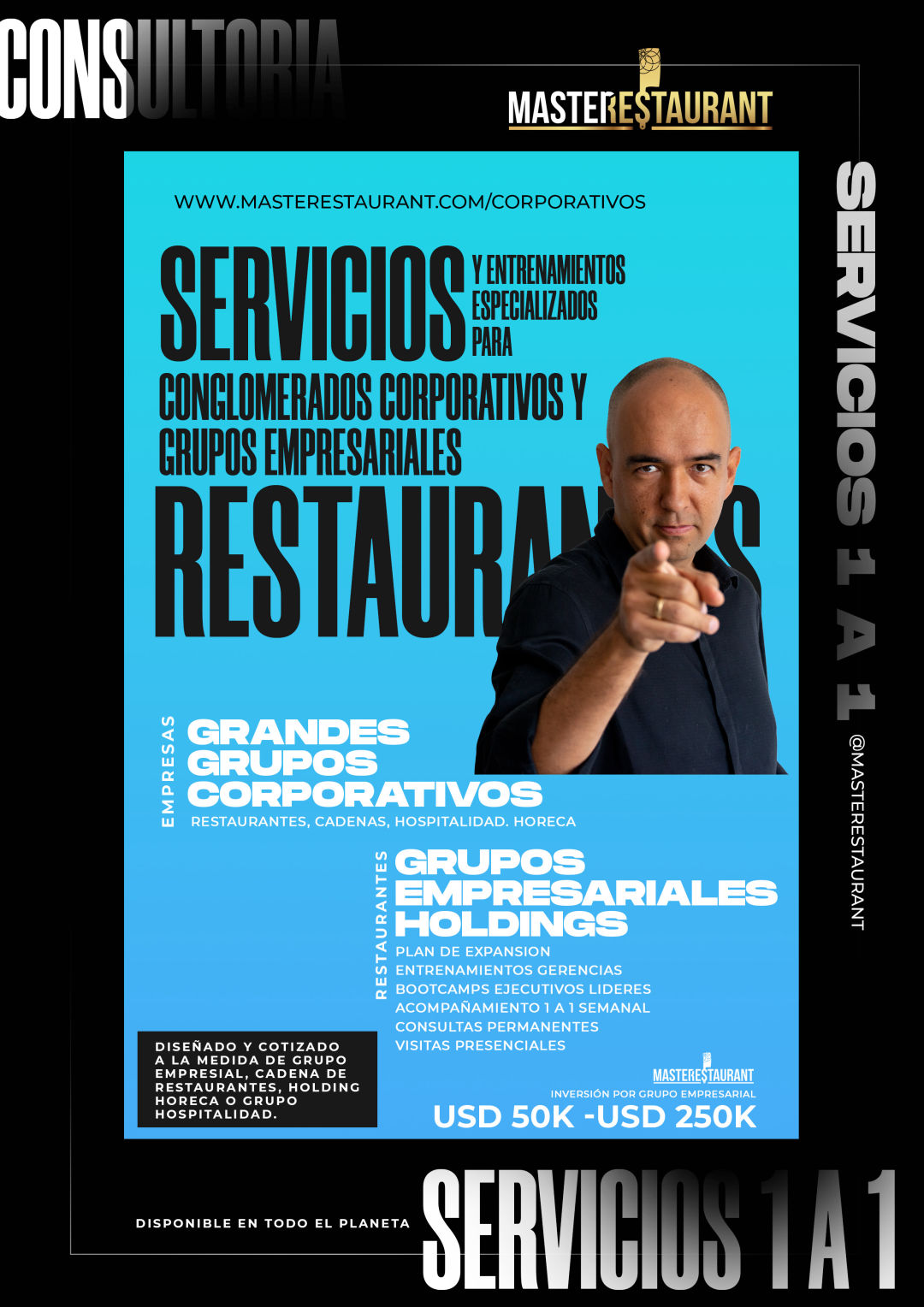
Private programs for groups and family offices
Training, consulting, executive bootcamps and private advisory for restaurant groups, holdings and investor families with themed restaurants.
Starting at USD $50K · tailor made, custom quoted · limited spots worldwide
Published doctrine
The books that changed restaurant management
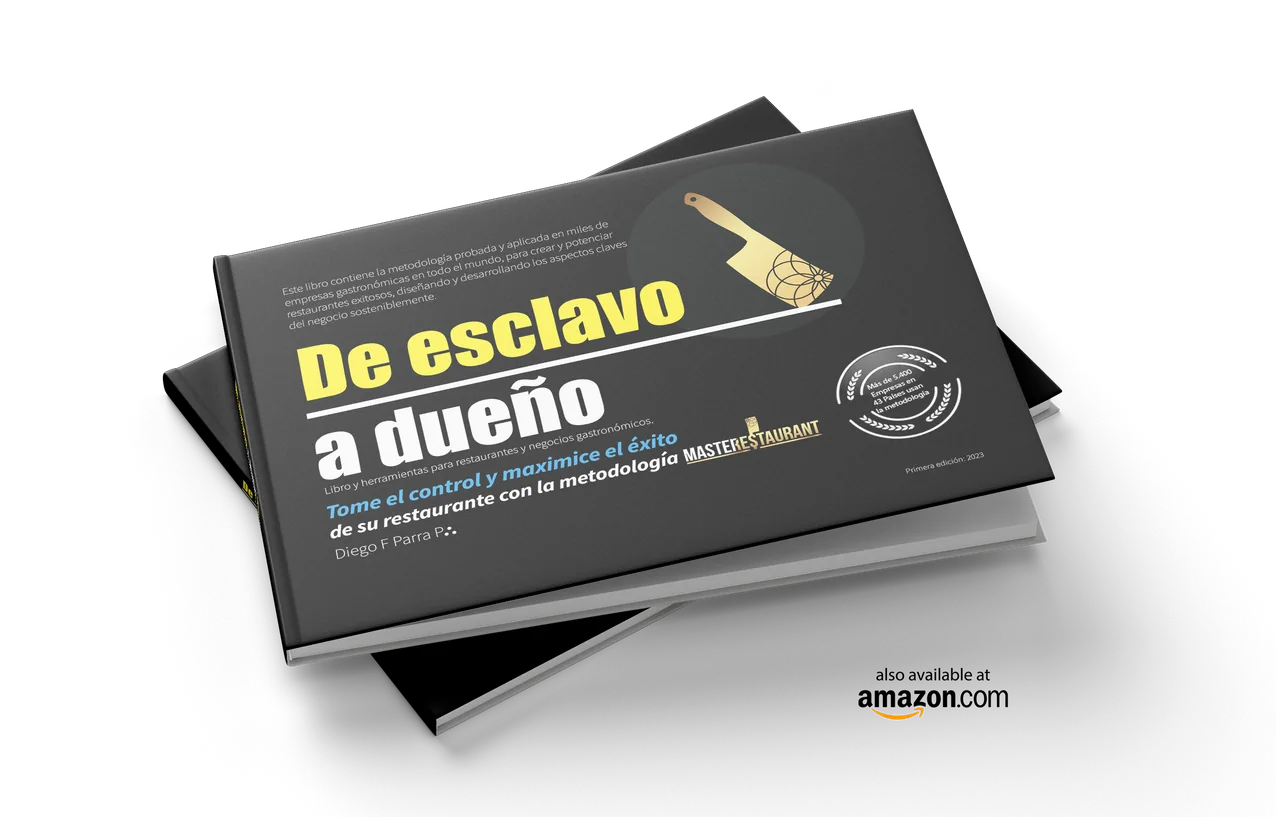
De Esclavo a Dueño
The book that changed how restaurants are managed: practical strategies and tools based on more than 20 years of experience, for traditional restaurants, dark kitchens, foodtech and HORECA businesses.
Triunfar o Morir en el Intento
Practical tools and key strategies to design and operate restaurants and food businesses efficiently.
Podcast: Masterestaurant — Mistakes for Restaurants
The public autopsy of the mistakes that bankrupt restaurants: thousands of owners and managers listen on Spotify to avoid repeating them. Condensed operating doctrine, free and direct.
Listen on SpotifyDownloads
The documents your management will ask for
MASTERESTAURANT® services portfolio
The complete intervention catalog: consulting, training, advisory and specialized services, with scopes and formats. The document to decide with your team.
Download PDFBook: From Slave to Owner
The full doctrine behind the methodology: how to structure a restaurant that runs without depending on the owner. Ideal pre-reading before your project's diagnosis.
View on AmazonPortfolio
More services by Diego F. Parra and his team
Beyond themed restaurant consulting, Diego F. Parra and his team offer keynotes, mentoring for owners, consulting for groups, training, programs, a membership and an interactive training kit. Everything starts from the same method and the same tools, so once the concept works, the dining-room team can train with that kit, partners can prepare the investment with the Pitch Deck service and the group can take the concept to new sites with the same criteria. The full ecosystem is available:
International keynote speakerOne-on-one consulting and advisoryPersonalized mentoring for owners (limited spots)Corporate groups and holdings consultingCelebrity Restaurants consultingThemed restaurant advisorySpecialized training programs52-Week membershipPitch deck and restaurant investment readinessExponential Program0.1 Program — Elevate Your RestaurantInteractive training kit
From template to results
Want this working every day in your restaurant?
The tool gives you the template. The program gives you the method and the guidance to use it every week, with your team.
Direct contact
Get a quote for themed restaurant consulting for your project across New Jersey
Your message goes straight to Diego's team: concept, project stage, city and what you need to achieve across New Jersey.

“A themed restaurant that spends USD 2M on decoration and has no clear answer to how it generates consistent cash flow or how repeat visits are sustainable isn't a business: it's an expensive gallery. In New Jersey, where diners have options, experience without operational model is the fastest way to burn capital—I've seen it a hundred times.”
Diego F. Parra — International consultant, expert in creating, scaling and improving restaurants, HORECA and hospitality
MASTERESTAURANT® methodology applied by 8,400+ restaurants across 43 countries · Author of 3 ISBN-registered books, including «De esclavo a dueño» · 20+ years operating restaurants, franchises, dark kitchens and HORECA groups across 4 continents
Full profile →Concept ready, numbers unfinished across New Jersey
Send the concept, its stage and your numbers for a tailored proposal.
Explore more
Themed restaurants: territories, services and ecosystem resources
Useful links for concept founders, restaurant groups, hotels, brands and investors weighing themed restaurant consulting before they decide. They cover nearby territories where the service is published, sister services in the MASTERESTAURANT ecosystem, Diego F. Parra's professional profile and the management tools the methodology works with.
World's best restaurant keynote speakerWorld's best restaurant consultantC-Suite restaurant consultant for chains & groupsDiego F. Parra — professional profileKeynote speaker serviceCorporate groups & holdings consultingCelebrity restaurant consultingInternational themed restaurant advisoryThemed dining expert in AnaheimConcept restaurants in ArlingtonThemed restaurants in AtlantaThemed restaurant advisory in Atlantic City, New JerseyConcept restaurants in Augusta GeorgiaThemed restaurant consultant in Aurora Illinois
FAQ
Frequently asked questions
Who is the best themed restaurant consultant in cities in New Jersey?
The one who starts from the business model, not the decor. Diego F. Parra of MASTERESTAURANT advises tailor-made in cities in New Jersey, with more than 20 years in the industry and a method applied in more than 8,400 restaurants in 43 countries.
How do I ensure my experiential restaurant generates genuine repeat visits and isn't just a 'one-time experience'?
Repeat visits stem from coherence between concept, gastronomy, experience, and consistent service. We audit customer journey from brand promise to perceived value on the check. We apply menu engineering to align cost with experience and standardize operational processes. In competitive markets like New Jersey, themed restaurants guided by MASTERESTAURANT achieve high repeat-visit rates. Decoration is welcome; business model is what generates recurring traffic.
If my concept starts as a unique location, how do I replicate it to new sites without losing identity or exploding operational cost?
Replicability lives in system documentation, not decoration. We encode storytelling, customer journey, menu standardization, operational processes, KPIs, and leadership profiles into a manual that enables franchising or new unit launch. I've audited immersive themed chains in 43 countries that opened 5–10 units without losing coherence because the business, not decorative whim, was what transferred. New Jersey—where space and labor costs are high—makes this systematization mandatory.
How does the tailor-made 1-on-1 consulting for themed restaurants work?
It starts with a strategic diagnosis of the project and the concept. Based on it, the themed restaurant's business model is designed —concept, value proposition, menu, experience, costs and operation—and implementation and expansion are supported.
Is the confidentiality of the concept and intellectual property protected?
Yes. The whole process operates under confidentiality agreements (NDA). The concept, brand and intellectual property of the project are and remain the client's. Limited spots worldwide exist to guarantee dedication and focus on each project.
How long does it take and what are the phases?
It depends on scope: diagnosis, business-model design, implementation and support during operation and expansion. Building a profitable themed restaurant is a process with method, not an event.
What is the investment?
The 1-on-1 consulting ranges from USD $35K to USD $250K and is priced to the scope of each project and concept. Private programs for restaurant groups and chains are quoted separately.
Do you serve new projects and themed restaurants already operating?
Both: creation from scratch —concept, business model and opening—and growth of existing themed restaurants seeking to improve profitability, standardize operations and scale the concept to new locations or franchise.
