 MASTERESTAURANT®
MASTERESTAURANT services portfolio
The complete catalog of services, programs and engagements of the ecosystem, with scopes and formats.
Download PDFDIEGO F PARRA · CREATOR OF THE MASTERESTAURANT® METHODOLOGY

This restaurant business guide walks through the MASTERESTAURANT restaurant canvas in 10 stages: who you serve, what you offer, where you sell, where the money comes from and what it costs. Leave your details and it arrives free in your inbox, together with the 10-step e-book.
After the guide
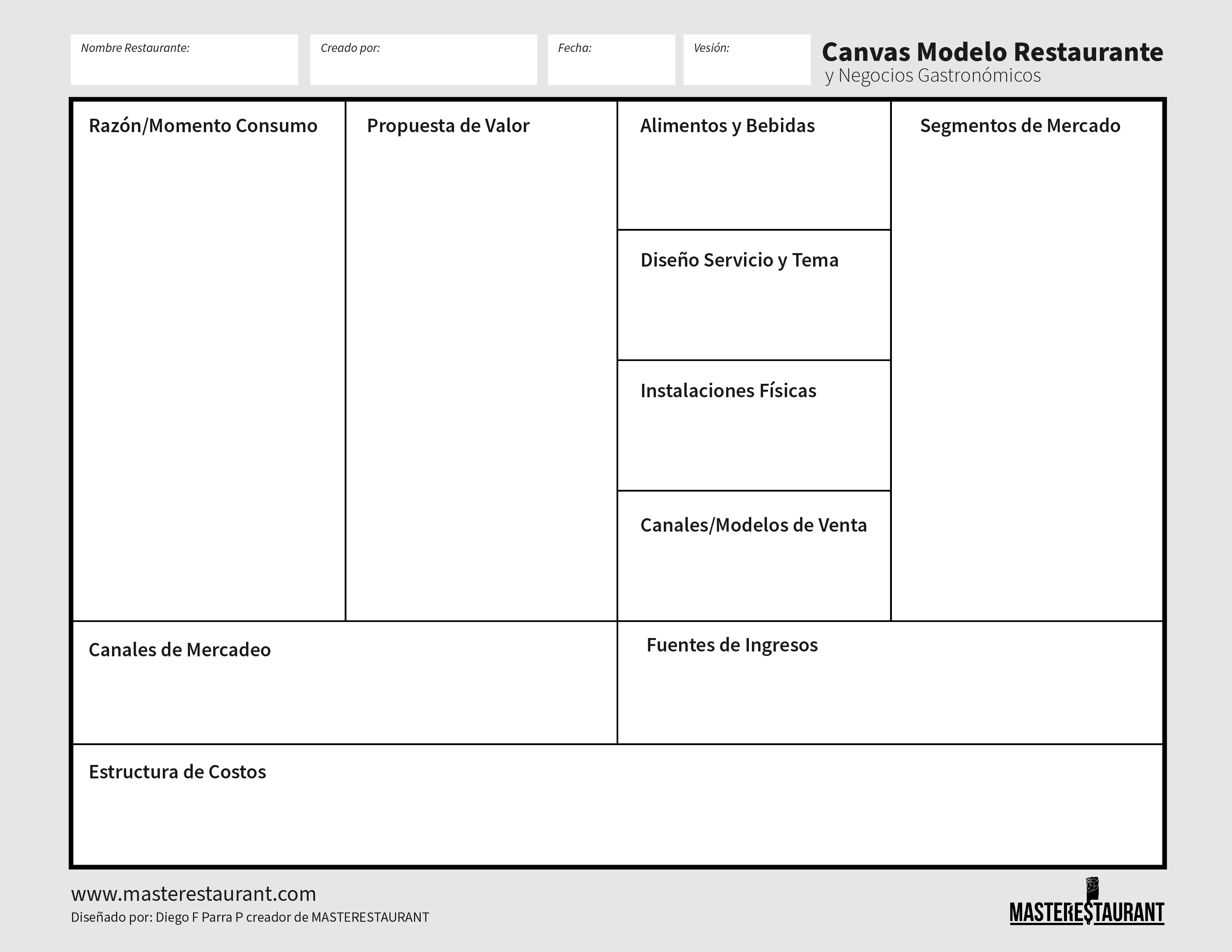
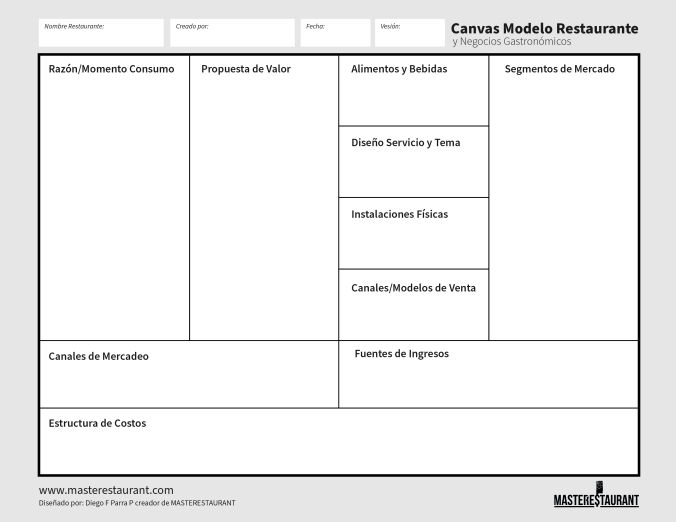
The micro-guide's 10 stages on a single sheet: the restaurant's full business model.
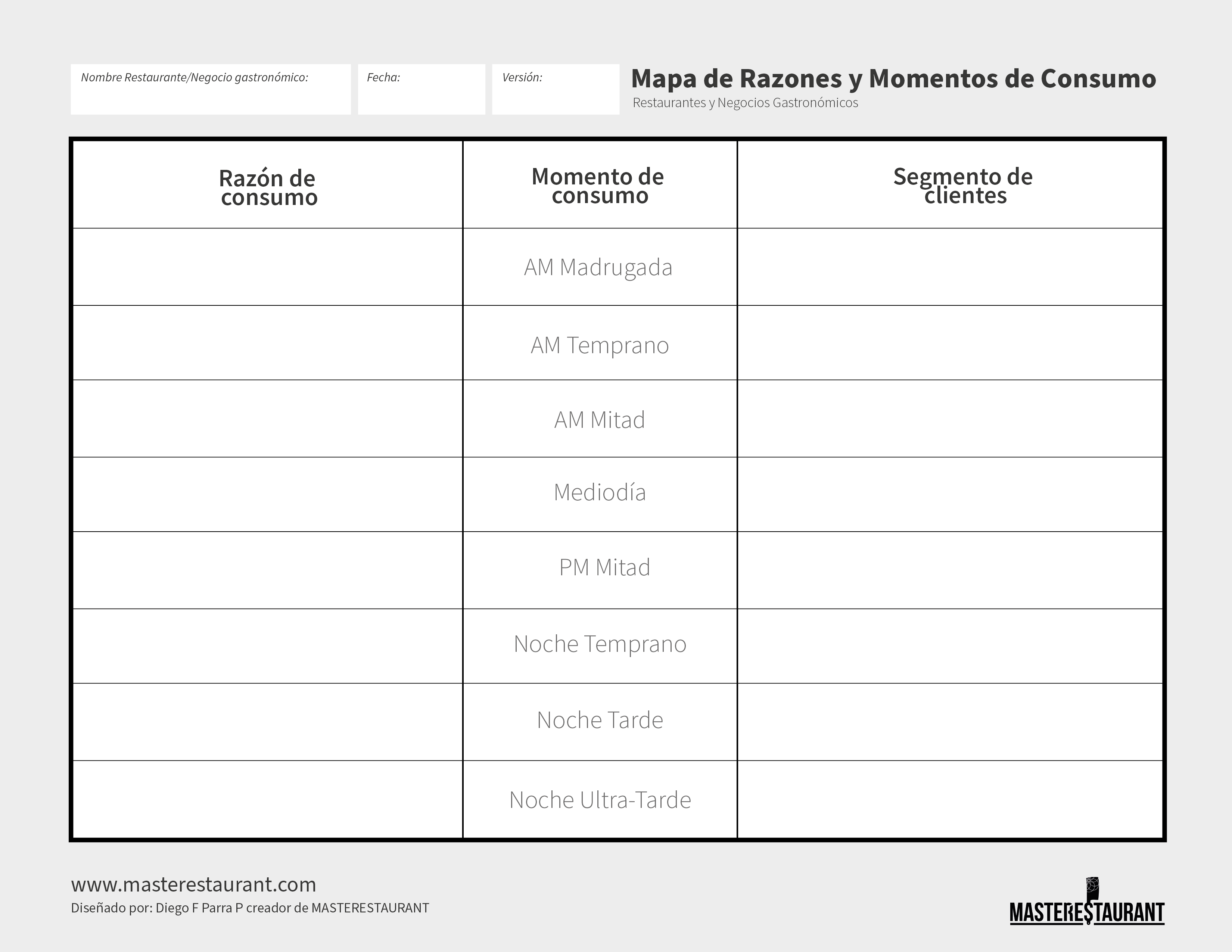
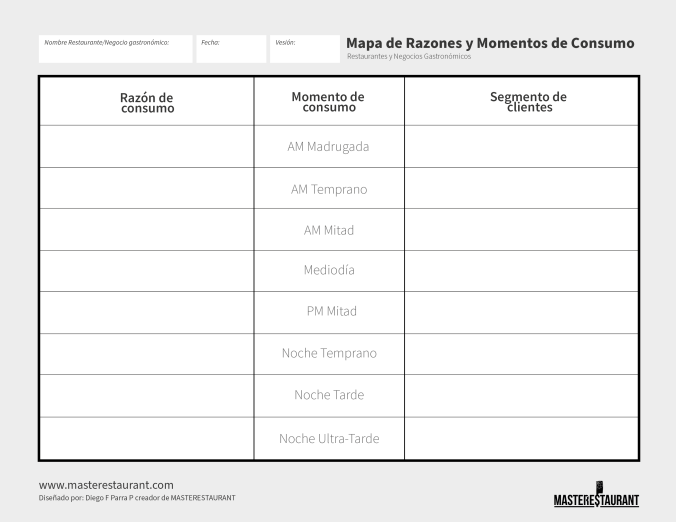
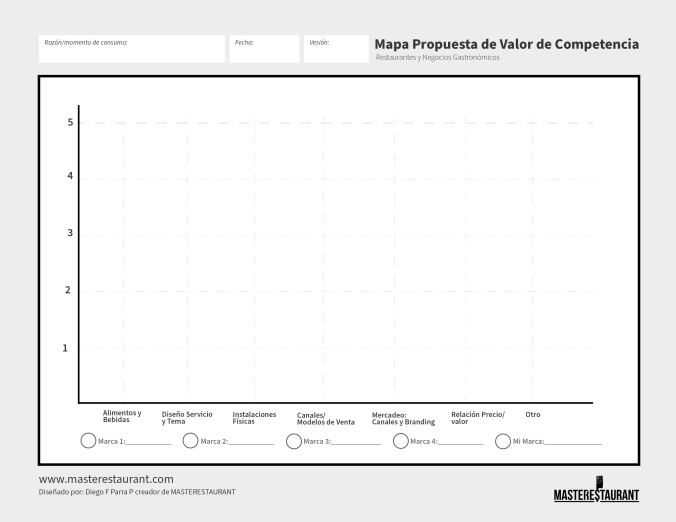
Stage 1: when and why each guest eats out, and which occasions you can add.
Stage 3: why guests come back, written on one sheet.
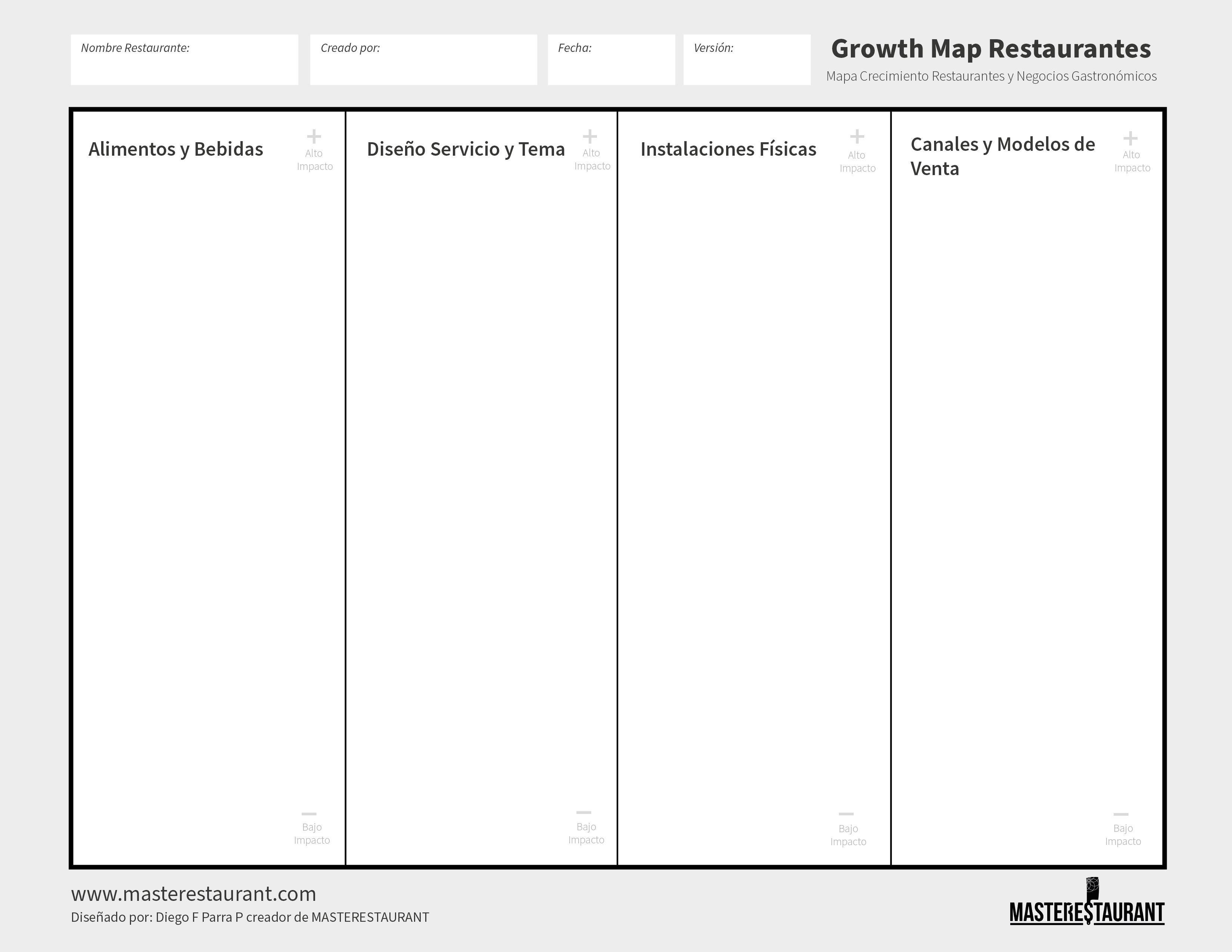
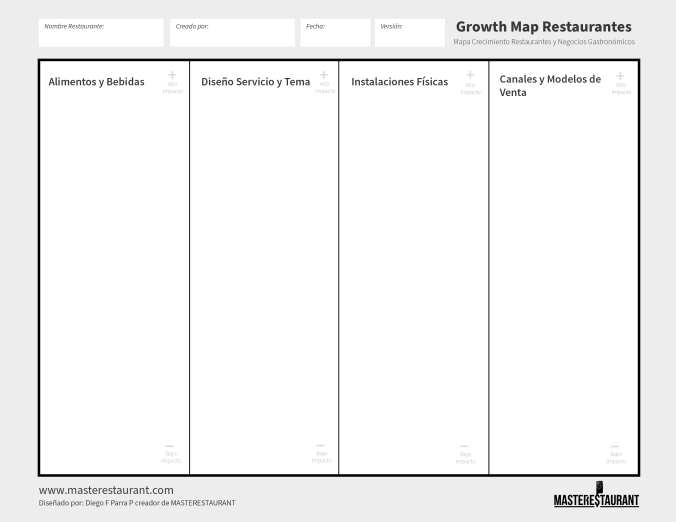
After the 10 stages: what to improve first, by impact.
@masterestaurant
The 10-stage micro-guide for building restaurants and food businesses with the MASTERESTAURANT methodology is a short resource for owners, managers and entrepreneurs who want a profitable, sustainable restaurant. In restaurant management, a clear business model is the basis for sound decisions.
The guide presents the 10 key stages of the restaurant canvas and a short, practical introduction to designing your value proposition and cost structure. It is the shortest version of the methodology created by Diego F. Parra; the 10-step e-book develops it with lessons from more than 20 restaurant professionals. Both PDFs are in Spanish.
It is a free four-page PDF guide that walks through the elements of the MASTERESTAURANT restaurant canvas in 10 short stages: a quick review for building a restaurant's business model. The guide is in Spanish.
Each stage fits in one box: an idea, an example and a task. The first, for example, asks you to understand when and why each type of guest eats with you —the parent who has breakfast at your restaurant because the kids start school early— and to look for additional occasions. The last one asks you to review your cost structure and keep standard recipes up to date. It is not a course or a book: it is the entry point to the methodology created by Diego F. Parra, meant to be read in one sitting and revisited whenever a decision is due. It arrives free in your inbox when you fill in the form on this page, together with the 10-step e-book, which develops the same ideas at greater length.
Reasons and occasions for eating out, market segments, value proposition, food and beverage, service design, physical spaces, sales channels and models, communication, revenue streams and cost structure.
The first three define who you serve and why they come back: the micro-guide warns that thinking everyone is your customer is a common mistake, and that almost every owner answers “quality and service” when asked why guests choose them. The next four connect the business with those guests: the food and beverage offer, a repeatable service model that creates emotions, physical spaces that speak before anyone says a word —today including the website— and sales channels beyond the dining room. The last three organize the money: a marketing budget that is measured, revenue streams beyond food and beverage sales, and a cost structure that gets reviewed.
By writing down who you serve, what you offer, which channels you sell through, where the money comes from and what it costs to produce, and then making decisions with that structure rather than with day-to-day experience alone.
Owners who run a restaurant on intuition usually live inside operations: cooking, buying, serving and putting out fires. Running it with a model does not mean stepping away from operations; it means deciding with a structure the team understands and that does not depend on the owner being there. The micro-guide organizes that way of running a restaurant into 10 stages because most restaurant problems do not start in the kitchen but in business-model decisions nobody wrote down: an undefined target guest, a single revenue stream, a marketing budget that is never measured or costs nobody reviews. It is the same idea behind Diego F. Parra's book “De esclavo a dueño” (From Slave to Owner): the business should work for the owner, not the other way around.
Because a clear business model is the basis for sound decisions: without it, every operational fix is a separate bet, and the restaurant invests in what is visible rather than in what drives profitability.
The micro-guide suggests focusing effort on the key elements before spending: spot improvement opportunities in the model, prioritize the investments that really move profitability, organize the management criteria and design marketing for your ideal guests rather than for everyone. One example from the guide itself: many restaurants plan the business around a single type of revenue, food and beverage sales, when events, corporate sales or complementary services could sustain it in the long run. Another: the industry is full of people in love with their craft who forget to review their cost and expense structure. Neither problem gets fixed by working more hours in the kitchen.
The e-book is the long version: 33 pages, third edition from 2023, with 10 ideas to reinvent a restaurant following the canvas, plus lessons from more than 20 restaurant professionals in three countries. It is in Spanish.
Its first version was written during the pandemic as a reinvention guide; over the years it was updated into an introduction, organized step by step, for restaurants and food businesses that want to grow. Between steps, owners, chefs, managers and consultants answer the same question: if you could give your children only one piece of advice about running restaurants, what would it be? The micro-guide, by contrast, fits in four pages and lets you review the 10 stages in minutes. The practical approach is to read the micro-guide first, mark the stages where your restaurant is weakest and then read the matching step in the e-book. Both arrive free in your inbox when you fill in the form on this page.
For owners, partners, managers and entrepreneurs working out how to start and run a restaurant, or how to organize and grow the one they have, in any hospitality format.
It works the same for an independent restaurant as for a café, a bar, a ghost kitchen or a multi-unit group, because the 10 stages ask the same questions at any scale: which dining occasion you serve, for which segments, with what value proposition, through which channels and with what cost structure. If you are about to open, use it so you do not sign a lease or design a menu before you have the model. If you already operate, use it as a quick diagnosis: read it stage by stage, mark what the business has not solved and decide where to start. For a team, it works as a shared language: everyone talks about the same 10 stages when they discuss what to improve first.
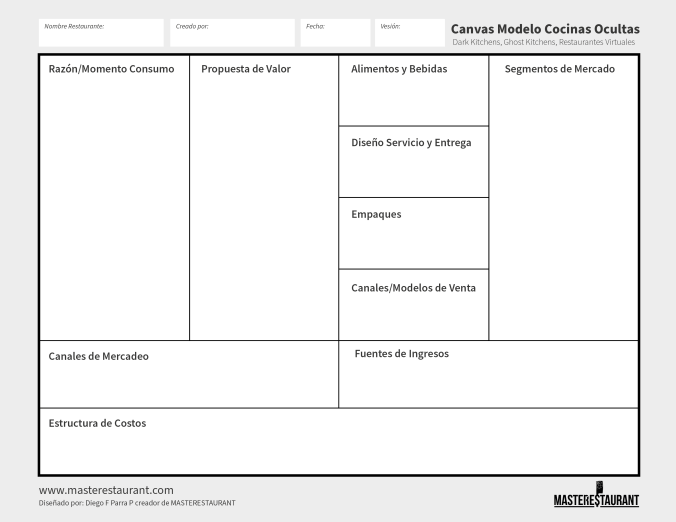
Moving from reading to worksheets: the restaurant business model canvas to write down the full model and the toolkit sheets that develop each stage, all free on this site.
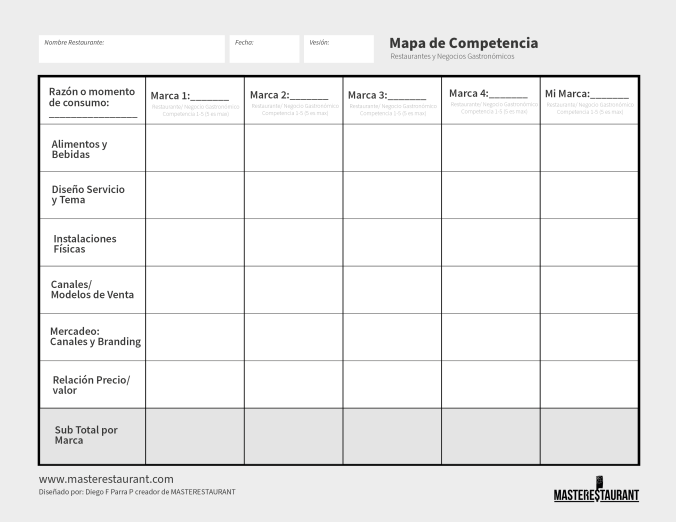
The restaurant business model canvas brings the 10 stages together on a single sheet, and each stage has its tool: the map of reasons and occasions for eating out, the value proposition map, the menu, service, channels and marketing checklists, the physical spaces map and the standard recipe format for the cost structure. If the challenge is the numbers, the free restaurant cost class is the natural next step. And if you want to go deeper into moving from running the business to leading it, the book “De esclavo a dueño” and MASTERESTAURANT training develop the full methodology. At the end of this page you can write to Diego F. Parra's team. Most toolkit sheets are in Spanish.
Summary
What each stage of the micro-guide asks for and the toolkit sheet that develops it.
| Stage | What you review | Toolkit sheet |
|---|---|---|
| 1 · Reasons and occasions | When and why each guest eats out, and which occasions you can add | Reasons and occasions map |
| 2 · Market segments | Which guest groups you serve today and which valuable ones do not buy from you | Restaurant canvas |
| 3 · Value proposition | Why guests really come back, beyond “quality and service” | Value proposition map |
| 4 · Food and beverage | The food offer that connects the business with its guests | Menu checklist |
| 5 · Service design | A repeatable service model designed for the brand | Service and theme checklist |
| 6 · Physical spaces | What the place —and the website— tells guests before anyone speaks | Physical spaces map |
| 7 · Sales channels and models | Delivery, apps, online sales, packaged food and beyond the dining room | Sales channels checklist |
| 8 · Communication | A fixed marketing budget, measured by channel | Marketing checklist |
| 9 · Revenue streams | Events, corporate sales and complementary services | Restaurant canvas |
| 10 · Cost structure | Costs and expenses reviewed, with standard recipes up to date | Standard recipe format |
Summary of the MASTERESTAURANT micro-guide (4-page PDF, in Spanish). The toolkit sheets download free from the tools section of this site.
Who created them
Written by Diego F Parra, creator of the MASTERESTAURANT methodology: engineer and consultant with more than 20 years working inside restaurants, ghost kitchens and restaurant groups in 43 countries.
The micro-guide is the entry point to that methodology: the 10 stages of the restaurant canvas, summarized to be read in one sitting.
The 10-step e-book goes with it, with advice from more than 20 restaurant professionals in three countries.
The methodology
Behind every restaurant that grows profitably there is a system, not luck: the MASTERESTAURANT methodology, applied in 8,400+ restaurants across 43 countries.
Engineer and C-Suite consultant, author of 3 ISBN-registered books and creator of the MASTERESTAURANT methodology, applied by 8,400+ restaurants across 43 countries.
Published doctrine
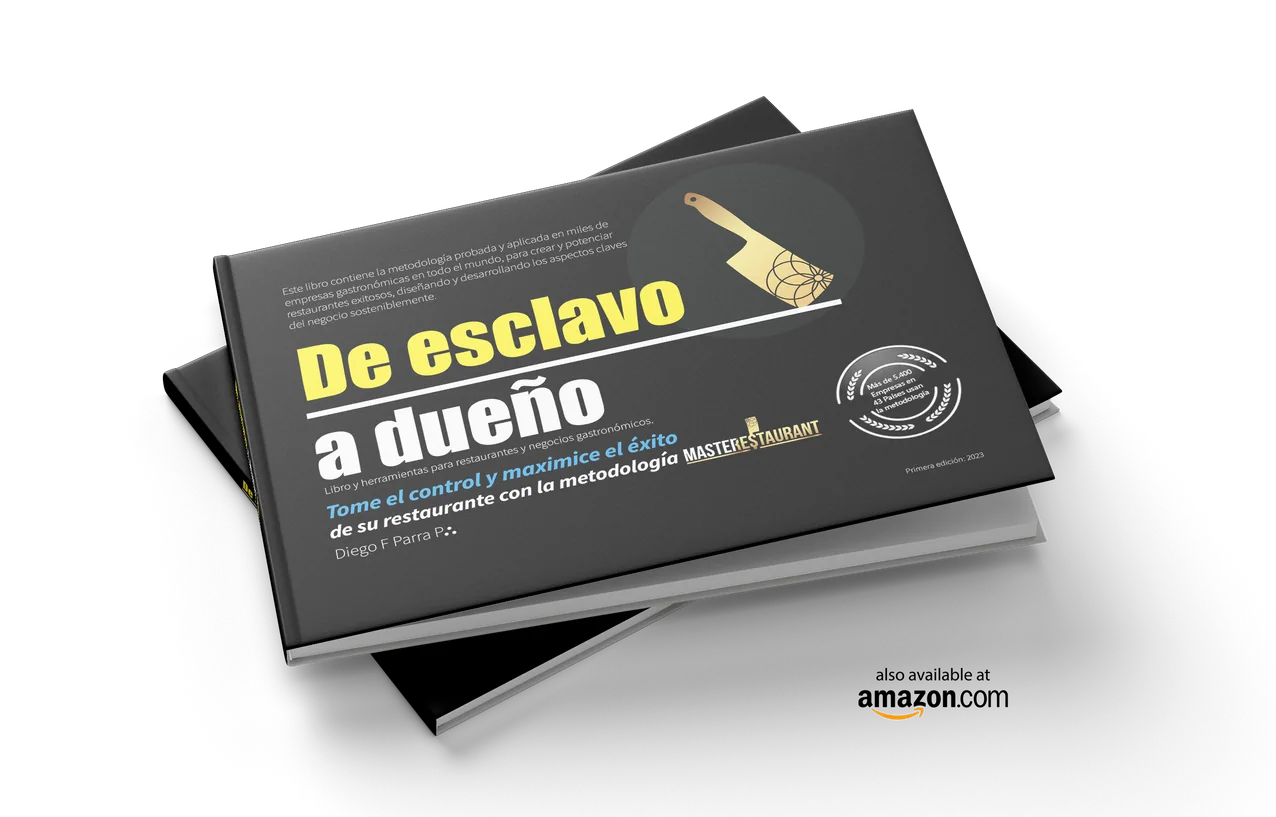
Diego F. Parra's guide to stop being a slave to your restaurant and run it as its owner, based on more than 20 years of experience.
Practical tools and key strategies to design and operate restaurants and food businesses efficiently.
The public autopsy of the mistakes that bankrupt restaurants, so you do not repeat them. Every episode is condensed operating doctrine, direct, no anesthesia.
Listen on SpotifyDownloads
The complete catalog of services, programs and engagements of the ecosystem, with scopes and formats.
Download PDFThe complete doctrine of the owner who takes control and maximizes the success of their restaurant.
See on AmazonAccess to the MASTERESTAURANT membership of group trainings and mentoring sessions for 52 weeks.
Learn about the membershipReserve your seat with direct payment: Bold, PayU or PayPal (payment links are confirmed and updated when scheduling).
Pay with BoldPortfolio
If you want to apply the methodology with support, Diego F. Parra and his team do it through training, mentoring and consulting, from the restaurant canvas to the cost structure. These are their services:
Free, in your inbox
Leave your details and we will instantly send you the links to the 10-stage micro-guide and the 10-step e-book (PDFs in Spanish). If you want help applying them in your restaurant, tell us in your message which stage you are at.
Get the micro-guide and the e-book free in your inbox and, if you like, tell us which stage you are at: we will tell you where to start.
Explore more
The toolkit sheets, programs and MASTERESTAURANT resources that develop the micro-guide's 10 stages. Most sheets are in Spanish.
FAQ
Yes. The MASTERESTAURANT 10-stage micro-guide and the 10-step e-book are free. Fill in the form on this page and the links to both PDFs arrive in your inbox right away. Both are in Spanish. If you also want help applying them in your restaurant, say so in your message and the team will reply.
With a written business model, not only intuition: define who you serve and why they return, what you offer, which channels you sell through, where the money comes from and what it costs to produce, and review those decisions with your team. The micro-guide organizes running a restaurant into 10 stages, from dining occasions to costs.
The micro-guide explains the 10 stages in four pages, with an example and a task per stage. The restaurant canvas is the worksheet where you write down the full business model. The practical order is to read the guide first and then fill in the canvas with your team.
It works as a short introduction for anyone opening a restaurant, and as a quick diagnosis for anyone already running one: read it stage by stage, mark what is not solved and decide where to start. It is a guide to the business model, not a cooking course.
Yes. If you already operate, use it as a quick diagnosis: read each stage, mark what the business has not solved and choose where to start. If you are about to open, use it to have the model in place before you sign a lease or design the menu.
Diego F. Parra, creator of the MASTERESTAURANT methodology and author of “De esclavo a dueño”. The 10-step e-book also includes advice from more than 20 restaurant professionals in three countries, in its third edition from 2023.
Social proof
Only a sample of our clients across 43 countries: the full operation spans thousands of restaurants and hospitality groups.
Toolkit MASTERESTAURANT®
From the same toolkit (tool pages in Spanish), chosen by closeness to this tool.
Restaurant owners and teams from 43 countries sharing knowledge, tools and applied AI — straight to your WhatsApp.
Join the community