Diego F. Parra · CREATOR OF THE MASTERESTAURANT® METHODOLOGY
ARTIFICIAL INTELLIGENCE FOR RESTAURANTSWho measures in Mexico City whether the AI you bought is adding margin or just fixed cost?
For operations in Mexico City that already tried tools and saw no result: the problem is rarely the tool, it is the order in which it arrived and the absence of an indicator saying whether it worked.
Measuring whether AI is adding anything, in Mexico City
AI adoption is organized the same way as an operation: by numbers, in stages and with owners. That is the rule of the MASTERESTAURANT methodology and its TOOLKIT, applied across 8,400+ restaurants in 43 countries: put the data in order first and automate second, because technology speeds up whatever it finds, disorder included.
The diagnosis is the starting point. The use cases that can return the most margin go first (demand, inventory, service and marketing), they are integrated with what the business already has, and each agent gets a clear line on what it may and may not decide.
In Mexico City, the order fits the size of the business and its digital maturity, because an independent restaurant and a fifteen-site group do not automate the same things, nor in the same order. Each step is measured before the next one starts.
How does AI consulting for restaurants work in Mexico City?
It starts with a diagnosis of the operation's digital and AI maturity in Mexico City: what it measures today, which tools are already in place and where the data is disorganized. Data gets organized first; automation comes second.
Automating disorder only multiplies it, so MASTERESTAURANT's AI consulting ranks use cases by margin, not by novelty: demand forecasting, inventory, service and marketing are compared on their return. The roadmap covers the questions to put to every vendor, agents with explicit limits, integration with the tools already in use, data governance and privacy, and an adoption dashboard that shows whether each change worked. AI takes the repetitive work; the team keeps its time for the guest.
It fits a single restaurant, a hotel or a HORECA group, on site or virtual, in English or Spanish. As context for Mexico City, this page cites four verified reference figures, from sources such as McKinsey Next in Personalization and Comisión Europea.
What do the numbers say about AI and restaurants for an operator in Mexico City?
71% — consumers expecting personalized experiences from brands, according to McKinsey Next in Personalization. A reference figure describes the environment in which the decision is made; it does not say which AI use case will return margin in a specific restaurant.
Other reference points cited on this page: approx. 32% (jobs that could be substantially transformed by automation, Comisión Europea); 70% (share of AI adoption challenges that stem from people and processes, not technology, BCG); approx. 10% (tourism contribution to global GDP before the pandemic, WTTC). For an operator in Mexico City, what matters is the order of adoption: clean data first (recipes, inventory, sales), then the use case with the clearest return on margin, tracked on an adoption dashboard. That is what decides whether AI cuts waste and admin time or simply automates the mess.
Data with AI
AI and technology figures for foodservice in Mexico City
The figures cited on this page, with what each one measures and its source.
Figure
What it measures
Source
71%
Consumers expecting personalized experiences from brands
McKinsey Next in Personalization
approx. 32%
Jobs that could be substantially transformed by automation
Comisión Europea (Knowledge4Policy)
70%
Share of AI adoption challenges that stem from people and processes, not technology
BCG
approx. 10%
Tourism contribution to global GDP before the pandemic
WTTC
Each figure links to its source in the data cards on this page.
Why they hire AI consulting
The Mexico City market and artificial intelligence
A restaurant, hotel, or hospitality group in Mexico City faces a structural challenge today: margin pressure is relentless—labor costs consume a significant portion of revenue, waste and shrinkage without visibility, volatile demand by season and trend—but the solution is not destructive cost-cutting or reliance on a heroic operator.
Specialized artificial intelligence for HORECA fills the gap left by generic systems: while a common chatbot offers flat answers, AI applied to restaurants predicts demand by hour and dish, optimizes inventory in real time, automates purchasing and detects waste before it occurs, and integrates operational, sales, and financial data into a single dashboard. Without this depth of AI, the business remains hostage to individual experience, decisions are made without data, and profitability fluctuates with each season or staff change.
The real risk is not automating: it is failing to do so while competitors globally adopt AI and gain in EBITDA.
The Masterestaurant methodology and its proprietary artificial intelligence suite—including intelligent automation of operations—transform the HORECA sector concretely. A restaurant or group in Mexico City accesses AI tools that forecast demand with precision based on time zone, weather, local events, and historical behavior, feeding production and purchasing decisions. Engineering of Prime Cost and EBITDA assisted by artificial intelligence analyzes each variable—ingredient costs, waste, service efficiency, occupancy—and signals where the business loses profitability.
Automation extends to intelligent purchasing, AI-driven waste alerts, personnel optimization, and autonomous agents that execute repetitive tasks, freeing the team for strategic decisions. Additionally, artificial intelligence positions the brand in new discovery channels—AEO (Answer Engine Optimization) and GEO—amplifying visibility and demand without raising advertising spend, and personalizes customer experience with massive data. The result: modern, profitable, and scalable operations.
Diego F. Parra's global authority—consultant in 43 countries with Masterestaurant methodology applied across 8,400+ restaurants and HORECA establishments—radically reduces the risk of AI adoption in Mexico City. This is not a startup experiment: the proprietary artificial intelligence suite has been refined in contexts as diverse as Buenos Aires, Barcelona, Bangkok, and New York, capturing universal gastronomic patterns and local variables.
A common mistake in implementing technology in restaurants is automating chaos—digitizing broken processes without first redesigning the business model—or buying generic AI that doesn't understand kitchen economics (waste, standardization, demand variability). Diego avoids both traps: his methodology first aligns the business model, then integrates artificial intelligence. In Mexico City, where the HORECA ecosystem is mature but fragmented, specialized and verified guidance accelerates AI adoption without false starts.
The return is quantifiable and verifiable. A restaurant or group implementing specialized artificial intelligence under the Masterestaurant methodology protects and expands margin in year one, eliminates intuition-based decisions by replacing them with real-time data-driven decisions, and decouples operations from a single founder or manager, enabling scale. Greater visibility: AI improves positioning in search engines and discovery platforms, attracting more demand without raising advertising spend. Better experience: each customer receives personalized offers based on history and preference.
And resilience: when facing changes (zone closures, cost increases, trends), the business responds with data, not panic. For groups and chains in Mexico City, this means greater replication capacity—operational standards supported by artificial intelligence rather than exceptional talent in each location.
AI data and benchmarks
Data context for applying AI in Mexico City
71%
Consumers expecting personalized experiences from brands
The technology and AI context of the sector in Mexico City
Mexico City is today the gastronomic epicenter of Latin America, with a HORECA market of restaurants and establishments totaling over 50,000 formal and informal units—according to CONCANACO data (National Confederation of Commerce Chambers)—yet adoption of specialized AI and technology remains heterogeneous. Many traditional restaurants still operate with basic point-of-sale systems, without data integration between kitchen, cashier, and purchasing; others have adopted digital delivery and ordering platforms but without connecting them to business intelligence.
The sector faces unique challenges: scarce and expensive operational talent, high turnover, unpredictable tourism-driven demand spikes, complex regulatory environment, and constant margin pressure. Specialized artificial intelligence for HORECA that understands these variables—not a generic solution—is what differentiates sustainable growth from constant operational firefighting.
The opportunity is immediate. Mexico City's HORECA sector is in transition: successful operators discover that empirical experience is no longer sufficient to compete with chains and foodtech companies adopting artificial intelligence, data, and automation. A group that today implements AI to forecast demand, optimize purchasing, reduce waste, and integrate gastronomic operations gains sustainable competitive advantage in 12-18 months.
The main risk is not technology itself: it is poor adoption of generic artificial intelligence, misaligned with HORECA operational principles, that generates frustration and rejection. Hotel and restaurant operators in Mexico City need guidance that understands both local complexity—geography, regulation, talent—and universal principles of service and profitability. This is where most artificial intelligence initiatives fail: lack of gastronomic specialization.
AI RESOURCES
MASTERESTAURANT AI studies, guides & tools
What a team in Mexico City can review to size the impact: sector studies, tools and cases:
Who signs the methodology that will run your business with AI
The MASTERESTAURANT® methodology is applied today by 8,400+ restaurants across 43 countries, and there is one signature behind it: Diego F. Parra, engineer and C-Suite consultant with two decades creating, rescuing and expanding restaurants, franchises, dark kitchens and HORECA groups across four continents.
What separates him from a desk advisor is what he has had to do himself: sign payrolls when the till was short, negotiate leases with the margin counted, structure partnerships between partners who were no longer speaking, and close expansions in operations worth hundreds of millions of dollars. The TOOLKIT — MTIE, Gastronomic Radar, Standard Recipe Generator, Tech Sheets and KPI Dashboard — comes from there, not from a framework.
He is also the author of 3 ISBN-registered books, including «De esclavo a dueño», creator of the industry's leading podcast and of the largest bilingual community of owners, chefs and operations directors in the region (65M+ views per year as @masterestaurant), and ranks among the top Latino restaurant operations experts globally. His full track record is in Diego F. Parra's professional profile.
AI consulting with its own doctrine, not generic tools
Having its own doctrine means technology is never deployed for hype: artificial intelligence and automation adoption is designed methodically and measured by its impact on margin, experience and operations. The problem is rarely the tool; it is the order in which it arrived and the absence of an indicator saying whether it worked.
That is why every use case is prioritized by margin, every vendor is assessed against the risks and the questions worth putting to it, and every agent works within explicit limits. AI automates repetitive work and sharpens decisions, so your team gains time for the guest and the experience. Finally, the method is transferred so the team keeps applying it.
Private, made-to-measure support, for whoever is creating and for whoever is correcting:
Whoever signs the AI investment
Ownership and leadership, who need to know which use cases return margin and which still do not.
Whoever runs the daily operation alongside AI
Kitchen and floor, who gain time when the repetitive stops being done by hand.
Whoever owns the numbers and measures AI
Controlling, who find in analytics the most direct lever on prime cost.
Whoever owns the technology and AI
Technical profiles who need business judgement to prioritize what actually moves the needle.
What's included · AI
Key topics and elements of the AI consulting program for restaurants
The scope is defined with you; these are the MASTERESTAURANT methodology modules available:
Artificial intelligence strategy for hospitality
Agents applied to complete tasks
Automation of purchasing, inventory and shifts
Analytics and a management dashboard
Demand forecasting
Answer-engine (AEO/GEO) visibility
Measurement with the usual numbers
Support until the team can sustain it
Investment: tailor-made AI and automation consulting programs, quoted by operation size, number of sites and scope — LIMITED slots worldwide.
AI consulting programs
Tailor-made artificial intelligence and automation programs
Every AI program is 100% custom: it starts with an artificial intelligence diagnosis of the business and covers the highest-impact use cases for your operation.
Diego F. Parra is an AI expert consultant for restaurants and the creator of the MASTERESTAURANT® methodology, applied by 8,400+ restaurants across 43 countries.
He is the author of 3 ISBN-registered books and built the methodology's AI technology suite: MTIE, Gastronomic Radar and KPI Dashboard. An engineer and C-Suite consultant, he has spent two decades creating, rescuing and expanding restaurants, franchises, dark kitchens and HORECA groups across four continents. That is why his AI consulting does not start with the tool but with kitchen economics: demand forecasting, inventory and Prime Cost. He arrives with tools born from running real restaurants and leaves your team an adoption dashboard and the method.
The books that changed restaurant management with AI
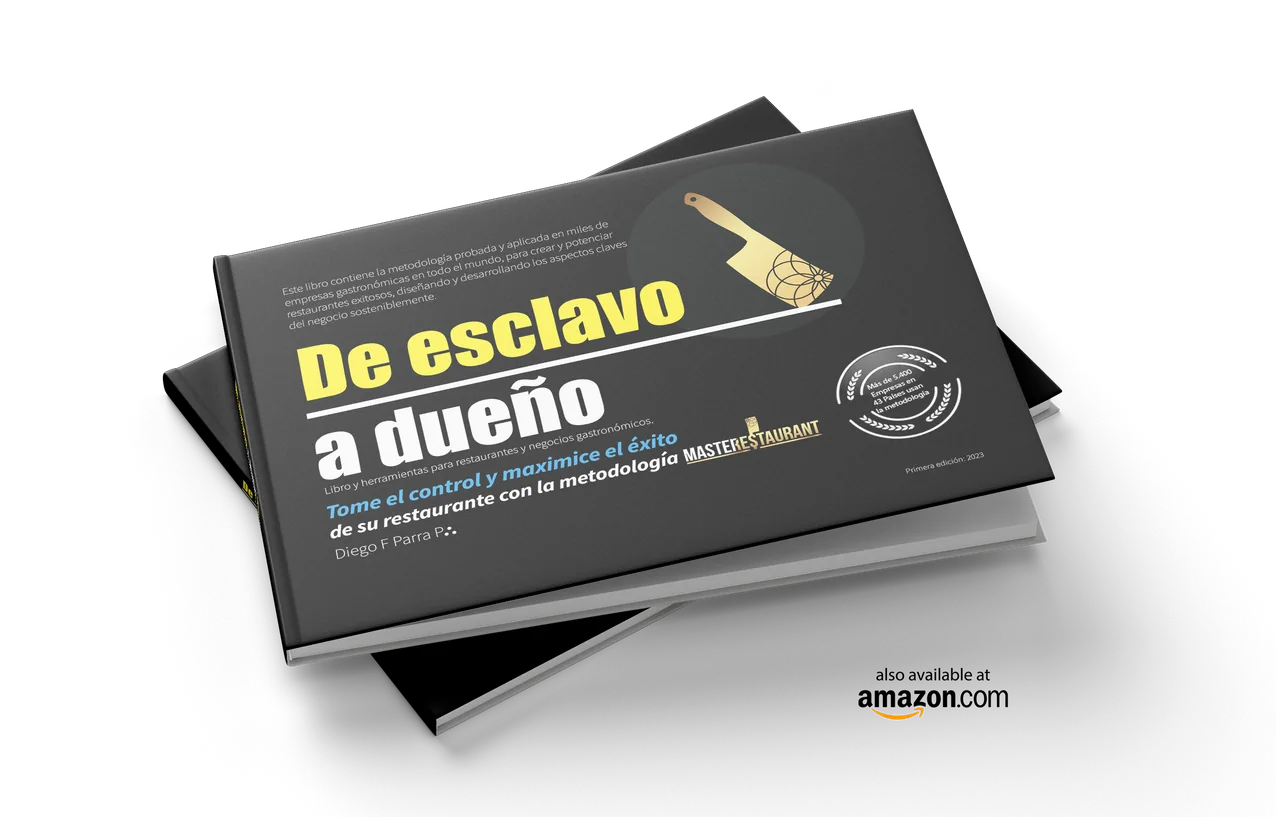
De Esclavo a Dueño
The book that changed how restaurants are managed: practical strategies and tools based on more than 20 years of experience, for traditional restaurants, dark kitchens, foodtech and HORECA businesses.
Triunfar o Morir en el Intento
Practical tools and key strategies to design and operate restaurants and food businesses efficiently.
Podcast: Masterestaurant — Mistakes for Restaurants
The public autopsy of the mistakes that bankrupt restaurants: owners and managers listen on Spotify to avoid repeating them. Condensed operating doctrine, open to everyone.
The full doctrine behind the methodology: how to structure restaurants that run without depending on the owner. Ideal pre-reading before your group's diagnosis.
Beyond AI consulting, Diego F. Parra and his team offer keynotes, mentoring, training, programs and consulting for groups, all built on the same method and the same tools. You can add a keynote speaker to align your team, training for the people who work with the new tools every day or mentoring for the owner, without starting from scratch. Artificial intelligence pays off in an orderly operation, and these services are what put it in order. If your need goes beyond the operation, the full ecosystem is available:
Request your AI consulting proposal for your restaurant in Mexico City
Artificial intelligence and automation diagnosis for your operation in Mexico City.
“AI applied to restaurants is not a technology luxury: it is the difference between a business that grows with healthy margins and one that always sits on the edge of collapse. In Mexico City, where talent is scarce but opportunity is enormous, specializing automation in the real patterns of HORECA is what separates success from extinction.”
Diego F. Parra — International consultant, expert in creating, scaling and improving restaurants, HORECA and hospitality
MASTERESTAURANT® methodology applied by 8,400+ restaurants across 43 countries · Author of 3 ISBN-registered books, including «De esclavo a dueño» · 20+ years operating restaurants, franchises, dark kitchens and HORECA groups across 4 continents
Expert artificial intelligence consulting for restaurants and HORECA
Useful links for owners and leadership teams weighing AI consulting for restaurants before deciding: nearby territories where the same service is available, sister services in the MASTERESTAURANT ecosystem, Diego F. Parra's professional profile and management tools.
What does an AI consultant in Mexico City do for a restaurant?
First measures how ready the operation in Mexico City is for AI: what it records, which tools it already runs and how reliable its data is. Only then are use cases ranked by margin, such as demand forecasting or inventory control.
What is the real ROI of implementing artificial intelligence and automation in my restaurant or group in Mexico City?
Typical return is significant improvement in EBITDA in year one, measurable in three lines: operational savings (less waste, optimized purchasing, less manual work), additional revenue (better positioning through AI in search engines, offer personalization), and decoupling from structural costs. For example, a group of 15 locations in Mexico City that reduces waste by 2% via artificial intelligence and improves occupancy by 8% through visibility gains USD 300-500K annually net.
Return accelerates if the operational model is already solid; slower if redesign is needed first. Diego measures and reports every metric for transparency.
Will automation and AI replace my operational team?
No. Specialized artificial intelligence for HORECA eliminates variables—forecasts demand, detects waste, automates purchasing—but requires a team that interprets data, executes strategic decisions, and maintains service quality. In fact, many operations discover they can invest more in training and retaining key talent, because artificial intelligence absorbs repetitive, demanding work. In Mexico City, where gastronomic talent is scarce, AI frees your best manager for strategy rather than daily management.
What exactly is an AI agent?
A system handed a complete task with judgement of its own, not a single step: handling reservations, watching inventory levels or preparing the weekly report. Delegating requires a clear process first.
What does AI decide and what does a person decide?
It is defined explicitly before anything is implemented. AI proposes and executes the repetitive; decisions with consequences for the guest, the team or the money stay human.
How do you measure whether AI adds margin?
With Prime Cost, waste, management hours freed and average ticket. If a tool moves none of those four, it is not adding value, however modern it looks.
What happens to our guests' data once AI comes in?
That is the first question to put to any vendor. The engagement devotes a stretch to what to ask before signing and which data should never leave the operation.
What is the investment for an AI consulting program?
Every artificial intelligence program is tailor-made and quoted according to the size of the operation, the number of sites and the scope of the automation.
Community
Join our MASTERESTAURANT Community for FREE
Restaurant owners and teams from 43 countries sharing knowledge, tools and applied AI — straight to your WhatsApp.
 MASTERESTAURANT®