Diego F. Parra · CREATOR OF THE MASTERESTAURANT® METHODOLOGY
AI IN RESTAURANTSThe most sought-after AI consultant to make your foodservice operation in the United States more efficient, profitable and scalable with artificial intelligence and automation.
For operations in the United States that already tried tools and saw no result: the problem is rarely the tool, it is the order in which it arrived and the absence of an indicator saying whether it worked.
AI consulting for restaurants in the United States
AI adoption is organized the same way as an operation: by numbers, in stages and with owners. That is the rule of the MASTERESTAURANT methodology and its TOOLKIT, applied across 8,400+ restaurants in 43 countries: put the data in order first and automate second, because technology speeds up whatever it finds, disorder included.
The diagnosis is the starting point. The use cases that can return the most margin go first (demand, inventory, service and marketing), they are integrated with what the business already has, and each agent gets a clear line on what it may and may not decide. In the United States, the order fits the size of the business and its digital maturity, because an independent restaurant and a fifteen-site group do not automate the same things, nor in the same order. Each step is measured before the next one starts.
How does AI consulting for restaurants work in the United States?
The first step is a digital and AI maturity diagnosis of the operation in the United States: the indicators it tracks, the tools it already pays for and the data still scattered. The order is fixed: clean data first, automation second.
The work follows one rule: automating a mess makes the mess bigger. Demand forecasting, inventory, service and marketing are ranked by the margin they can return, not by how new they are. The roadmap adds the questions every vendor has to answer, AI agents with explicit limits, integration with the systems already in place, data governance and privacy, and a dashboard that tracks adoption. The team stops doing repetitive work by hand. The engagement is sized to one restaurant, a hotel or a HORECA group, runs on site or virtually, in English or Spanish, and leaves the method with the team. As context for the United States, this page cites four verified reference figures, from sources such as Deloitte State of AI and MIT News.
What do the numbers say about AI and restaurants for an operator in the United States?
78% — companies expecting to increase their AI spending next fiscal year, according to Deloitte State of AI.
A reference figure describes the environment in which the decision is made; it does not say which AI use case will return margin in a specific restaurant. Other reference points cited on this page: 40% (less time on writing tasks with an AI assistant, MIT study, MIT News); US$2.6-4.4 trillion (potential annual contribution of generative AI to the global economy, McKinsey); 29% (customers who stopped using a brand after a poor experience, online or in person, PwC Experience is Everything). For an operator in the United States, what matters is the order of adoption: clean data first (recipes, inventory, sales), then the use case with the clearest return on margin, tracked on an adoption dashboard. That is what decides whether AI cuts waste and admin time or simply automates the mess.
Data with AI
AI and technology figures for foodservice in the United States
The figures cited on this page, with what each one measures and its source.
Figure
What it measures
Source
78%
Companies expecting to increase their AI spending next fiscal year
Deloitte State of AI
40%
Less time on writing tasks with an AI assistant (MIT study)
MIT News
US$2.6-4.4 trillion
Potential annual contribution of generative AI to the global economy
McKinsey - The economic potential of generative AI
29%
Customers who stopped using a brand after a poor experience, online or in person
PwC Experience is Everything
Each figure links to its source in the data cards on this page.
Why they hire AI consulting
What pushes operations in the United States toward AI
In restaurants, hospitality, and HORECA chains across the United States, operations still rely on intuition: procurement decisions without demand forecasting, waste nobody measures, labor costs consuming a significant share of revenue without real visibility. A generic chatbot doesn't solve this. Specialized artificial intelligence in gastronomy closes that gap: it automates inventory forecasting with historical data and local calendars, engineers Prime Cost in real time, optimizes procurement routes and eliminates waste. Without technology automation, the business remains dependent on heroic operators who know the "how" but don't transmit methodology. Competitors who adopt AI plus advanced methodology gain protected margins, data-driven decisions, and scalable operations. Not adopting it means ceding market to those who do.
The MASTERESTAURANT methodology, applied by +8,400 restaurants across 43 countries, integrates four layers of specialized artificial intelligence: (1) Dynamic demand forecasting by zone, customer type, and seasonality, fed with U.S. local data (tourism, events, delivery patterns); (2) Automated Prime Cost engineering: the MTIE suite (Masterestaurant Territory Engine) calculates gross margin per dish and unit, detects real-time deviations, and suggests inventory or pricing adjustments; (3) Operations automation: intelligent agents orchestrate procurement, validate receipts, predict waste, and recommend actions without manual intervention; (4) Visibility in response engines (AEO/GEO): algorithmic positioning in local search and voice queries, a critical differentiator in U.S. urban markets. Every operational decision is documented in a Dashboard of Indicators that the CEO consults without depending on the general manager.
The history of AI adoption in restaurants is littered with failures: automating chaos, technology without business model, tools that don't speak kitchen language. Diego F. Parra has avoided those traps over two decades advising chains and groups across 43 countries, from small restaurants to 500+ unit chains. His proprietary technology suite (MTIE, Radar Gastronomy, Restaurant Model Canvas) is not generic: it was built iterating with real owners across contexts as diverse as Miami, Madrid, and Medellín. That experience applied to U.S. operations means prior diagnosis, technology architecture calibrated to each business, and avoiding the trap of importing solutions that don't fit. The risk of adopting AI decreases when the advisor has already seen 8,400 cases of success and failure.
The return is verifiable within months: (1) Protected operating margin: reduction in Prime Cost through inventory automation and waste detection; (2) Data-driven decisions, not intuition: forecasting models that explain demand fluctuation and how to prepare, reducing stock crises and waste; (3) Scalable operations: documented processes, team training in MASTERESTAURANT methodology, independence from founder/general manager; (4) Greater demand and visibility: positioning in local search and AI engines (Google, Bing) that customers use to discover restaurants, especially critical in competitive U.S. urban markets. Companies combining AI plus business methodology execute faster, more profitable expansion.
AI data and benchmarks
What the sector data in the United States says before applying AI
78%
Companies expecting to increase their AI spending next fiscal year
The United States leads the accelerated adoption of technology in hospitality and HORECA: many restaurants have implemented digital ordering or third-party delivery (GrubHub, DoorDash), major cities like New York, Los Angeles, and Miami host significant density of food-tech startups, and Silicon Valley investors fund gastronomy ventures with total automation vision. Simultaneously, operational talent is scarce and expensive (restaurant labor grows steadily), pressuring margins in chains that don't automate. Specialized artificial intelligence in restaurants is no longer an advantage but a competitive requirement: operators adopting AI for demand forecasting, inventory management, and process automation will command data-driven margins without sacrificing experience. The ecosystem exists: data platforms (Toast, MarginEdge, Toast Analytics), integration with POS systems and local suppliers, talent in key cities. The gap: methodology specific to high-performance gastronomy that aligns technology with business model.
The opportunity for groups, chains, and hotels in the United States is concrete: automation of operational decisions that today require a heroic operator, margin protection in a market where post-pandemic labor inflation erodes profitability, and rapid scaling without losing cost control. Hotels with 200+ rooms and integrated F&B services benefit especially because AI reduces variability across multiple units simultaneously. The real risk is investing in technology without understanding where it creates value: inventory software without demand forecasting remains reactive; a chatbot without supplier integration doesn't automate anything. Adopting artificial intelligence in restaurants requires operational redesign, not just tools. Operators not accompanied through that redesign end up with expensive, underutilized systems, perpetuating manual management.
AI RESOURCES
MASTERESTAURANT AI studies, guides & tools
Actionable resources for restaurant teams in the United States — original studies, guides and tools, not theory:
Who signs the methodology that will run your business with AI
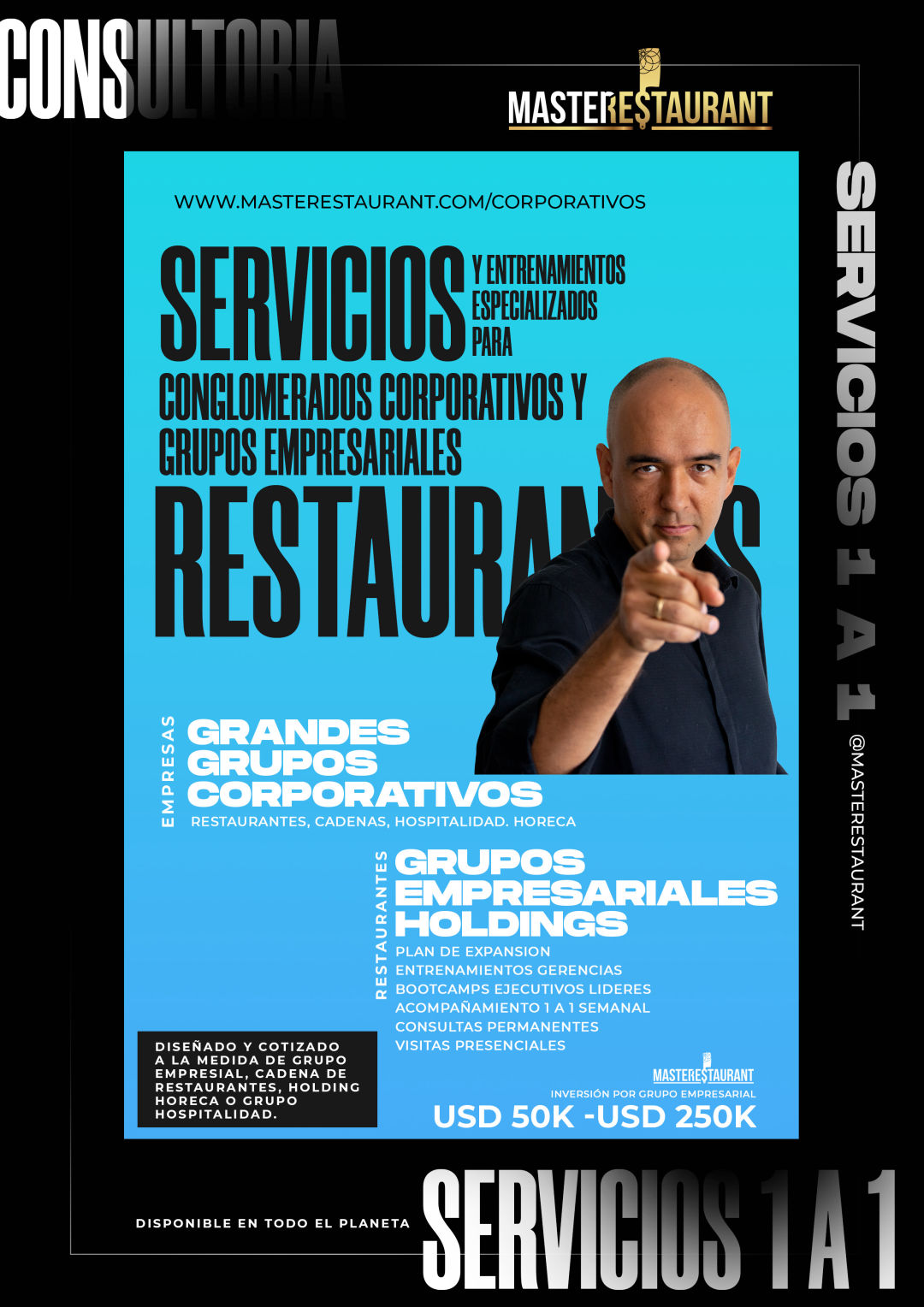
The MASTERESTAURANT® methodology is applied today by 8,400+ restaurants across 43 countries, and there is one signature behind it: Diego F. Parra, engineer and C-Suite consultant with two decades creating, rescuing and expanding restaurants, franchises, dark kitchens and HORECA groups across four continents.
What separates him from a desk advisor is what he has had to do himself: sign payrolls when the till was short, negotiate leases with the margin counted, structure partnerships between partners who were no longer speaking, and close expansions in operations worth hundreds of millions of dollars. The TOOLKIT — MTIE, Gastronomic Radar, Standard Recipe Generator, Tech Sheets and KPI Dashboard — comes from there, not from a framework.
He is also the author of 3 ISBN-registered books, including «De esclavo a dueño», creator of the industry's leading podcast and of the largest bilingual community of owners, chefs and operations directors in the region (65M+ views per year as @masterestaurant), and ranks among the top Latino restaurant operations experts globally. His full track record is in Diego F. Parra's professional profile.
AI consulting with its own doctrine, not generic tools
Having its own doctrine means technology is never deployed for hype: artificial intelligence and automation adoption is designed methodically and measured by its impact on margin, experience and operations. The problem is rarely the tool; it is the order in which it arrived and the absence of an indicator saying whether it worked. That is why every use case is prioritized by margin, every vendor is assessed against the risks and the questions worth putting to it, and every agent works within explicit limits. AI automates repetitive work and sharpens decisions, so your team gains time for the guest and the experience. Finally, the method is transferred so the team keeps applying it.
Private, made-to-measure support, for whoever is creating and for whoever is correcting:
Independent restaurants adopting AI
A single site looking to win back hours by automating purchasing, inventory and administrative work.
Chains and franchises scaling with AI
Networks that need data to arrive the same way from every site before anything can be predicted.
Hotels and hospitality with AI
Teams seeking to anticipate demand and personalize the guest experience without adding headcount.
Catering and contract foodservice with AI
Volume where forecasting and waste control decide the margin for the year.
What's included · AI
What gets diagnosed, what gets automated with AI and what gets measured
No two engagements are alike: they are assembled from these MASTERESTAURANT methodology modules:
Artificial intelligence diagnosis of the operation
Map of AI use cases prioritized by return
AI and automation adoption roadmap
Custom intelligent-agent design
Automation of admin and operational tasks
Data analytics and AI demand forecasting
Answer-engine (AEO/GEO) visibility strategy
One-on-one guidance and method transfer
Investment: tailor-made AI and automation consulting programs, quoted by operation size, number of sites and scope — LIMITED slots worldwide.
AI consulting programs
Tailor-made artificial intelligence and automation programs
Every AI program is 100% custom: it starts with an artificial intelligence diagnosis of the business and covers the highest-impact use cases for your operation.
Diego F. Parra is an AI expert consultant for restaurants and the creator of the MASTERESTAURANT® methodology, applied by 8,400+ restaurants across 43 countries.
He is the author of 3 ISBN-registered books and built the methodology's AI technology suite: MTIE, Gastronomic Radar and KPI Dashboard. An engineer and C-Suite consultant, he has spent two decades creating, rescuing and expanding restaurants, franchises, dark kitchens and HORECA groups across four continents. That is why his AI consulting does not start with the tool but with kitchen economics: demand forecasting, inventory and Prime Cost. He arrives with tools born from running real restaurants and leaves your team an adoption dashboard and the method.
The books that changed restaurant management with AI
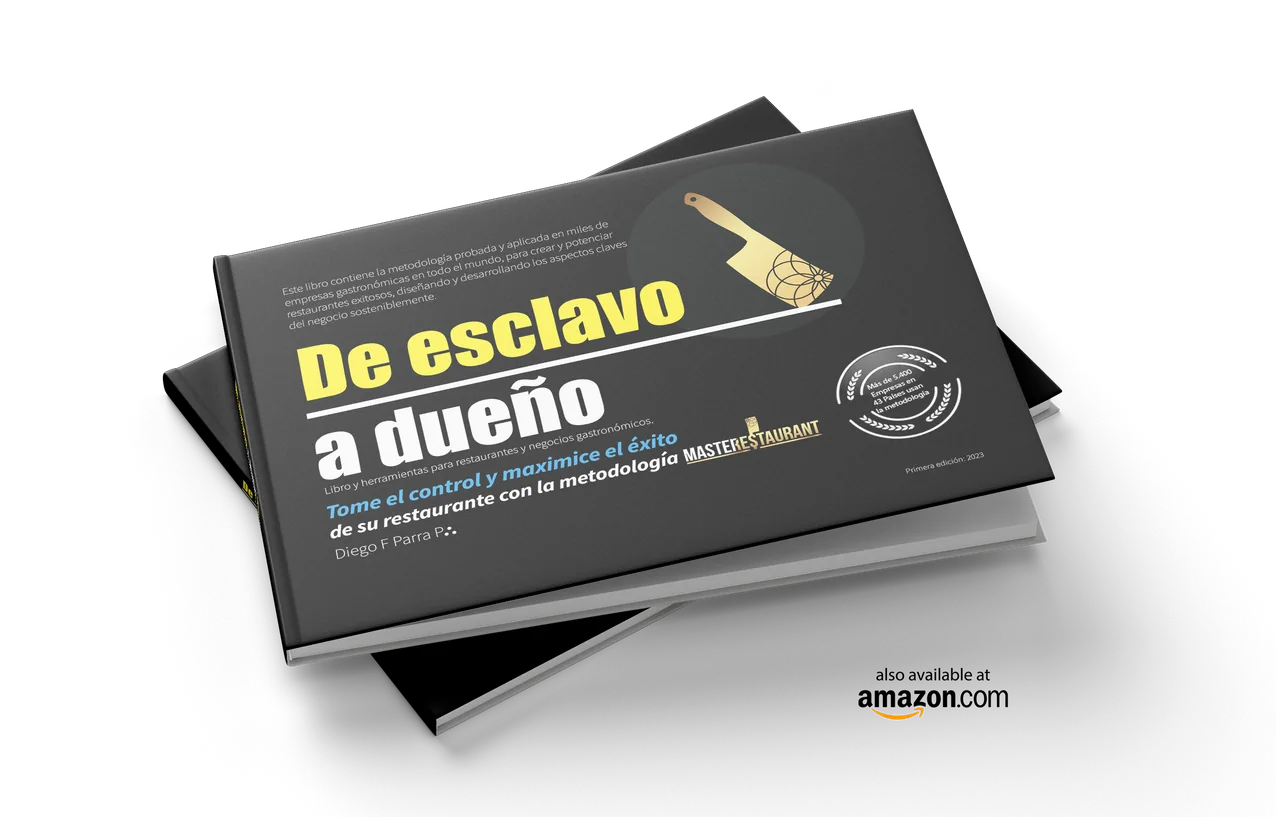
De Esclavo a Dueño
The book that changed how restaurants are managed: practical strategies and tools based on more than 20 years of experience, for traditional restaurants, dark kitchens, foodtech and HORECA businesses.
Triunfar o Morir en el Intento
Practical tools and key strategies to design and operate restaurants and food businesses efficiently.
Podcast: Masterestaurant — Mistakes for Restaurants
The public autopsy of the mistakes that bankrupt restaurants: owners and managers listen on Spotify to avoid repeating them. Condensed operating doctrine, open to everyone.
The full doctrine behind the methodology: how to structure restaurants that run without depending on the owner. Ideal pre-reading before your group's diagnosis.
Beyond AI consulting, Diego F. Parra and his team offer keynotes, mentoring, training, programs and consulting for groups, all built on the same method and the same tools. You can add a keynote speaker to align your team, training for the people who work with the new tools every day or mentoring for the owner, without starting from scratch. Artificial intelligence pays off in an orderly operation, and these services are what put it in order. If your need goes beyond the operation, the full ecosystem is available:
Request your AI consulting proposal for your restaurant in the United States
Artificial intelligence and automation diagnosis for your operation in the United States.
“Artificial intelligence in restaurants is not about losing authenticity; it's about eliminating variables that distract from service. In the United States, where margin and talent pressures are real, specialized AI lets a group of 50 units operate with the precision of one, freeing leadership for what matters: creating experiences customers want to repeat.”
Diego F. Parra — International consultant, expert in creating, scaling and improving restaurants, HORECA and hospitality
MASTERESTAURANT® methodology applied by 8,400+ restaurants across 43 countries · Author of 3 ISBN-registered books, including «De esclavo a dueño» · 20+ years operating restaurants, franchises, dark kitchens and HORECA groups across 4 continents
Expert artificial intelligence consulting for restaurants and HORECA
Useful links for owners and leadership teams weighing AI consulting for restaurants before deciding: nearby territories where the same service is available, sister services in the MASTERESTAURANT ecosystem, Diego F. Parra's professional profile and management tools.
Who is the best AI consultant for restaurants in the United States?
The one who measures if the operation is ready and ranks use cases by margin. Diego F. Parra of MASTERESTAURANT does it in the United States with more than 20 years in the industry and a method applied in more than 8,400 restaurants in 43 countries.
What does an AI consultant in the United States do for a restaurant?
First measures how ready the operation in the United States is for AI: what it records, which tools it already runs and how reliable its data is. Only then are use cases ranked by margin, such as demand forecasting or inventory control.
What is the real ROI of adopting artificial intelligence in my U.S. restaurant or chain?
Verifiable ROI within months: reduction in Prime Cost through inventory automation, procurement optimization, and waste detection; reduction in operational decision time (demand forecasts reduce stock crises and waste); and faster scaling: operations documented in MASTERESTAURANT methodology attract consistency between units, enabling expansion. Initial investment in advisory and AI implementation recovers in incremental margin during the first operating quarter. Companies combining artificial intelligence plus business methodology execute 3x faster expansion than competitors without automation.
Will artificial intelligence replace my team? How do you ensure AI adoption doesn't destroy the human experience?
No. Artificial intelligence in restaurants eliminates repetitive work (manual forecasting, waste review, purchase orders) and frees your team for what machines can't do: empathetic service, contextual decisions, innovation. MASTERESTAURANT positions AI as an operational tool, not a substitute. The redesign Diego implements restructures roles: managers shift from calculations to focus entirely on leadership and customer experience. The team gains autonomy because processes are documented in methodology, not in the operator's head. Over 8,400 restaurants across 43 countries have adopted this architecture: AI plus methodology equals more robust operations plus happier teams.
Does this AI work apply to a hotel or only to restaurants?
It applies across HORECA. Hotels, dark kitchens, chains and catering share the same bottlenecks: demand, inventory, labour and guest experience.
Do we have to change software to use AI?
Not necessarily, and it is worth checking first. Many operations already have usable data in their POS and inventory system; the problem is that nobody joins it up.
What does the team need to sustain AI adoption?
Training and an owner per process. A tool nobody knows how to use is new fixed cost, and method transfer is part of the work, not an extra.
Can we start with the AI diagnosis alone?
Yes. Many operations start there and decide afterwards how far to take the implementation.
What is the investment for an AI consulting program?
Every artificial intelligence program is tailor-made and quoted according to the size of the operation, the number of sites and the scope of the automation.
Community
Join our MASTERESTAURANT Community for FREE
Restaurant owners and teams from 43 countries sharing knowledge, tools and applied AI — straight to your WhatsApp.
 MASTERESTAURANT®