DIEGO F PARRA · CREATOR OF THE MASTERESTAURANT® METHODOLOGY
HOSPITALITY CONSULTINGWho does leadership in Mazatlán turn to when the founder's judgement stops scaling?
Growing a restaurant is harder than opening one. This consulting exists so an operation in Mazatlán reaches its next site with margin defended and a standard that travels, not with more repeated chaos.
Expert consulting, not generic consulting, in Mazatlán
The MASTERESTAURANT methodology and its TOOLKIT have been applied across more than 8,400 restaurants in 43 countries. This is not business-school theory: it is what was left standing after working inside real operations, and it arrives with its own instruments —MTIE, Gastronomic Radar, Standard Recipe Generator, Tech Sheets and KPI Dashboard— instead of generic templates.
In Mazatlán it adapts to the market, the size and the stage of the business, because copying a recipe from another country is exactly what this consulting exists to prevent. The order of work stays the same from one market to the next: measure with the operation's own data first, then fix what returns margin fastest, and put the structural work in writing until the model is ready to be replicated.
How does restaurant consulting work in Mazatlán?
In Mazatlán, the first step is measuring the restaurant on its own numbers: what each dish really earns, where margin leaks and which decisions are being made without data. The diagnosis then orders the plan by impact, with what moves money first.
The work is done one-on-one with whoever runs the business, in two stages. Within weeks: Prime Cost, theoretical versus actual cost, waste and menu engineering, the part that hits the bottom line first. Then the part that makes the change stick: standard recipes with technical sheets, written processes, manuals and a team trained to run service without the owner in the kitchen. Support lasts until everything is implemented and being measured, not merely recommended. It runs virtually, on site or in a hybrid format, in English or Spanish. This page cites four verified figures as a reference for Mazatlán, from sources such as INEGI and the National Restaurant Association.
What do the numbers say about running a restaurant in Mazatlán?
15,950 — jobs in food and beverage preparation, largest sector in Mazatlán (Economic Census 2024); source: INEGI. It is context, not a diagnosis: it does not say how much margin an operation keeps or where it leaks.
The decision comes from the restaurant's own numbers, not from market figures. Other reference points cited on this page: 42 % (operators who reported their restaurant was not profitable, the National Restaurant Association); 1.3 % (projected real sales growth for the industry in 2026, the National Restaurant Association); 5.4% (average monthly staff separations rate in US accommodation and food services, 2024, the U.S. Bureau of Labor Statistics). Those numbers are Prime Cost, the gap between theoretical and actual cost, waste and the margin on each dish. In Mazatlán, as in any other market, they are what show whether the next move is to adjust the menu and prices, tighten the operation or prepare a second site.
Data
Reference figures for restaurants in Mazatlán
The figures cited on this page, with what each one measures and its source.
Figure
What it measures
Source
42 %
Operators who reported their restaurant was not profitable
National Restaurant Association
1.3 %
Projected real sales growth for the industry in 2026
National Restaurant Association
15,950
jobs in food and beverage preparation, largest sector in Mazatlán (Economic Census 2024)
INEGI - Censo Económico 2024
5.4%
Average monthly staff separations rate in US accommodation and food services (2024)
U.S. Bureau of Labor Statistics
Each figure links to its source in the data cards on this page.
The local market
The competitive context of Mazatlán
Most consolidated restaurants in Mazatlán confuse turnover with margin. They increase sales, but profitability leaks through gaps no one measures: the theoretical cost of a pasta or ceviche rarely matches actual execution (waste, spoilage, unpredictable labor), and that gap widens each quarter. The owner works longer hours, runs more shifts, but margin doesn't appear because the problem isn't effort—it's that the business has no visibility into where money actually goes. When I audit well-grossing restaurants, I consistently find the same thing: unreported costs, recipes that vary by shift, staff operating by intuition because there are no standard procedures. That doesn't fix by pushing harder. It fixes by measuring.
What restaurant consulting delivers, tailored and concrete, is the move from a business dependent on the owner's judgment to one that runs on system. It starts with a full diagnostic: real numbers are modeled (not guesses, but actual POS and inventory data), processes are mapped, the menu is engineered from true unit economics (which dish delivers real margin, which one bleeds cost), and you get standard recipes with technical specifications any chef can execute identically each shift. The Restaurant Model Canvas of MASTERESTAURANT puts prime cost under visible control, waste moves from invisible to measured, processes are written so they don't depend on staff memory, and EBITDA per unit stops being a vague number to become an indicator tracked week by week. What's designed gets implemented the following week in the kitchen and back office—not filed in a presentation—it's operational, concrete, and margin rises.
Working with an operator who's led +8,400 restaurants across 43 countries shortens the learning curve because this isn't theory—it's patterns distilled from thousands of real cases. Diego F. Parra already knows exactly where to look: he doesn't re-discover that prime cost drives profitability or that staff turnover erodes margin; he knows the questions almost no one asks and spots the patterns software misses. Those insights—how to engineer a menu in a coastal market where tourism matters but residents drive real margin, how to standardize when skilled labor is scarce and mobile, what process changes close the gap between theoretical and actual cost—don't come from generic consulting or from any system. They come from the harvest of real business cases.
The return is concrete: margin recovered and defended against the erosion of invisible costs, cost structure under control, consistency across every shift and every location without last-minute surprises, staff executing to standard because processes are documented and technical specs aren't a filing cabinet item but the way work gets done every day. A business where investment, menu, and expansion decisions are made on data and unit economics, not on owner intuition. And where the owner stops being indispensable to daily operations to become the executive who watches indicators, who decides strategically whether the next location makes sense or how to strengthen the existing one. That's what separates a restaurant prepared to scale from one still trapped in founder-dependent effort.
Market data
Sector figures in Mazatlán
42 %
Operators who reported their restaurant was not profitable
Mazatlán's dining ecosystem is shaped by tourism, but not dominated by it. The seasonal guest (mainly December through March and holiday weeks) has high purchasing power but limited stay; the resident is where real margin lives. The major restaurant corridors—Avenida Marlin with its seafood establishments and ambiance, the Historic Center attracting locals seeking traditional food, the beachfront fluctuating by season—each has completely different cost dynamics and competitive pressure. On Marlin, rent is high and competition is brutal because everyone serves ceviche and shrimp: only those with clear unit economics scale. Downtown, clients are more loyal but return every two weeks, not every shift. Skilled labor (chefs who execute with consistency, servers who understand sales) is scarce because the tourism sector aggressively competes for the same talent pool, driving both turnover and wage pressure. A restaurant in Mazatlán that doesn't map this bimodal client reality—seasonal vs. resident—ends up with operations that satisfy neither well.
Margin erodes in Mazatlán from port-specific factors. Quality ingredients fluctuate with season, and seasonality compresses cash flow: winter revenue must carry spring and summer months. Staff turnover is structural: trained cooks seek work in Cancún or move north. Rent in high-traffic zones (Marlin, beachfront) is high relative to local ticket average, and labor costs don't drop when customer volume does. Without waste control and spoilage procedures—especially on over-purchased seafood—you hemorrhage margin. The local customer is price-sensitive, competition is fierce, and entry barriers are low. Without visible cost systems, defending margin becomes mathematically impossible.
RESOURCES
MASTERESTAURANT studies, guides & tools
Reading and downloads we bring to operators in Mazatlán: proprietary data, cases and working templates:
There are consultants who have read about restaurants and consultants who have stood inside one at nine on a Friday night. Diego F Parra is the second kind: engineer and C-Suite consultant with two decades creating, rescuing and expanding restaurants, franchises, dark kitchens and HORECA and hospitality groups across four continents, with payrolls signed, leases negotiated and expansions closed in operations worth hundreds of millions of dollars.
That experience was distilled into the MASTERESTAURANT® methodology, applied today by 8,400+ restaurants across 43 countries, and into its TOOLKIT: MTIE, Gastronomic Radar, Standard Recipe Generator, Tech Sheets and KPI Dashboard. Tools, not slides.
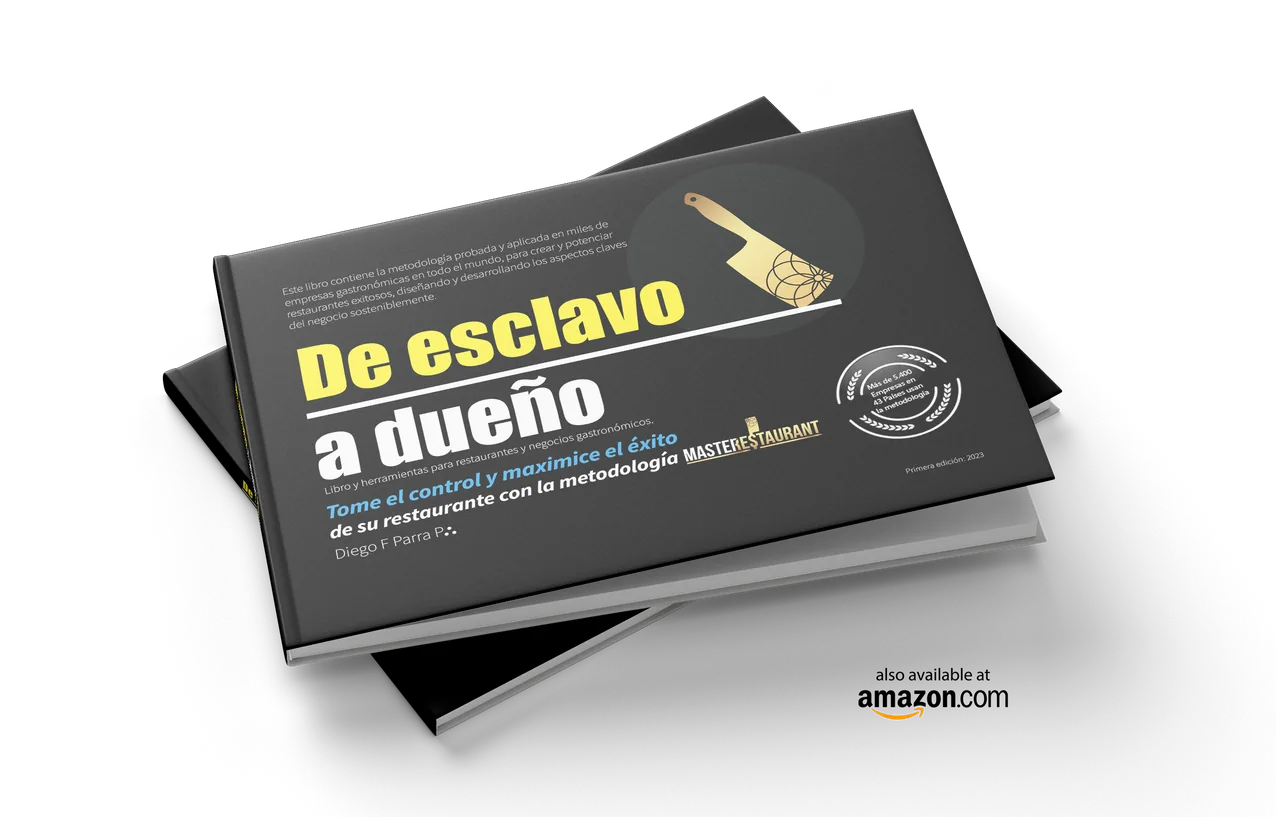
The picture is completed by 3 ISBN-registered books, including «De esclavo a dueño», the industry's leading podcast, the largest bilingual community of owners, chefs and operations directors in the region (65M+ views per year as @masterestaurant) and a place among the top Latino restaurant operations experts globally. Full detail in Diego F Parra's professional profile.
Restaurant consulting with its own doctrine, not generic frameworks
Expert restaurant and hospitality consulting is not solved with management theory borrowed from another industry. It is solved with hospitality engineering: Prime Cost under control, theoretical versus actual cost, waste measured, standard recipes, written processes and indicators leadership reviews every week. Every engagement starts from the Restaurant Model Canvas: the whole business model is diagnosed, priorities are ranked by their impact on margin, and the team is left with its own instruments to sustain the results once the consulting ends. Decisions stop being bets: they are made on data. The method is the same for an independent restaurant, a chain or a hospitality group.
Menu engineering and technical sheets that show what each dish earns, with Prime Cost, waste and shrinkage measured: where the bottom line feels the change first.
1-on-1 consulting, no templates, for restaurants in any of these situations:
Established restaurants ready to scale
Proven turnover and the ambition to grow: the business needs margin defended, a standard that travels and a model that survives the next site.
High-volume operations
When millions are sold a year, one point of Prime Cost is real money. Theoretical versus actual cost, waste measured, and menu engineering where it moves the needle.
Multi-site businesses
The point where the founder's judgement stops scaling: standardization, EBITDA per unit, business governance and a structure that carries growth.
Hotels and hospitality businesses
Food and beverage inside a hotel operation: profitability of the department, its own unit economics and an experience worthy of the rest of the asset.
Investors and family offices
Foodservice assets in a portfolio: independent diagnosis, value thesis and support to leadership so the return does not depend on the operator's luck.
What does it include?
Contents of the restaurant consulting engagement
These are the MASTERESTAURANT methodology modules your tailor-made programme is built from:
Full diagnosis of the restaurant and its business
Business model and Restaurant Model Canvas
Concept, positioning and value proposition
Customer experience and customer journey
Menu and cost engineering (Prime Cost, theoretical vs. actual, waste)
Standard recipes and technical sheets
Financial model and EBITDA visibility per unit
Operating model, processes and manuals
Organizational structure and roles
Management indicators and control dashboard
Leadership development and management training
Front-of-house and kitchen team training
Readiness to grow: new locations, licensing or franchising
Investment: from USD $12K upwards — tailor-made programs, priced to the size, stage and complexity of the business.
Consulting programs
Tailor-made expert restaurant and hospitality consulting programs
Every consulting program is 100% customized to the restaurant: its size, its stage, its market and whatever is keeping it from being profitable today.
Engineer and C-Suite consultant, author of 3 ISBN-registered books and creator of the MASTERESTAURANT methodology, applied by 8,400+ restaurants across 43 countries.
The method comes with its own technology suite: MTIE, Gastronomic Radar, Restaurant Model Canvas and KPI Dashboard. He has spent two decades creating, rescuing and expanding restaurants, franchises, dark kitchens and HORECA and hospitality groups across four continents, signing payrolls, negotiating leases and closing expansions. For an owner or a leadership team, what matters is where the method comes from: having run restaurants, not studying them from the outside. That is why every engagement arrives with proven instruments and leaves indicators the team keeps using afterwards. He works in English or Spanish, virtually, on site or in a hybrid format.
The book that changed how restaurants are managed: practical strategies and tools based on more than 20 years of experience, for traditional restaurants, dark kitchens, foodtech and HORECA businesses.
Triunfar o Morir en el Intento
Practical tools and key strategies to design and operate restaurants and food businesses efficiently.
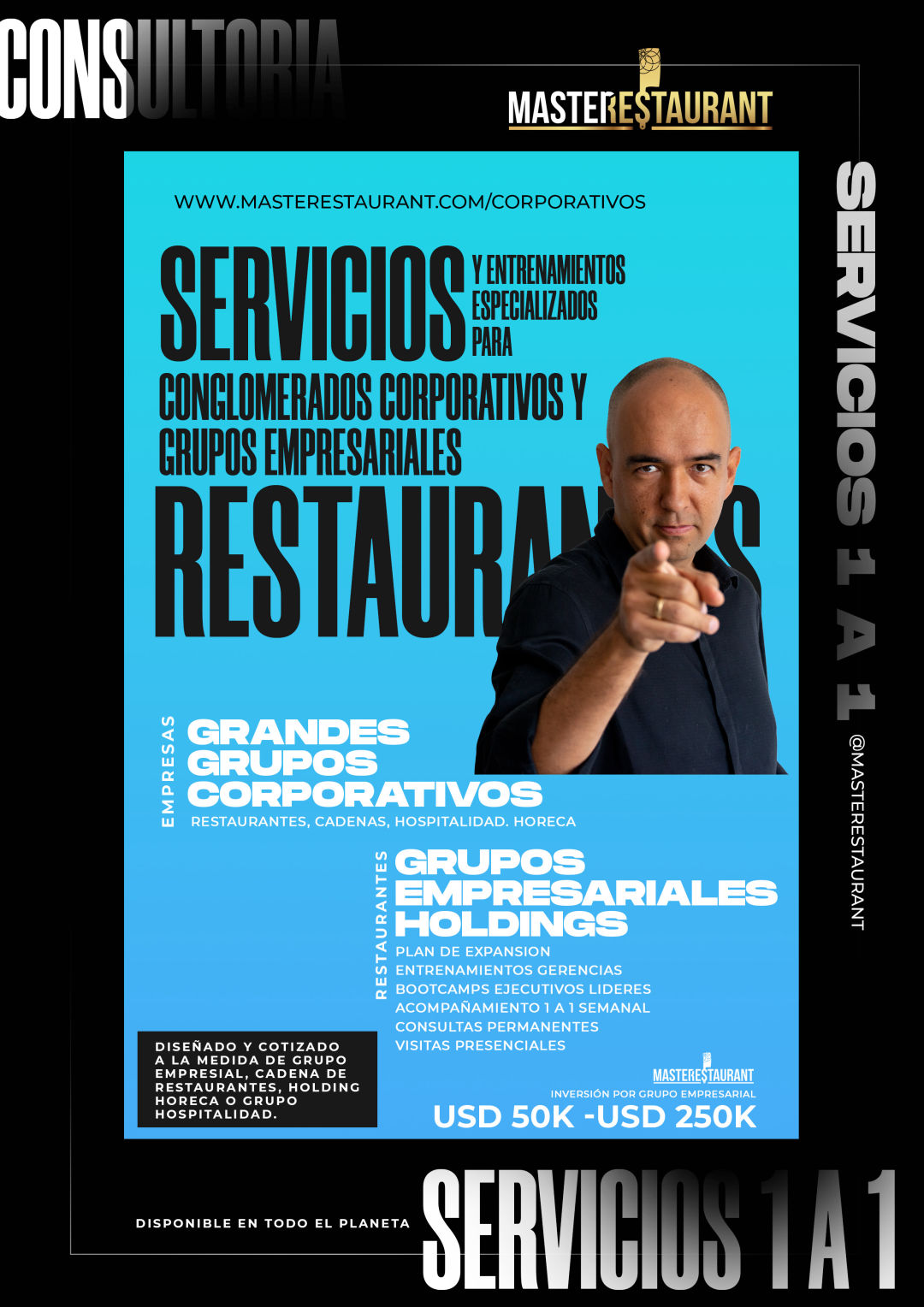
The complete corporate intervention catalog: consulting, executive bootcamps, advisory and specialized services, with scopes and formats. The document to decide with your board.
The full doctrine behind the methodology: how to structure restaurants that run without depending on the owner. Ideal pre-reading before your group's diagnosis.
Is the restaurant only the beginning? Every service in the ecosystem starts from the same method and the same tools as this consulting: personalized mentoring for the owner, growth programs, the membership, training for the team and group consulting once the second or third site arrives. The full ecosystem is available:
Get a quote for expert consulting for your group in Mazatlán
Your message goes straight to Diego's team: group or chain, number of sites, stage and what you need to achieve in Mazatlán.
“The restaurant that grosses well but doesn't margin doesn't need to sell more: it needs to see where what it sells is going. And that only fixes with system.”
Diego F. Parra — International consultant, expert in creating, scaling and improving restaurants, HORECA and hospitality
MASTERESTAURANT® methodology applied by 8,400+ restaurants across 43 countries · Author of 3 ISBN-registered books, including «De esclavo a dueño» · 20+ years operating restaurants, franchises, dark kitchens and HORECA groups across 4 continents
Restaurant and hospitality consulting: territories, services and ecosystem resources
Related links for owners, partners and leadership teams evaluating expert restaurant and hospitality consulting for their food business: nearby territories, sister services in the MASTERESTAURANT ecosystem and management tools, all built on the same method and the same instruments.
We have good revenue, but margins are thin. Is the problem really costs we don't measure?
Absolutely. When I audit a restaurant with solid sales but weak margins, I invariably find the same: theoretical recipe cost never matches actual cost (seafood waste, spoilage, improvised labor), and that gap multiplies every shift. In Mazatlán it's typical to treat seafood waste as 'normal' without measuring it. When you standardize recipes with technical specs and track actual waste, you close that gap. It's money disappearing without anyone seeing it.
Our staff turns over constantly. How do I standardize operations when people keep changing?
Consistency doesn't depend on people; it depends on documented processes and technical specs that replace memory. A new cook learns the ceviche recipe because it's written down, not because you need hours to train them. Portions, waste, timing: all fixed. When they leave, the next one executes the same way. In Mazatlán, with structurally high turnover, that's the difference between a business that works and one that depends on who's cooking that shift. It's also what lets you scale: each new location doesn't start training from scratch.
What is a full diagnosis?
A complete picture of the business with numbers: costs, operations, processes, team, customer experience and model. It comes from real operating data, not from a questionnaire.
Is the work remote or on site?
Virtual, on site or hybrid, depending on scope and city. The logistics change; the method and the deliverables do not.
What is left in writing at the end?
Standard recipes and technical sheets, processes and manuals, a structure of roles, an indicator dashboard and the growth plan. What is not written down does not survive the first round of staff turnover.
Do you help with franchising too?
With getting ready to franchise. Without a standardized model that is profitable per unit, franchising sells a replicated problem. Model first, contract second.
What if I already have a consultant or an accountant?
Nobody gets replaced. An accountant measures what already happened; this consulting changes what is about to happen in the operation. They usually work well in parallel.
Community
Join our MASTERESTAURANT Community for FREE
Restaurant owners and teams from 43 countries sharing knowledge, tools and applied AI — straight to your WhatsApp.
 MASTERESTAURANT®