 MASTERESTAURANT®
Operators still reporting some level of staffing insufficiency (2026)
James Beard Foundation
Expert consulting · Other cities in California

DIEGO F PARRA · CREATOR OF THE MASTERESTAURANT® METHODOLOGY
FOOD AND BEVERAGE CONSULTANT Who do owners in Other cities in California call when the restaurant trades well and still leaves no money?
Diego F. Parra has worked on 8,400+ restaurants across 43 countries. In Other cities in California the method is the same: a diagnosis with numbers, a plan ranked by impact and support until the changes are implemented and measured.
Download the portfolio (PDF)Restaurant & hospitality consulting slots LIMITED worldwide — reserve yours
8,400+restaurants apply his methodology
43countries with supported groups
65M+views per year
2service languages: EN - ES
International validation
See Diego F. Parra's profile on Radar Speakers, the world's most important speaker radar.
See profile on Radar Speakers →
49 %
1.3 %
1 million+
5-25x

@masterestaurant
Restaurant consulting in Other cities in California: what happens, and in what order
The MASTERESTAURANT methodology and its TOOLKIT have been applied across more than 8,400 restaurants in 43 countries. This is not business-school theory: it is what was left standing after working inside real operations, and it arrives with its own instruments —MTIE, Gastronomic Radar, Standard Recipe Generator, Tech Sheets and KPI Dashboard— instead of generic templates.
In other cities in California it adapts to the market, the size and the stage of the business, because copying a recipe from another country is exactly what this consulting exists to prevent. The order of work stays the same from one market to the next: measure with the operation's own data first, then fix what returns margin fastest, and put the structural work in writing until the model is ready to be replicated.
How does restaurant consulting work in other cities in California?
In other cities in California, it starts with a diagnosis of the restaurant built from its own operating data, not questionnaires: where the money goes, how much margin each dish earns and which processes are missing.
That becomes a work plan ranked by impact on margin.
This is one-on-one consulting with no templates, for the owner and the team that runs the restaurant. What moves money in weeks comes first: Prime Cost, actual versus theoretical cost, waste and shrinkage, menu engineering and technical sheets. The structural work follows, in writing: standard recipes, processes, manuals and an organizational structure that does not depend on the owner being there. Support continues through implementation and ends with a closing measurement against the opening one. It runs virtually, on site or in a hybrid format, in English or Spanish. This page cites four verified figures as a reference for other cities in California, from sources such as the James Beard Foundation and the National Restaurant Association.
What do the numbers say about running a restaurant in other cities in California?
49 % — operators still reporting some level of staffing insufficiency (2026); source: the James Beard Foundation. It is context, not a diagnosis: it does not say how much margin an operation keeps or where it leaks.
The decision comes from the restaurant's own numbers, not from market figures. Other reference points cited on this page: 1.3 % (projected real sales growth for the industry in 2026, the National Restaurant Association); 1 million+ (restaurant and foodservice establishments, 2025, the National Restaurant Association); 5-25x (cost of acquiring a new customer vs. retaining an existing one, Harvard Business Review). Those numbers are Prime Cost, the gap between theoretical and actual cost, waste and the margin on each dish. In other cities in California, as in any other market, they are what show whether the next move is to adjust the menu and prices, tighten the operation or prepare a second site.
Data
Reference figures for restaurants in other cities in California
The figures cited on this page, with what each one measures and its source.
| Figure | What it measures | Source |
|---|---|---|
| 49 % | Operators still reporting some level of staffing insufficiency (2026) | James Beard Foundation |
| 1.3 % | Projected real sales growth for the industry in 2026 | National Restaurant Association |
| 1 million+ | restaurant and foodservice establishments (2025) | National Restaurant Association |
| 5-25x | Cost of acquiring a new customer vs. retaining an existing one | Harvard Business Review |
Each figure links to its source in the data cards on this page.
The local market
The restaurant market in Other cities in California: the context your portfolio must master
A consolidated restaurant in California doing $2M in annual revenue is operating with margins that feel structural —that's just how restaurants work—. It's not. Most close with elevated Prime Cost, when it should be lower. That 6-to-8-point gap is where margin dies. It lives entirely in what nobody measures: waste misclassified, shrink booked as revenue, menu engineering where every plate costs the same and generates fuzzy margins, purchasing without rigor because there's no line-by-line audit of what leaves the kitchen against the recipe. The owner closes night after night, watches numbers, builds budgets, sends messages at eleven. Works. The gap doesn't move. Working more doesn't touch it. Measuring it does.
The transformation that restaurant consulting delivers isn't a diagnosis that gets archived. It's a Restaurant Model Canvas built to your operation's specifics, a Prime Cost dissected line by line, standard recipes with technical specifications every cook executes identically, processes written where there used to be gut call. Numbers: EBITDA per unit, unit economics clear, margin per plate, cost per shift and per location if you have multiples. None of that lives in a report. It runs in your operation the following week, when the sous chef closes the new recipe, when the purchasing manager executes negotiation with metrics, when cash close takes 20 minutes because the system is designed for that, not improvisation. A business that runs on system doesn't depend on the owner's call. Then it can grow.
When a hospitality consulting firm works with restaurants across 43 countries over years, it doesn't learn theory. It learns patterns. It sees where systems fail, why a menu change tanks margin, how a two-line tweak in purchasing recovers 15 Prime Cost points, when staff turnover isn't failure but signal that operations is chaotic. Those learnings come from thousands of real cases —restaurants doing the same revenue as yours, facing the same cost pressure, the same labor problems—. The pattern Diego sees in a San Francisco operation holds in Los Angeles, San Diego, Lake Tahoe. Software doesn't see patterns. A C-Suite consultant who's been in operations does. That shortens the path.
Return isn't aspirational. A California restaurant that applies this method recovers 4 to 6 Prime Cost points in 60 days. A margin improves. On $2M revenue, that's $80-120K annually staying inside. But recovered margin is half the payoff. The other half is that the business stops depending on your constant presence. A team with processes, knowing what to measure, deciding on data, executes consistent. Every shift is predictable. Every location runs the same logic. When that happens, growth is strategy, not a bet. You stop being essential to daily operations.
Market data
The numbers decisions get made on in Other cities in California
Projected real sales growth for the industry in 2026
National Restaurant Associationrestaurant and foodservice establishments (2025)
National Restaurant AssociationCost of acquiring a new customer vs. retaining an existing one
Harvard Business ReviewOther cities in California as a market
What sets the pace of business in Other cities in California
California concentrates high-cost hospitality operations with elevated expectations. The main consumption corridors —San Francisco Bay, Los Angeles, San Diego, tourism and resort zones—are densely packed with boutique restaurants, differentiated concepts and established operations competing for margins that erode fast. The California diner has purchasing power, is sophisticated and informed, and faces hundreds of alternatives. Rents in premium zones are high; kitchen talent availability is limited and minimum wage plus benefits already consume a significant portion of revenue. Tourism is significant in specific seasons and zones but volatile. It's a market of opportunity but also constant pressure.
Margin in California erodes through factors specific to the region. Water, energy, waste cost more than other markets; staff turnover is structural because talent seeks stability but also geographic mobility options; inputs are competitive thanks to local agriculture, but premium products raise costs; competitive pressure per zone is intense —the customer chooses from dozens of similar options—. The restaurant without tight cost control, relying on high margins or volume to compensate, loses pace fast. California doesn't gift anything. It also doesn't punish as hard as other markets if the operational model is solid and measured.
RESOURCES
MASTERESTAURANT studies, guides & tools
Reading and downloads we bring to operators in Other cities in California: proprietary data, cases and working templates:
- AI PROMPTDish Cost & Profitability Analyzer for Restaurants
- CHECKLISTBusiness model for restaurant owners: before vs after with Masterestaurant
- CHECKLISTChef partnerships: traditional method vs Masterestaurant method
- COMPARISONCocina oculta comparativa restaurantecercademi
- LIST7 restaurant membership and subscription mistakes
- ARTICLEThemed Restaurants in Other cities in California
- CANVASBusiness model canvas gastronomico definicion
The expert restaurant and hospitality consultant
Why his judgment matters in this decision
When an owner hires restaurant consulting, what he is really buying is judgment: someone who has already watched the same plan fail three times and knows where it breaks. Diego F Parra has two decades of that material — engineer and C-Suite consultant, restaurants, franchises, dark kitchens and HORECA groups created, rescued and expanded across four continents, with payrolls signed, leases negotiated and expansions closed in operations worth hundreds of millions of dollars.
That judgment is written into the MASTERESTAURANT® methodology, used by 8,400+ restaurants across 43 countries, and into its TOOLKIT: MTIE, Gastronomic Radar, Standard Recipe Generator, Tech Sheets and KPI Dashboard. The goal is not for you to depend on the consultant, but on the system.
Author of 3 ISBN-registered books, including «De esclavo a dueño», creator of the industry's leading podcast and of the largest bilingual community of owners, chefs and operations directors in the region (65M+ views per year as @masterestaurant), recognized among the top Latino restaurant operations experts globally. More in Diego F Parra's professional profile.
Restaurant consulting with its own doctrine, not generic frameworks
Expert restaurant and hospitality consulting is not solved with management theory borrowed from another industry. It is solved with hospitality engineering: Prime Cost under control, theoretical versus actual cost, waste measured, standard recipes, written processes and indicators leadership reviews every week. Every engagement starts from the Restaurant Model Canvas: the whole business model is diagnosed, priorities are ranked by their impact on margin, and the team is left with its own instruments to sustain the results once the consulting ends. Decisions stop being bets: they are made on data. The method is the same for an independent restaurant, a chain or a hospitality group.
Expert restaurant and hospitality consulting, end to end
An engagement that covers the whole cycle, from diagnosis to expansion
Diagnosis and business model
Consulting that measures before it advises: the operation's numbers first, then the restaurant's business model, not the other way around.
Do you run a group or a chain?Profitability and cost engineering
Menu engineering and technical sheets that show what each dish earns, with Prime Cost, waste and shrinkage measured: where the bottom line feels the change first.
A hotel or hospitality group?Standardization and operations
Standard recipes, written processes, manuals and structure: the restaurant runs just as well on the day the owner is away.
A celebrity or high-profile investor?Leadership, indicators and growth
A trained team, indicators in plain sight and an orderly growth plan: new sites or franchises when the model can carry it.
A themed or immersive concept?The methodology
Discover the MASTERESTAURANT methodology
Behind every food business that scales profitably there is a method, not a hunch: applied from the first diagnosis, with its own instruments.
Who is it for?
For operations already trading and ready to grow with order
Private, made-to-measure support, for whoever is creating and for whoever is correcting:
Businesses that already measure
Those keeping their numbers current move faster: they can go straight to cost engineering and standardization.
Businesses not measuring yet
The most common starting point, and not an obstacle: the full diagnosis begins precisely by putting those numbers on their feet.
Pre-opening projects
Opening with processes, technical sheets and a dashboard designed from day one avoids redoing everything with a full room.
Established groups
Structures with years of trading, layers of accumulated decisions and a need for one criterion across the whole portfolio.
What does it include?
The scope of work, point by point
The scope is defined with you; these are the MASTERESTAURANT methodology modules available:
- Full diagnosis of the business
- Menu and cost engineering
- Standard recipes and technical sheets
- Financial model and EBITDA per unit
- Processes, manuals and structure
- Management indicators
- Leadership and management training
- Front-of-house and kitchen training
- Readiness for new sites or franchising
Investment: from USD $12K upwards — tailor-made programs, priced to the size, stage and complexity of the business.
Consulting programs
Tailor-made expert restaurant and hospitality consulting programs
Every consulting program is 100% customized to the restaurant: its size, its stage, its market and whatever is keeping it from being profitable today.
Expert coverage
Other locations with expert consulting near Other cities in California
Explore other territories or the worldwide index:
Hospitality consulting in AnaheimRestaurant profitability consultant in ArlingtonExpert restaurant consultant in AtlantaFood and beverage consulting in Atlantic City, New JerseyHospitality consulting in Augusta GeorgiaRestaurant profitability consultant in Aurora IllinoisHospitality consulting in AustinExpert restaurant consultant in Baltimore MarylandHospitality consulting in Baton Rouge, LouisianaFood and beverage consulting in Beverly HillsFood and beverage consulting in Boca Raton FloridaFood and beverage consulting in BostonRestaurant business consultant in Brookhaven, New YorkExpert restaurant consultant in Carson City NevadaRestaurant consulting in Charlotte, North CarolinaHospitality consulting in ChicagoRestaurant business consultant in Columbia MarylandExpert restaurant consultant in Coral Gables FloridaExpert restaurant consultant in Corpus ChristiRestaurant profitability consultant in Cupertino CaliforniaRestaurant business consultant in DallasHospitality consulting in Delray Beach FloridaRestaurant business consultant in El PasoFood and beverage consulting in State of ArizonaMore countries →More cities →
We do serve — and every city on the planet
Served on site or virtually, in English and Spanish.
Who is Diego F Parra?
Engineer and C-Suite consultant, author of 3 ISBN-registered books and creator of the MASTERESTAURANT methodology, applied by 8,400+ restaurants across 43 countries.
The method comes with its own technology suite: MTIE, Gastronomic Radar, Restaurant Model Canvas and KPI Dashboard. He has spent two decades creating, rescuing and expanding restaurants, franchises, dark kitchens and HORECA and hospitality groups across four continents, signing payrolls, negotiating leases and closing expansions. For an owner or a leadership team, what matters is where the method comes from: having run restaurants, not studying them from the outside. That is why every engagement arrives with proven instruments and leaves indicators the team keeps using afterwards. He works in English or Spanish, virtually, on site or in a hybrid format.
HORECA · Chains · Holdings · Foodtech
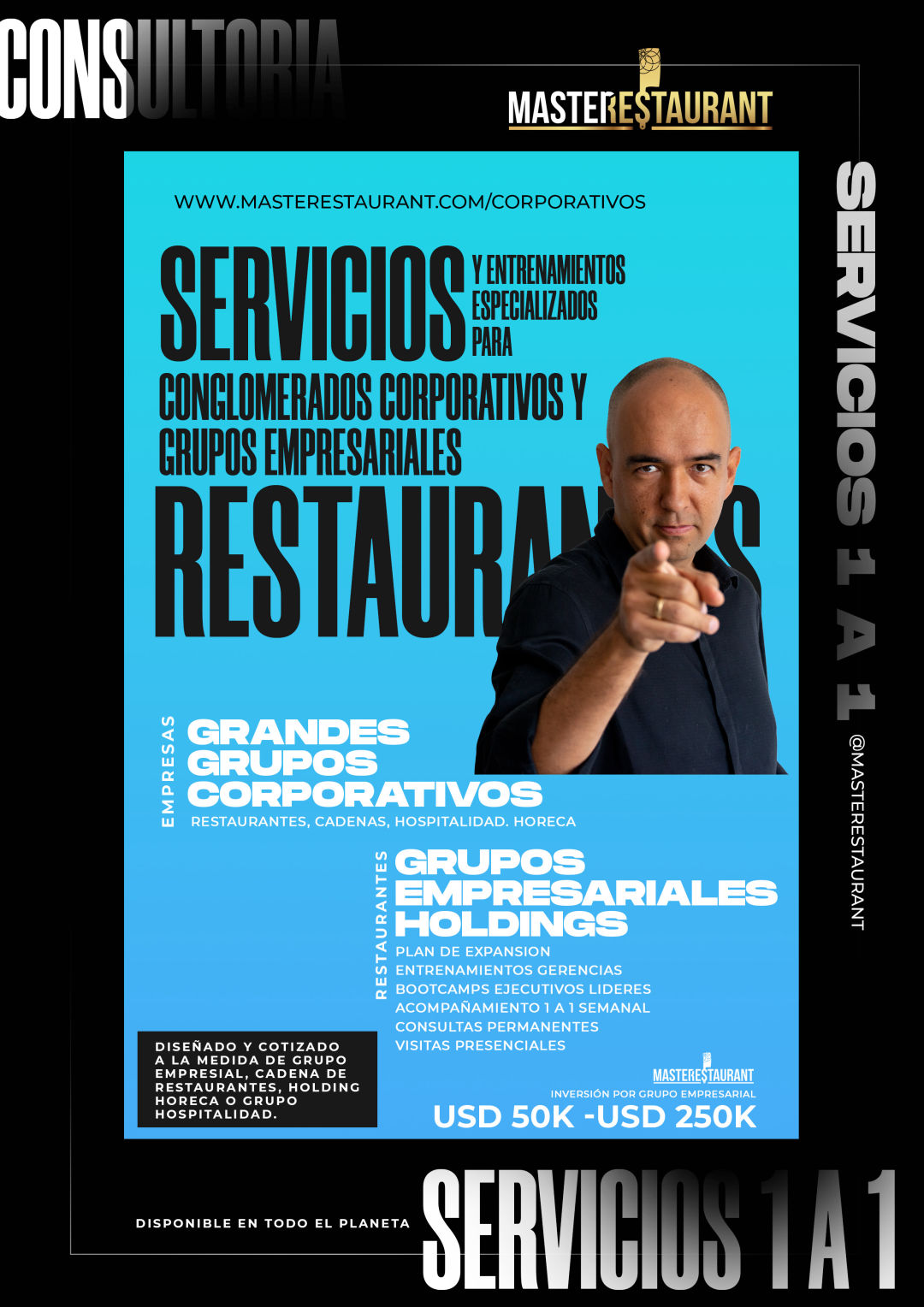
Private consulting programs for owners, partners and leadership teams
Bootcamps, training and private 1-on-1 engagements for those who run the business.
From USD $12K, priced to the business.
Published doctrine
The books that changed restaurant management
De Esclavo a Dueño
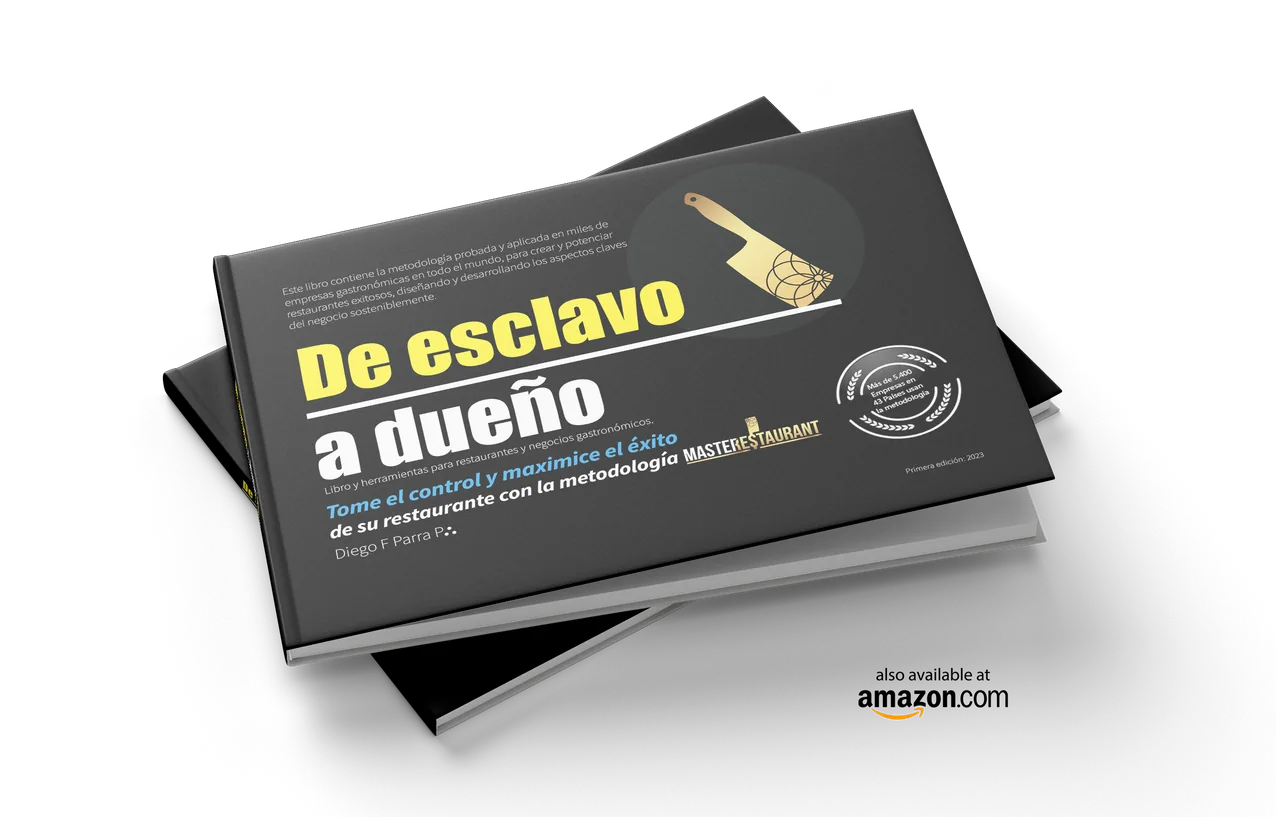
The book that changed how restaurants are managed: practical strategies and tools based on more than 20 years of experience, for traditional restaurants, dark kitchens, foodtech and HORECA businesses.
Triunfar o Morir en el Intento
Practical tools and key strategies to design and operate restaurants and food businesses efficiently.
Podcast: Masterestaurant — Mistakes for Restaurants
The public autopsy of the mistakes that bankrupt restaurants: thousands of owners and managers listen on Spotify to avoid repeating them.
Listen on SpotifyDownloads
The documents your board will ask for
MASTERESTAURANT services portfolio
The complete corporate intervention catalog: consulting, executive bootcamps, advisory and specialized services, with scopes and formats. The document to decide with your board.
Download PDFBook: From Slave to Owner
The full doctrine behind the methodology: how to structure restaurants that run without depending on the owner. Ideal pre-reading before your group's diagnosis.
View on AmazonPortfolio
More services by Diego F Parra and his team
Is the restaurant only the beginning? Every service in the ecosystem starts from the same method and the same tools as this consulting: personalized mentoring for the owner, growth programs, the membership, training for the team and group consulting once the second or third site arrives. The full ecosystem is available:
International keynote speakerOne-on-one consulting and advisoryPersonalized mentoring for owners (limited spots)Corporate groups and holdings consultingCelebrity Restaurants consultingThemed restaurant advisorySpecialized training programs52-Week membershipPitch deck and restaurant investment readinessExponential Program0.1 Program — Elevate Your RestaurantInteractive training kit
Direct contact
Get a quote for expert consulting for your group in Other cities in California
Your message goes straight to Diego's team: group or chain, number of sites, stage and what you need to achieve in Other cities in California.
“Most California restaurants don't lose margin because they work too little. They lose it because the business is designed to lose it. None of that is inevitable. When a system has measurement, it has leverage to change.”
Diego F. Parra — International consultant, expert in creating, scaling and improving restaurants, HORECA and hospitality
MASTERESTAURANT® methodology applied by 8,400+ restaurants across 43 countries · Author of 3 ISBN-registered books, including «De esclavo a dueño» · 20+ years operating restaurants, franchises, dark kitchens and HORECA groups across 4 continents
Full profile →Shall we talk about your operation in Other cities in California?
Tell us your revenue, how many sites you have and what worries you: you'll get a concrete proposal.
Explore more
Restaurant and hospitality consulting: territories, services and ecosystem resources
Related links for owners, partners and leadership teams evaluating expert restaurant and hospitality consulting for their food business: nearby territories, sister services in the MASTERESTAURANT ecosystem and management tools, all built on the same method and the same instruments.
World's best restaurant keynote speakerWorld's best restaurant consultantC-Suite restaurant consultant for chains & groupsDiego F Parra — professional profileKeynote speaker serviceCorporate groups & holdings consultingCelebrity restaurant consultingInternational themed restaurant advisoryHospitality consulting in AnaheimRestaurant profitability consultant in ArlingtonExpert restaurant consultant in AtlantaFood and beverage consulting in Atlantic City, New JerseyHospitality consulting in Augusta GeorgiaRestaurant profitability consultant in Aurora Illinois
FAQ
Frequently asked questions
How long before we see real change in margin and operations after starting the consulting engagement?
First visible margin metrics appear between 45 and 60 days: actual-versus-theoretical cost audit, menu engineering adjustments, redesigned purchasing lines. Operational processes —standard recipes, technical specifications, structured shift close—are implemented week one because they're deterministic. Team learning curve is where time lives: the sous chef mastering precise recipe execution, warehouse running FIFO, line understanding why we measure. By day 90 the model is in motion. By six months it's normal operations.
How do I know if I really have margin loss from cost chaos versus naturally thin business margins?
Measure actual Prime Cost line by line: real food cost, labor, occupied versus theoretical. If the delta exceeds 3 points, there's recoverable loss; above 5, there's structural erosion. The next metric is consistency across shifts: if Friday closes at 58% Prime Cost and Tuesday at 65%, operations is the culprit, not the model. Waste, shrink, and recipe rotation are audited. A naturally thin restaurant shows consistent low margin. One with chaos shows high volatility and large gap against category benchmark.
Where does the work begin?
With measurement. A full diagnosis puts the real numbers on the table before anything is proposed: Prime Cost, theoretical versus actual cost, waste, shrinkage, fixed-cost structure and average ticket. Recommending without measuring is just an opinion.
My restaurant is busy and leaves no money. Is that a typical case?
It is the most common case. Busy without margin is almost never a sales problem: it is menu engineering, actual versus theoretical cost, waste, or a fixed-cost structure the volume cannot cover.
How long does the engagement last?
It depends on size and stage. What does not change is the ending: it finishes when the changes are implemented and being measured, not when the report is handed over.
Do you work with the team or only with leadership?
With both, and the order matters. Leadership decides and the team executes; a change leadership approves and the team cannot sustain lasts until the first busy week.
What is the investment?
It is quoted to fit once we know the size of the operation, the number of sites and the scope. Tell us those three facts and you will get a concrete proposal.
