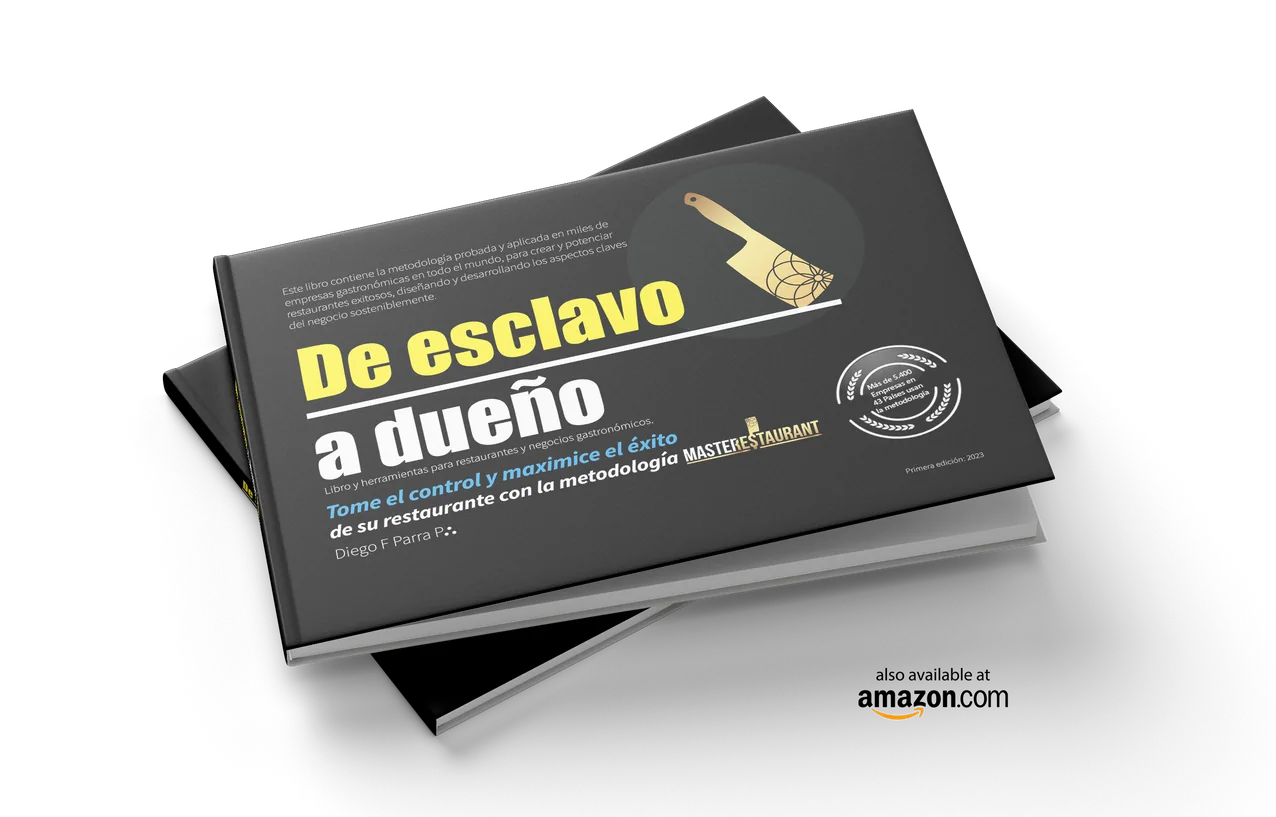
DIEGO F PARRA · CREATOR OF THE MASTERESTAURANT® METHODOLOGY
Restaurant inventory template free kitchen inventory sheetThe kitchen, bar and storage inventory sheet to count what is on hand and decide what to order
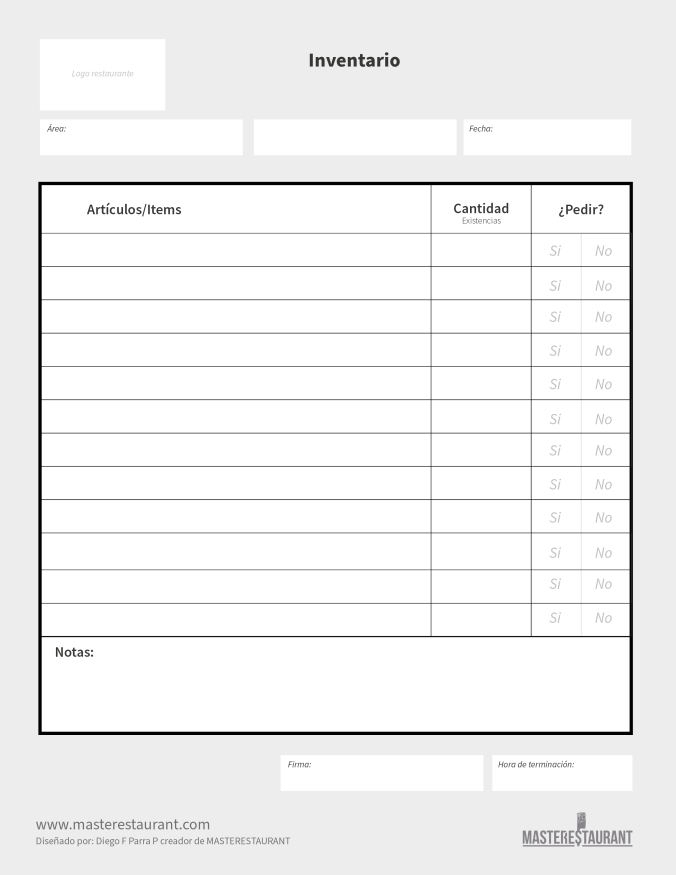
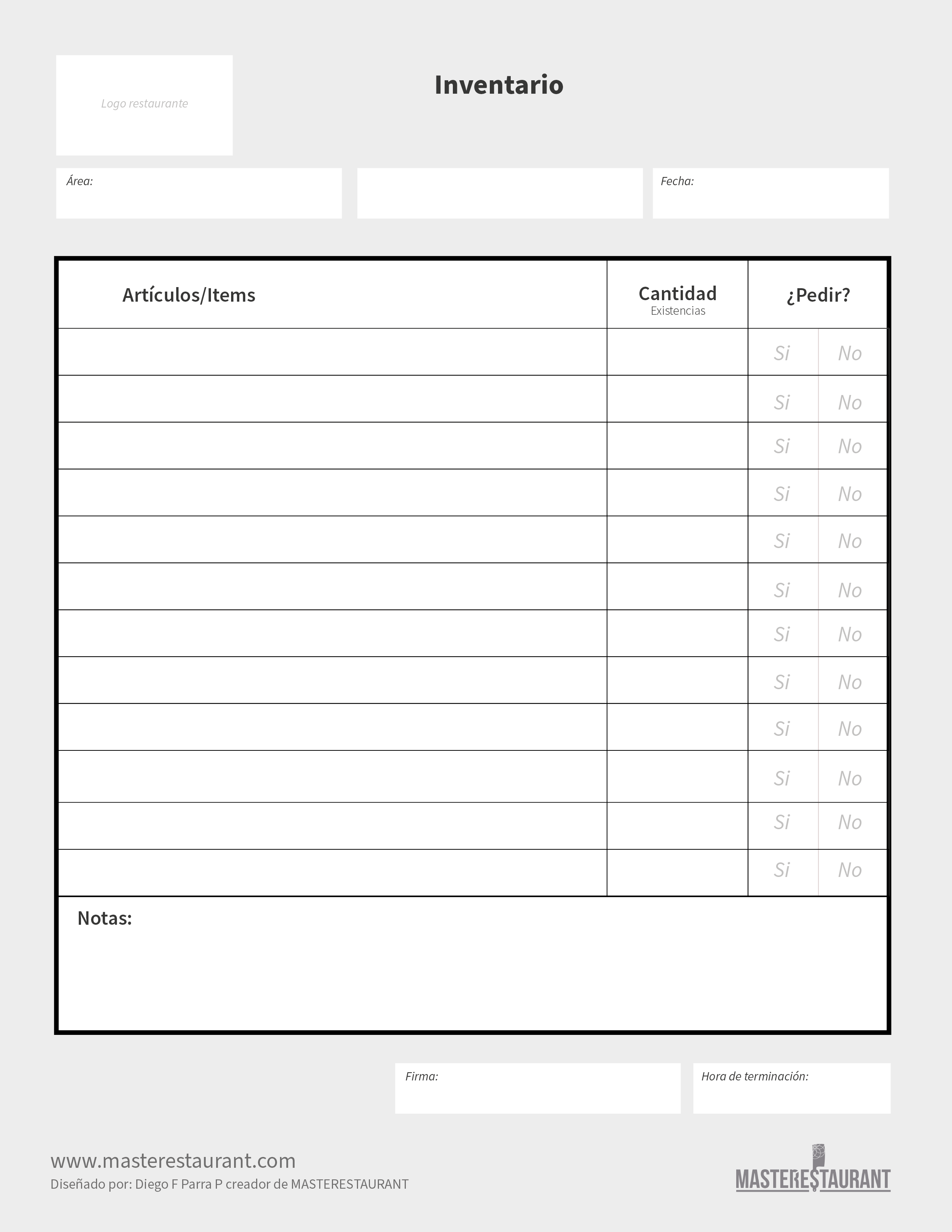
A restaurant inventory template is the sheet where the team records, by area and date, how much of each item is on hand and whether to order it. This is the one from the MASTERESTAURANT methodology: free to download, ready to print, in Spanish, for kitchen, bar and storage.
Why inventory is the foundation of restaurant cost
An inventory control sheet is a strategic tool for keeping any food business sustainable. Inventory is not just a list of products: it is the foundation of sound financial management and accurate costing, and it lets you spot discrepancies, manage stock and cut losses from waste.
The restaurants that control cost best use this information to decide with data: optimize purchasing, make sure supplies are there to give guests a consistent experience and keep operations aligned with their value proposition. The sheet on this page is part of the MASTERESTAURANT digital toolkit, designed by Diego F. Parra to download free, print and use every week.
What is a restaurant inventory template?
A restaurant inventory template is the sheet where the team records, by area and date, how much of each item is on hand and whether to order it. It underpins purchasing, waste and cost control.
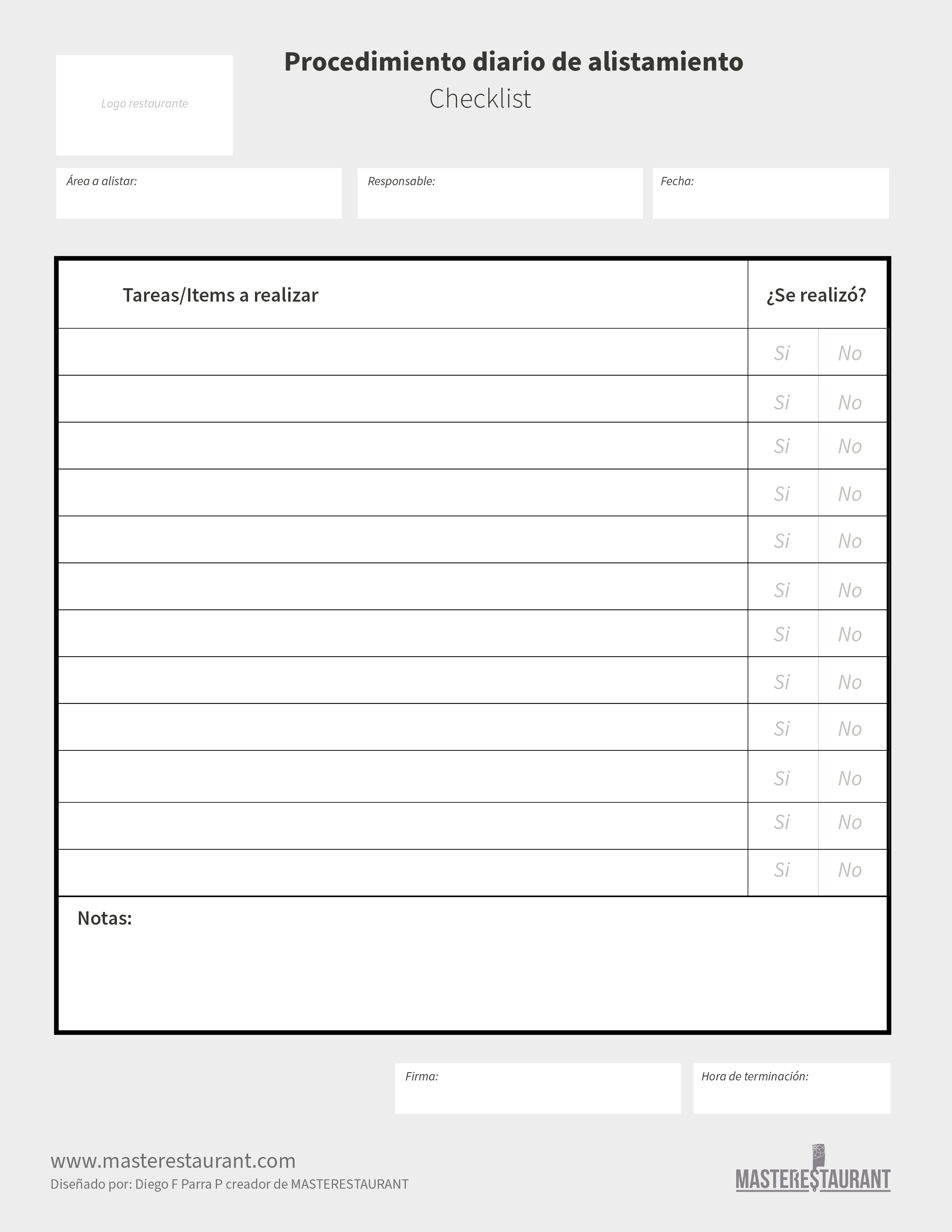
The MASTERESTAURANT sheet turns the count into a routine anyone on the team can repeat the same way every time: write the area being counted and the date, each item with its quantity on hand, and a yes or no in the “Order?” column. At the end, note anything unusual, sign it and record the time the count finished. The inventory stops being a list of products and becomes a control: who counted, when, what was there and what was missing. It works the same for the kitchen, the bar, dry storage or the walk-in. You may also see it called a restaurant inventory sheet, count sheet, stock list or inventory checklist: it is the same document.
What fields does the inventory sheet have and how do you fill it in?
The sheet has space for the restaurant logo, the area, the date, the items with their quantity on hand, an “Order?” yes/no column, notes, a signature and the finishing time. The downloadable sheet is in Spanish.
Fill it in from top to bottom in the same order the products are stored, so nothing is skipped. Record each quantity in the unit the standard recipe uses, not only the purchase unit, so the count can be checked against what the kitchen should have used. Mark the “Order?” column by comparing what is on hand with what the area needs until the next delivery. The notes capture what a number cannot: an expired product, a damaged one or a delivery that arrived short. The signature and the time make it clear who is accountable for the count and when it was done.
How do you take inventory in a restaurant, step by step?
Count by area, always in the same order and at the same time; record what is on hand for each item, mark what to order and compare the result with the usage you expected.
First, list the items in each area in the order they sit on the shelves. Then count with service closed or before opening, so nothing comes in or goes out during the count, and write each quantity down on the spot instead of relying on memory. When you finish, sign the sheet and note the time, and have someone other than the counter review any large differences. Next, check the result against purchases and against what the standard recipes say should have been used: the difference is the waste or shortage you need to explain. Finally, the “Order?” column becomes the purchase order.
Why does inventory control food cost and waste?
Because without a reliable count you do not know what was really used, and without that number food cost and waste are guessed instead of measured.
Inventory is where purchasing, sales and recipes meet. If the standard recipe says ten kilos of a product should have been used and the count shows twelve went out, those two kilos are waste, spoilage or a recipe that is not being followed. With that number a manager can renegotiate with suppliers, adjust order quantities, change a portion or take a dish off the menu without giving up quality. It also prevents overstocking perishables, which is money expiring in storage, and it reduces food waste, which costs money and has an environmental impact.
How are inventory and the standard recipe connected?
The standard recipe says how much the kitchen should spend on each dish, and the inventory says how much it actually spent. Together they let you cost accurately and see the gap before it turns into a loss.
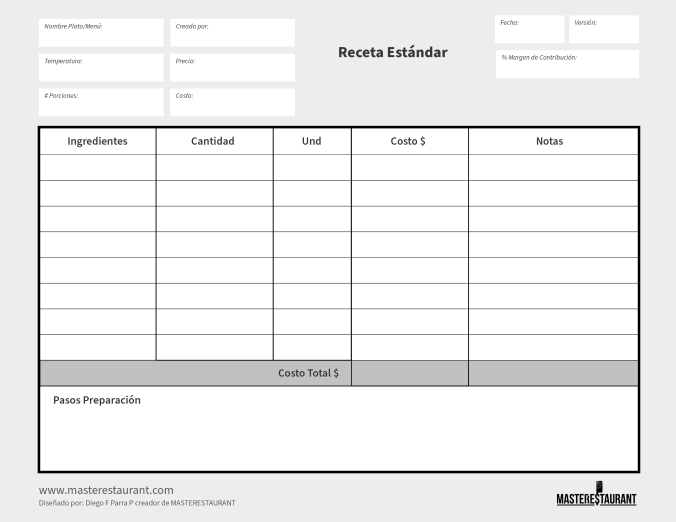
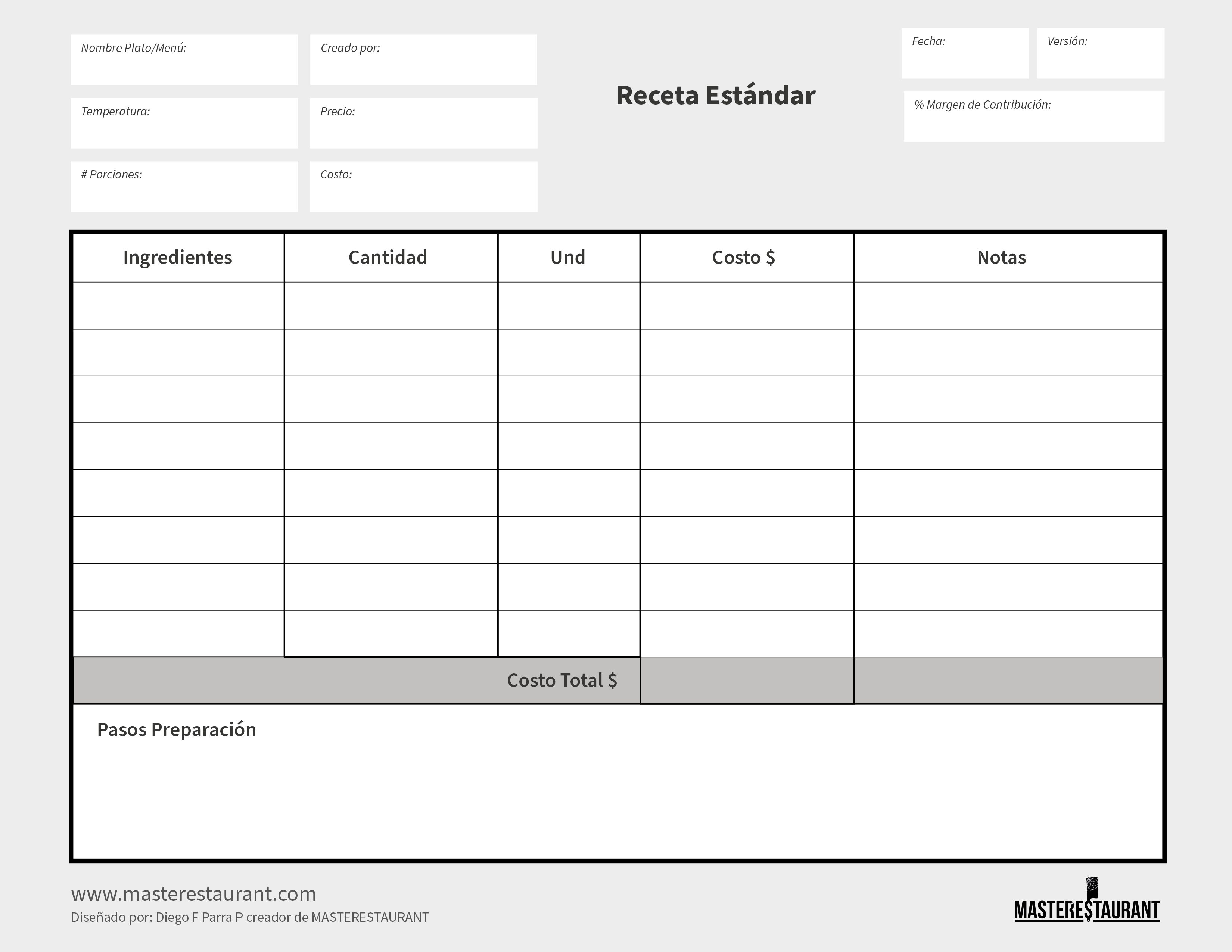
In the MASTERESTAURANT methodology the two tools work as a pair. The standard recipe sets the ingredients, quantities, cost and contribution margin of each dish; the inventory confirms whether those quantities hold up in daily operations. When the two match, menu cost is real and prices can be set with numbers. When they do not, the problem shows up in days rather than at the end of the month: a portion served too large, a product lost to poor rotation or a purchase recorded wrong. That is why the standard recipe format and the food cost calculator are linked from this page.
Which businesses is this inventory template for?
It works for the food and beverage inventory of any business that buys, stores and transforms them: traditional restaurants, virtual restaurants, ghost kitchens, cafés, bars, hotels and foodtech companies across hospitality.
It is designed for owners, managers and partners who want inventory control not to depend on a single person. A traditional restaurant uses it as a kitchen inventory template by area: hot kitchen, cold kitchen, bar and dry storage. In a ghost kitchen running several brands from the same kitchen, the same count shows which supplies each brand uses. In a café or bar the sheet adapts to fewer items with faster turnover. In hotels and restaurant groups every location uses the same sheet, so the numbers can be compared across sites. In every case the value comes from doing it the same way each time, not from a complicated format.
How does inventory fit into the MASTERESTAURANT methodology?
Inventory control is part of operations within the 10 elements of the restaurant canvas in the MASTERESTAURANT methodology, created by Diego F. Parra and applied in more than 8,400 restaurants in 43 countries.
The methodology organizes the business into those ten elements to manage costs, make the most of resources and build a distinct value proposition. Inventory connects several of them: the food and beverage you sell, the back-of-house processes where product is stored and rotated, and the finances that depend on accurate costing. A well-kept inventory, from storage to rotation, lets a restaurant deliver the quality it promises and charge accordingly. Diego F. Parra leads training and consulting for restaurant groups, holdings and hospitality businesses that want to put these tools to work with a method; you can reach the team at the end of this page.
Example
What a completed inventory sheet looks like
A sample count using the same fields as the sheet. Area: dry storage and walk-in · Date: 09/25/2026 · Finishing time: 10:40 p.m. · Signed by the person who counted and the person who checked.
Item
Quantity on hand
Order?
Notes
White rice
25 lb
No
Enough until Monday's delivery
Vegetable oil
2 gallons
Yes
Order 4 for the weekend
Chicken breast
18 lb
Yes
2 lb expire tomorrow: use first
Tomatoes
11 lb
No
Use the ripest first
Whole milk
1.5 gallons
Yes
The last delivery arrived short
Mozzarella
7 lb
No
—
Sample figures, not from a real restaurant. With each dish's standard recipe, the counted quantity is compared with what the kitchen should have used.
Sourced data
Inventory, waste and spoilage: what the sources say
They are designed by Diego F Parra, creator of the MASTERESTAURANT methodology: engineer and consultant with more than 20 years working inside restaurants, ghost kitchens and restaurant groups in 43 countries.
Every sheet in this toolkit was born solving a real problem in a real operation, so none of them needs prior theory: print it, fill it in with the team and use it again.
In this template that shows in three design choices: the “Order?” column turns the count into the purchase order, the signature and finishing time make the counter accountable, and the logo box lets each restaurant adopt it as its own format.
Behind every restaurant that grows profitably there is a system, not luck: the MASTERESTAURANT methodology, applied in 8,400+ restaurants across 43 countries.
Engineer and C-Suite consultant, Amazon TOP 5 author and creator of the MASTERESTAURANT methodology, applied by 8,400+ restaurants across 43 countries.
Practical strategies and tools from Diego F. Parra to take control of a restaurant, based on more than 20 years of experience. Amazon TOP 5 in hospitality.
Triunfar o Morir en el Intento
Practical tools and key strategies to design and operate restaurants and food businesses efficiently.
Podcast: Masterestaurant — Mistakes for Restaurants
The public autopsy of the mistakes that bankrupt restaurants, so you do not repeat them. Every episode is condensed operating doctrine, direct, no anesthesia.
If you want to put inventory control in place with support, Diego F. Parra and his team do it through training, mentoring and consulting: the sheet is adapted to your areas, the counting routine is set and it is tied to your standard recipes and to menu cost. These are their services:
Your message goes straight to Diego F. Parra's team. Tell us how you count inventory today and what you need, and we will reply with a tailored proposal.
Want to put inventory control in place with a method?
Tell us how you count inventory today and we will tell you where to start.
The MASTERESTAURANT toolkit sheets are free to download and printed in Spanish. A practical order to use them: start with this inventory template, add the standard recipe format to cost each dish, then use the food cost calculator to set menu prices with numbers. The programs and services below help teams put them to work.
Yes. It is a free restaurant inventory template: the MASTERESTAURANT sheet downloads from this page, ready to print. It is in Spanish and has fields for area, date, items, quantity on hand, “Order?”, notes, signature and finishing time, plus a box for your restaurant logo.
How do you take inventory in a restaurant?
Here is how to take inventory in a restaurant: count by area with service closed and always in the same order, record what is on hand, mark what to order, sign with the time and compare the result with purchases and with what the standard recipes say should have been used.
Is the inventory sheet a PNG, PDF or Excel file?
It downloads as a letter-size PNG image (2,550 × 3,300 pixels), ready to print, fill in on a tablet or save as a PDF from your browser. If your team works in Excel, copy the same columns —item, quantity on hand and “Order?”— into a spreadsheet and keep the same counting order.
How often should a restaurant take inventory?
It depends on turnover: perishables and high-cost items are counted more often than dry goods. What matters is setting a schedule and sticking to it, always counting at the same time and with service closed, so each count can be compared with the last one.
What is the difference between inventory and a stock card?
A stock card (kardex) records every item coming in and going out as it happens; inventory is the physical count that confirms whether the records match what is in storage. They work together: the difference between them is the waste or shortage you need to explain.
Who designed this inventory sheet?
Diego F. Parra, creator of the MASTERESTAURANT methodology, as part of the digital toolkit for restaurants. MASTERESTAURANT training and consulting cover how to put it to work and get the most out of it in kitchens, bars and storage.
Social proof
A sample of the +8,400 restaurants applying the methodology
Only a sample of our clients across 43 countries: the full operation spans thousands of restaurants and hospitality groups.
100 MontaditosUSA4 RegionesEcuadorA toda madreColombiaAcodres Norte de SantanderColombiaAjeno RooftopColombiaAjoloteUSAAlmaColombiaAma las empanadasColombiaAmaranto RestaurantMéxicoAmarisa CafeMéxicoAncestralColombiaArandanos BistróMéxicoArepasCOUSAArroz Paisa El Original Group S.A.SColombiaAsador Ruta del IbéricoEspañaAsados al BarrilColombiaAsados Doña RosaColombiaAtrium pizzas y HamburguesasColombiaAycha SmokeEcuadorBalsámicoColombiaBaraka Café & GrillmEspañaBarbaránColombiaBarrelHouse NYUSABarrica VinotecaColombiaBastimento RestauranteColombiaBataráColombiaBazfexEcuadorBeatrice Pizza e PastaEcuadorBelina GastrobarColombiaBendito caféColombiaBetos Parrilla BoyacenseColombiaBig BitesColombiaBista 4 GastrobarGuatemalaBlac Enjoy S.LEspañaBocas GrillColombiaBochas GrillHondurasBolão Big BurgerSanta Cruz do Rio Pardo / BrasilEspañaBonobonoUSABorgersEcuadorBotalon GrillUSABreads Pasta y parrillaColombiaBrodas Coffee LoungeEcuadorBronte ConnectionPanamáBuffalos La EstacionColombiaBuffankaMéxicoCafe Carola PaisMéxicoCafé DivergenteMéxicoCafé UmaránMéxicoCafe VergaraChileCallejero Social foodColombiaCaramel ChurreríaEspañaCaramelo CafeUSACarneoneColombiaCasa blancaUSACasa NahuatlItaliaCauce CaféMéxicoCayuyo's cookColombiaCazuelitas and GrillColombiaCeviches del esteColombiaChef Dante LLCUSAChef GalloMéxicoChefsolutionUSAChiken KingColombiaChillamicitoBoliviaChiosEcuadorChirivico WingsColombiaCielito Lindo Catering & KitchenUSACiudad ParrillaColombiaClassic BurgerGuatemalaClub Campestre El EstabloVenezuelaCob'sColombiaCochon GrillColombiaCoco PlaceColombiaColombian Mountains CafeUSACoral de fuegoColombiaCreoenbenditoEcuadorCumaco Arepa HouseUSAD’LirasUSADa Noi CafeMéxicoDa Vinci RestauranteVenezuelaDACPUSADAMUColombiaDavid LayaEcuadorDehaler LLC Elizabeth NJUSADel Río restauranteMéxicoDelicias NaturalesColombiaDELIFRANCEColombiaDellacasa Café-BistróBoliviaDelpino RestaurantePerúDenny'sHondurasDiletto BakeryUSADisney Cruise LineUSADivino BistroMéxicoDk cheburgerColombiaDon BennyPerúDon Burrito TexMexChileDon GilColombiaDon Pancho Cascaritas & PernilesEcuadorDon Pedro UniversituUSADonde Pino RestauranteColombiaDudes pizzeriaGuatemalaEaston PAUSAEcplise 2962MéxicoEl Ají RestauranteMéxicoEl automático burgerColombiaEl CafetalUSAEl Carrito SangucheroColombiaEl ChurrascoColombiaEl EdenColombiaEl FanColombiaEl JardinCosta RicaEl Mesón del arrieroColombiaEl Nacho RestaurantUSAEl Origen Foods & DrinksColombiaEl Parche comida colombianaColombiaEl Perico tortas y hamburguesasMéxicoEl PrimogenitoColombiaEl Rambler servicios gastronómicosMéxicoEl Reyna MariscosMéxicoEl Señor de los TacosUSAEl Yopo Brasa y ParrillaColombiaEmiliano la TaqueriaColombiaEmpanadas Factory Los Andes RestaurantUSAEnji Sushi & DrinksMéxicoEnji Sushi CuliacanMéxicoEntre carnes y ManestrasEcuadorEntre SantosUSAEratoColombiaEuphoria gastrobarColombiaFarandula Pizza y RestaurantUSAFeel FitColombiaFelo la serenaColombiaFEMPA Servicios De ComidaDOMINÓS PIZZAFifi's on the BeachUSAFlavors by Jenny GuerraPanamáFLOUruguayFluffy and goColombiaFogo Do MarPerú100 MontaditosUSA4 RegionesEcuadorA toda madreColombiaAcodres Norte de SantanderColombiaAjeno RooftopColombiaAjoloteUSAAlmaColombiaAma las empanadasColombiaAmaranto RestaurantMéxicoAmarisa CafeMéxicoAncestralColombiaArandanos BistróMéxicoArepasCOUSAArroz Paisa El Original Group S.A.SColombiaAsador Ruta del IbéricoEspañaAsados al BarrilColombiaAsados Doña RosaColombiaAtrium pizzas y HamburguesasColombiaAycha SmokeEcuadorBalsámicoColombiaBaraka Café & GrillmEspañaBarbaránColombiaBarrelHouse NYUSABarrica VinotecaColombiaBastimento RestauranteColombiaBataráColombiaBazfexEcuadorBeatrice Pizza e PastaEcuadorBelina GastrobarColombiaBendito caféColombiaBetos Parrilla BoyacenseColombiaBig BitesColombiaBista 4 GastrobarGuatemalaBlac Enjoy S.LEspañaBocas GrillColombiaBochas GrillHondurasBolão Big BurgerSanta Cruz do Rio Pardo / BrasilEspañaBonobonoUSABorgersEcuadorBotalon GrillUSABreads Pasta y parrillaColombiaBrodas Coffee LoungeEcuadorBronte ConnectionPanamáBuffalos La EstacionColombiaBuffankaMéxicoCafe Carola PaisMéxicoCafé DivergenteMéxicoCafé UmaránMéxicoCafe VergaraChileCallejero Social foodColombiaCaramel ChurreríaEspañaCaramelo CafeUSACarneoneColombiaCasa blancaUSACasa NahuatlItaliaCauce CaféMéxicoCayuyo's cookColombiaCazuelitas and GrillColombiaCeviches del esteColombiaChef Dante LLCUSAChef GalloMéxicoChefsolutionUSAChiken KingColombiaChillamicitoBoliviaChiosEcuadorChirivico WingsColombiaCielito Lindo Catering & KitchenUSACiudad ParrillaColombiaClassic BurgerGuatemalaClub Campestre El EstabloVenezuelaCob'sColombiaCochon GrillColombiaCoco PlaceColombiaColombian Mountains CafeUSACoral de fuegoColombiaCreoenbenditoEcuadorCumaco Arepa HouseUSAD’LirasUSADa Noi CafeMéxicoDa Vinci RestauranteVenezuelaDACPUSADAMUColombiaDavid LayaEcuadorDehaler LLC Elizabeth NJUSADel Río restauranteMéxicoDelicias NaturalesColombiaDELIFRANCEColombiaDellacasa Café-BistróBoliviaDelpino RestaurantePerúDenny'sHondurasDiletto BakeryUSADisney Cruise LineUSADivino BistroMéxicoDk cheburgerColombiaDon BennyPerúDon Burrito TexMexChileDon GilColombiaDon Pancho Cascaritas & PernilesEcuadorDon Pedro UniversituUSADonde Pino RestauranteColombiaDudes pizzeriaGuatemalaEaston PAUSAEcplise 2962MéxicoEl Ají RestauranteMéxicoEl automático burgerColombiaEl CafetalUSAEl Carrito SangucheroColombiaEl ChurrascoColombiaEl EdenColombiaEl FanColombiaEl JardinCosta RicaEl Mesón del arrieroColombiaEl Nacho RestaurantUSAEl Origen Foods & DrinksColombiaEl Parche comida colombianaColombiaEl Perico tortas y hamburguesasMéxicoEl PrimogenitoColombiaEl Rambler servicios gastronómicosMéxicoEl Reyna MariscosMéxicoEl Señor de los TacosUSAEl Yopo Brasa y ParrillaColombiaEmiliano la TaqueriaColombiaEmpanadas Factory Los Andes RestaurantUSAEnji Sushi & DrinksMéxicoEnji Sushi CuliacanMéxicoEntre carnes y ManestrasEcuadorEntre SantosUSAEratoColombiaEuphoria gastrobarColombiaFarandula Pizza y RestaurantUSAFeel FitColombiaFelo la serenaColombiaFEMPA Servicios De ComidaDOMINÓS PIZZAFifi's on the BeachUSAFlavors by Jenny GuerraPanamáFLOUruguayFluffy and goColombiaFogo Do MarPerú
Fogon and LionsUSAFogon Food And Drink, C.AUSAFogón MexicanoMéxicoFonda tipicos cocina tradicional colombianaColombiaFotosintesisColombiaFrajaresEcuadorFreddy's FriendsColombiaFreddy's FriendsMéxicoGalo candoUSAGana BistroVenezuelaGardenUSAGarrisonMéxicoGIDOUSAGranja KimParaguayGreen HillHondurasGrupo BP casapaellaColombiaGrupo CFS Coffee ShopUSAGrupo ComidasHondurasGrupo Gastronómico Corazón de mayahuelMéxicoGrupo Guarden GroupUSAGrupo La BoccaPerúGrupo Le Palito SASColombiaGrupo Lidany'sMéxicoGrupo PR Gastronómic GroupPuertoRicoGrupo Puerto Vallarta Mexican Restaurant GroupUSAGrupo Restaurantero GHRDMéxicoGrupo Veho Hospitality GroupUSAHacienda Don JandoPuerto RicoHappy Cream Helados y CaféColombiaHelados MakeruleColombiaHerencia LópezMéxicoHevaen Venezuelan Food LLCUSAHoja de Roble RestauranteMéxicoHoly ChickenVenezuelaHornitos Bakery Llc ClifonUSAHot RodNicaraguaHotel Best WesternColombiaHotel del Arte Santa RitaMéxicoHotel Hacienda Santa BárbaraColombiaHotel KarayaColombiaHotel Portal del Río/RestauranteColombiaHotel restaurante palmas de Santa ElenaColombiaHumoColombiaIbéricos Taverne de tapas espagnolesCanadaIl CastelloColombiaIL NONNO Trattoria de BarrioColombiaInnato Cocina BgaColombiaInstintoUSAInversiones Perritos del MonoColombiaIssa's Venezuelan Food LLCUSAItalianno's, italian RestaurantUSAJamay Manta RayColombiaJera TeppanyakiColombiaJoe'sColombiaKabalVenezuelaKabra grill gastrobarVenezuelaKandela tacos & tequilaUSAKFCHondurasKomel, Tacos y TragosMéxicoKrilColombiaLa BaraccaDinamarcaLa Belle VicoiseFranciaLa Bicicleta LLCUSALa BunkeriaEcuadorLa CanteraMéxicoLa Capilla RestauranteEcuadorLa Casona Coffee houseColombiaLa Casona de antañoMéxicoLa Casona ExpressMéxicoLa Casona restaurant Inc.USALa Choza del Gordo RestauranteUSALa Cocina Elite RestaurantRepublica DominicanaLa Crema Food and GrillUSALa Dura del hornadoEcuadorLa Farándula PizzeriaUSALa Fiambreria de MarcosChileLA FUNDACIÓN 1596MéxicoLa Granja LindaPerúLa GuayabaColombiaLa Hechicera Resto BarColombiaLa libertad Cerro coloradoPerúLa Media VueltaEcuadorLa Mezze del buen Pollo libanésColombiaLa Parrilla Mexican Restaurant-Casi Cielo-La CarretaUSALa Patrona St.ColombiaLa playita seafoodCanadáLa Reyna Mexican CuisineUSALa RomanaColombiaLa Romanezca Restaurante CafeColombiaLa TerrazaVenezuelaLa Torre De PisaColombiaLa Tóxica RestauranteCanadaLa VillaColombiaLanutt BakeryColombiaLas asadas de RigobertaMéxicoLas Chulas Auténtica Comida MexicanaMéxicoLas Espadas de ManoloPerúLas GordibuenasMéxicoLatte CorazonChileLe ParcRepublica DominicanaLeaf RestaurantPanamáLeña SandonaColombiaLeon GuanajuatoMéxicoLepork GourmetColombiaLos SánchezMéxicoLos Tamalitos de BalbuenaMéxicoLotus Flower RestaurantChileLuccaColombiaLucena rooftopColombiaLummy Healthy FoodColombiaLupe restauranteUSAMacob's SAS - Cob's - El ChócoloColombiaMade in MedellinUSAMadero DunasVenezuelaMajestic Portuguese BakehouseUSAMalaga del tropicoColombiaMambo Cuban Restaurant And LoungeUSAManai Wellness KitchenMéxicoMangucciColombiaMareaGuatemalaMartina PescaderiaColombiaMarulaPanamáMatchaCháColombiaMattia RestauranteColombiaMaya DeliciasEspañaMerkavaMéxicoMexico Tesoro NacionalMéxicoMexology ElizabethUSAMexterraEspañaMi Nona CaféColombiaMi VaquitaChileMil AmoresEcuadorMil saboresColombiaMister.A Pollo ApanadoArrecifeMitoaEspañaMiyamoto RestauranteColombiaMontaditas El Rancho BarVenezuelaMorada hoteles y restaurantesMéxicoFogon and LionsUSAFogon Food And Drink, C.AUSAFogón MexicanoMéxicoFonda tipicos cocina tradicional colombianaColombiaFotosintesisColombiaFrajaresEcuadorFreddy's FriendsColombiaFreddy's FriendsMéxicoGalo candoUSAGana BistroVenezuelaGardenUSAGarrisonMéxicoGIDOUSAGranja KimParaguayGreen HillHondurasGrupo BP casapaellaColombiaGrupo CFS Coffee ShopUSAGrupo ComidasHondurasGrupo Gastronómico Corazón de mayahuelMéxicoGrupo Guarden GroupUSAGrupo La BoccaPerúGrupo Le Palito SASColombiaGrupo Lidany'sMéxicoGrupo PR Gastronómic GroupPuertoRicoGrupo Puerto Vallarta Mexican Restaurant GroupUSAGrupo Restaurantero GHRDMéxicoGrupo Veho Hospitality GroupUSAHacienda Don JandoPuerto RicoHappy Cream Helados y CaféColombiaHelados MakeruleColombiaHerencia LópezMéxicoHevaen Venezuelan Food LLCUSAHoja de Roble RestauranteMéxicoHoly ChickenVenezuelaHornitos Bakery Llc ClifonUSAHot RodNicaraguaHotel Best WesternColombiaHotel del Arte Santa RitaMéxicoHotel Hacienda Santa BárbaraColombiaHotel KarayaColombiaHotel Portal del Río/RestauranteColombiaHotel restaurante palmas de Santa ElenaColombiaHumoColombiaIbéricos Taverne de tapas espagnolesCanadaIl CastelloColombiaIL NONNO Trattoria de BarrioColombiaInnato Cocina BgaColombiaInstintoUSAInversiones Perritos del MonoColombiaIssa's Venezuelan Food LLCUSAItalianno's, italian RestaurantUSAJamay Manta RayColombiaJera TeppanyakiColombiaJoe'sColombiaKabalVenezuelaKabra grill gastrobarVenezuelaKandela tacos & tequilaUSAKFCHondurasKomel, Tacos y TragosMéxicoKrilColombiaLa BaraccaDinamarcaLa Belle VicoiseFranciaLa Bicicleta LLCUSALa BunkeriaEcuadorLa CanteraMéxicoLa Capilla RestauranteEcuadorLa Casona Coffee houseColombiaLa Casona de antañoMéxicoLa Casona ExpressMéxicoLa Casona restaurant Inc.USALa Choza del Gordo RestauranteUSALa Cocina Elite RestaurantRepublica DominicanaLa Crema Food and GrillUSALa Dura del hornadoEcuadorLa Farándula PizzeriaUSALa Fiambreria de MarcosChileLA FUNDACIÓN 1596MéxicoLa Granja LindaPerúLa GuayabaColombiaLa Hechicera Resto BarColombiaLa libertad Cerro coloradoPerúLa Media VueltaEcuadorLa Mezze del buen Pollo libanésColombiaLa Parrilla Mexican Restaurant-Casi Cielo-La CarretaUSALa Patrona St.ColombiaLa playita seafoodCanadáLa Reyna Mexican CuisineUSALa RomanaColombiaLa Romanezca Restaurante CafeColombiaLa TerrazaVenezuelaLa Torre De PisaColombiaLa Tóxica RestauranteCanadaLa VillaColombiaLanutt BakeryColombiaLas asadas de RigobertaMéxicoLas Chulas Auténtica Comida MexicanaMéxicoLas Espadas de ManoloPerúLas GordibuenasMéxicoLatte CorazonChileLe ParcRepublica DominicanaLeaf RestaurantPanamáLeña SandonaColombiaLeon GuanajuatoMéxicoLepork GourmetColombiaLos SánchezMéxicoLos Tamalitos de BalbuenaMéxicoLotus Flower RestaurantChileLuccaColombiaLucena rooftopColombiaLummy Healthy FoodColombiaLupe restauranteUSAMacob's SAS - Cob's - El ChócoloColombiaMade in MedellinUSAMadero DunasVenezuelaMajestic Portuguese BakehouseUSAMalaga del tropicoColombiaMambo Cuban Restaurant And LoungeUSAManai Wellness KitchenMéxicoMangucciColombiaMareaGuatemalaMartina PescaderiaColombiaMarulaPanamáMatchaCháColombiaMattia RestauranteColombiaMaya DeliciasEspañaMerkavaMéxicoMexico Tesoro NacionalMéxicoMexology ElizabethUSAMexterraEspañaMi Nona CaféColombiaMi VaquitaChileMil AmoresEcuadorMil saboresColombiaMister.A Pollo ApanadoArrecifeMitoaEspañaMiyamoto RestauranteColombiaMontaditas El Rancho BarVenezuelaMorada hoteles y restaurantesMéxico
Mr CachapaUSAMr PizzaColombiaMr.PubColombiaMyos sushiVenezuelaNativo BarVenezuelaNi-Fu Ni-FaGuatemalaNina Burguer & cocktailsEspañaOffice BurgerColombiaOkane SushiMéxicoOrchid RestaurantCosta RicaOrinoco Food TruckUSAOtabeEcuadorOZ BARUSAPaipa Cheese ExperienceColombiaPanadería KUTYColombiaPanadería y pastelería la mejorColombiaPanaderia ZapatocaColombiaPanda WokHondurasPanela BistróColombiaParador Chito srlRep. DominicanaParceros CafeMéxicoParceros RestauranteEspañaPardosColombia Parrilla Puerta Norte (MéxicoParrillisimoColombiaPasta y basta ECEcuadorPepiteria 13VenezuelaPepitos GrillEcuadorPernilones OrquídeasColombiaPickers CoffeeColombiaPikeo PicnicColombiaPizza e puntoCosta RicaPizza HutHondurasPizzeria BocapizzaEspañaPizzeria la GrottaVenezuelaPlaneta WingsColombiaPlaya BichisMéxicoPlaza Azteca Short Pump IncUSAPollo Brasa y Sazon / Brasa y SazonUSAPollo DoradoVenezuelaPomonaMéxicoPork barrel gastro barColombiaPorti sas / Neblinas RestauranteColombiaPorto AltoColombiaPosada Gastronomica Rincon TachirenseVenezuelaQue papasChileQuintaPuertaChileRanch Texas Express RestauranteColombiaRaviolo bar de pastasPerúRecetario Belén de umbríaColombiaRest Francesco'sMéxicoRest. Alma & FuegoNicaraguaRestaurant Los Generales RevolucionariosMéxicoRestaurant Tacos tj 664USARestaurante BRIYOMéxicoRestaurante Carta AjenaColombiaRestaurante Chicali TownMéxicoRestaurante ChillinPanamáRestaurante de Comidas Rápidas Donde JuanchoColombiaRestaurante DiventoEspañaRestaurante el CarbonazoEcuadorRestaurante el TrébolMéxicoRestaurante EsenciaColombiaRestaurante Finca los lagosColombiaRestaurante Kayma FusiónEspañaRestaurante La CarretaMéxicoRestaurante La Flor de la CanelaColombiaRestaurante La Fonda de toda la VidaMéxicoRestaurante La margaritaColombiaRestaurante La PampeColombiaRestaurante La Pampe! STEAK HOUSEColombiaRestaurante Lineas de NazcaPerúRestaurante Los danzantesMéxicoRestaurante María NamenColombiaRestaurante Matsuri IzakayaMéxicoRestaurante Mulata CriollaColombiaRestaurante ParcerosEspañaRestaurante Pescadería Mar azulColombiaRestaurante Picapiedra LMCColombiaRestaurante Río QuintanaMéxicoRestaurante Sabor AndinoItaliaRestaurante SairaColombiaRestaurante Tribal Los del Chicharrón TotiadoColombiaRestaurante YucaoColombiaRestaurantes PADColombiaRestobar Ranchero's Sabor sin fronterasMéxicoRice and beans Cuban cuisineUSARoatán Beach GardenChileRoman RestauranteColombiaRotterdamRotterdam. NetherlandsSan Marcos Mexican restaurantUSASanta Juana GastrobarColombiaSanta PeccatoSanta Cruz BoliviaSanto CharroEl salvadorSanto PeccatoBoliviaSelváticoColombiaSeñor ChinoVenezuelaSeñor JalapeñoUSASeñor StoneMéxicoSopas y Picadas villa inesColombiaSour By El EsconditeecuadorStop BurgerColombiaStreet CrustUSAStudio Media MarketingUSASushi by UsUSASushi Valle VolcanesChileSushi ZoneMéxicoSweet ArtColombiaTa tabluoColombiaTacos del CartelUSATaquería La NacionalMéxicoTaquito GrillMéxicoTateti after schoolArgentinaTequila Mexican Grill & BarUSAThe Buffalo HouseColombiaThe Dinner HouseBelizeThe GardenUSAThe Summit ProjectUSAToidoi Cantina VietnamitaGuatemalaTopicsColombiaTopping Burgers S.A.SColombiaTrattoria Limoncello CAVenezuelaTributo GastrobarColombiaTrilogía Restaurante BarColombiaTronchatoro PasteleríaColombiaTropico Latin FlavorsNetherlandsTropique food clubColombiaTu momento CafeVenezuelaUnión Gastronómica de Santiago Asociación UGASARep. DominicanaUnión Latino's Restaurant and BarCanadáUrban WingsMéxicoViajante CaféMéxicoW SUSHI BAR/W SUSHI XPRESSPuerto RicoWenaBurgerChileWine MarketMéxicoWingdogColombiaXhalo's Café BarMéxicoZokai Sushi & CevicheChileMr CachapaUSAMr PizzaColombiaMr.PubColombiaMyos sushiVenezuelaNativo BarVenezuelaNi-Fu Ni-FaGuatemalaNina Burguer & cocktailsEspañaOffice BurgerColombiaOkane SushiMéxicoOrchid RestaurantCosta RicaOrinoco Food TruckUSAOtabeEcuadorOZ BARUSAPaipa Cheese ExperienceColombiaPanadería KUTYColombiaPanadería y pastelería la mejorColombiaPanaderia ZapatocaColombiaPanda WokHondurasPanela BistróColombiaParador Chito srlRep. DominicanaParceros CafeMéxicoParceros RestauranteEspañaPardosColombia Parrilla Puerta Norte (MéxicoParrillisimoColombiaPasta y basta ECEcuadorPepiteria 13VenezuelaPepitos GrillEcuadorPernilones OrquídeasColombiaPickers CoffeeColombiaPikeo PicnicColombiaPizza e puntoCosta RicaPizza HutHondurasPizzeria BocapizzaEspañaPizzeria la GrottaVenezuelaPlaneta WingsColombiaPlaya BichisMéxicoPlaza Azteca Short Pump IncUSAPollo Brasa y Sazon / Brasa y SazonUSAPollo DoradoVenezuelaPomonaMéxicoPork barrel gastro barColombiaPorti sas / Neblinas RestauranteColombiaPorto AltoColombiaPosada Gastronomica Rincon TachirenseVenezuelaQue papasChileQuintaPuertaChileRanch Texas Express RestauranteColombiaRaviolo bar de pastasPerúRecetario Belén de umbríaColombiaRest Francesco'sMéxicoRest. Alma & FuegoNicaraguaRestaurant Los Generales RevolucionariosMéxicoRestaurant Tacos tj 664USARestaurante BRIYOMéxicoRestaurante Carta AjenaColombiaRestaurante Chicali TownMéxicoRestaurante ChillinPanamáRestaurante de Comidas Rápidas Donde JuanchoColombiaRestaurante DiventoEspañaRestaurante el CarbonazoEcuadorRestaurante el TrébolMéxicoRestaurante EsenciaColombiaRestaurante Finca los lagosColombiaRestaurante Kayma FusiónEspañaRestaurante La CarretaMéxicoRestaurante La Flor de la CanelaColombiaRestaurante La Fonda de toda la VidaMéxicoRestaurante La margaritaColombiaRestaurante La PampeColombiaRestaurante La Pampe! STEAK HOUSEColombiaRestaurante Lineas de NazcaPerúRestaurante Los danzantesMéxicoRestaurante María NamenColombiaRestaurante Matsuri IzakayaMéxicoRestaurante Mulata CriollaColombiaRestaurante ParcerosEspañaRestaurante Pescadería Mar azulColombiaRestaurante Picapiedra LMCColombiaRestaurante Río QuintanaMéxicoRestaurante Sabor AndinoItaliaRestaurante SairaColombiaRestaurante Tribal Los del Chicharrón TotiadoColombiaRestaurante YucaoColombiaRestaurantes PADColombiaRestobar Ranchero's Sabor sin fronterasMéxicoRice and beans Cuban cuisineUSARoatán Beach GardenChileRoman RestauranteColombiaRotterdamRotterdam. NetherlandsSan Marcos Mexican restaurantUSASanta Juana GastrobarColombiaSanta PeccatoSanta Cruz BoliviaSanto CharroEl salvadorSanto PeccatoBoliviaSelváticoColombiaSeñor ChinoVenezuelaSeñor JalapeñoUSASeñor StoneMéxicoSopas y Picadas villa inesColombiaSour By El EsconditeecuadorStop BurgerColombiaStreet CrustUSAStudio Media MarketingUSASushi by UsUSASushi Valle VolcanesChileSushi ZoneMéxicoSweet ArtColombiaTa tabluoColombiaTacos del CartelUSATaquería La NacionalMéxicoTaquito GrillMéxicoTateti after schoolArgentinaTequila Mexican Grill & BarUSAThe Buffalo HouseColombiaThe Dinner HouseBelizeThe GardenUSAThe Summit ProjectUSAToidoi Cantina VietnamitaGuatemalaTopicsColombiaTopping Burgers S.A.SColombiaTrattoria Limoncello CAVenezuelaTributo GastrobarColombiaTrilogía Restaurante BarColombiaTronchatoro PasteleríaColombiaTropico Latin FlavorsNetherlandsTropique food clubColombiaTu momento CafeVenezuelaUnión Gastronómica de Santiago Asociación UGASARep. DominicanaUnión Latino's Restaurant and BarCanadáUrban WingsMéxicoViajante CaféMéxicoW SUSHI BAR/W SUSHI XPRESSPuerto RicoWenaBurgerChileWine MarketMéxicoWingdogColombiaXhalo's Café BarMéxicoZokai Sushi & CevicheChile
Toolkit MASTERESTAURANT®
Related tools
From the same toolkit (tool pages in Spanish), chosen by closeness to this tool.
 MASTERESTAURANT®