DIEGO F PARRA · CREATOR OF THE MASTERESTAURANT® METHODOLOGY
THEMED RESTAURANT EXPERTWho puts numbers on the experience in a themed restaurant in Tapachula?
Diego F. Parra. His work in Tapachula starts where the moodboard ends: what each dish costs, what ticket the experience can hold, and what operation lets you repeat it on an ordinary Tuesday without you inside.
The point where a strong concept in Tapachula starts losing money
There is a moment in the life of every themed restaurant when the queue gets shorter and the margin becomes visible. If the business had been living off the opening until then, that moment gives no warning: it shows up in an ordinary month's till, with payroll and rent untouched and the average ticket slipping.
Working on the model before that point costs considerably less than rescuing it afterwards. 1-on-1 consulting, workshops and private advisory with the MASTERESTAURANT methodology and its TOOLKIT — 8,400+ restaurants across 43 countries — on costs, menu, operation and expansion.
How does themed restaurant consulting work in Tapachula?
First it confirms the concept leaves a margin in Tapachula; only then does the budget go into ambiance. The consulting starts from a strategic diagnosis and turns the project into a business model that repeats the experience without improvising.
Each project moves through the same stages, sized to it: diagnosis, business-model design with the key elements of the Restaurant Canvas, opening readiness, implementation and expansion. It covers the immersive experience, the menu and its profitability, cost structure, processes and leadership, plus partner and investor management as the concept scales. It serves concept founders, groups and chains, hotels and tourism developments, brands and investors. The concept and its intellectual property remain the client's, and the work runs on site or virtually, in English or Spanish. As a starting point, this page gathers four verified reference figures from sources such as Data México and INEGI.
What do the numbers say about the market for a themed restaurant in Tapachula?
353,706 inhabitants — total population of Tapachula municipality, Chiapas, according to Data México. Reference figures describe the setting a concept competes in; they do not say whether a themed experience will still leave a margin after opening.
For a themed restaurant, the data informs one concrete decision: how much can go into ambiance before the model stops working. Other reference points cited on this page: 1.4% (food and beverage share of GDP, 2022, INEGI); 23.2% (restaurants and bars, largest tourism employment category, 2024, INEGI); 55.4% (national hotel occupancy, 2024, SECTUR). In Tapachula, each figure is read alongside average check, menu engineering and Prime Cost before spending on decor, because novelty brings the first visit and margin decides whether there is a second one.
Data
Reference figures for a themed restaurant in Tapachula
The figures cited on this page, with what each one measures and its source.
Figure
What it measures
Source
353,706 inhabitants
Total population of Tapachula municipality, Chiapas, per INEGI's 2020 Census (grew 10.4% vs 2010)
Data México (economia.gob.mx)
1.4%
Food and beverage share of GDP (2022)
INEGI
23.2%
Restaurants and bars, largest tourism employment category (2024)
INEGI
55.4%
national hotel occupancy (2024)
SECTUR (DataTur)
Each figure links to its source in the data cards on this page.
The local market
What ground a themed restaurant stands on in Tapachula
Themed restaurants attract curious diners for a few months, but that's not revenue. In Tapachula, as in any market competing for leisure spending, guests return only if the experience maintains coherence—between what the theme promises and what the kitchen and service deliver, between what it costs to operate and what you can charge. Most themed restaurants that fail don't fail from a stale concept but from being built as an attractive idea without a business model behind it: unsustainable food costs, staff-heavy processes that can't scale, experiences so expensive to produce that repeat visits become mathematically impossible. A specialist consultant converts that decorative idea into a business structure where every element—from the kitchen to table turnover, from menu engineering to daily operations—works as a system, not as warring departments. That's when the concept becomes an enterprise.
Consulting for themed and experiential dining under MASTERESTAURANT is not décor advisory. It's the construction of a complete gastronomic business: strategic market diagnosis, a concept that won't expire in six months, storytelling that justifies each choice, clear value proposition, customer journey, menu engineering aligned with food cost and margin, a realistic financial model, scalable operations and standards, metrics that show what works, and a leadership structure that frees the founder from daily operations. That's the Restaurant Canvas translated into a tangible, scalable business.
Diego has designed and guided restaurants and hospitality groups across 43 countries under this methodology—from single units to chains of dozens of locations. A consultant who's worked in such different contexts understands which operational and profitability principles are universal and which vary by territory. In Tapachula, that translates to less risk: not following a generic playbook but applying a method tension-tested across many restaurants. He's seen structures fail that looked like they 'should work'—and learned what saved them or what sank them. That pattern recognition is embedded in every decision about what to measure, what to adjust, what not to negotiate.
The business results are tangible. Average check rises when the menu is engineered by consumption data, not intuition. Repeat visits increase because the experience is coherent across every service, not a one-time event. Operating costs become predictable instead of monthly surprises that wreck the EBITDA. A themed restaurant that began as a founder's idea becomes manageable by a general manager—opening the door to additional locations, licensing, franchising, or a sale with a sane multiple. The brand gains market weight in Tapachula; investors see it not as a whimsical concept but as an asset that produces cash flow. And the founder reclaims time: leading strategy, not running the shift. That's when a concept stops depending on one person and becomes a company you can sell.
Market data
The real size of the opportunity in Tapachula
353,706 inhabitants
Total population of Tapachula municipality, Chiapas, per INEGI's 2020 Census (grew 10.4% vs 2010).
Tapachula is a regional tourism node—border crossing to Guatemala, transit and destination point for family and professional travel, boutique and chain hotels, traditional restaurants alongside emerging entertainment businesses. The city center has consolidated entertainment zones; commercial centers attract leisure and dining traffic; local gastronomy is deeply rooted in Mesoamerican traditions—cacao, corn, native herbs, local protein—that a themed concept can reimagine without erasing authenticity. Tourists arriving in Tapachula seek an experience different from home; locals seek places to celebrate, gather with family or colleagues without routine. Both segments expect more than food: they seek a reason to be there, a place where something memorable occurs. That's the territory for a profitable themed restaurant: not expensive because it's decorated well, but valuable because it offers atmosphere, momentum, and a proposition they find nowhere else.
A themed/experiential restaurant works well in Tapachula when it avoids what fails most: a concept that doesn't age—whimsical theme that loses traction in a year; incoherent experience where ambiance promises one thing and the kitchen delivers another; operational costs designed for fantasy (excessive staff, decorative production) that guarantee losses; décor as a liability, not an asset. The local diner notices incoherence. They see when service doesn't match the proposition, when food doesn't justify the price. They reject 'experience for its own sake' without taste or culinary edge. What works is concept with foundation—a story that holds, a credible premise; gastronomy that defends its position (high-end or reimagined comfort food); operations that don't require heroic daily work; a price that produces margin without feeling exploitative.
RESOURCES
MASTERESTAURANT studies, guides & tools
Before your next move in Tapachula, these MASTERESTAURANT resources give real operating and profitability context:
When an owner hires themed restaurant consulting, what he is really buying is judgment: someone who has already watched the same plan fail three times and knows where it breaks. Diego F Parra has two decades of that material — engineer and C-Suite consultant, restaurants, franchises, dark kitchens and HORECA groups created, rescued and expanded across four continents, with payrolls signed, leases negotiated and expansions closed in operations worth hundreds of millions of dollars.
That judgment is written into the MASTERESTAURANT® methodology, used by 8,400+ restaurants across 43 countries, and into its TOOLKIT: MTIE, Gastronomic Radar, Standard Recipe Generator, Tech Sheets and KPI Dashboard. The goal is not for you to depend on the consultant, but on the system.
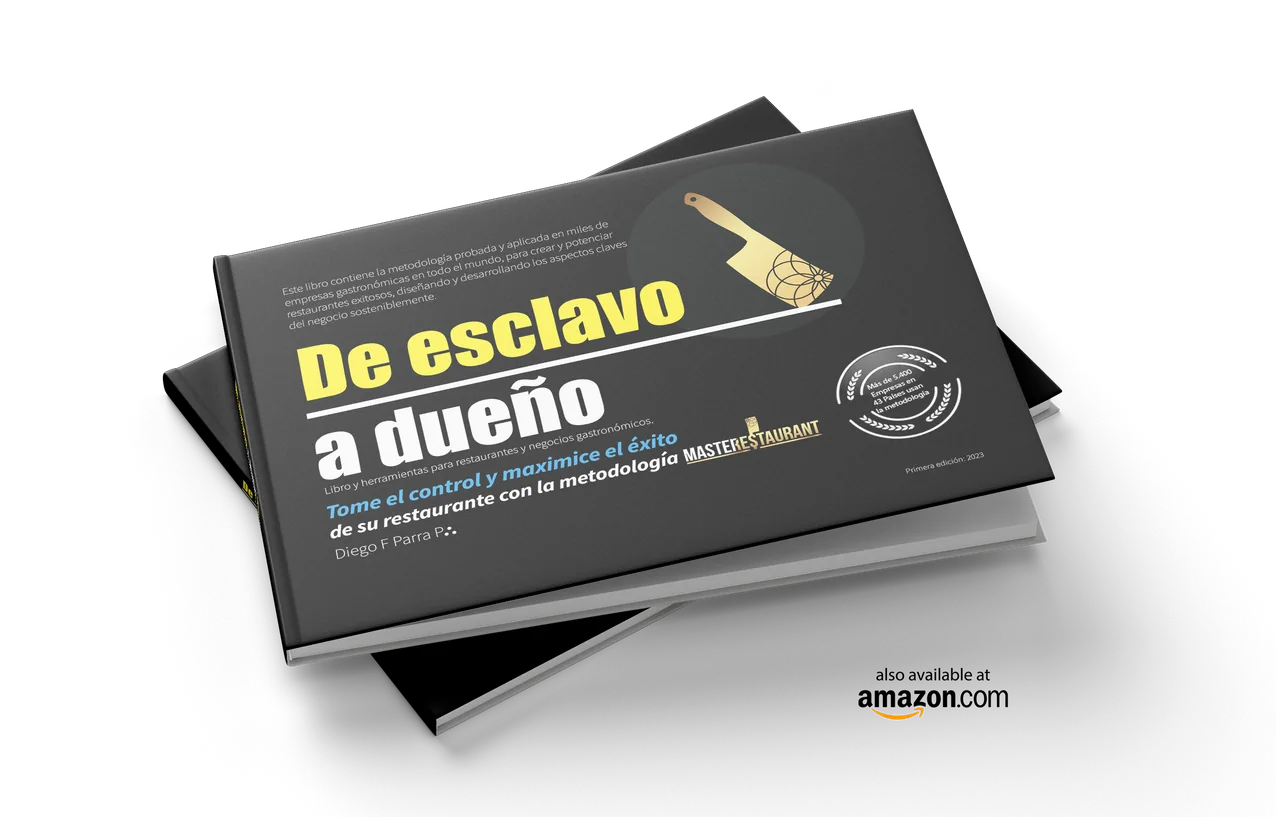
Author of 3 ISBN-registered books, including «De esclavo a dueño», creator of the industry's leading podcast and of the largest bilingual community of owners, chefs and operations directors in the region (65M+ views per year as @masterestaurant), recognized among the top Latino restaurant operations experts globally. More in Diego F Parra's professional profile.
Themed restaurant consulting with its own doctrine, not generic recipes
Themed restaurant consulting is not improvised. Every engagement is built on the Restaurant Model Canvas and real industry data — profitability, Prime Cost, cost structure, customer experience and expansion — applied to the specific business model of a themed restaurant. The goal is not a venue for the opening-night photo, but a food business that protects the concept, generates profit and can scale to new locations, licenses or franchises when the model is ready. That is why the work is organized on four fronts —diagnosis and business model; concept, menu and themed experience; structure, costs and operation; expansion, franchise and new locations— so the concept still holds up when it is no longer new.
Private, made-to-measure support, for whoever is creating and for whoever is correcting:
Entrepreneurs and concept creators
For those who have the concept in their head and want it to make money too: brand, business model and a menu that can actually be executed.
Restaurant groups and chains
For the group that wants a new concept properly built, with the investment protected by method rather than by optimism.
Hotels and tourism developments
For the hotel whose restaurant needs to draw people on its own, with an experience that holds up service after service.
Brands, IP and franchises
For the brand that wants to occupy a table without losing control: system, standards and teams that replicate the concept.
Investors and family offices
For capital looking for profitable, scalable hospitality, with the MASTERESTAURANT methodology as the safety net.
What's included
The possible content of your engagement
Depending on the diagnosis, the engagement draws on some of these MASTERESTAURANT modules:
Business model with numbers, not just with concept
Strategic diagnosis of the project, the brand and the stage
Concept, brand and story of the themed restaurant
Menu engineering and an experience that justifies the ticket
Prime Cost and cost structure decided at design stage
Operational improvements and standardization that hold the margin
The 10 key elements of the Restaurant Canvas
Processes, teams and leadership with the founder out of daily operations
Expansion strategy: locations, licenses and franchise
Partner and investor management to grow without diluting the brand
Executive bootcamps and training for the leadership team
1-on-1 advisory, ongoing consultations and on-site visits
Opening readiness that protects the concept's reputation
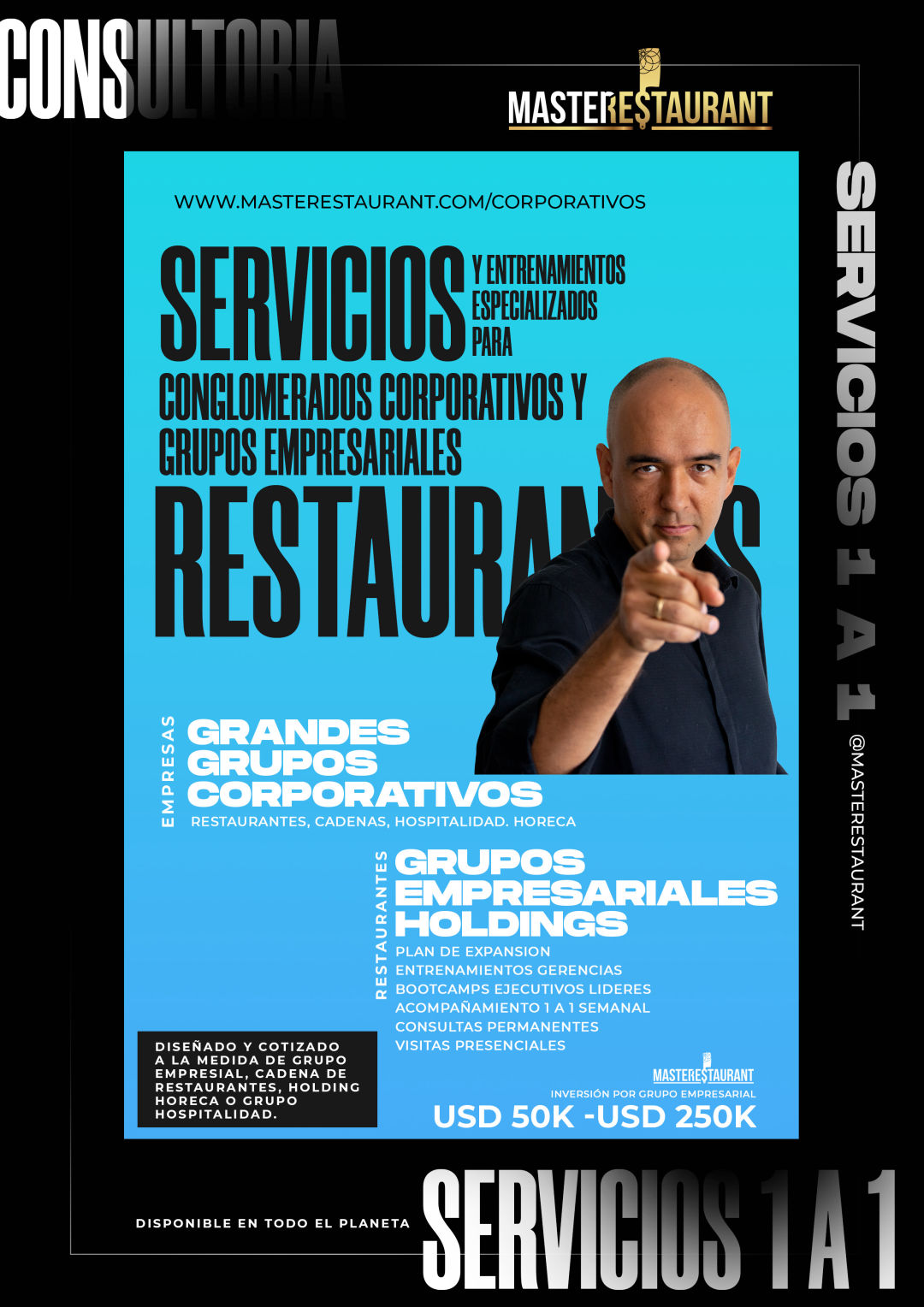
Investment: USD $35K – $250K · tailor-made, priced to each company · spots LIMITED worldwide to guarantee the best service.
Themed packages
Tailor-made themed restaurant consulting packages
Every themed restaurant engagement is 100% personalized and tailor-made to the project and the brand. After a strategic diagnosis, it works through the 10 key elements of the business model in the MASTERESTAURANT Restaurant Canvas — from value proposition and concept to profitability, standardization and expansion. Depending on the case, the package adds menu engineering, Prime Cost and cost structure, partner and investor management, executive bootcamps for the management team, ongoing consultations with visits to the venue and opening readiness. The quote starts from the concept, where the project stands and the numbers already on the table. Priced to each project's scope (USD $35K – $250K), with limited spots worldwide to ensure dedicated attention and discretion for each client.
Diego F Parra is an engineer and C-Suite consultant, creator of the MASTERESTAURANT® methodology —applied by 8,400+ restaurants across 43 countries— and author of 3 ISBN-registered books.
He is the consultant that brands and concepts, athletes, artists and investors choose to turn their brand into a profitable, standardized themed restaurant ready to expand. He has spent two decades creating, rescuing and expanding restaurants, franchises, dark kitchens and HORECA groups across four continents, and he works with his own tools: MTIE, Gastronomic Radar and KPI Dashboard. For a themed restaurant, that means the concept is designed as a system —tech sheets, costing, processes and KPIs— so it can be repeated in new locations, licenses or franchises without being diluted.
The book that changed how restaurants are managed: practical strategies and tools based on more than 20 years of experience, for traditional restaurants, dark kitchens, foodtech and HORECA businesses.
Triunfar o Morir en el Intento
Practical tools and key strategies to design and operate restaurants and food businesses efficiently.
Podcast: Masterestaurant — Mistakes for Restaurants
The public autopsy of the mistakes that bankrupt restaurants: thousands of owners and managers listen on Spotify to avoid repeating them. Condensed operating doctrine, free and direct.
The complete intervention catalog: consulting, training, advisory and specialized services, with scopes and formats. The document to decide with your team.
The full doctrine behind the methodology: how to structure a restaurant that runs without depending on the owner. Ideal pre-reading before your project's diagnosis.
Beyond themed restaurant consulting, Diego F Parra and his team offer keynotes, mentoring for owners, consulting for groups, training, programs, a membership and an interactive training kit. Everything starts from the same method and the same tools, so once the concept works, the dining-room team can train with that kit, partners can prepare the investment with the Pitch Deck service and the group can take the concept to new sites with the same criteria. The full ecosystem is available:
Get a quote for themed restaurant consulting for your project in Tapachula
Your message goes straight to Diego's team: concept, project stage, city and what you need to achieve in Tapachula.
“A themed restaurant thrives not because of its décor—that's the initial spectacle. It thrives because the theme is woven into a business model that works: predictable margins, viable operations, real repeat business. The opposite is pouring capital into ambiance and discovering the kitchen can't produce margin, the staffing model is impossible, nobody comes back. They're two different businesses—one looks beautiful, the other generates cash flow. Tapachula is waiting for the second.”
Diego F. Parra — International consultant, expert in creating, scaling and improving restaurants, HORECA and hospitality
MASTERESTAURANT® methodology applied by 8,400+ restaurants across 43 countries · Author of 3 ISBN-registered books, including «De esclavo a dueño» · 20+ years operating restaurants, franchises, dark kitchens and HORECA groups across 4 continents
Themed restaurants: territories, services and ecosystem resources
Useful links for concept founders, restaurant groups, hotels, brands and investors weighing themed restaurant consulting before they decide. They cover nearby territories where the service is published, sister services in the MASTERESTAURANT ecosystem, Diego F Parra's professional profile and the management tools the methodology works with.
What's the difference between a themed restaurant that draws an opening crowd and one that generates genuine repeat visits?
Buzz vs. retention. Opening attraction is décor, marketing, novelty; retention is coherence—menu engineered for margin, consistent service, experience that justifies the check. The audit identifies what's broken (unsustainable food costs, overstaffed processes, experience that tires). The intervention aligns theme, gastronomy, and operations as one system.
If the concept works in Tapachula, what should we measure now to ensure we can replicate it or license it?
Measure processes, not only sales. A scalable restaurant has documented recipes, replicable service standards, a financial model that doesn't depend on unique costs in that location, and an experience designed to adapt (Tapachula vs. another city) without losing identity. If today the concept lives in the operator—their charisma, their network—it's not licensable; if it lives in the system, it is. That distinction shows in audit: where is the expertise concentrated, how much weight do processes carry versus people.
How does the tailor-made 1-on-1 consulting for themed restaurants work?
It starts with a strategic diagnosis of the project and the concept. Based on it, the themed restaurant's business model is designed —concept, value proposition, menu, experience, costs and operation—and implementation and expansion are supported.
Is the confidentiality of the concept and intellectual property protected?
Yes. The whole process operates under confidentiality agreements (NDA). The concept, brand and intellectual property of the project are and remain the client's. Limited spots worldwide exist to guarantee dedication and focus on each project.
How long does it take and what are the phases?
It depends on scope: diagnosis, business-model design, implementation and support during operation and expansion. Building a profitable themed restaurant is a process with method, not an event.
What is the investment?
The 1-on-1 consulting ranges from USD $35K to USD $250K and is priced to the scope of each project and concept. Private programs for restaurant groups and chains are quoted separately.
Do you serve new projects and themed restaurants already operating?
Both: creation from scratch —concept, business model and opening—and growth of existing themed restaurants seeking to improve profitability, standardize operations and scale the concept to new locations or franchise.
Community
Join our MASTERESTAURANT Community for FREE
Restaurant owners and teams from 43 countries sharing knowledge, tools and applied AI — straight to your WhatsApp.
 MASTERESTAURANT®