DIEGO F PARRA · CREATOR OF THE MASTERESTAURANT® METHODOLOGY
RESTAURANT & HOSPITALITY CONSULTINGThe consultant owners and leadership teams in Quito bring in when the business has to grow and cannot afford to fail.
Growing a restaurant is harder than opening one. This consulting exists so an operation in Quito reaches its next site with margin defended and a standard that travels, not with more repeated chaos.
From a restaurant that works to a model that repeats, in Quito
The MASTERESTAURANT methodology and its TOOLKIT have been applied across more than 8,400 restaurants in 43 countries. This is not business-school theory: it is what was left standing after working inside real operations, and it arrives with its own instruments —MTIE, Gastronomic Radar, Standard Recipe Generator, Tech Sheets and KPI Dashboard— instead of generic templates.
In Quito it adapts to the market, the size and the stage of the business, because copying a recipe from another country is exactly what this consulting exists to prevent. The order of work stays the same from one market to the next: measure with the operation's own data first, then fix what returns margin fastest, and put the structural work in writing until the model is ready to be replicated.
How does restaurant consulting work in Quito?
In Quito, the first step is measuring the restaurant on its own numbers: what each dish really earns, where margin leaks and which decisions are being made without data. The diagnosis then orders the plan by impact, with what moves money first.
The work is done one-on-one with whoever runs the business, in two stages. Within weeks: Prime Cost, theoretical versus actual cost, waste and menu engineering, the part that hits the bottom line first. Then the part that makes the change stick: standard recipes with technical sheets, written processes, manuals and a team trained to run service without the owner in the kitchen. Support lasts until everything is implemented and being measured, not merely recommended.
It runs virtually, on site or in a hybrid format, in English or Spanish. This page cites four verified figures as a reference for Quito, from sources such as INEC and the National Restaurant Association.
What do the numbers say about running a restaurant in Quito?
88,654 jobs in accommodation and food services (2021), +5.3% in 2022 — national employment in the accommodation and food services sector; source: INEC.
It is context, not a diagnosis: it does not say how much margin an operation keeps or where it leaks. The decision comes from the restaurant's own numbers, not from market figures. Other reference points cited on this page: 1.3 % (projected real sales growth for the industry in 2026, the National Restaurant Association); 1.55 trillion USD (projected restaurant and foodservice sales in 2026, the National Restaurant Association); 4-10% (food waste and spoilage over purchases, LeanPath).
Those numbers are Prime Cost, the gap between theoretical and actual cost, waste and the margin on each dish. In Quito, as in any other market, they are what show whether the next move is to adjust the menu and prices, tighten the operation or prepare a second site.
Data
Reference figures for restaurants in Quito
The figures cited on this page, with what each one measures and its source.
Figure
What it measures
Source
1.3 %
Projected real sales growth for the industry in 2026
National Restaurant Association
1.55 trillion USD
Projected restaurant and foodservice sales in 2026
National Restaurant Association
88,654 jobs in accommodation and food services (2021), +5.3% in 2022
National employment in the accommodation and food services sector
INEC - Registro Estadístico de Empresas (REEM) 2022
4-10%
Food waste and spoilage over purchases
LeanPath / U.S. EPA
Each figure links to its source in the data cards on this page.
The local market
What kind of market Quito is for a restaurant
Your restaurant's revenue looks healthy while its margins erode unnoticed. This is the pattern we encounter most often: the business grows in gross income, yet Prime Cost climbs because actual food cost runs substantially above budget—unmeasured waste, unstandardized portions, kitchen losses that become accepted as the cost of doing business. The result is an operation that looks profitable on the sales line but tightens margin year over year.
Most owners respond with the obvious move: longer hours, smaller staff, cut costs. What they miss is that margin doesn't slip because you're not trying hard enough; it slips because your processes have no measurement. Measuring it—theoretical cost against actual cost, waste, technical specs for each recipe—is the first step most operators never take.
This engagement transforms a business that runs on daily owner judgment into a system that operates on its own. It starts with a full diagnostic: real numbers are audited, EBITDA per unit is calculated, your business model is mapped. From there comes a tailor-made Restaurant Model Canvas, critical processes documented, standardized recipes with cost and technique specifications. Once that's in place, Prime Cost is no longer a monthly shock; it's a controlled variable.
Service shifts are consistent because processes are written and your team knows what's expected. You stop being a firefighter and become a manager. What sets this restaurant consulting apart is that it doesn't end up archived: what gets delivered is implemented the next week, because it's designed for your specific business, not for general theory. Change is operational from day one.
Diego's track record shortens the path measurably. He has audited restaurants and hospitality operations across 43 countries, seen 8.400+ real businesses either working or failing. That means when he audits your operation, he already knows which patterns break, which hold, and at what speed results arrive. The insights delivered aren't theoretical; they're patterns that repeat across real operations.
An owner consulting for the first time typically spends 18–24 months discovering what expert restaurant consulting already knows will happen by week 2. That's what you're buying: not a management course, but the shortcut of thousands of cases that walked this path first.
The return is concrete and measurable. First: margin recovered. Once Prime Cost is controlled, the gap between what a dish should cost and what it actually costs vanishes. That money drops straight to EBITDA. Second: costs under control, not under pressure. You stop being surprised each month; you know what to expect and why. Third: consistency in every shift and every location.
If you operate multiple sites, the system travels: what works in one doesn't depend on who's working that day; it works because it's documented. Fourth: team built. Processes don't live in your head; they live in procedure sheets the next shift can execute. That cuts turnover and improves talent retention, particularly critical where skilled personnel are actively competed for. Fifth: decisions with data.
You stop guessing and get a dashboard that shows you exactly where the problem is. Sixth: a business that can scale. When current operations run on system, growth isn't a bet; it's controlled replication. Seventh: you're not the operation. When you take a week off, the business doesn't collapse. That's the structural shift.
Market data
The numbers decisions get made on in Quito
1.3 %
Projected real sales growth for the industry in 2026
The market operates within distinct geographic corridors. Hospitality demand concentrates in specific zones: the Historic Center, where luxury tourism from Colombia, Peru, and Venezuela mixes with local high-income diners, especially October through February; Floresta and La Mariscal, an entertainment district where average check is lower but table turn is critical; Cumbayá and Tumbaco, where the entrepreneurial and professional class operates with higher culinary expectations. Bellávista is emerging as an alternative.
Competition in these areas is fierce: established local restaurants, international concepts, fusion operations vie for attention. The local diner is sophisticated in expectations; this isn't the market of 15 years ago. Real estate costs in central and high-traffic zones are steep, skilled labor availability is limited and contested, and imported ingredients—common in contemporary cuisine—arrive with currency pressure.
And all that before accounting for the fact that tourism seasonality is pronounced: operations see very different demand cycles between January and July.
What compresses margin here is a specific local dynamic. Seasonality is brutal: January through February brings tourist surge that spikes income, but July is depressed compared to the months before. A restaurant charging higher prices in high-tourism seasons can't stop paying payroll or rent in the slow season; that crushes margin predictably. Second: staff turnover in skilled kitchen roles is high annually, meaning training and the loss of tacit knowledge is a constant cost. Third: food cost pressure.
Certain ingredients aren't produced locally or have seasonal availability; imports arrive with exchange volatility. Fourth: zone competition is intense, especially where average check faces downward pressure without clear differentiation. Fifth: local diner expectations are high in technique, plating, and experience, not just taste; that raises operating costs in ways that don't always reflect in price. The result is compressed margin that most operators don't see coming.
RESOURCES
MASTERESTAURANT studies, guides & tools
Reference content for owners and directors in Quito: proprietary indexes, tools and industry analysis:
Who signs the methodology that will run your business
The MASTERESTAURANT® methodology is applied today by 8,400+ restaurants across 43 countries, and there is one signature behind it: Diego F Parra, engineer and C-Suite consultant with two decades creating, rescuing and expanding restaurants, franchises, dark kitchens and HORECA groups across four continents.
What separates him from a desk advisor is what he has had to do himself: sign payrolls when the till was short, negotiate leases with the margin counted, structure partnerships between partners who were no longer speaking, and close expansions in operations worth hundreds of millions of dollars. The TOOLKIT — MTIE, Gastronomic Radar, Standard Recipe Generator, Tech Sheets and KPI Dashboard — comes from there, not from a framework.
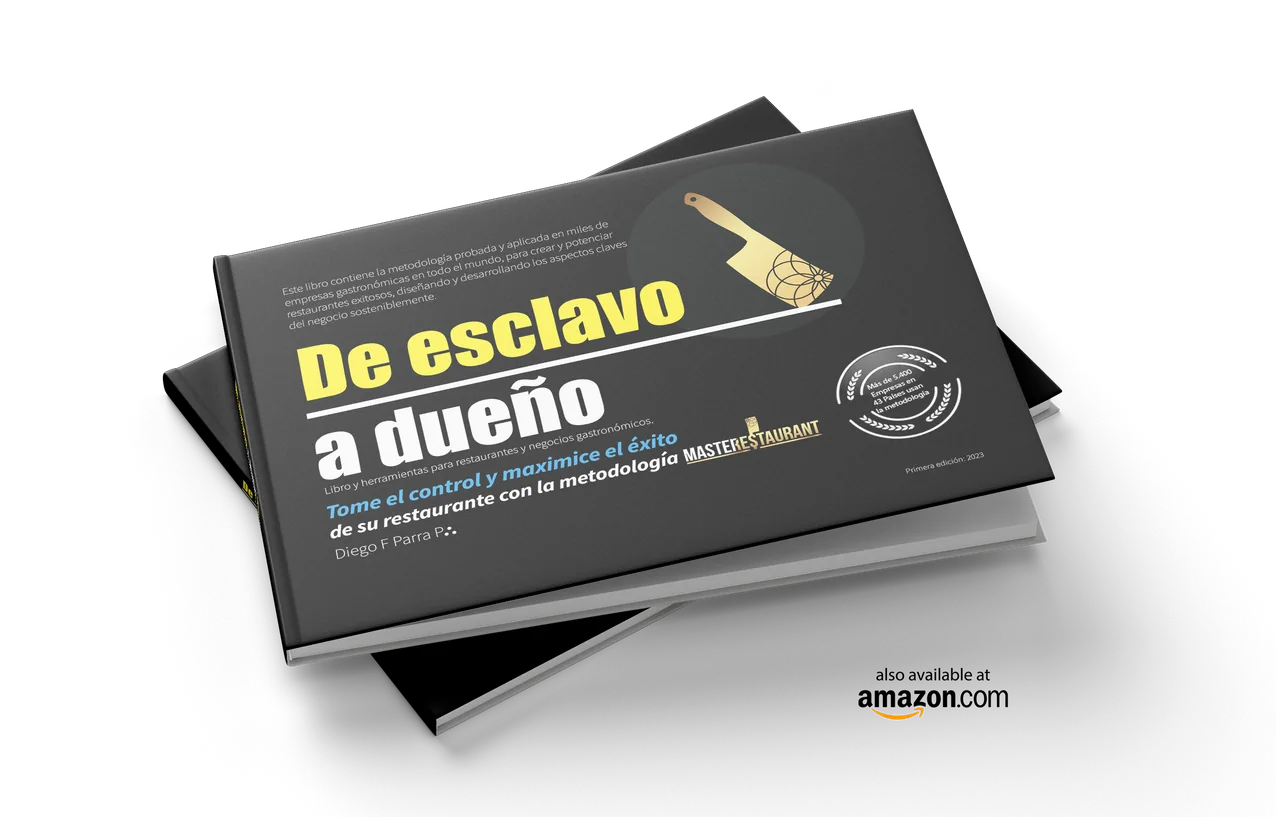
He is also the author of 3 ISBN-registered books, including «De esclavo a dueño», creator of the industry's leading podcast and of the largest bilingual community of owners, chefs and operations directors in the region (65M+ views per year as @masterestaurant), and ranks among the top Latino restaurant operations experts globally. His full track record is in Diego F Parra's professional profile.
Restaurant consulting with its own doctrine, not generic frameworks
Expert restaurant and hospitality consulting is not solved with management theory borrowed from another industry. It is solved with hospitality engineering: Prime Cost under control, theoretical versus actual cost, waste measured, standard recipes, written processes and indicators leadership reviews every week. Every engagement starts from the Restaurant Model Canvas: the whole business model is diagnosed, priorities are ranked by their impact on margin, and the team is left with its own instruments to sustain the results once the consulting ends.
Decisions stop being bets: they are made on data. The method is the same for an independent restaurant, a chain or a hospitality group.
Menu engineering and technical sheets that show what each dish earns, with Prime Cost, waste and shrinkage measured: where the bottom line feels the change first.
Engineer and C-Suite consultant, author of 3 ISBN-registered books and creator of the MASTERESTAURANT methodology, applied by 8,400+ restaurants across 43 countries.
The method comes with its own technology suite: MTIE, Gastronomic Radar, Restaurant Model Canvas and KPI Dashboard. He has spent two decades creating, rescuing and expanding restaurants, franchises, dark kitchens and HORECA and hospitality groups across four continents, signing payrolls, negotiating leases and closing expansions. For an owner or a leadership team, what matters is where the method comes from: having run restaurants, not studying them from the outside.
That is why every engagement arrives with proven instruments and leaves indicators the team keeps using afterwards. He works in English or Spanish, virtually, on site or in a hybrid format.
The book that changed how restaurants are managed: practical strategies and tools based on more than 20 years of experience, for traditional restaurants, dark kitchens, foodtech and HORECA businesses.
Triunfar o Morir en el Intento
Practical tools and key strategies to design and operate restaurants and food businesses efficiently.
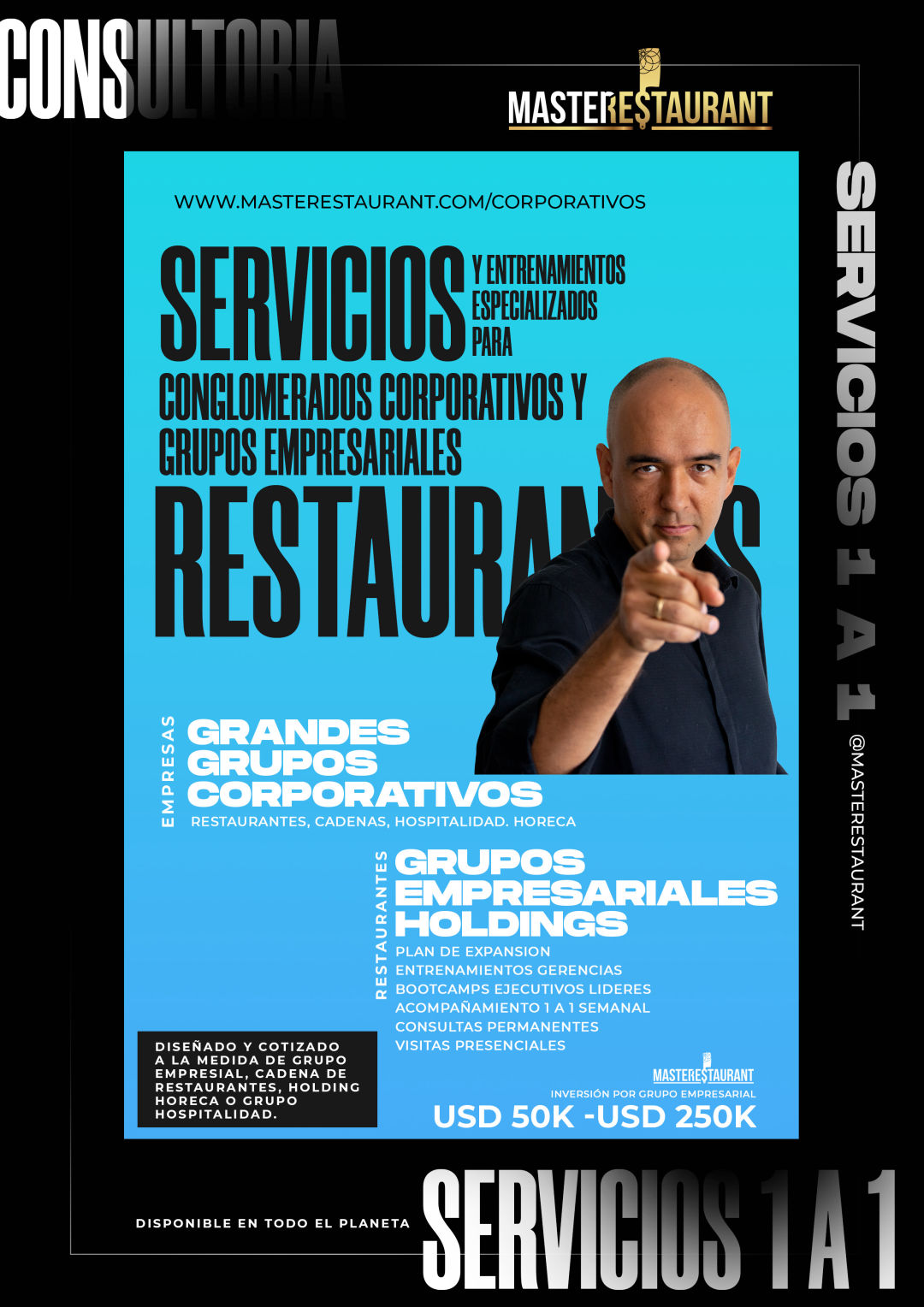
The complete corporate intervention catalog: consulting, executive bootcamps, advisory and specialized services, with scopes and formats. The document to decide with your board.
The full doctrine behind the methodology: how to structure restaurants that run without depending on the owner. Ideal pre-reading before your group's diagnosis.
Is the restaurant only the beginning? Every service in the ecosystem starts from the same method and the same tools as this consulting: personalized mentoring for the owner, growth programs, the membership, training for the team and group consulting once the second or third site arrives. The full ecosystem is available:
Get a quote for expert consulting for your group in Quito
Your message goes straight to Diego's team: group or chain, number of sites, stage and what you need to achieve in Quito.
“A restaurant loses a significant portion of its margin potential in operations, but not because the chef doesn't cook well or the food isn't good. It loses it because no one measures actual food cost against budget, because every shift is a different decision, and because processes live in your head. When that changes, margin appears without anyone working longer hours. That's a system.”
Diego F. Parra — International consultant, expert in creating, scaling and improving restaurants, HORECA and hospitality
MASTERESTAURANT® methodology applied by 8,400+ restaurants across 43 countries · Author of 3 ISBN-registered books, including «De esclavo a dueño» · 20+ years operating restaurants, franchises, dark kitchens and HORECA groups across 4 continents
Restaurant and hospitality consulting: territories, services and ecosystem resources
Related links for owners, partners and leadership teams evaluating expert restaurant and hospitality consulting for their food business: nearby territories, sister services in the MASTERESTAURANT ecosystem and management tools, all built on the same method and the same instruments.
Do you offer restaurant management consulting in Quito?
Yes. Restaurant management consulting in Quito starts with a diagnosis built from the restaurant's real data (costs, waste, processes and team), then a work plan sequenced by what each change adds to the bottom line, built on that restaurant's volume, stage and market.
Who is a restaurant consultant in Quito for owners who want a repeatable model?
Diego F. Parra, the restaurant consultant behind MASTERESTAURANT, works with owners in Quito one on one: first a diagnosis from the operation's own data, then a plan ranked by margin impact, so the restaurant can run and grow without improvising.
How long before we see real results in margin and EBITDA?
Diagnosis closes in 4–6 weeks. Delta in Prime Cost is measurable by week 8: a recipe that cost 12 becomes 9.2 after standardization, and you see it immediately. EBITDA per unit improves between week 8 and 12, depending on implementation speed and current operational complexity. If there's internal resistance or staff changes, it extends. What doesn't happen is results 'by magic' in three months; what happens is you measured, corrected, and replicated what works.
We operate well but want to open a second location—how do we avoid repeating the mistakes we made the first time?
Your first site already has the Model Canvas, processes documented, recipes with cost sheets. That's the asset you replicate. The second location doesn't start from scratch operationally; it starts with a model that already works. You train the team, adjust for local market dynamics if needed, and launch. The cost to scale is a fraction of the cost to learn the first time. Without documented systems, scaling means replicating your errors too; with them, scaling means cloning what works.
What is a full diagnosis?
A complete picture of the business with numbers: costs, operations, processes, team, customer experience and model. It comes from real operating data, not from a questionnaire.
Is the work remote or on site?
Virtual, on site or hybrid, depending on scope and city. The logistics change; the method and the deliverables do not.
What is left in writing at the end?
Standard recipes and technical sheets, processes and manuals, a structure of roles, an indicator dashboard and the growth plan. What is not written down does not survive the first round of staff turnover.
Do you help with franchising too?
With getting ready to franchise. Without a standardized model that is profitable per unit, franchising sells a replicated problem. Model first, contract second.
What if I already have a consultant or an accountant?
Nobody gets replaced. An accountant measures what already happened; this consulting changes what is about to happen in the operation. They usually work well in parallel.
Community
Join our MASTERESTAURANT Community for FREE
Restaurant owners and teams from 43 countries sharing knowledge, tools and applied AI — straight to your WhatsApp.
 MASTERESTAURANT®