Restaurant & hospitality consulting · All cities in New Mexico
DIEGO F PARRA · CREATOR OF THE MASTERESTAURANT® METHODOLOGY
RESTAURANT CONSULTINGWho audits a restaurant across New Mexico that grew faster than its processes?
Across New Mexico, the work starts by measuring: where the money goes, what margin each dish leaves, which processes are not written down and which decisions are being made without data. The plan comes from that, not from a template.
Restaurant consulting across New Mexico: what happens, and in what order
The MASTERESTAURANT methodology and its TOOLKIT have been applied across more than 8,400 restaurants in 43 countries. This is not business-school theory: it is what was left standing after working inside real operations, and it arrives with its own instruments —MTIE, Gastronomic Radar, Standard Recipe Generator, Tech Sheets and KPI Dashboard— instead of generic templates.
In New Mexico it adapts to the market, the size and the stage of the business, because copying a recipe from another country is exactly what this consulting exists to prevent. The order of work stays the same from one market to the next: measure with the operation's own data first, then fix what returns margin fastest, and put the structural work in writing until the model is ready to be replicated.
How does restaurant consulting work in New Mexico?
In New Mexico, it begins with a diagnosis of the operation from real data (costs, waste, processes and team) to find where the margin is going. From there comes a work plan sequenced by what each change adds to the bottom line.
It is not generic consulting: it is built on that restaurant's volume, stage and market. The plan puts what moves money first (Prime Cost, theoretical versus actual cost, waste measured, menu engineering) and the structural work second: standard recipes, written processes and indicators leadership reviews every week. The goal is a model that can survive being repeated before anyone signs a second lease. Support runs through implementation, virtually, on site or in a hybrid format, in English or Spanish. This page cites four verified figures as a reference for New Mexico, from sources such as the James Beard Foundation and the National Restaurant Association.
What do the numbers say about running a restaurant in New Mexico?
13 % — decline in staffing shortages compared with 2024; source: the James Beard Foundation. It is context, not a diagnosis: it does not say how much margin an operation keeps or where it leaks.
The decision comes from the restaurant's own numbers, not from market figures. Other reference points cited on this page: 49 % (chefs ranking social media among the top trends affecting operations in 2026, the James Beard Foundation); 1 million+ (restaurant and foodservice establishments, 2025, the National Restaurant Association); 4% (global foodservice market growth in 2025, Euromonitor International). Those numbers are Prime Cost, the gap between theoretical and actual cost, waste and the margin on each dish. In New Mexico, as in any other market, they are what show whether the next move is to adjust the menu and prices, tighten the operation or prepare a second site.
Data
Reference figures for restaurants in New Mexico
The figures cited on this page, with what each one measures and its source.
Figure
What it measures
Source
13 %
Decline in staffing shortages compared with 2024
James Beard Foundation
49 %
Chefs ranking social media among the top trends affecting operations in 2026
James Beard Foundation
1 million+
restaurant and foodservice establishments (2025)
National Restaurant Association
4%
Global foodservice market growth in 2025
Euromonitor International
Each figure links to its source in the data cards on this page.
The local market
How the All cities in New Mexico market competes today
A restaurant that bills in New Mexico and believes it needs to 'work harder' is observing the symptom, not the disease. Revenue grows when there is demand, but margin—what actually matters at month's end—is lost in three invisible places: the difference between the theoretical cost of your recipe and what it actually costs to prepare (waste, inventory loss, uncontrolled portions), menu engineering (serving dishes that don't cover labor and food cost), and numbers nobody watches because they're scattered in a notebook or in the manager's head. A consolidated hospitality business in New Mexico bills because it has product and traffic; it loses margin because it doesn't measure where. Thousands of restaurants operate this way: they grow in sales and contract in profit. It's not a failure of effort. It's a failure of running a business without system. Restaurant consulting focused on margin recovery starts with the question almost no owner asks: what should this cost, what does it actually cost, and why aren't those the same number?
The transformation delivered by MASTERESTAURANT methodology is not an audit you file away. It's the shift from a business run on the owner's judgment—because the owner has always been the diagnosis, the decision, the control—to one run on system. That includes: complete diagnosis of current state and business model; restaurant model canvas built for your exact operation; real measurement of prime cost and its breakdown (food, direct labor, controllable overhead); standardized recipes with specification sheets linking portions, exact cost, and margin; written processes that let any person execute the same way each time; visibility of unit EBITDA per location (not aggregate); and governance to defend those numbers shift after shift, site by site. None of this is theory: every piece implements the following week, not filed in a report. A restaurant that adopted this method three months ago doesn't just see different numbers at close; it operates differently. The owner moves from being in the kitchen at eleven p.m., squaring expenses, to watching a dashboard and knowing what to correct before service.
What allows hospitality consulting to shorten the learning curve is not theory; it's pattern. Error #1 is never the food; it's cost structure without control. Error #2 is serving without margin—menu pricing that doesn't cover inputs. Error #3 is confusing revenue with profit. Those errors are not unique to New Mexico; they appear in any market because they respond to the same arithmetic of restaurants. What Diego's background across 43 countries has revealed is that restaurants solving this don't share geography: they share method. The solution that worked in similar contexts elsewhere—same operation type, same margin challenges—works here because it's method, not improvisation. What matters is not how many cities or countries, but that the pattern replicates: identify, measure, correct, defend. That works anywhere.
The return is quantifiable. A restaurant consolidates margin because every cost is measured against the theoretical and every deviation has ownership (who, when, why). The recipe that cost $14.50 and ran at $16 now executes at $14 because waste is visible; the margin that seemed fixed now varies by what actually goes in each plate. Cost control doesn't mean cutting spend: it means spending exactly. Consistency: every shift and every location delivers the same quality, at the same cost, at the same price; no surprises at close. The team works from data, not hunches; menu decisions, supplier choices, scheduling respond to verified numbers, not what the manager believes. A business that can grow when growth is a strategic choice—expand location, launch a new concept, scale processes—not a blind bet of 'let's see if this works.' And perhaps most valuable: an owner who is no longer indispensable. Not because he leaves; because the business runs without him inside every shift solving crises. That is an asset that can be sold, expanded, or delegated without everything collapsing.
The hospitality ecosystem in New Mexico is dense. You have zones with consolidated purchasing power where the diner expects experience; you have gastronomic tourism (travelers who come for regional cuisine have clear expectations); you have fragmented competition by operation type and location. Rent is not what it was; talent is a bottleneck—when you find someone with experience, so do others—and supply costs vary by vendor and volume. What erodes margin in New Mexico is what erodes in any consolidated market, with local shades: seasons where sales drop without warning, staff turnover that never stops (each turnover is margin lost to retraining), competition that underprices because owners don't know their own numbers, and customers who know what a good dish costs because they've eaten in another city. This is not a market kind to those who don't measure. It's a market that punishes those who believe revenue is the same as profit.
In a consolidated New Mexico market, cost structure carries real weight. Rent that doesn't fall, wages where turnover is expensive (losing a trained cook is costly; replacing him is more so), suppliers who know you have demand and price accordingly. There is seasonality: if your zone has tourism, there are high seasons and drops where sales fall thirty or forty percent; if it's residential, you face different seasonality (summer may be empty if your market is corporate). The New Mexico diner is sophisticated in what he respects: if his business grows, his expectations rise. He wants quality, not price surprises, and he'll go elsewhere if he feels overcharged. Competitive pressure by zone is real: the restaurant two blocks away bills like you do, has similar costs, and fights for the same diners. In that context, margin recovers where others don't look: in your prime cost running five points lower than standard because every recipe is engineered, because your waste is data not surprises, because your team executes a process, not improvises.
RESOURCES
MASTERESTAURANT studies, guides & tools
What a team across New Mexico can review to size the impact: sector studies, tools and cases:
Behind MASTERESTAURANT's restaurant consulting is Diego F Parra: engineer and C-Suite consultant with two decades creating, rescuing and expanding restaurants, franchises, dark kitchens and HORECA and hospitality groups across four continents. He doesn't arrive with theory: he arrives with the experience of having signed payrolls, negotiated leases, structured partnerships and closed expansions in operations worth hundreds of millions of dollars.
He is the creator of the MASTERESTAURANT® methodology — applied by 8,400+ restaurants across 43 countries — and its TOOLKIT of tools (MTIE, Gastronomic Radar, Standard Recipe Generator, Tech Sheets and KPI Dashboard). For a brand, a group or an investor that means one thing: every decision is made on proven data and systems, not on intuition.
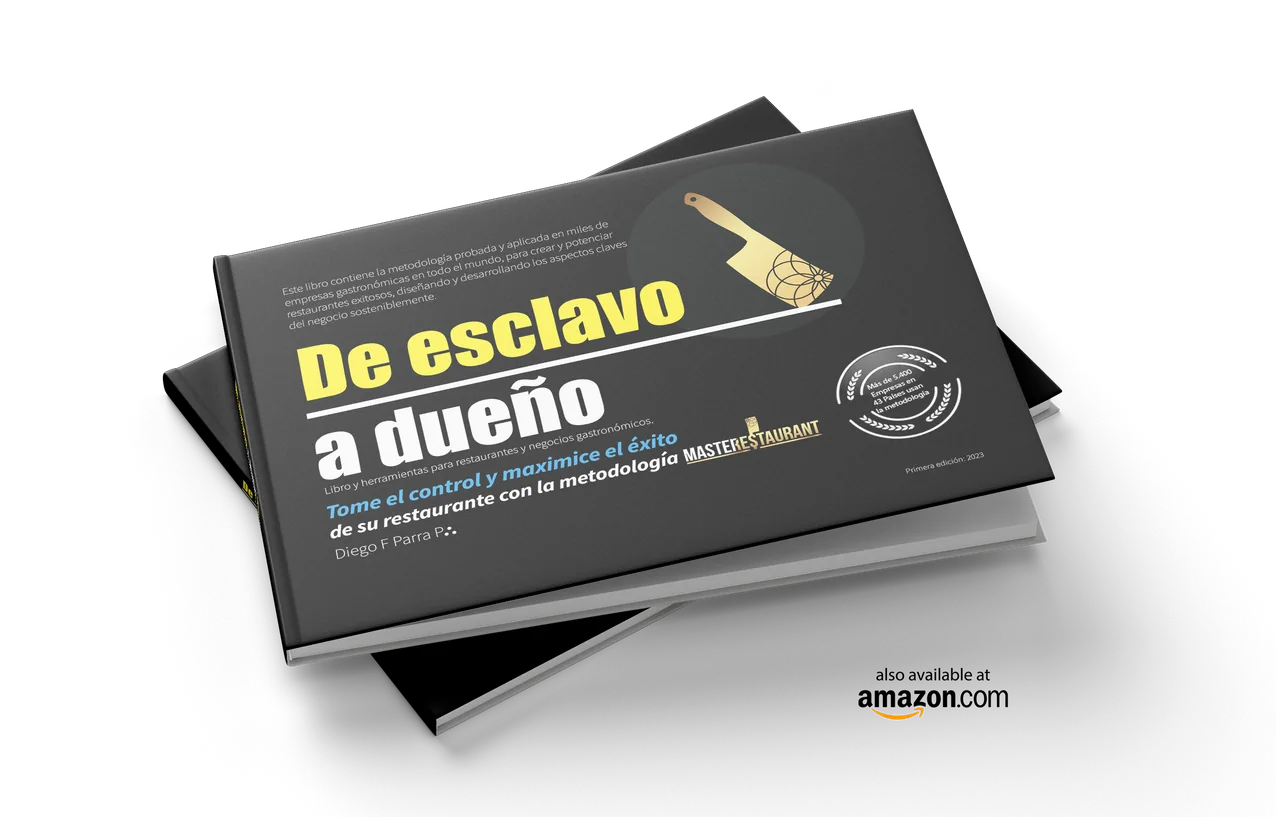
Author of 3 ISBN-registered books, including «De esclavo a dueño», creator of the industry's leading podcast and of the largest bilingual community of owners, chefs and operations directors in the region (65M+ views per year as @masterestaurant), and recognized among the top Latino restaurant operations experts globally. See his full track record in Diego F Parra's professional profile.
Restaurant consulting with its own doctrine, not generic frameworks
Expert restaurant and hospitality consulting is not solved with management theory borrowed from another industry. It is solved with hospitality engineering: Prime Cost under control, theoretical versus actual cost, waste measured, standard recipes, written processes and indicators leadership reviews every week. Every engagement starts from the Restaurant Model Canvas: the whole business model is diagnosed, priorities are ranked by their impact on margin, and the team is left with its own instruments to sustain the results once the consulting ends. Decisions stop being bets: they are made on data. The method is the same for an independent restaurant, a chain or a hospitality group.
Menu engineering and technical sheets that show what each dish earns, with Prime Cost, waste and shrinkage measured: where the bottom line feels the change first.
Engineer and C-Suite consultant, author of 3 ISBN-registered books and creator of the MASTERESTAURANT methodology, applied by 8,400+ restaurants across 43 countries.
The method comes with its own technology suite: MTIE, Gastronomic Radar, Restaurant Model Canvas and KPI Dashboard. He has spent two decades creating, rescuing and expanding restaurants, franchises, dark kitchens and HORECA and hospitality groups across four continents, signing payrolls, negotiating leases and closing expansions. For an owner or a leadership team, what matters is where the method comes from: having run restaurants, not studying them from the outside. That is why every engagement arrives with proven instruments and leaves indicators the team keeps using afterwards. He works in English or Spanish, virtually, on site or in a hybrid format.
The book that changed how restaurants are managed: practical strategies and tools based on more than 20 years of experience, for traditional restaurants, dark kitchens, foodtech and HORECA businesses.
Triunfar o Morir en el Intento
Practical tools and key strategies to design and operate restaurants and food businesses efficiently.
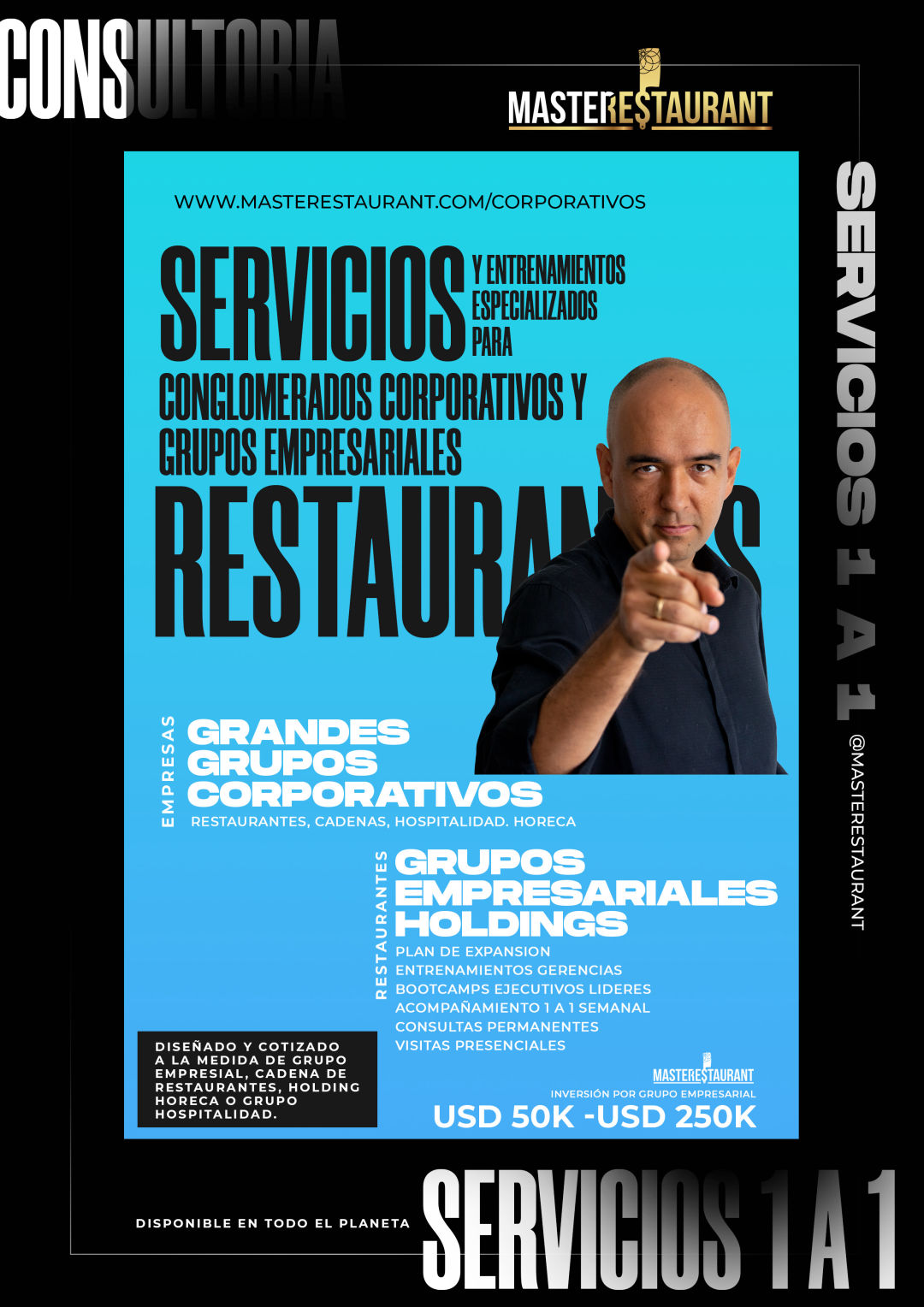
The complete corporate intervention catalog: consulting, executive bootcamps, advisory and specialized services, with scopes and formats. The document to decide with your board.
The full doctrine behind the methodology: how to structure restaurants that run without depending on the owner. Ideal pre-reading before your group's diagnosis.
Is the restaurant only the beginning? Every service in the ecosystem starts from the same method and the same tools as this consulting: personalized mentoring for the owner, growth programs, the membership, training for the team and group consulting once the second or third site arrives. The full ecosystem is available:
Get a quote for expert consulting for your group across New Mexico
Your message goes straight to Diego's team: group or chain, number of sites, stage and what you need to achieve across New Mexico.
“Margin doesn't appear because you work more hours; it appears when the system you run makes every decision measured, every cost known, and every shift identical to the one before. I've seen it thousands of times: the restaurant that screams and writhes has the same revenue as the one running process, but lands with half the profit.”
Diego F. Parra — International consultant, expert in creating, scaling and improving restaurants, HORECA and hospitality
MASTERESTAURANT® methodology applied by 8,400+ restaurants across 43 countries · Author of 3 ISBN-registered books, including «De esclavo a dueño» · 20+ years operating restaurants, franchises, dark kitchens and HORECA groups across 4 continents
Restaurant and hospitality consulting: territories, services and ecosystem resources
Related links for owners, partners and leadership teams evaluating expert restaurant and hospitality consulting for their food business: nearby territories, sister services in the MASTERESTAURANT ecosystem and management tools, all built on the same method and the same instruments.
How do I know I'm actually losing margin and it's not just that supply costs went up?
There's a difference: if your input costs rose and your margin fell exactly the same amount, that's market pressure; if it fell more, something in your operation broke. Prime cost is the answer. Measure: (food cost + direct labor cost) ÷ gross sales. If that number climbs while nothing changes on your end, your recipes cost more than you thought, you're wasting more, or your team is portioning differently. That shows. Standardized recipes with spec sheets tell you what SHOULD cost; if actual is higher, you have a hole. That's where the fix begins.
If my operation barely runs now, how do I add another location without breaking?
You don't add. You fix the one you have first. A system that works in one location replicates; a broken system replicates too. You invest in making your current location have written processes, predictable margin, and a team that executes without depending on you. Then replicating is cheap: you copy the numbers, the processes, the structure, and open. Without that, a second location is a gamble. With it, it's math. Specialized restaurant consulting doesn't accelerate growth; it makes growth happen without surprises.
What does EBITDA per unit mean and why does it matter?
It is what each site leaves on its own before interest, tax and depreciation. Without it, a group does not know which location is carrying which, and decisions to close or to open get made blind.
What is shrinkage and why measure it?
It is what is lost between what gets bought and what gets sold: portioning, waste and spoilage. It is money already paid that never reaches the till.
Does standardization strip a restaurant of personality?
The opposite. Standardizing what should be identical — cost, process, product — is what leaves time and margin for what should be distinctive: the welcome and the experience.
How long before results show?
Cost engineering shows within weeks. Standardization and changing team habits take months. The plan says what to expect and when.
Do you work with investors or family offices?
Yes: independent diagnosis, value thesis and support to leadership, so the return on a foodservice asset does not depend on the operator's luck.
Community
Join our MASTERESTAURANT Community for FREE
Restaurant owners and teams from 43 countries sharing knowledge, tools and applied AI — straight to your WhatsApp.
 MASTERESTAURANT®