 MASTERESTAURANT®
Food waste and spoilage over purchases
LeanPath / U.S. EPAMASTERESTAURANT® Toolkit · Operations
DIEGO F PARRA · CREATOR OF THE MASTERESTAURANT® METHODOLOGY
Standard recipe template free standard recipe card with exampleThe sheet for each dish, so it comes out the same, costs the same and earns the margin you planned
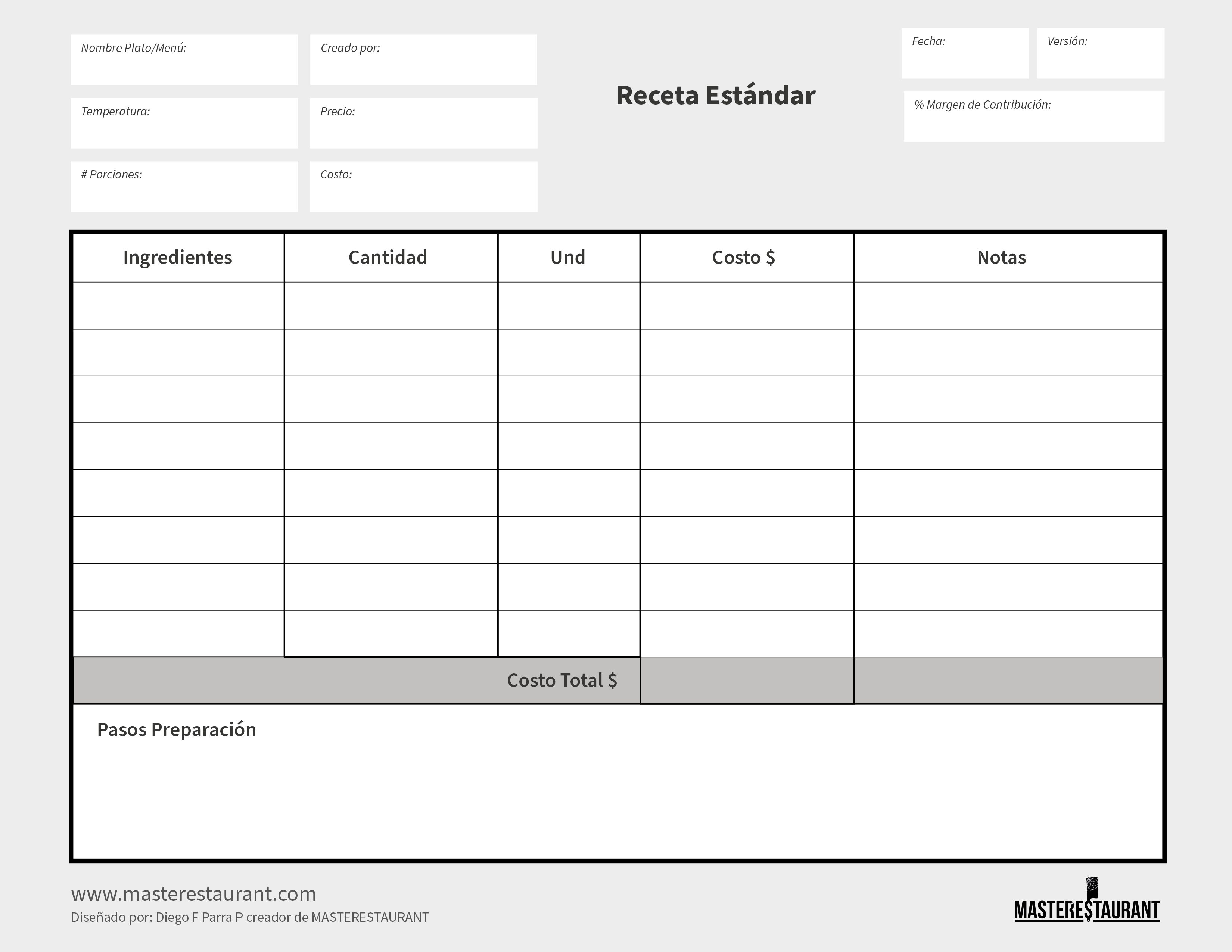
A standard recipe template is the sheet where a restaurant sets, for each dish, the ingredients, quantities, units, cost, portions, price and contribution margin. This is the MASTERESTAURANT one: free to download, ready to print, in Spanish, with a filled-in example below.
See all the tools8,400+restaurants apply his methodology
43countries with supported groups
65M+views per year
2service languages: EN - ES
Toolkit sheets
The standard recipe sheet and the ones that go with it (in Spanish)
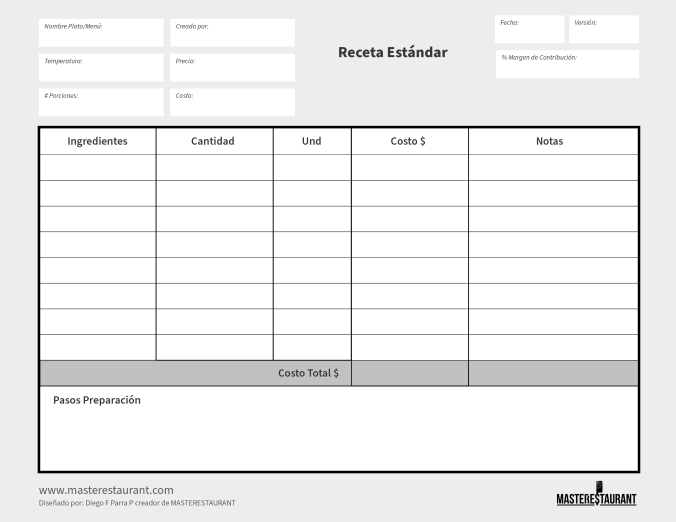
Standard recipe template (in Spanish)
One sheet per dish: ingredients, quantity, unit, cost, portions, price and contribution margin %, ready to print.
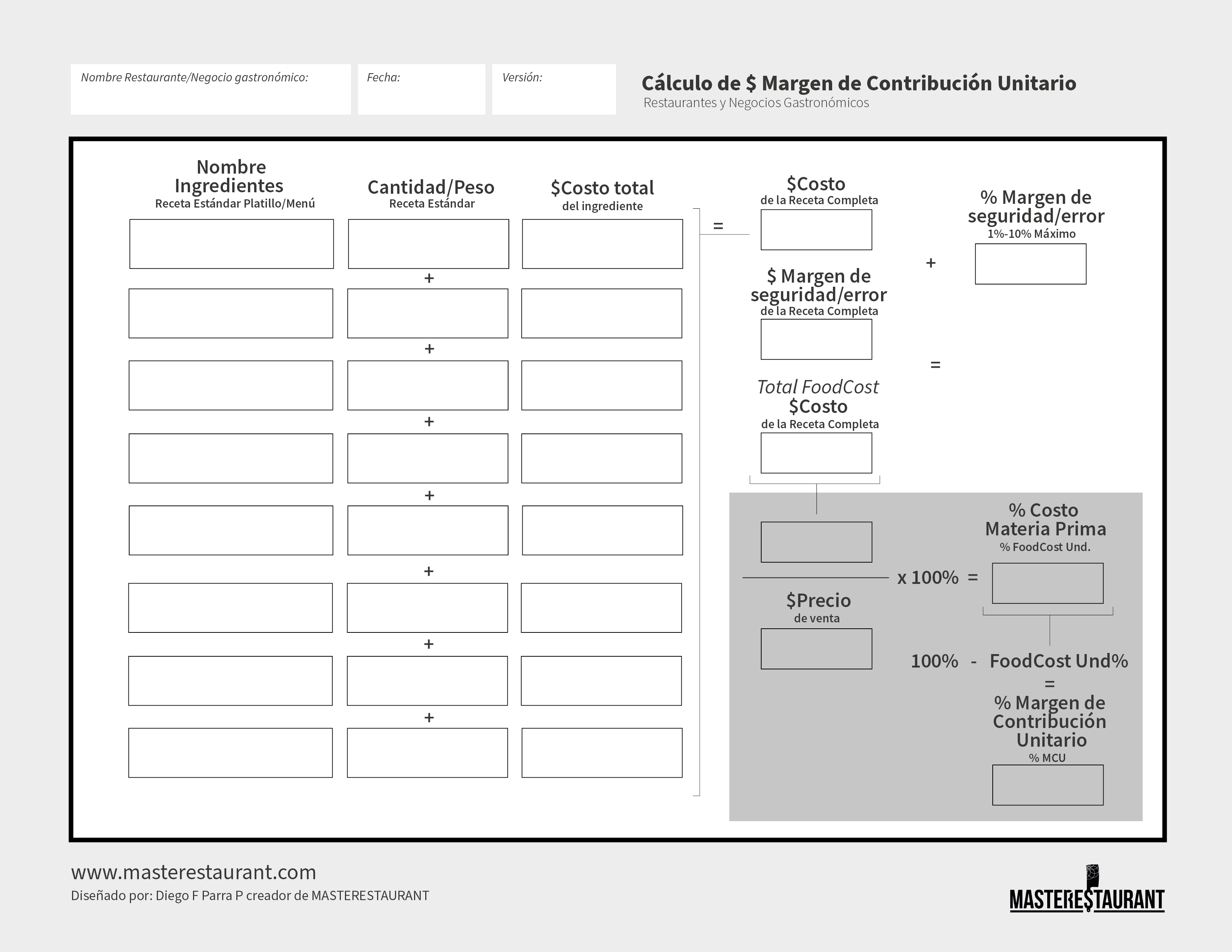
Unit contribution margin sheet
Uses the standard recipe ingredients to get the dish cost and its unit contribution margin %.
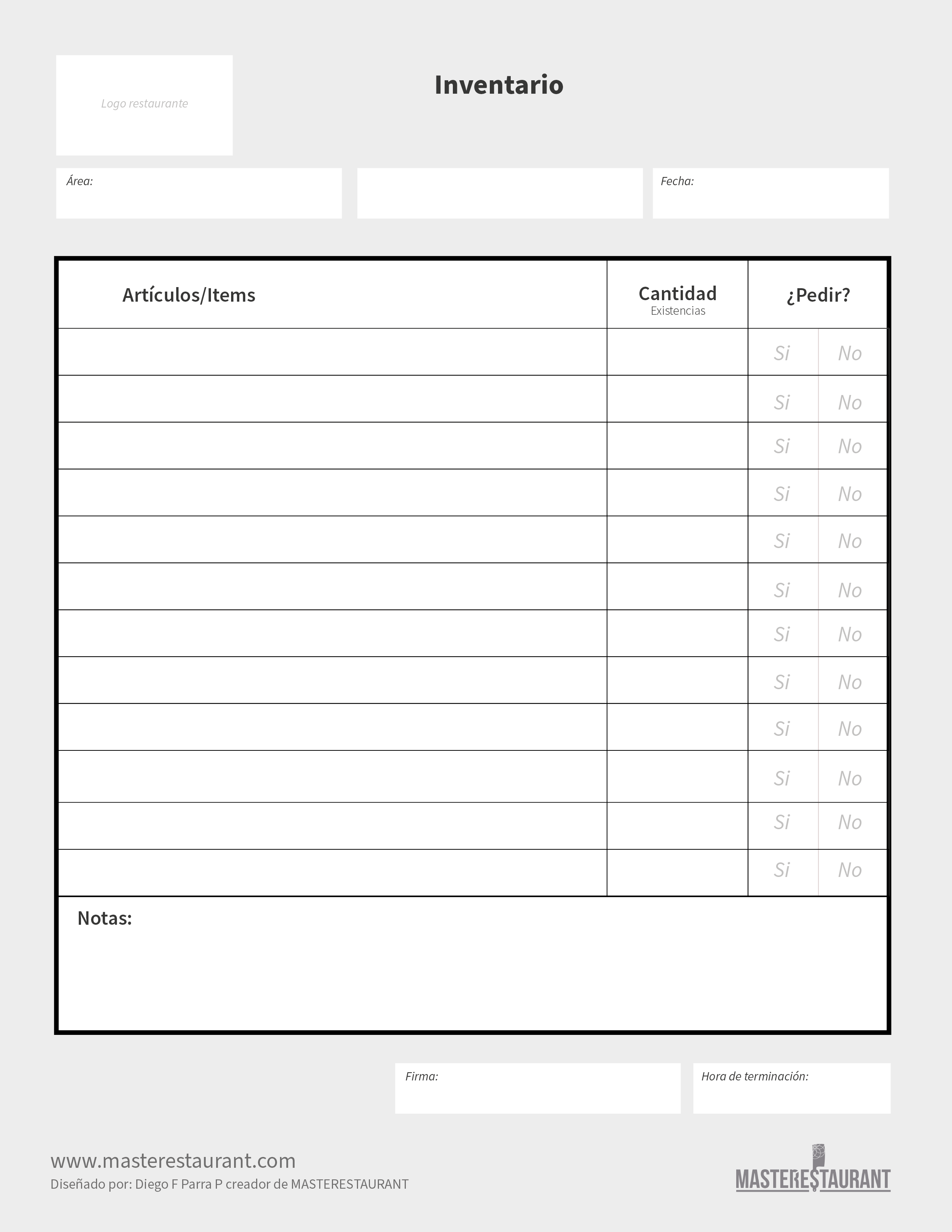
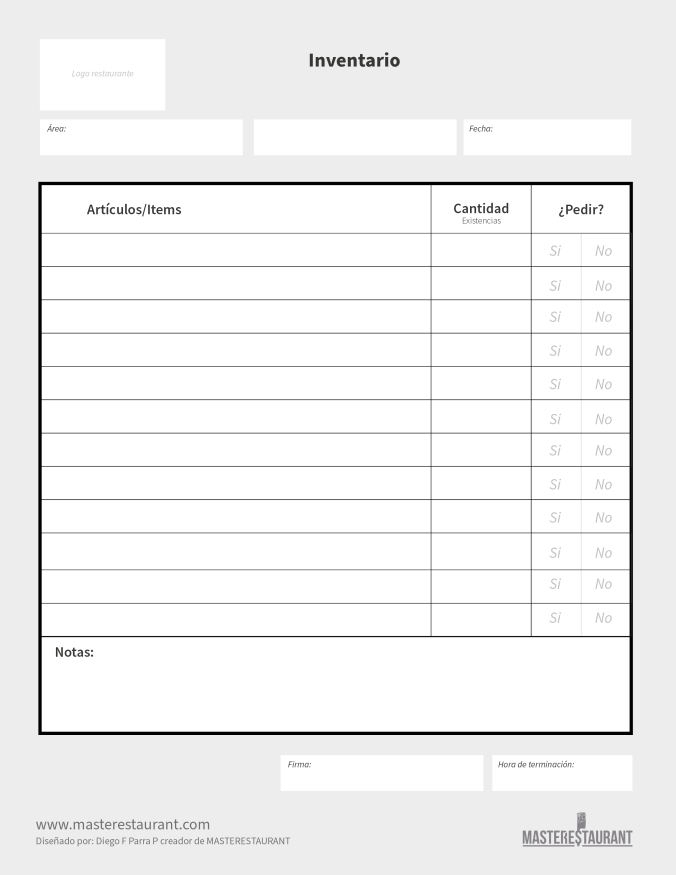
Inventory sheet
The sheet to count stock by area and date and compare what went out with what the recipes say.
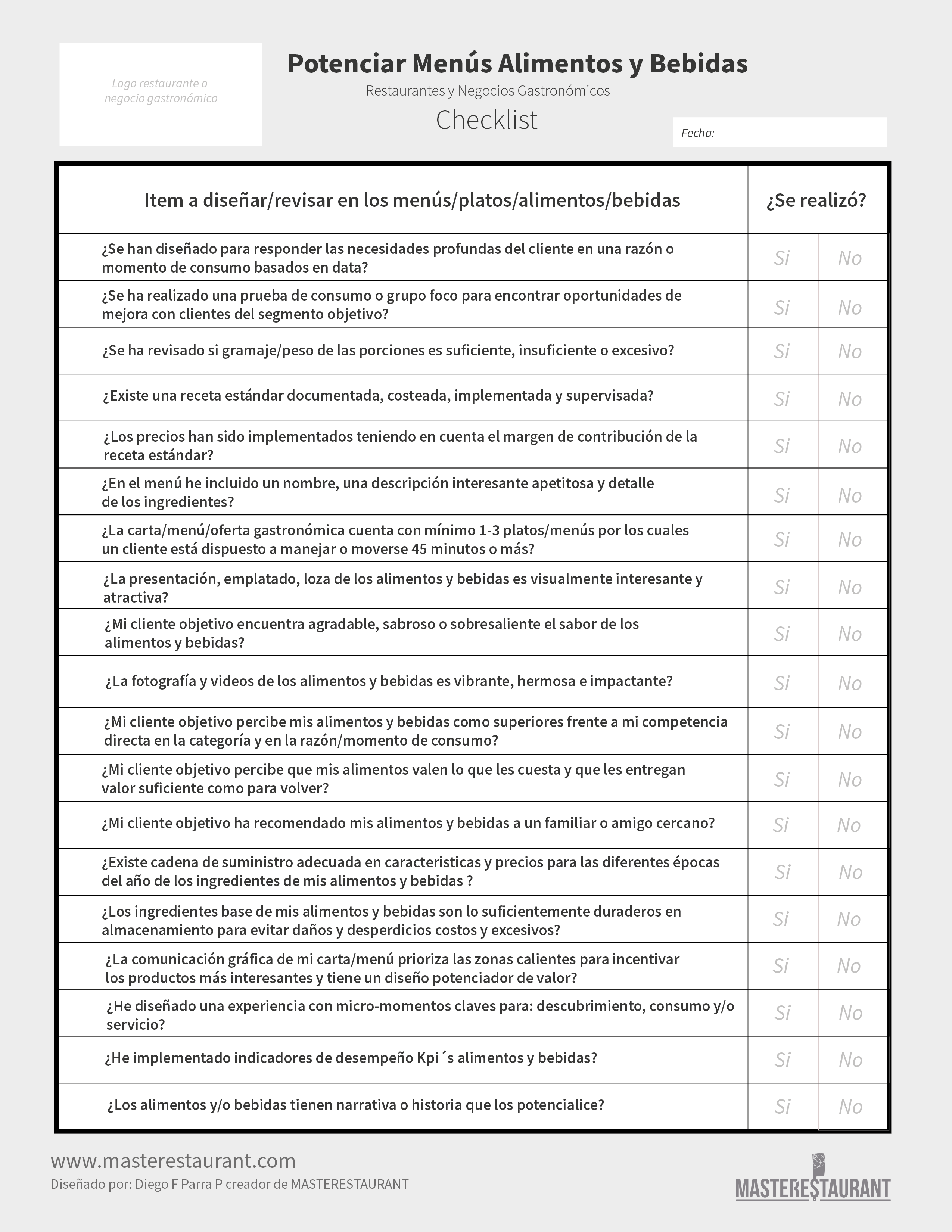
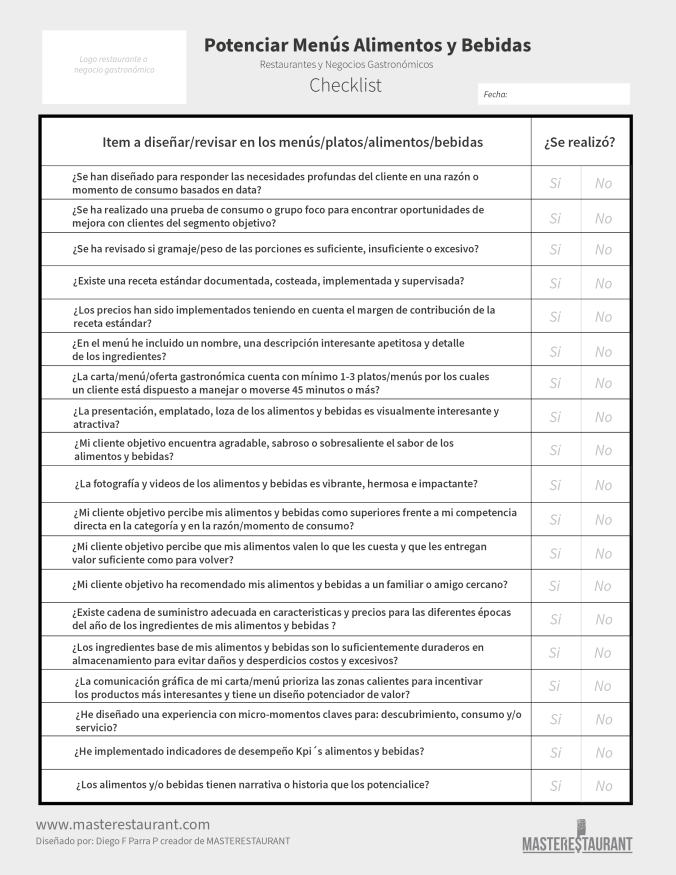
Menu improvement checklist
What to review on the food and beverage menu before changing dishes or prices.

International validationSee Diego F. Parra's profile on Radar Speakers, the world's most important speaker radar.See profile on Radar Speakers →
4-10% ~70% 32.0% 
@masterestaurant
Why standardizing recipes is a pillar of menu profitability
Standardizing recipes is one of the pillars of running a restaurant efficiently and profitably. The sheet for each dish is not just an operating document: it is a strategic tool that ties the kitchen to inventory control, waste reduction and the cost of every dish, and it delivers the consistency guests expect every time they come back.
The restaurants that control cost best use it to decide with real data: adjust the selling price when ingredient costs change, catch waste early and keep the quality standards they promise. The sheet on this page is part of the MASTERESTAURANT digital toolkit, designed by Diego F. Parra to download free, print and use for every dish on the menu.
What is a standard recipe template?
A standard recipe template is the sheet where a restaurant sets, for each dish, the ingredients, quantities, units, cost, portions, price and contribution margin, so the dish comes out the same and costs the same every time.
The MASTERESTAURANT sheet turns what a cook knows by heart into a document anyone on the team can repeat. At the top it holds the dish details: name, who created it, date, version, temperature, price, number of portions, cost and contribution margin percentage. In the middle, the ingredient table with quantity, unit, cost and notes, plus the total cost. At the bottom, the preparation steps. It is a standardized recipe format: it defines what goes into the dish, how much and at what cost, and puts the method in writing. You may also see it called a restaurant recipe template, a standardized recipe or a recipe spec sheet: it is the same document under another name.
How do you fill in the standard recipe card, field by field?
Start with the dish details, then list each ingredient with its quantity, unit and cost. Add up the total cost, divide it by the portions and compare that cost per portion with the price to get the margin.
Write the ingredients in the order they are used and with the quantity that actually reaches the plate, not the purchased amount: if the recipe uses trimmed chicken breast, record the trimmed weight. The unit —grams, ounces, milliliters or each— should match the one your inventory uses, so the two can be checked against each other. The cost of each line is the quantity times the purchase price in that unit. The notes column holds what a number cannot: the cut, the brand or an approved substitution. Write the preparation steps as short sentences, with times, temperatures and plating. The date and version show which recipe is current when a price or an ingredient changes.
How do you standardize a recipe in the kitchen, step by step?
Cook the dish with the person who makes it best, weigh every ingredient, record quantities and steps on the sheet, cost it, have someone else cook it from the sheet alone and train the team on the approved version.
First, choose the dish and the person who prepares it best. While they cook, someone weighs each ingredient before it goes into the pan, instead of accepting “a handful” or “to taste”. Next, write the recipe on the template, with the portions it yields and how it is plated. Then another cook prepares it reading only the sheet: if the result is not the same, the sheet is incomplete and gets corrected. With the approved version, calculate the cost and review the price. Finally, print the sheet, keep it at the station and use it to train every new cook. Each change of ingredient or supplier opens a new version with its own date.
How do you calculate cost per portion and contribution margin?
Cost per portion = total recipe cost ÷ number of portions. Contribution margin = selling price before tax − cost per portion. The margin percentage is that margin ÷ price × 100.
For example, if a 4-portion recipe costs $10.00 in ingredients, each portion costs $2.50; if the dish sells for $9.00 before tax, it leaves $6.50 in contribution margin, 72.2% of the price. That margin is what the dish contributes to pay rent, payroll and utilities; whatever is left after that is profit. Based on Diego F. Parra's experience with more than 8,400 restaurants, the most common food cost range is between 22% and 38% of the selling price before tax. To run the numbers with trim yields, unit conversions and a target price, use the food cost calculator linked from this page.
What is a standardized recipe book and how do you organize it?
A standardized recipe book is the full set of a restaurant's standard recipes, one sheet per dish, organized like the menu. It is the kitchen's manual: what is made, how it is made and at what cost.
Organize it by menu section —starters, mains, desserts and drinks— and keep the base preparations that several dishes share, such as sauces, stocks or doughs, in a separate section, each with its own standard recipe. That way, when an ingredient price goes up you know which dishes it hits. Every sheet carries its date and version, and there is only one current recipe book: the one in the kitchen, not the one someone keeps on their phone. A practical setup is a printed copy at the station, protected from water and grease, and a digital copy controlled by the chef or the manager. In a restaurant group, the same recipe book at every location is what makes the dish taste the same at each one.
Why does a standard recipe control cost, waste and quality?
Because it sets how much of each ingredient should go out per dish. Without that number you cannot tell whether portions are too large, product is being lost or the menu price covers the cost.
That sheet is the reference everything else is measured against. For example, if it says each dish uses 7 ounces of protein and the inventory shows 8 ounces went out for every dish sold, that difference is waste, spoilage or an over-portioned plate. With it, a manager can adjust the selling price when an ingredient gets more expensive, change a portion or a supplier without giving up quality, and see which dishes leave the most margin. The guest also gets the same dish on Monday and on Saturday, whoever cooks it, and a new cook learns faster because there is a sheet and not only someone else's memory. That is why this sheet works as a pair with the toolkit's inventory template.
How does the standard recipe fit into the MASTERESTAURANT methodology?
The standard recipe is one of the tools behind the 10 elements of the restaurant canvas in the MASTERESTAURANT methodology, created by Diego F. Parra and applied in more than 8,400 restaurants in 43 countries.
The methodology organizes the business into those ten elements to manage costs, make the most of resources and build a distinct value proposition, designed around the guest's moments and reasons to eat out and not only around food and beverage. This sheet connects the menu with kitchen processes and with the finances: it is where each dish's cost, its unit contribution margin, inventory control and waste reduction come from. Diego F. Parra has taken this tool into training and consulting for restaurants, restaurant chains and hospitality holdings. If you want to put it in place with support, you can reach the team at the end of this page.
Example
What a completed standard recipe looks like
A sample recipe using the fields on the sheet. Dish: grilled chicken breast with rice and salad · Created by: head chef · Date: 09/25/2026 · Version: 1 · Portions: 4 · Serving temperature: hot.
| Ingredient | Quantity | Unit | Cost |
|---|---|---|---|
| Trimmed chicken breast | 28 | oz | $7.00 |
| White rice | 11 | oz | $0.80 |
| Lettuce | 7 | oz | $0.60 |
| Tomatoes | 8.5 | oz | $0.50 |
| Olive oil | 1.4 | fl oz | $0.70 |
| Limes | 2 | each | $0.35 |
| Salt and pepper | 0.35 | oz | $0.05 |
| Total recipe cost | 4 | portions | $10.00 |
| Cost per portion | 1 | portion | $2.50 |
| Selling price before tax | 1 | portion | $9.00 |
| Contribution margin | 1 | portion | $6.50 |
| Contribution margin % | — | — | 72.2% |
Sample figures, not from a real restaurant. Cost per portion = total cost ÷ portions; contribution margin = price before tax − cost per portion; % = margin ÷ price × 100.
Sourced data
Kitchen cost and waste: what the sources say
Restaurant food surplus that comes from plate waste
ReFEDFood and non-alcoholic beverage cost in full-service restaurants was 32.0% of sales (median, 2024)
National Restaurant AssociationRESOURCES
MASTERESTAURANT studies, guides & tools
Reference content for owners and directors in your market: proprietary indexes, tools and industry analysis:
- AI PROMPTStandard Recipes, Spec Sheets and Production
- WHITEPAPERThe Hidden Cost of Waste in Commercial Kitchens: Algorithmic Shrinkage Audits and Their EBITDA Impact
- STUDYRestaurant Customer Acquisition Barometer 2026: which channel fills tables and which burns budget
- CONCEPTRestaurant Business Plan: Before vs After · Definition
- LISTRestaurant unit economics: traditional vs Masterestaurant
- COMPARISONOpening a new restaurant: before vs after Masterestaurant
- GUIDERestaurant partners: traditional method · Guide
Who created them
Tools from someone who has run restaurants
They are designed by Diego F Parra, creator of the MASTERESTAURANT methodology: engineer and consultant with more than 20 years working inside restaurants, ghost kitchens and restaurant groups in 43 countries.
Every sheet in this toolkit was born solving a real problem in a real operation, so none of them needs prior theory: print it, fill it in with the team and use it again.
In this template that shows in three design choices: cost and contribution margin % sit at the top next to the price, so no one approves a dish without seeing what it leaves; the date and version show which recipe is current; and the notes column keeps the detail a number cannot.
The methodology
Discover the MASTERESTAURANT methodology
Behind every restaurant that grows profitably there is a system, not luck: the MASTERESTAURANT methodology, applied in 8,400+ restaurants across 43 countries.
Who is Diego F Parra?
Engineer and C-Suite consultant, Amazon TOP 5 author and creator of the MASTERESTAURANT methodology, applied by 8,400+ restaurants across 43 countries.
Published doctrine
The books that changed restaurant management
De Esclavo a Dueño AMAZON TOP 5
Practical strategies and tools from Diego F. Parra to take control of a restaurant, based on more than 20 years of experience. Amazon TOP 5 in hospitality.
Triunfar o Morir en el Intento
Practical tools and key strategies to design and operate restaurants and food businesses efficiently.
Podcast: Masterestaurant — Mistakes for Restaurants
The public autopsy of the mistakes that bankrupt restaurants, so you do not repeat them. Every episode is condensed operating doctrine, direct, no anesthesia.
Listen on SpotifyDownloads
Resources and access
MASTERESTAURANT services portfolio
The complete catalog of services, programs and engagements of the ecosystem, with scopes and formats.
Download PDFBook: From Slave to Owner
The complete doctrine of the owner who takes control and maximizes the success of their restaurant. TOP 5 on Amazon.
See on Amazon52-Week Membership: group trainings and mentoring
Access to the MASTERESTAURANT membership of group trainings and mentoring sessions for 52 weeks.
Learn about the membershipDirect payment for your session
Reserve your seat with direct payment: Bold, PayU or PayPal (payment links are confirmed and updated when scheduling).
Pay with BoldPortfolio
More services by Diego F Parra and his team
If you want to standardize your kitchen's recipes with support, Diego F. Parra and his team do it through training, mentoring and consulting: the recipe book is built with your team, each dish is costed and it is tied to inventory and menu prices. These are their services:
International keynote speakerOne-on-one consulting and advisoryPersonalized mentoring for owners (limited spots)Corporate groups and holdings consultingCelebrity Restaurants consultingThemed restaurant advisorySpecialized training programs52-Week membershipPitch deck and restaurant investment readinessExponential Program0.1 Program — Elevate Your RestaurantInteractive training kit
Direct contact
Want help applying it in your restaurant?
Your message goes straight to Diego F. Parra's team. Tell us how you handle recipes today and what you need, and we will reply with a tailored proposal.
Want to standardize your kitchen's recipes with a method?
Tell us how you handle recipes today and we will tell you where to start.
Explore more
Related tools and resources
The MASTERESTAURANT toolkit sheets are free to download and printed in Spanish. A practical order to use them: start with this standard recipe template for each dish, count stock with the inventory template, then use the food cost calculator to set menu prices with numbers. The programs and services below help teams put them to work.
World's best restaurant keynote speakerWorld's best restaurant consultantC-Suite restaurant consultant for chains & groupsDiego F Parra — professional profileKeynote speaker serviceCorporate groups & holdings consultingCelebrity restaurant consultingInternational themed restaurant advisoryServices portfolioOne-on-one consultingMentoringMTIE — Territory EngineGastronomic RadarStandard Recipe GeneratorFood cost calculatorStandard recipe generator (in Spanish)
FAQ
Frequently asked questions
What is a standard recipe?
A standard recipe is the document that defines, for one dish, the ingredients, exact quantities, units, cost, portions, price, contribution margin and preparation steps. It makes the dish come out the same whoever cooks it, and it tells you how much it costs and how much it leaves.
How do you write a standard recipe?
Cook the dish with the person who makes it best, weigh every ingredient and record quantities, units and steps on the template. Then cost it, have someone else cook it from the sheet alone to confirm nothing is missing, and use the approved version to train the team.
Is the standard recipe template free?
Yes. The MASTERESTAURANT sheet downloads free from this page, ready to print. It is in Spanish and has fields for dish name, date, version, price, portions, cost and contribution margin %, the ingredient table and space for the preparation steps.
Is the standard recipe card a PNG, PDF or Excel file?
It downloads as a landscape letter-size PNG image (3,300 × 2,550 pixels), ready to print, fill in on a tablet or save as a PDF from your browser. If your team works in Excel, copy the same columns —ingredient, quantity, unit, cost and notes— and the cost per portion and margin formulas.
What is the difference between a standard recipe and a recipe spec sheet?
Many restaurants use both names for the same thing. When they are separate, the standard recipe focuses on quantities, cost, portions and margin, and the spec sheet adds the plating photo, allergens and preparation detail. The MASTERESTAURANT standard recipe generator (in Spanish) builds that sheet online.
How often should a standard recipe be updated?
Every time an ingredient, a supplier, the portion or the purchase price of a key ingredient changes. That is why the sheet has a date and a version: the current recipe is the latest version, and the previous one is kept to compare cost and margin.