 MASTERESTAURANT®
Workers in hotels and restaurants (tourism)
INEC Panamá
Concept Restaurants · Panama City

DIEGO F PARRA · CREATOR OF THE MASTERESTAURANT® METHODOLOGY
THEMED RESTAURANT CONSULTANT Who works in Panama City with brands that want to bring their concept to the table without improvising the operation?
If you want to create or grow a themed or concept restaurant in Panama City, Diego F. Parra brings the MASTERESTAURANT methodology to your project: concept, business model, operation and expansion.
Download the portfolio (PDF)Limited advisory spots worldwide — reserve your evaluation early
8,400+restaurants apply his methodology
43countries with supported projects
65M+views per year
2service languages: EN · ES
International validation
See Diego F. Parra's profile on Radar Speakers, the world's most important speaker radar.
See profile on Radar Speakers →
120,430
39,276
US$ 403
B/. 90,462.6 million

@masterestaurant
The point where a strong concept in Panama City starts losing money
There is a moment in the life of every themed restaurant when the queue gets shorter and the margin becomes visible. If the business had been living off the opening until then, that moment gives no warning: it shows up in an ordinary month's till, with payroll and rent untouched and the average ticket slipping.
Working on the model before that point costs considerably less than rescuing it afterwards. 1-on-1 consulting, workshops and private advisory with the MASTERESTAURANT methodology and its TOOLKIT — 8,400+ restaurants across 43 countries — on costs, menu, operation and expansion.
How does themed restaurant consulting work in Panama City?
It reverses the usual order: first it checks that the concept's business model works in Panama City, then money goes into ambiance. The work starts with a strategic diagnosis and ends with a system built to repeat the experience.
Using the MASTERESTAURANT Restaurant Canvas, the concept and its business model are designed together. That covers value proposition, consumption moment, concept storytelling, menu engineering (which dish stays, which goes up in price and which comes off) and Prime Cost protected from the menu design onwards. Then the concept becomes a system: tech sheets, costing, processes, KPIs and an expansion plan for new locations, licenses or franchises. It serves new projects and themed restaurants already open, under confidentiality agreements, on site or virtually, in English or Spanish. As a starting point, this page gathers four verified reference figures from sources such as INEC Panamá and ATP.
What do the numbers say about the market for a themed restaurant in Panama City?
120,430 — workers in hotels and restaurants (tourism), according to INEC Panamá. Reference figures describe the setting a concept competes in; they do not say whether a themed experience will still leave a margin after opening.
For a themed restaurant, the data informs one concrete decision: how much can go into ambiance before the model stops working. Other reference points cited on this page: 39,276 (hotel rooms available in the country, ATP); US$ 403 (average daily spending per international visitor, ATP); B/. 90,462.6 million (Nominal GDP at current prices, Ministerio de Economía y Finanzas). In Panama City, each figure is read alongside average check, menu engineering and Prime Cost before spending on decor, because novelty brings the first visit and margin decides whether there is a second one.
Data
Reference figures for a themed restaurant in Panama City
The figures cited on this page, with what each one measures and its source.
| Figure | What it measures | Source |
|---|---|---|
| 120,430 | Workers in hotels and restaurants (tourism) | INEC Panamá |
| 39,276 | Hotel rooms available in the country | ATP (Autoridad de Turismo de Panamá) |
| US$ 403 | Average daily spending per international visitor | ATP (Autoridad de Turismo de Panamá) |
| B/. 90,462.6 million | Nominal GDP at current prices | Ministerio de Economía y Finanzas (MEF) |
Each figure links to its source in the data cards on this page.
The local market
What ground a themed restaurant stands on in Panama City
A themed or experiential restaurant in Panama City faces an operational reality that most entrepreneurs discover too late: investment in décor and visual environment generates initial enthusiasm but does not guarantee sustained profitability. It is common to invest millions of dollars in interior architecture, scenography, immersive ambiance, and experiential design while simultaneously neglecting the business structure that makes that experience profitable. A themed concept without a solid business model—pricing strategy aligned with value, menu engineering, efficient operations, clear margins, performance indicators—becomes expensive decoration that generates no real cash return. This gap is precisely what specialized consulting fills: transforming investment in environment into genuine business return, ensuring that every experiential detail is tied to a genuine reason to consume, a moment of sale, and a coherent financial model.
The transformation this consulting delivers is converting a themed idea into an organized, profitable, scalable, and manageable gastronomic enterprise. Drawing on the MASTERESTAURANT methodology and the Restaurant Model Canvas, the engagement integrates: business model definition and differentiated value proposition, storytelling and communication strategy, customer journey design and key experience moments, definition of consumption reasons and contexts, comprehensive environment and architectural design from the diner's perspective, detailed menu engineering (composition, costs, margins, coherence with theme), financial projections, operational structure and processes, definition of key performance indicators, and corporate governance. All of this, one hundred percent tailored to Panama City—its market, its target audience, its seasonality, its local constraints and opportunities. The result is an enterprise that does not depend on visual novelty, but thrives in every daily operation.
Diego F. Parra's global authority—an international specialist in restaurants and hospitality with one hundred percent dedication to the discipline—significantly reduces the risk of an experiential project in this region. He has applied the MASTERESTAURANT methodology across more than 8,400 restaurants and gastronomic groups in 43 countries, which enables him to recognize patterns of success and failure that a local consultant might overlook. As author of 3 ISBN-registered books and community leader with more than 65 million annual views, Diego possesses a curated body of research on what differentiates a thriving themed restaurant from one that becomes a symbol of lost investment. His approach combines business strategy with deep knowledge of gastronomy, hospitality operations, and diner psychology—three dimensions that rarely converge in a single consultant. That convergence is what positions a concept to become a recognized reference in the market.
The concrete return for the entrepreneur, group, or investor is multifaceted. First, clear differentiation in a market saturated with entertainment options—a concept that is genuinely distinct, not a generic themed copy. Second, a memorable experience that generates high repeat visits and higher average ticket, because it responds to genuine reasons to consume, not merely visual surprise. Third, better operational control, visible margins, and a business that can be understood and measured daily. Fourth, a model that grows methodically—new locations, licenses, franchises—because it is documented and systematized, not tied to founder intuition. Fifth, greater appeal to investors and more defensible valuation, because the business is clear and repeatable. And finally, founder independence—the themed experience does not depend on the owner operating every service; the team sustains it. That is the difference between owning a themed restaurant and owning a themed business.
Market data
Food service market data for Panama City
Hotel rooms available in the country
ATP (Autoridad de Turismo de Panamá)Average daily spending per international visitor
ATP (Autoridad de Turismo de Panamá)Nominal GDP at current prices
Ministerio de Economía y Finanzas (MEF)Panama City as a destination
Panama City as a destination for concept restaurants
The ecosystem where a themed or experiential restaurant thrives in Panama is complex and offers concentrated opportunities. There is an established gastronomic corridor in Casco Viejo, with high international tourism flow and demand for authentic experiences; a modern zone in Punta Pacifica with sophisticated executive clientele; a steady stream of cruise passengers disembarking at the Port of Balboa, seeking differentiated experiences; luxury shopping centers like Multiplaza and Maduro hosting high-spending audiences; world-class hotel offerings—JW Marriott, Sofitel, Mandarin Oriental—where guests seek memorable experiences beyond their rooms; and a growing population of executives, families, and expatriate residents with disposable income for premium entertainment. Add to this a clear seasonality: December through April concentrates business and recreational tourism. The audience is diverse: tourists, executives, couples, families, corporate celebrations. Panamanian culture—cosmopolitan, Caribbean-influenced, historically receptive to international commerce—readily embraces well-executed themed experiences.
The market opportunity is clear: growing demand for premium gastronomic experiences, with few truly high-quality themed or immersive concepts genuinely competing in the city. However, real risks are as concrete as the opportunity. Failed themed restaurants abound for predictable reasons: themes that age quickly or never genuinely resonated with Panamanian audiences; incoherent experiences where decoration is cinema-worthy but menu, service, or operations are mediocre; inflated operational costs from whimsical design lacking proportional return; teams incapable of maintaining daily quality standards; and financial models failing to anticipate the drop in visits after the initial novelty period. The diner in Panama is demanding: they value authenticity (not imitation), genuine gastronomy, coherent service, and clear value for money. They expect an experience that justifies their investment—not merely attractive ambiance, but genuine reasons to return. That standard defines success.
RESOURCES
MASTERESTAURANT studies, guides & tools
Support material to raise operations in Panama City — MASTERESTAURANT research, real cases and tools:
- COMPARISONBusiness model: traditional method vs Masterestaurant method
- STUDYRestaurant Competitive Analysis: Myth vs Reality According to the Data
- COMPARISONDark kitchen vs restaurante tradicional comparativa restaurantecercademi
- ARTICLECustomer Experience in Restaurants 2026: Traditional Method
- LIST7 restaurant membership and subscription mistakes
- PODCASTRestaurant Podcast #016 - Extreme service in restaurants
The themed consultant
Twenty years of real operations, not theory
There are consultants who have read about restaurants and consultants who have stood inside one at nine on a Friday night. Diego F Parra is the second kind: engineer and C-Suite consultant with two decades creating, rescuing and expanding restaurants, franchises, dark kitchens and HORECA and hospitality groups across four continents, with payrolls signed, leases negotiated and expansions closed in operations worth hundreds of millions of dollars.
That experience was distilled into the MASTERESTAURANT® methodology, applied today by 8,400+ restaurants across 43 countries, and into its TOOLKIT: MTIE, Gastronomic Radar, Standard Recipe Generator, Tech Sheets and KPI Dashboard. Tools, not slides.
The picture is completed by 3 ISBN-registered books, including «De esclavo a dueño», the industry's leading podcast, the largest bilingual community of owners, chefs and operations directors in the region (65M+ views per year as @masterestaurant) and a place among the top Latino restaurant operations experts globally. Full detail in Diego F Parra's professional profile.
Themed restaurant consulting with its own doctrine, not generic recipes
Themed restaurant consulting is not improvised. Every engagement is built on the Restaurant Model Canvas and real industry data — profitability, Prime Cost, cost structure, customer experience and expansion — applied to the specific business model of a themed restaurant. The goal is not a venue for the opening-night photo, but a food business that protects the concept, generates profit and can scale to new locations, licenses or franchises when the model is ready. That is why the work is organized on four fronts —diagnosis and business model; concept, menu and themed experience; structure, costs and operation; expansion, franchise and new locations— so the concept still holds up when it is no longer new.
Themed restaurant consulting from start to finish
Advisory that covers the full themed restaurant lifecycle
Diagnosis and profitability structure
Diagnosis of the project and business model with the Restaurant Canvas: value proposition, consumption moment and the structure that holds the margin.
Quote my diagnosisConcept, menu engineering and experience
The story of the concept taken into menu and immersive experience, with the times and the costs already calculated.
Quote the conceptPrime Cost, standardization and teams
Financial management, processes and leadership so the operation is repeatable with the team you have, not the ideal one.
Quote the operationExpansion, franchise and partners
New locations, licenses, franchise and investor management, in the order that avoids diluting the concept.
See the services portfolio (PDF)The methodology
Discover the MASTERESTAURANT methodology
What holds a concept up is a system, not a flash of inspiration: tools, processes and models you can audit.
Who is it for?
Who Diego F Parra works with in this service
Tailor-made 1-on-1 support, for new projects and for operations already running:
Entrepreneurs and concept creators
You already have the idea; what is missing is the model that holds it up once the novelty wears off. Concept, brand and numbers on the same plane.
Restaurant groups and chains
Adding a concept to the portfolio without improvising: method to protect the investment, clear rules between partners and financial control from day one.
Hotels and tourism developments
The restaurant stops being a hotel service and becomes a destination, with storytelling, menu and an operation that hold up every day.
Brands, IP and franchises
Taking a brand to the table demands standardization and trained teams; without them, every location tells a different story.
Investors and family offices
Entering hospitality with the learning curve already paid by someone else: a profitable, scalable concept with a methodology behind it.
What's included
The possible content of your engagement
Depending on the diagnosis, the engagement draws on some of these MASTERESTAURANT modules:
- Business model: the part that rarely comes with a good concept
- Strategic diagnosis of the project, the concept and its brand
- Concept and brand architecture of the themed restaurant
- Menu engineering and an experience design the customer pays for again
- Cost structure and Prime Cost within the range the business can hold
- Profitable standardization and concrete operational improvements
- The 10 key elements of the Restaurant Canvas, optimized
- Processes, teams and leadership with no dependence on the founder
- Growth strategy: own locations, licenses or franchise
- Partners and investors: clear rules to scale without diluting
- Executive bootcamps and leadership training
- 1-on-1 advisory with ongoing consultations and on-site visits
- Opening readiness that protects the concept's reputation
Investment: USD $35K – $250K · tailor-made, priced to each company · spots LIMITED worldwide to guarantee the best service.
Themed packages
Tailor-made themed restaurant consulting packages
Every themed restaurant engagement is 100% personalized and tailor-made to the project and the brand. After a strategic diagnosis, it works through the 10 key elements of the business model in the MASTERESTAURANT Restaurant Canvas — from value proposition and concept to profitability, standardization and expansion. Depending on the case, the package adds menu engineering, Prime Cost and cost structure, partner and investor management, executive bootcamps for the management team, ongoing consultations with visits to the venue and opening readiness. The quote starts from the concept, where the project stands and the numbers already on the table. Priced to each project's scope (USD $35K – $250K), with limited spots worldwide to ensure dedicated attention and discretion for each client.
Themed coverage
Concept consulting around Panama City
Explore themed restaurant consulting in other territories, or go back to the worldwide index on the themed restaurants worldwide page:
Concept restaurants across PanamaThemed restaurant advisory in ColonThemed restaurant advisory in Llano TugriThemed dining expert in PanamaThemed dining expert in PenonomeConcept restaurants in SantiagoThemed restaurants in AustraliaConcept restaurants in AustriaThemed restaurant consulting in IsraelThemed restaurant consulting in South AfricaThemed restaurant consultant in AlajuelaThemed restaurant advisory across ArgentinaThemed restaurants across BoliviaThemed restaurants across BrazilThemed restaurant consultant across CanadaThemed dining expert across ChileConcept restaurants across ColombiaThemed restaurant consulting across Costa RicaThemed restaurants across CubaConcept restaurants across the Dominican RepublicThemed restaurant consultant across EcuadorThemed restaurant consulting across El SalvadorThemed dining expert across GuatemalaThemed restaurants across HondurasMore countries →More cities →
We do serve — and every city on the planet
Available on site or virtually, in English and Spanish.
Who is Diego F Parra?
Diego F Parra is an engineer and C-Suite consultant, creator of the MASTERESTAURANT® methodology —applied by 8,400+ restaurants across 43 countries— and author of 3 ISBN-registered books.
He is the consultant that brands and concepts, athletes, artists and investors choose to turn their brand into a profitable, standardized themed restaurant ready to expand. He has spent two decades creating, rescuing and expanding restaurants, franchises, dark kitchens and HORECA groups across four continents, and he works with his own tools: MTIE, Gastronomic Radar and KPI Dashboard. For a themed restaurant, that means the concept is designed as a system —tech sheets, costing, processes and KPIs— so it can be repeated in new locations, licenses or franchises without being diluted.
HORECA · Chains · Holdings · Foodtech
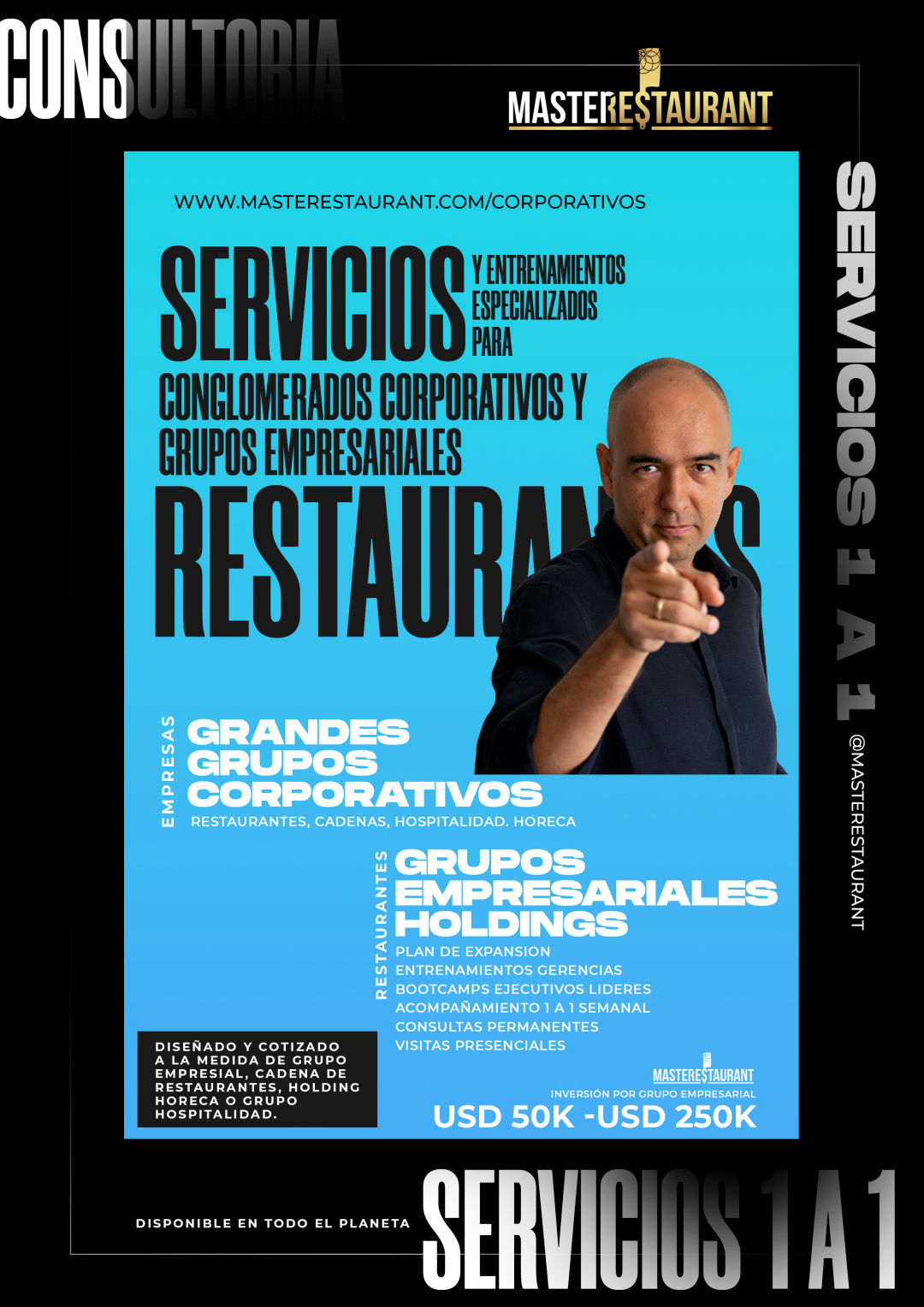
Private programs for groups and family offices
Training, consulting, executive bootcamps and private advisory for restaurant groups, holdings and investor families with themed restaurants.
Starting at USD $50K · tailor made, custom quoted · limited spots worldwide
Published doctrine
The books that changed restaurant management
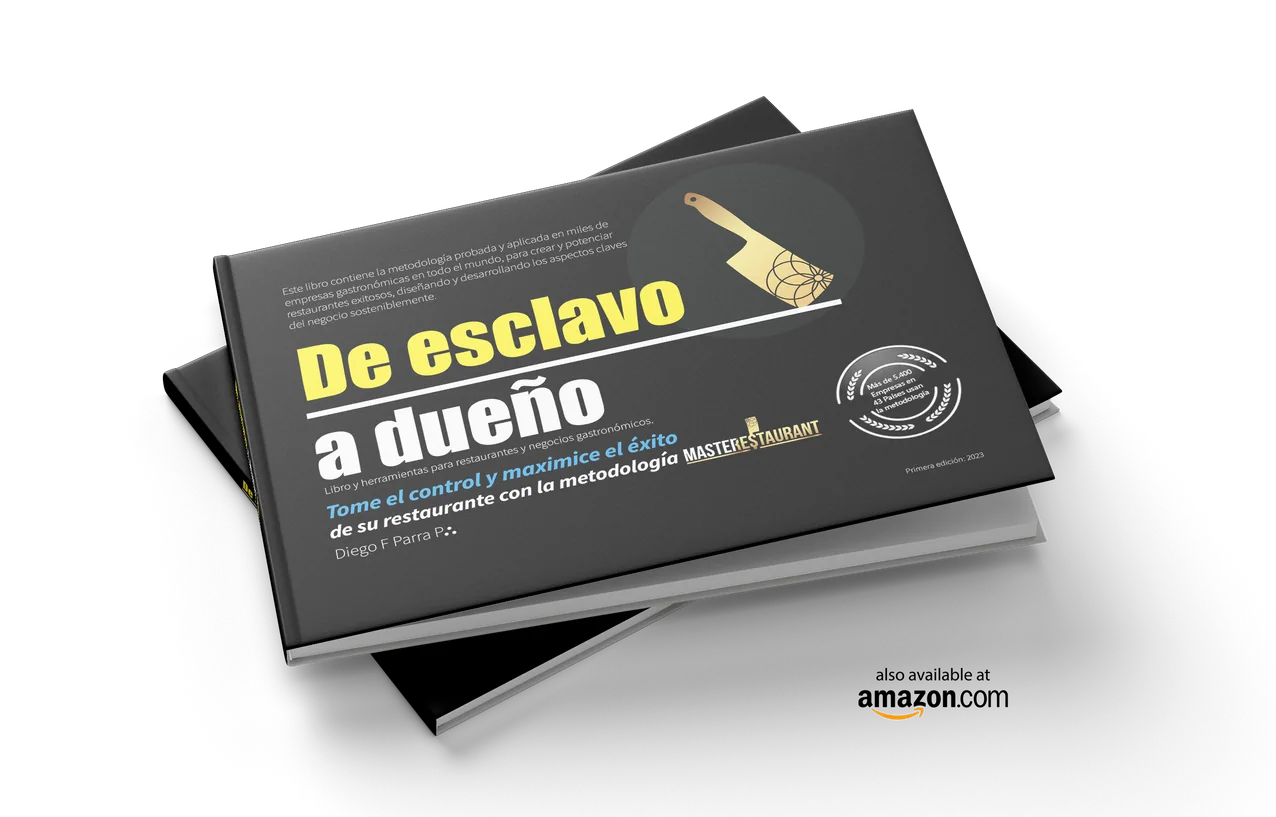
De Esclavo a Dueño
The book that changed how restaurants are managed: practical strategies and tools based on more than 20 years of experience, for traditional restaurants, dark kitchens, foodtech and HORECA businesses.
Triunfar o Morir en el Intento
Practical tools and key strategies to design and operate restaurants and food businesses efficiently.
Podcast: Masterestaurant — Mistakes for Restaurants
The public autopsy of the mistakes that bankrupt restaurants: thousands of owners and managers listen on Spotify to avoid repeating them. Condensed operating doctrine, free and direct.
Listen on SpotifyDownloads
The documents your management will ask for
MASTERESTAURANT® services portfolio
The complete intervention catalog: consulting, training, advisory and specialized services, with scopes and formats. The document to decide with your team.
Download PDFBook: From Slave to Owner
The full doctrine behind the methodology: how to structure a restaurant that runs without depending on the owner. Ideal pre-reading before your project's diagnosis.
View on AmazonPortfolio
More services by Diego F Parra and his team
Beyond themed restaurant consulting, Diego F Parra and his team offer keynotes, mentoring for owners, consulting for groups, training, programs, a membership and an interactive training kit. Everything starts from the same method and the same tools, so once the concept works, the dining-room team can train with that kit, partners can prepare the investment with the Pitch Deck service and the group can take the concept to new sites with the same criteria. The full ecosystem is available:
International keynote speakerOne-on-one consulting and advisoryPersonalized mentoring for owners (limited spots)Corporate groups and holdings consultingCelebrity Restaurants consultingThemed restaurant advisorySpecialized training programs52-Week membershipPitch deck and restaurant investment readinessExponential Program0.1 Program — Elevate Your RestaurantInteractive training kit
Direct contact
Get a quote for themed restaurant consulting for your project in Panama City
Your message goes straight to Diego's team: concept, project stage, city and what you need to achieve in Panama City.
“I've seen restaurants in this region with million-dollar décor investments that closed within 18 months because they lacked a coherent business model. Theme opens doors; business keeps them open. Without differentiated cuisine, flawless operations, and visible margins, decoration is merely an asset depreciating daily.”
Diego F. Parra — International consultant, expert in creating, scaling and improving restaurants, HORECA and hospitality
MASTERESTAURANT® methodology applied by 8,400+ restaurants across 43 countries · Author of 3 ISBN-registered books, including «De esclavo a dueño» · 20+ years operating restaurants, franchises, dark kitchens and HORECA groups across 4 continents
Full profile →The next step for your concept restaurant in Panama City
Send the concept, its stage and your numbers for a tailored proposal.
Explore more
Themed restaurants: territories, services and ecosystem resources
Useful links for concept founders, restaurant groups, hotels, brands and investors weighing themed restaurant consulting before they decide. They cover nearby territories where the service is published, sister services in the MASTERESTAURANT ecosystem, Diego F Parra's professional profile and the management tools the methodology works with.
World's best restaurant keynote speakerWorld's best restaurant consultantC-Suite restaurant consultant for chains & groupsDiego F Parra — professional profileKeynote speaker serviceCorporate groups & holdings consultingCelebrity restaurant consultingInternational themed restaurant advisoryConcept restaurants across PanamaThemed restaurant advisory in ColonThemed restaurant advisory in Llano TugriThemed dining expert in PanamaThemed dining expert in PenonomeConcept restaurants in Santiago
FAQ
Frequently asked questions
How do I ensure a themed restaurant remains profitable after the first year when novelty fades?
Sustained profitability depends on solid fundamentals, not novelty: menu margins, efficient operations, genuine customer repeat visits for experience and cuisine (not just visual surprise), and a financial model that anticipates cycles. The consulting includes scalable operational design, indicators that alert when the business degrades, and planning for refresh timing. A well-built themed restaurant enters its most profitable phase after year one, having shifted from capturing curiosity to retaining genuine customers.
What is the model for scaling a successful themed restaurant to a second location without losing identity?
Replicability is engineered from the start. Document operations, menu, processes, team training, and the experience proposition so the second location is authentic, not diluted. The engagement includes an operational playbook, brand and experience manual, and clear governance on what is flexible (location customization) versus immovable (concept core). Panama and new Latin American locations require light menu or ambiance adjustments, but the business core replicates—that is scalability with identity.
How does the tailor-made 1-on-1 consulting for themed restaurants work?
It starts with a strategic diagnosis of the project and the concept. Based on it, the themed restaurant's business model is designed —concept, value proposition, menu, experience, costs and operation—and implementation and expansion are supported.
Is the confidentiality of the concept and intellectual property protected?
Yes. The whole process operates under confidentiality agreements (NDA). The concept, brand and intellectual property of the project are and remain the client's. Limited spots worldwide exist to guarantee dedication and focus on each project.
How long does it take and what are the phases?
It depends on scope: diagnosis, business-model design, implementation and support during operation and expansion. Building a profitable themed restaurant is a process with method, not an event.
What is the investment?
The 1-on-1 consulting ranges from USD $35K to USD $250K and is priced to the scope of each project and concept. Private programs for restaurant groups and chains are quoted separately.
Do you serve new projects and themed restaurants already operating?
Both: creation from scratch —concept, business model and opening—and growth of existing themed restaurants seeking to improve profitability, standardize operations and scale the concept to new locations or franchise.
