 MASTERESTAURANT®
Annual revenue lost by the restaurant sector due to the absence of tourists
Globes
Themed Restaurants · Tel Aviv

DIEGO F PARRA · CREATOR OF THE MASTERESTAURANT® METHODOLOGY
THEMED RESTAURANT EXPERT Who works in Tel Aviv with brands that want to bring their concept to the table without improvising the operation?
Diego F. Parra works in Tel Aviv with brands, groups and founders who want to bring a concept to the table using the MASTERESTAURANT methodology: model, menu, operation and expansion, in that order.
Download the portfolio (PDF)Limited advisory spots worldwide — reserve your evaluation early
8,400+restaurants apply his methodology
43countries with supported projects
65M+views per year
2service languages: EN · ES
International validation
See Diego F. Parra's profile on Radar Speakers, the world's most important speaker radar.
See profile on Radar Speakers →
₪ 3 billion
5-25x
+10 million
2.5%

@masterestaurant
Why owners in Tel Aviv ask for help after opening, not before
Most themed projects in Tel Aviv arrive with the venue built and the money spent. It isn't recklessness: a concept is validated by the public and the numbers are validated by time, and by the time the second reading lands, the first has already used up the budget that would have paid for the fix.
It can still be fixed, and it gets fixed with method: cost diagnosis, menu redesign, standardization of the operation and a growth plan that doesn't depend on novelty. MASTERESTAURANT methodology and its TOOLKIT, applied in 8,400+ restaurants across 43 countries.
How does themed restaurant consulting work in Tel Aviv?
It reverses the usual order: first it checks that the concept's business model works in Tel Aviv, then money goes into ambiance. The work starts with a strategic diagnosis and ends with a system built to repeat the experience.
Using the MASTERESTAURANT Restaurant Canvas, the concept and its business model are designed together. That covers value proposition, consumption moment, concept storytelling, menu engineering (which dish stays, which goes up in price and which comes off) and Prime Cost protected from the menu design onwards. Then the concept becomes a system: tech sheets, costing, processes, KPIs and an expansion plan for new locations, licenses or franchises. It serves new projects and themed restaurants already open, under confidentiality agreements, on site or virtually, in English or Spanish. As a starting point, this page gathers four verified reference figures from sources such as Bank of Israel and Central Bureau of Statistics.
What do the numbers say about the market for a themed restaurant in Tel Aviv?
2.5% — Year-on-year inflation at the time of the rate cut, within the target range, according to Bank of Israel.
Reference figures describe the setting a concept competes in; they do not say whether a themed experience will still leave a margin after opening. For a themed restaurant, the data informs one concrete decision: how much can go into ambiance before the model stops working. Other reference points cited on this page: +10 million (Country's population at the start of the year, per the central statistics bureau, Central Bureau of Statistics); ₪ 3 billion (annual revenue lost by the restaurant sector due to the absence of tourists, Globes); 5-25x (cost of acquiring a new customer vs. retaining an existing one, Harvard Business Review). In Tel Aviv, each figure is read alongside average check, menu engineering and Prime Cost before spending on decor, because novelty brings the first visit and margin decides whether there is a second one.
Data
Reference figures for a themed restaurant in Tel Aviv
The figures cited on this page, with what each one measures and its source.
| Figure | What it measures | Source |
|---|---|---|
| ₪ 3 billion | Annual revenue lost by the restaurant sector due to the absence of tourists | Globes |
| 5-25x | Cost of acquiring a new customer vs. retaining an existing one | Harvard Business Review |
| +10 million | Country's population at the start of the year, per the central statistics bureau | Central Bureau of Statistics |
| 2.5% | Year-on-year inflation at the time of the rate cut, within the target range | Bank of Israel |
Each figure links to its source in the data cards on this page.
The local market
Inside the concept restaurant market in Tel Aviv
A themed or immersive restaurant that generates revenue during its first six months because of decor-driven novelty is a misleading metric. I've audited one hundred experiential concepts where three to four million was invested in architecture, storytelling, and branding, yet the business model was left to someone without hospitality operations experience. Theming attracts; interior design impacts; but neither ensures optimized Prime Cost, scalable average check, a customer journey that drives repeat visits, or operational processes that resolve—at eleven at night during peak season—what happens when a reservation system fails. An experiential restaurant in Tel Aviv that doesn't solve its business model independently from decor ends up with eroded margins and exhausted founders. That's the gap high-performing restaurants close: the theme is the hook; the business is what converts visits into sustainable revenue streams.
Specialized consulting transforms a themed concept into a mature gastronomic enterprise. It means integrating, from inception, the business model with the experiential concept: value proposition architecture, distinct identity, storytelling strategy coherent with the actual consumption moments of your local audience, design thinking applied to customer journey, menu engineering with contribution margins by dish, food cost and labor segmented by service type (tables, bar, events), operational standards that survive personnel turnover, KPIs for occupancy and rotation specific to your model, and corporate governance that permits delegation without loss of control. The MASTERESTAURANT® methodology and Restaurant Model Canvas integrate those nine dimensions into a single engagement, tailored to the reality of an experiential concept in Tel Aviv. It's not menu redesign or a two-day workshop; it's a process of maturing the gastronomic enterprise within its thematic framework.
Diego's global authority in hospitality and themed restaurants reduces technical risk. More than 8,400 restaurants and gastronomic groups across 43 countries have deployed MASTERESTAURANT® methodology and the concept viability diagnostic that surrounds any consulting engagement; the author of "From Slave to Owner" positioned restaurant operations as a mastery domain, not trial-and-error. That means when your themed concept is audited or the operational architecture of an immersive experience is designed, there's no speculation: evaluation occurs against verified patterns of what works in hospitality, entertainment, and experiential gastronomy across multiple geographies, including markets with dynamics similar to Israel's. A consultant who has seen thousands of proposals identifies in hours the ten factors that six months of operation would drive your business outside profitability. That's the risk cost you avoid.
Returns are measurable and cumulative. Themed restaurants completing the engagement report stronger market differentiation, higher average check through menu engineering and consumption experience design that justifies premium pricing, tighter operational cost management (merch reduction, personnel scheduling aligned with actual demand, intelligent procurement control), and capacity to replicate the model across new locations or license concepts because they have a documented, scalable operational architecture. Investors and financial institutions find demonstrable brand appeal. But the most tangible return is that the founder shifts from 24/7 operator to strategic director: once systems, processes, and staff align with a reference methodology, the theme stops depending on one person and starts living as enterprise. Restaurant repeat rate—what drives sustainable tourism and local traffic—becomes an outcome of the system, not a founder's personality. That's orderly expansion.
Market data
Tel Aviv in numbers: the themed restaurant market
Cost of acquiring a new customer vs. retaining an existing one
Harvard Business ReviewCountry's population at the start of the year
Central Bureau of StatisticsYear-on-year inflation at the time of the rate cut, within the target range
Bank of IsraelTel Aviv as a destination
What makes Tel Aviv attractive for a themed restaurant
Tel Aviv concentrates unique dynamics for a themed or experiential concept. The city attracts over three million international visitors annually, with strong concentration in group travel, corporate incentives, and family tourism—particularly January-February and July-August. The historic port, Neve Tzedek, and contemporary gastronomy districts are entertainment hubs where experiential concepts find audience density; four- and five-star hotels actively seek gastronomy differentiation beyond commodity fare; shopping centers and leisure parks pursue entertainment anchors that justify longer stays. Commercial rent is more accessible than in cities like New York or London, yet the local diner is sophisticated, expecting real gastronomic quality—not decoration masking mediocre cooking. Mediterranean climate permits outdoor patios that expand the architectural experiment of an immersive concept. Seasonality is predictable and documented: your model must perform in low season without cash-flow collapse.
The opportunity for themed restaurants in Israel is tangible, but failure risks are clear. What works: coherent, documentable experiences; local narratives resonating with travelers and residents (cultural, historical, or contemporary Israeli references); extraordinary service justifying brand and repeat patronage; revenue models not dependent solely on fixed capacity. What frequently fails: themes that age within months due to shallow storytelling; incoherent experiences where decor disconnects from gastronomy or customer journey; operational architecture costing more than it generates (excessive labor for executing experience, brutal bar merch waste, thematic accessories yielding no return); and expectation management vacuum (visitors arrive for theme, leave disappointed because cooking didn't deliver, or found decoration instead of concept). The most common operational risk: founders sacrifice margins pursuing "perfect experience" without return measurement. A second risk nobody talks about: tying the concept to a single narrative that cannot evolve.
RESOURCES
MASTERESTAURANT studies, guides & tools
What a team in Tel Aviv can review to size the impact: sector studies, tools and cases:
- CONCEPTRestaurant Business Plan: Before vs After with Masterestaurant
- STUDYRestaurant business plan: the mistakes that sink it vs the correct Masterestaurant method
- DATAValue Proposition: Before vs After Masterestaurant
- CONCEPTTeam Culture in Restaurants: Myth vs Reality 2026
- STUDYMarket study for gastrobar: myth vs reality 2026
- CASE STUDYAI-Generated Restaurant Content: Traditional Method · Case study
The themed consultant
Who signs the methodology that will run your business
The MASTERESTAURANT® methodology is applied today by 8,400+ restaurants across 43 countries, and there is one signature behind it: Diego F Parra, engineer and C-Suite consultant with two decades creating, rescuing and expanding restaurants, franchises, dark kitchens and HORECA groups across four continents.
What separates him from a desk advisor is what he has had to do himself: sign payrolls when the till was short, negotiate leases with the margin counted, structure partnerships between partners who were no longer speaking, and close expansions in operations worth hundreds of millions of dollars. The TOOLKIT — MTIE, Gastronomic Radar, Standard Recipe Generator, Tech Sheets and KPI Dashboard — comes from there, not from a framework.
He is also the author of 3 ISBN-registered books, including «De esclavo a dueño», creator of the industry's leading podcast and of the largest bilingual community of owners, chefs and operations directors in the region (65M+ views per year as @masterestaurant), and ranks among the top Latino restaurant operations experts globally. His full track record is in Diego F Parra's professional profile.
Themed restaurant consulting with its own doctrine, not generic recipes
Themed restaurant consulting is not improvised. Every engagement is built on the Restaurant Model Canvas and real industry data — profitability, Prime Cost, cost structure, customer experience and expansion — applied to the specific business model of a themed restaurant. The goal is not a venue for the opening-night photo, but a food business that protects the concept, generates profit and can scale to new locations, licenses or franchises when the model is ready. That is why the work is organized on four fronts —diagnosis and business model; concept, menu and themed experience; structure, costs and operation; expansion, franchise and new locations— so the concept still holds up when it is no longer new.
Themed restaurant consulting from start to finish
Advisory that covers the full themed restaurant lifecycle
Business model and diagnosis
It starts by looking at the numbers and the stage of the project, and on that the model is designed with the Restaurant Canvas: value, consumption and profitability.
Quote my diagnosisConcept and experience that repeat
Storytelling, menu engineering and immersive experience, designed for the second visit and not for the photo of the first.
Quote the conceptOperation, costs and standardization
Prime Cost, financial management, processes and teams: method and system where there used to be improvisation and goodwill.
Quote the operationNew locations, licenses and franchise
Expansion challenges, launches and partner and investor management, so the concept reaches the second location intact.
See the services portfolio (PDF)The methodology
Discover the MASTERESTAURANT methodology
What holds a concept up is a system, not a flash of inspiration: tools, processes and models you can audit.
Who is it for?
Made for brands, groups and concept founders
1-on-1 consulting, no templates, for restaurants in any of these situations:
Entrepreneurs and concept creators
For those who have the concept in their head and want it to make money too: brand, business model and a menu that can actually be executed.
Restaurant groups and chains
For the group that wants a new concept properly built, with the investment protected by method rather than by optimism.
Hotels and tourism developments
For the hotel whose restaurant needs to draw people on its own, with an experience that holds up service after service.
Brands, IP and franchises
For the brand that wants to occupy a table without losing control: system, standards and teams that replicate the concept.
Investors and family offices
For capital looking for profitable, scalable hospitality, with the MASTERESTAURANT methodology as the safety net.
What's included
The possible content of your engagement
The programme is built on whichever MASTERESTAURANT methodology modules your case calls for:
- Business model that turns concept into sustainable profitability
- Strategic diagnosis of the project and the personal brand
- Concept, brand architecture and themed restaurant storytelling
- Menu engineering and an experience customers pay to repeat
- Cost structure and Prime Cost: profitability protected by design
- Operational improvement and profitable standardization
- The 10 key elements of the Restaurant Canvas, optimized
- Processes, teams and leadership that run without the founder
- Expansion strategy: new locations, licenses and franchises
- Partner and investor management to scale without diluting the brand
- Executive bootcamps and training for the management team
- 1-on-1 advisory, ongoing consultations and on-site visits
- Opening readiness that protects the concept's reputation
Investment: USD $35K – $250K · tailor-made, priced to each company · spots LIMITED worldwide to guarantee the best service.
Themed packages
Tailor-made themed restaurant consulting packages
Every themed restaurant engagement is 100% personalized and tailor-made to the project and the brand. After a strategic diagnosis, it works through the 10 key elements of the business model in the MASTERESTAURANT Restaurant Canvas — from value proposition and concept to profitability, standardization and expansion. Depending on the case, the package adds menu engineering, Prime Cost and cost structure, partner and investor management, executive bootcamps for the management team, ongoing consultations with visits to the venue and opening readiness. The quote starts from the concept, where the project stands and the numbers already on the table. Priced to each project's scope (USD $35K – $250K), with limited spots worldwide to ensure dedicated attention and discretion for each client.
Themed coverage
Territories neighbouring Tel Aviv
Explore themed restaurant consulting in other territories, or go back to the worldwide index on the themed restaurants worldwide page:
Themed restaurant consulting in IsraelThemed restaurants across BrazilThemed restaurants in AustraliaConcept restaurants in AustriaThemed restaurant consulting in South AfricaThemed restaurants in Abu DhabiThemed restaurant consultant in DohaThemed restaurant consultant in DubaiThemed restaurant consulting in QatarThemed restaurant consultant in RiyadhConcept restaurants in Saudi ArabiaThemed restaurants in the United Arab EmiratesThemed restaurant consultant across CanadaThemed restaurants across CubaThemed restaurant consulting across El SalvadorThemed restaurants across HondurasThemed restaurant consultant across NicaraguaThemed restaurant consulting across ParaguayThemed restaurants across UruguayThemed restaurant consulting across VenezuelaThemed restaurant advisory in Antigua and BarbudaThemed restaurants in ArgentinaConcept restaurants in the BahamasThemed restaurant consultant in BelgiumMore countries →More cities →
We do serve — and every city on the planet
Available on site or virtually, in English and Spanish.
Who is Diego F Parra?
Diego F Parra is an engineer and C-Suite consultant, creator of the MASTERESTAURANT® methodology —applied by 8,400+ restaurants across 43 countries— and author of 3 ISBN-registered books.
He is the consultant that brands and concepts, athletes, artists and investors choose to turn their brand into a profitable, standardized themed restaurant ready to expand. He has spent two decades creating, rescuing and expanding restaurants, franchises, dark kitchens and HORECA groups across four continents, and he works with his own tools: MTIE, Gastronomic Radar and KPI Dashboard. For a themed restaurant, that means the concept is designed as a system —tech sheets, costing, processes and KPIs— so it can be repeated in new locations, licenses or franchises without being diluted.
HORECA · Chains · Holdings · Foodtech
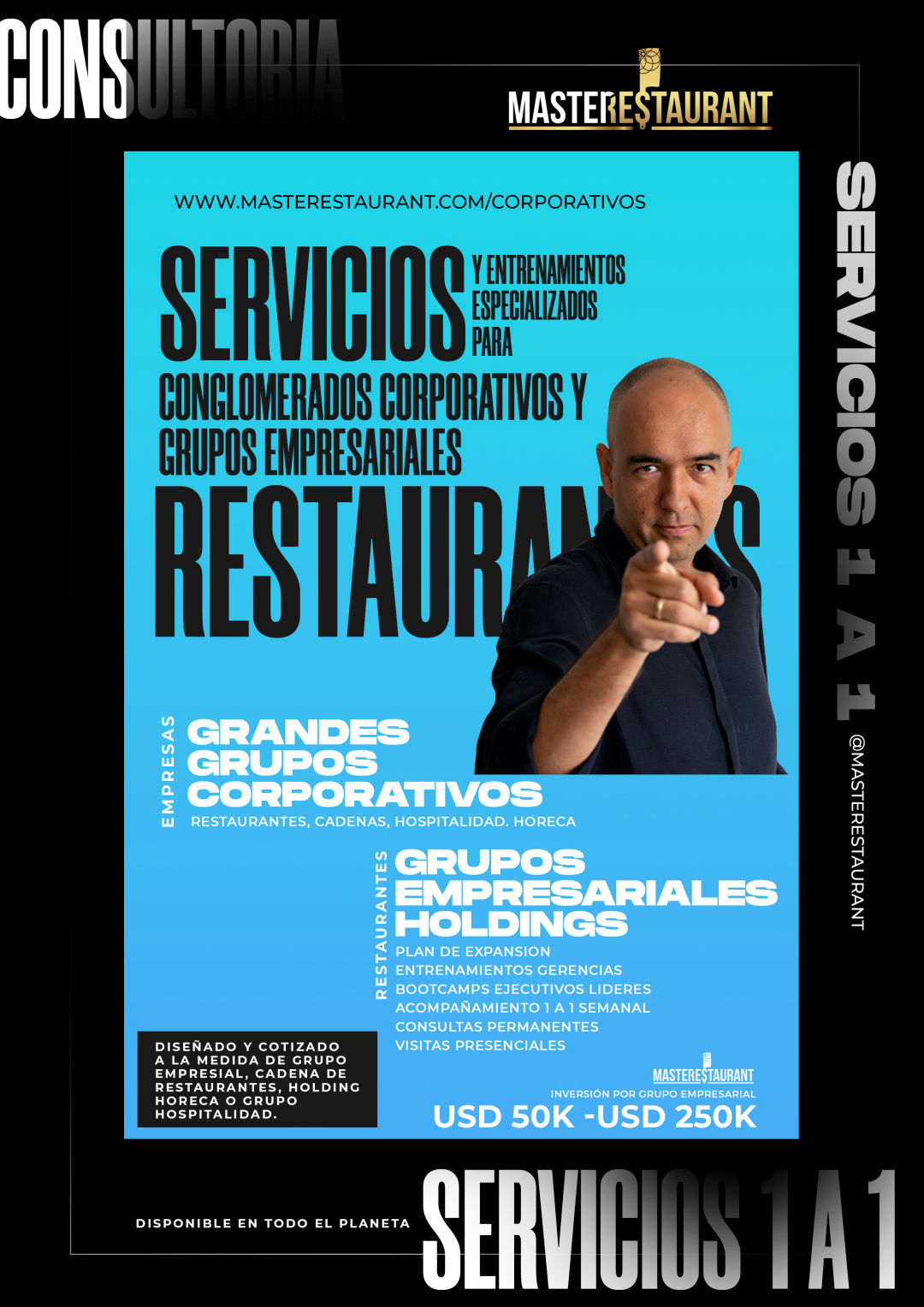
Private programs for groups and family offices
Training, consulting, executive bootcamps and private advisory for restaurant groups, holdings and investor families with themed restaurants.
Starting at USD $50K · tailor made, custom quoted · limited spots worldwide
Published doctrine
The books that changed restaurant management
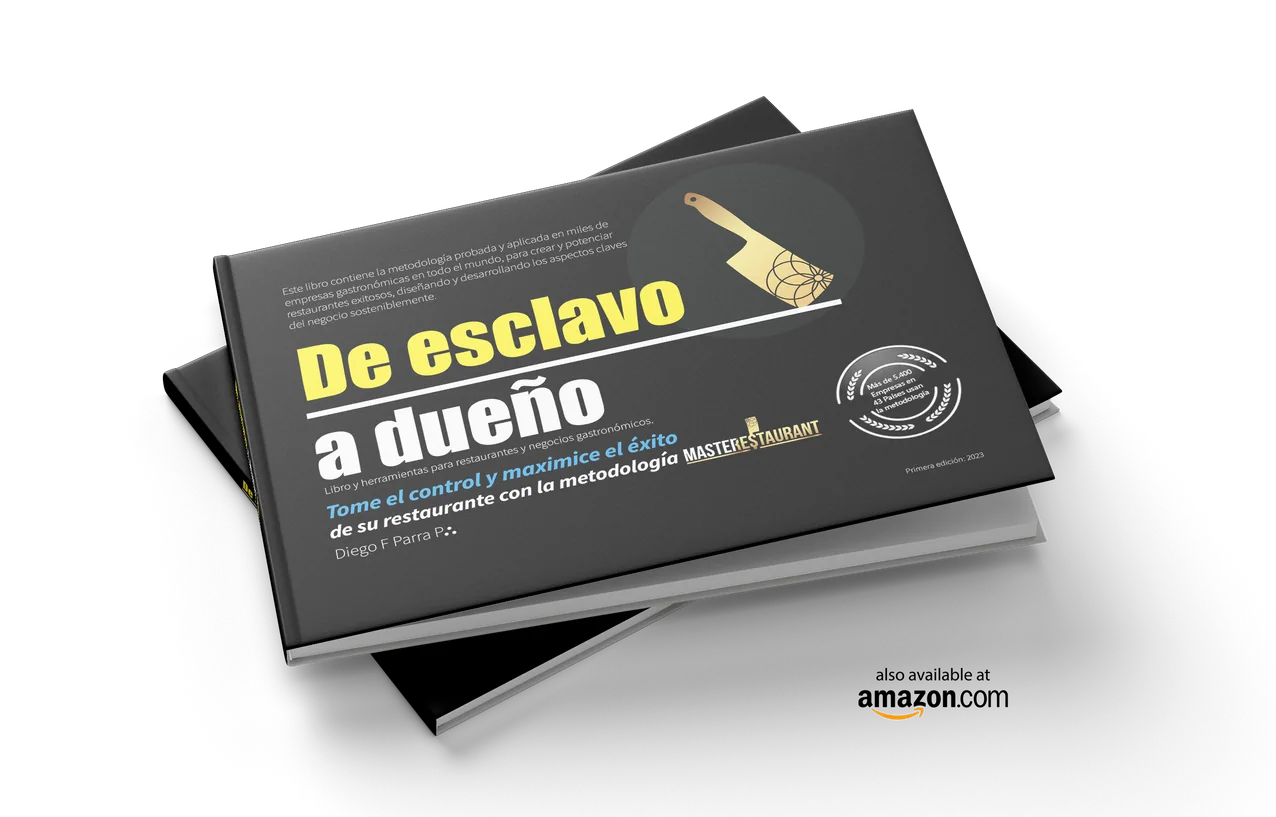
De Esclavo a Dueño
The book that changed how restaurants are managed: practical strategies and tools based on more than 20 years of experience, for traditional restaurants, dark kitchens, foodtech and HORECA businesses.
Triunfar o Morir en el Intento
Practical tools and key strategies to design and operate restaurants and food businesses efficiently.
Podcast: Masterestaurant — Mistakes for Restaurants
The public autopsy of the mistakes that bankrupt restaurants: thousands of owners and managers listen on Spotify to avoid repeating them. Condensed operating doctrine, free and direct.
Listen on SpotifyDownloads
The documents your management will ask for
MASTERESTAURANT® services portfolio
The complete intervention catalog: consulting, training, advisory and specialized services, with scopes and formats. The document to decide with your team.
Download PDFBook: From Slave to Owner
The full doctrine behind the methodology: how to structure a restaurant that runs without depending on the owner. Ideal pre-reading before your project's diagnosis.
View on AmazonPortfolio
More services by Diego F Parra and his team
Beyond themed restaurant consulting, Diego F Parra and his team offer keynotes, mentoring for owners, consulting for groups, training, programs, a membership and an interactive training kit. Everything starts from the same method and the same tools, so once the concept works, the dining-room team can train with that kit, partners can prepare the investment with the Pitch Deck service and the group can take the concept to new sites with the same criteria. The full ecosystem is available:
International keynote speakerOne-on-one consulting and advisoryPersonalized mentoring for owners (limited spots)Corporate groups and holdings consultingCelebrity Restaurants consultingThemed restaurant advisorySpecialized training programs52-Week membershipPitch deck and restaurant investment readinessExponential Program0.1 Program — Elevate Your RestaurantInteractive training kit
Direct contact
Get a quote for themed restaurant consulting for your project in Tel Aviv
Your message goes straight to Diego's team: concept, project stage, city and what you need to achieve in Tel Aviv.
“A themed restaurant dies when decor starts competing with gross margin. I've seen three million in architecture investment blocked by a menu model that should never have entered the kitchen. The theme sells the first visit; the business model brings the customer back the second, third, and twentieth time. Without that, it's a money-losing museum.”
Diego F. Parra — International consultant, expert in creating, scaling and improving restaurants, HORECA and hospitality
MASTERESTAURANT® methodology applied by 8,400+ restaurants across 43 countries · Author of 3 ISBN-registered books, including «De esclavo a dueño» · 20+ years operating restaurants, franchises, dark kitchens and HORECA groups across 4 continents
Full profile →Let's work on your themed restaurant in Tel Aviv with the numbers on the table
Send the concept, its stage and your numbers for a tailored proposal.
Explore more
Themed restaurants: territories, services and ecosystem resources
Useful links for concept founders, restaurant groups, hotels, brands and investors weighing themed restaurant consulting before they decide. They cover nearby territories where the service is published, sister services in the MASTERESTAURANT ecosystem, Diego F Parra's professional profile and the management tools the methodology works with.
World's best restaurant keynote speakerWorld's best restaurant consultantC-Suite restaurant consultant for chains & groupsDiego F Parra — professional profileKeynote speaker serviceCorporate groups & holdings consultingCelebrity restaurant consultingInternational themed restaurant advisoryThemed restaurant consulting in IsraelThemed restaurants in Abu DhabiThemed restaurant consultant in DohaThemed restaurant consultant in DubaiThemed restaurant consulting in QatarThemed restaurant consultant in Riyadh
FAQ
Frequently asked questions
What's the difference between investing in decor/architecture versus investing in a business model for a themed restaurant? Aren't both necessary?
Both are necessary, but sequencing matters. Decor executed without prior business-model vetting is expense; executed within viability parameters (maximum allowable Prime Cost, ROI on decorative investment, profitable revenue per square meter), it's strategy. Auditing first means identifying what your cash flow can sustain; designing experience within those limits; then investing in architecture that supports the model, not buries it. Many themes fail not because the ideas are poor, but because cost architecture doesn't close.
If we open a second location with the same concept, will the model remain profitable? What requires monitoring?
Model scalability is measurable from inception. A concept designed with documented operational architecture (recipe standardization, reservation systems, staffing ratios, cash and procurement management) can replicate across a second location with controlled margin erosion. Monitor: local labor costs in the new area, quality-supplier availability, local tourism context and audience density, and corporate overhead costs a single location can't absorb. The engagement includes a replicability model identifying what varies and what remains immutable across your second point; without it, you're guessing.
What does a project actually receive?
A complete business model for the themed restaurant —concept, value proposition, menu, experience, costs and operation—built from a strategic diagnosis, plus support through implementation and expansion.
Is my idea protected?
Yes. An NDA is signed and the concept, the brand and the intellectual property remain entirely the client's during and after the work. Limited spots worldwide exist so that each project gets real focus.
Is this a course, a mentorship or a consultancy?
A consultancy, in phases: diagnosis, model design, implementation and support during operation and expansion. Duration depends on scope; what does not change is that there is method and not a one-off session.
What investment should be budgeted?
From USD $35K to USD $250K for the 1-on-1 consulting, depending on the scope of the project and the concept. Restaurant groups and chains have private programs quoted on their own.
Openings only, or turnarounds too?
Both. Creation from scratch with concept, business model and opening; and growth of themed restaurants already running that need margin, standardization and a path to new locations or franchise.
