 MASTERESTAURANT®
Traveller arrivals in the country's tourist accommodation
Statbel
Concept and margin · Belgium

DIEGO F PARRA · CREATOR OF THE MASTERESTAURANT® METHODOLOGY
THEMED RESTAURANT CONSULTING Who puts numbers on the experience in a themed restaurant in Belgium?
Bringing a concept to the table in Belgium takes two kinds of judgment at once, and few people hold both: the creative one and the cash one. Diego F. Parra puts the second at the service of the first.
Download the portfolio (PDF)Limited advisory spots worldwide — reserve your evaluation early
8,400+restaurants apply his methodology
43countries with supported projects
65M+views per year
2service languages: EN · ES
International validation
See Diego F. Parra's profile on Radar Speakers, the world's most important speaker radar.
See profile on Radar Speakers →
19,599,221
25.4%
11,067
9.85 million

@masterestaurant
What a concept restaurant in Belgium usually needs first
A themed restaurant sells two things at once, the food and the story, and it almost always fails at the seam: the experience raises production costs, stretches kitchen times and forces a menu no team can run two shifts in a row without food cost climbing past 32%.
Here that gets taken apart piece by piece: menu engineering, Prime Cost, tech sheets and standardization, with the MASTERESTAURANT methodology and its TOOLKIT, applied in 8,400+ restaurants across 43 countries. The concept stays yours; what changes is that it now pays.
How does themed restaurant consulting work in Belgium?
The work starts with the model, not the decor: a strategic diagnosis in Belgium shows where the project stands and where the money goes, then the business is designed to hold the concept once the novelty passes.
The goal is a concept that can be repeated without losing quality or margin. To get there, the engagement works on concept, brand and storytelling written for the dining room, menu engineering, Prime Cost, standardization you can audit, and processes and teams that run without the owner in the room. Once the model is proven, it sets the order of expansion into new locations, licenses or franchises. The work is confidential and runs on site or virtually, in English or Spanish. As a starting point, this page gathers four verified reference figures from sources such as Statbel and Fevia.
What do the numbers say about the market for a themed restaurant in Belgium?
19,599,221 — traveller arrivals in the country's tourist accommodation, according to Statbel. Reference figures describe the setting a concept competes in; they do not say whether a themed experience will still leave a margin after opening.
For a themed restaurant, the data informs one concrete decision: how much can go into ambiance before the model stops working. Other reference points cited on this page: 25.4% (food industry share of total industrial turnover, largest sector, Fevia); 11,067 (company bankruptcies in the year, with horeca among the hardest-hit sectors, Statbel); 9.85 million (overnight stays booked in Brussels including platforms, annual record, visit.brussels). In Belgium, each figure is read alongside average check, menu engineering and Prime Cost before spending on decor, because novelty brings the first visit and margin decides whether there is a second one.
Data
Reference figures for a themed restaurant in Belgium
The figures cited on this page, with what each one measures and its source.
| Figure | What it measures | Source |
|---|---|---|
| 19,599,221 | Traveller arrivals in the country's tourist accommodation | Statbel |
| 25.4% | Food industry share of total industrial turnover, largest sector | Fevia |
| 11,067 | Company bankruptcies in the year, with horeca among the hardest-hit sectors | Statbel |
| 9.85 million | Overnight stays booked in Brussels including platforms, annual record | visit.brussels |
Each figure links to its source in the data cards on this page.
The local market
What to understand about the Belgium market before opening
A themed restaurant in Belgium requires specialized consulting because thematic and decorative elements attract visitors in the first months, but don't guarantee repeat business, profitability, or a sustainable business model. It's common for entrepreneurs and investors to invest hundreds of thousands or millions of euros in architecture, furniture, and ambiance, yet neglect critical elements: a differentiating value proposition, menu engineering, cash flow management, Prime Cost, margins, operations, and performance indicators. Without specialized consulting, an 'experience restaurant' with a captivating theme ends up operating as an uncontrolled business where decoration consumes budget but doesn't generate returns—the theme becomes a cost, not an asset. This is where thematic consulting enters: it's not just designing beautifully, but building a SYSTEM where concept, experience, gastronomy, operations, and profitability work integrated.
The transformation this service delivers is converting a thematic idea into an organized, profitable, scalable, and manageable gastronomic ENTERPRISE. The engagement applies the MASTERESTAURANT® methodology—proven in 43 countries—and integrates: business model design and cash flow, strategic differentiator and authentic storytelling, value proposition and customer journey, reasons and consumption moments (why and when customers visit), experience and environment design coherent with the business, menu engineering with margins aligned to theme, standardized operations and processes, performance indicators (Prime Cost, EBITDA, repeat rate), leadership and operational culture. This means transforming an idea ('a restaurant with a movie, history, or sports theme') into a professionally managed enterprise, with controlled margins, customers who return, and capacity to grow across new locations, licensing, or franchise models.
Diego's global authority significantly reduces project risk. He is a C-Suite consultant specialized 100% in restaurants and hospitality with 43 countries of experience, MASTERESTAURANT® methodology applied in over 8,400 restaurants and gastronomic groups, author of 'From Slave to Owner', community of over 65 million people annually, proprietary technological suite (Restaurant Model Canvas, MTIE, Gastronomic Radar, technical specifications, performance dashboard), and deep expertise in scalability, franchising, and corporate governance. When advising on themed and experiential restaurants, he doesn't improvise: he brings internationally proven frameworks, avoids typical pitfalls (themes that become outdated, incoherent experiences, non-viable operations), and positions the project to become a recognized reference in its category.
The concrete return for entrepreneurs and investors is multidimensional: real differentiation (coherent and memorable concept, not just decoration), customers who return and spend more (higher repeat rate and elevated average ticket thanks to integrated experience), operational control and visible profitability (protected margins, tracked indicators), capacity to grow without depending on the founder (systems, processes, documentation for new locations or licenses), greater brand value (attractive to investors and partners), and most importantly: OPERATIONAL INDEPENDENCE of the owner. When the theme is well integrated into the model, the restaurant doesn't depend on the founder being in the dining room every day; the experience is embedded in the system, not the person. This distinguishes a viable business from an expensive hobby.
Market data
Food service market data for Belgium
Food industry share of total industrial turnover, largest sector
FeviaCompany bankruptcies in the year, with horeca among the hardest-hit sectors
StatbelOvernight stays booked in Brussels including platforms, annual record
visit.brusselsBelgium as a destination
What makes Belgium attractive for a themed restaurant
Belgium's gastronomic and entertainment ecosystem offers specific opportunities and context for a themed or experiential restaurant. Cities like Brussels, with its historical heritage (Grand Place, Sablon district and its art galleries), attracts international tourism with cultural and gastronomic profiles; Antwerp, with its reputation as a cosmopolitan city, concentrates purchasing power and nightlife; Ghent, a medieval heritage destination, receives culture and experience tourism; Liège, with industrial heritage and traditional gastronomy, seeks differentiation. The public values authenticity, differentiation, and credible storytelling—it rejects frivolous themes or decoration disconnected from the product. Hotels, resorts, shopping centers, leisure parks, and entertainment complexes seek experiential concepts that add real value. Tourism seasonality is pronounced (peaks at Easter, summer, Christmas), requiring strategic management of customer flow and margin sustainability.
The real opportunity for an experiential restaurant exists, but the risks are concrete and measurable. It works: concepts with verifiable authentic storytelling, multimodal experience (visual, auditory, gastronomic integration), menu coherent with thematic narrative, service trained in narrative delivery, environment without internal contradictions. It usually fails: themes that become outdated (trends that fade), incoherent experiences (beautiful decoration but generic or misaligned menu), excessive operational costs from over-design, lack of menu flexibility (variable margins for adaptability), weak operational management, and teams without experience culture. The local diner expects that if you pay for 'experience,' every detail matters: the waiter tells the story, the dessert closes the narrative, the prices justify the integrated experience. A restaurant that doesn't integrate all these elements ends up charging for experience but delivering only decoration.
RESOURCES
MASTERESTAURANT studies, guides & tools
Reference content for owners and directors in Belgium: proprietary indexes, tools and industry analysis:
- COMPARISONMyth vs Reality: Physical restaurant vs dark kitchen
- CHECKLISTRestaurant profitability checklist: common mistakes vs the right method (Masterestaurant 2026)
- ARTICLEWaiter Training in Restaurants 2026: Myth vs Reality
- ARTICLEPricing Strategy: traditional method vs Masterestaurant
- COMPARISONRestaurant Inventory Control
- COMPARISONCocina oculta comparativa restaurantecercademi
The themed consultant
From the kitchen to the boardroom, in the same language
Few consultants move as easily through a kitchen on a full service as through a board meeting reviewing EBITDA per unit. Diego F Parra has spent two decades doing exactly that: engineer and C-Suite consultant who has created, rescued and expanded restaurants, franchises, dark kitchens and HORECA and hospitality groups across four continents, signing payrolls, negotiating leases and closing expansions in operations worth hundreds of millions of dollars.
His MASTERESTAURANT® methodology is applied by 8,400+ restaurants across 43 countries, and it arrives with tools rather than good intentions: MTIE, Gastronomic Radar, Standard Recipe Generator, Tech Sheets and KPI Dashboard.
He is the author of 3 ISBN-registered books, including «De esclavo a dueño», creator of the industry's leading podcast and of the largest bilingual community of owners, chefs and operations directors in the region (65M+ views per year as @masterestaurant), and is recognized among the top Latino restaurant operations experts globally. The full track record is in Diego F Parra's professional profile.
Themed restaurant consulting with its own doctrine, not generic recipes
Themed restaurant consulting is not improvised. Every engagement is built on the Restaurant Model Canvas and real industry data — profitability, Prime Cost, cost structure, customer experience and expansion — applied to the specific business model of a themed restaurant. The goal is not a venue for the opening-night photo, but a food business that protects the concept, generates profit and can scale to new locations, licenses or franchises when the model is ready. That is why the work is organized on four fronts —diagnosis and business model; concept, menu and themed experience; structure, costs and operation; expansion, franchise and new locations— so the concept still holds up when it is no longer new.
Themed restaurant consulting from start to finish
Advisory that covers the full themed restaurant lifecycle
Diagnosis and business model
Specialist diagnosis of the project and model design with the Restaurant Canvas: value proposition, consumption moment and profitability structure.
Quote my diagnosisConcept, menu and themed experience
From the storytelling of the concept to menu engineering and the design of the immersive experience customers pay to repeat.
Quote the conceptStructure, costs and operation
Prime Cost, financial management, standardization and teams: the restaurant runs on method and system, not on improvisation.
Quote the operationExpansion, franchise and new locations
Expansion challenges, launches, franchise and partner and investor management to scale the concept without diluting it.
See the services portfolio (PDF)The methodology
Discover the MASTERESTAURANT methodology
What holds a concept up is a system, not a flash of inspiration: tools, processes and models you can audit.
Who is it for?
Built for those who turn their brand into hospitality
Tailor-made 1-on-1 support, for new projects and for operations already running:
Entrepreneurs and concept creators
Whoever creates the concept usually falls in love with it. The work is making sure it also earns once the opening stops being news.
Restaurant groups and chains
Add a concept to the portfolio with the investment protected by method, the rules between partners written and financial control in place.
Hotels and tourism developments
A restaurant that becomes a destination in its own right: story, menu and operation that keep the promise every day, not in the photo.
Brands, IP and franchises
A business that runs on system, with written standards and teams able to replicate the concept in each new location.
Investors and family offices
Entry into hospitality with the MASTERESTAURANT methodology behind it: a concept that is profitable, scalable and auditable.
What's included
The possible content of your engagement
No two engagements are alike: they are assembled from these MASTERESTAURANT methodology modules:
- Business model with numbers, not just with concept
- Strategic diagnosis of the project, the brand and the stage
- Concept, brand and story of the themed restaurant
- Menu engineering and an experience that justifies the ticket
- Prime Cost and cost structure decided at design stage
- Operational improvements and standardization that hold the margin
- The 10 key elements of the Restaurant Canvas
- Processes, teams and leadership with the founder out of daily operations
- Expansion strategy: locations, licenses and franchise
- Partner and investor management to grow without diluting the brand
- Executive bootcamps and training for the leadership team
- 1-on-1 advisory, ongoing consultations and on-site visits
- Opening readiness that protects the concept's reputation
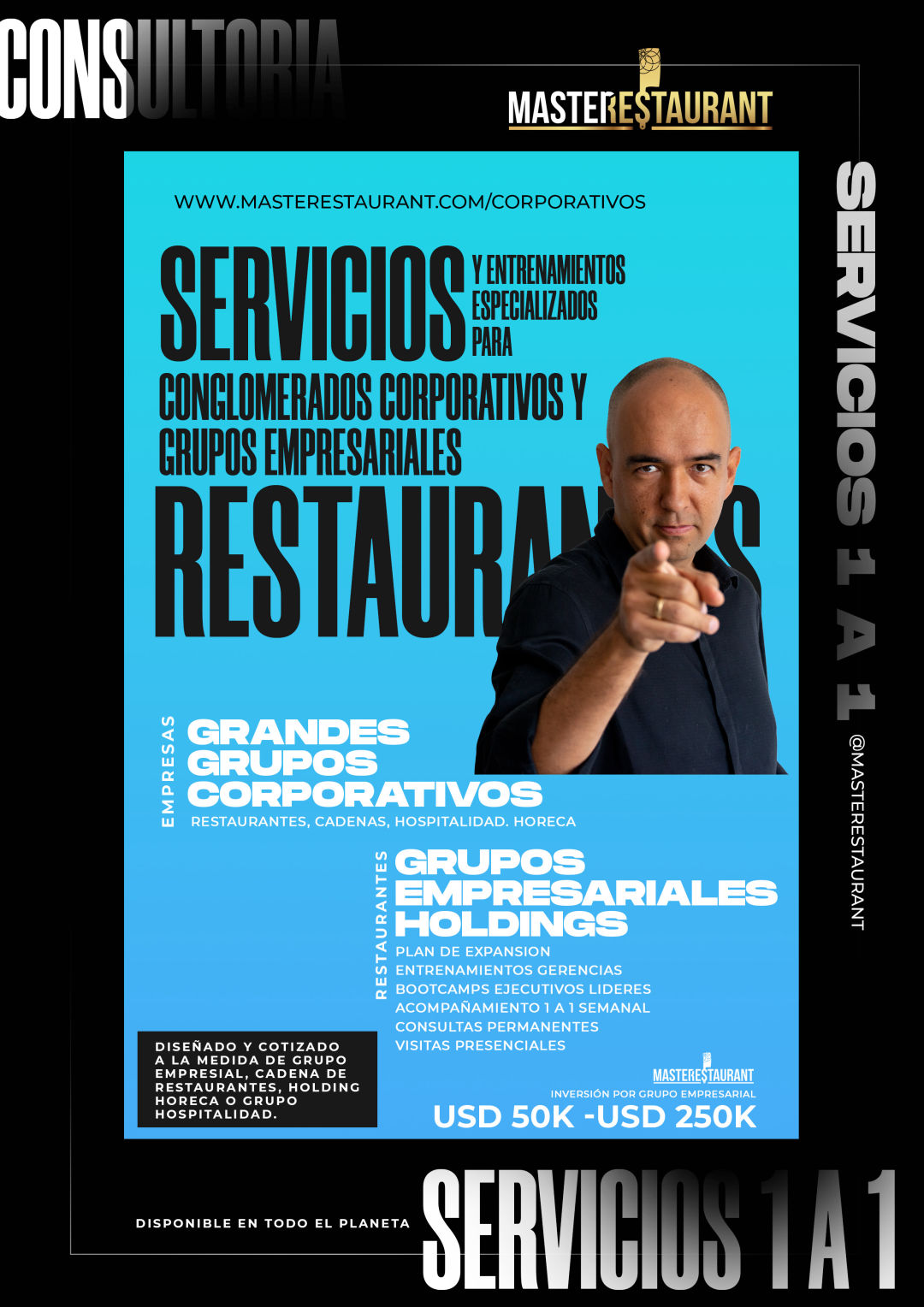
Investment: USD $35K – $250K · tailor-made, priced to each company · spots LIMITED worldwide to guarantee the best service.
Themed packages
Tailor-made themed restaurant consulting packages
Every themed restaurant engagement is 100% personalized and tailor-made to the project and the brand. After a strategic diagnosis, it works through the 10 key elements of the business model in the MASTERESTAURANT Restaurant Canvas — from value proposition and concept to profitability, standardization and expansion. Depending on the case, the package adds menu engineering, Prime Cost and cost structure, partner and investor management, executive bootcamps for the management team, ongoing consultations with visits to the venue and opening readiness. The quote starts from the concept, where the project stands and the numbers already on the table. Priced to each project's scope (USD $35K – $250K), with limited spots worldwide to ensure dedicated attention and discretion for each client.
Themed coverage
Themed restaurant consulting near Belgium
Explore themed restaurant consulting in other territories, or go back to the worldwide index on the themed restaurants worldwide page:
Themed dining expert in BrusselsThemed restaurants across BrazilThemed restaurants in AustraliaThemed restaurant consulting in IsraelThemed restaurant consulting in South AfricaConcept restaurants in AalborgThemed restaurants in AarhusThemed restaurant consulting in AlicanteThemed restaurant consulting across DenmarkConcept restaurants across FranceThemed dining expert across SpainThemed restaurant advisory across the United KingdomConcept restaurants in AmsterdamConcept restaurants in AustriaThemed restaurant consultant in BarcelonaThemed restaurant consultant in BerlinThemed restaurant consultant in BirminghamThemed dining expert in CannesConcept restaurants in CopenhagenThemed dining expert in CórdobaThemed restaurant consulting in DenmarkThemed restaurants in EdinburghThemed restaurants in FranceConcept restaurants in FrankfurtMore countries →More cities →
We do serve — and every city on the planet
Available on site or virtually, in English and Spanish.
Who is Diego F Parra?
Diego F Parra is an engineer and C-Suite consultant, creator of the MASTERESTAURANT® methodology —applied by 8,400+ restaurants across 43 countries— and author of 3 ISBN-registered books.
He is the consultant that brands and concepts, athletes, artists and investors choose to turn their brand into a profitable, standardized themed restaurant ready to expand. He has spent two decades creating, rescuing and expanding restaurants, franchises, dark kitchens and HORECA groups across four continents, and he works with his own tools: MTIE, Gastronomic Radar and KPI Dashboard. For a themed restaurant, that means the concept is designed as a system —tech sheets, costing, processes and KPIs— so it can be repeated in new locations, licenses or franchises without being diluted.
HORECA · Chains · Holdings · Foodtech
Private programs for groups and family offices
Training, consulting, executive bootcamps and private advisory for restaurant groups, holdings and investor families with themed restaurants.
Starting at USD $50K · tailor made, custom quoted · limited spots worldwide
Published doctrine
The books that changed restaurant management
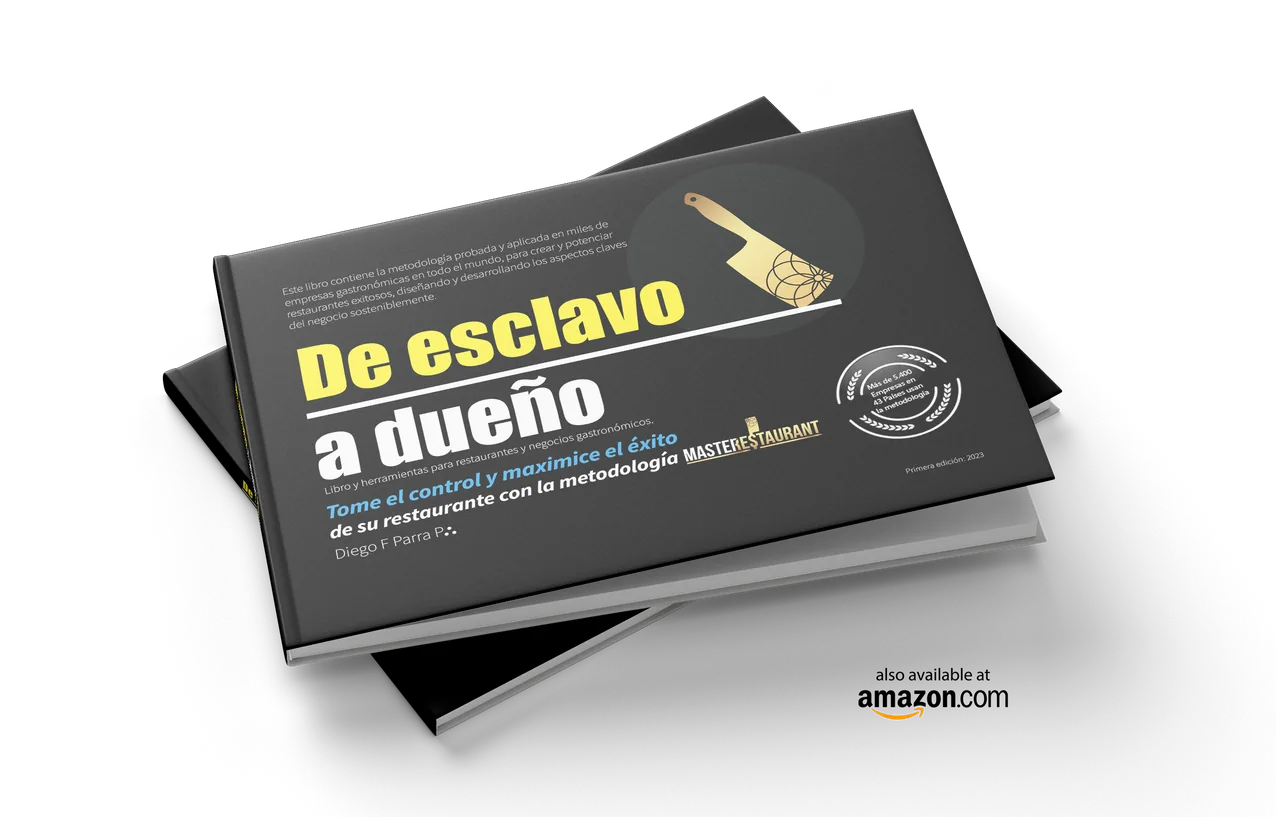
De Esclavo a Dueño
The book that changed how restaurants are managed: practical strategies and tools based on more than 20 years of experience, for traditional restaurants, dark kitchens, foodtech and HORECA businesses.
Triunfar o Morir en el Intento
Practical tools and key strategies to design and operate restaurants and food businesses efficiently.
Podcast: Masterestaurant — Mistakes for Restaurants
The public autopsy of the mistakes that bankrupt restaurants: thousands of owners and managers listen on Spotify to avoid repeating them. Condensed operating doctrine, free and direct.
Listen on SpotifyDownloads
The documents your management will ask for
MASTERESTAURANT® services portfolio
The complete intervention catalog: consulting, training, advisory and specialized services, with scopes and formats. The document to decide with your team.
Download PDFBook: From Slave to Owner
The full doctrine behind the methodology: how to structure a restaurant that runs without depending on the owner. Ideal pre-reading before your project's diagnosis.
View on AmazonPortfolio
More services by Diego F Parra and his team
Beyond themed restaurant consulting, Diego F Parra and his team offer keynotes, mentoring for owners, consulting for groups, training, programs, a membership and an interactive training kit. Everything starts from the same method and the same tools, so once the concept works, the dining-room team can train with that kit, partners can prepare the investment with the Pitch Deck service and the group can take the concept to new sites with the same criteria. The full ecosystem is available:
International keynote speakerOne-on-one consulting and advisoryPersonalized mentoring for owners (limited spots)Corporate groups and holdings consultingCelebrity Restaurants consultingThemed restaurant advisorySpecialized training programs52-Week membershipPitch deck and restaurant investment readinessExponential Program0.1 Program — Elevate Your RestaurantInteractive training kit
Direct contact
Get a quote for themed restaurant consulting for your project in Belgium
Your message goes straight to Diego's team: concept, project stage, city and what you need to achieve in Belgium.
“A themed restaurant succeeds or fails because of its business model, not its decoration. I've seen 2 million euro investments in architecture that generated losses because there was no menu strategy, margins were fiction, and operations were chaos. The theme is the compass to tell a story; the business is what sustains that story. If you only manage decoration, the story costs you money. If you manage both—concept plus business model—the story generates returns.”
Diego F. Parra — International consultant, expert in creating, scaling and improving restaurants, HORECA and hospitality
MASTERESTAURANT® methodology applied by 8,400+ restaurants across 43 countries · Author of 3 ISBN-registered books, including «De esclavo a dueño» · 20+ years operating restaurants, franchises, dark kitchens and HORECA groups across 4 continents
Full profile →The next step for your concept restaurant in Belgium
Send the concept, its stage and your numbers for a tailored proposal.
Explore more
Themed restaurants: territories, services and ecosystem resources
Useful links for concept founders, restaurant groups, hotels, brands and investors weighing themed restaurant consulting before they decide. They cover nearby territories where the service is published, sister services in the MASTERESTAURANT ecosystem, Diego F Parra's professional profile and the management tools the methodology works with.
World's best restaurant keynote speakerWorld's best restaurant consultantC-Suite restaurant consultant for chains & groupsDiego F Parra — professional profileKeynote speaker serviceCorporate groups & holdings consultingCelebrity restaurant consultingInternational themed restaurant advisoryThemed dining expert in BrusselsConcept restaurants in AalborgThemed restaurants in AarhusThemed restaurant consulting in AlicanteThemed restaurant consulting across DenmarkConcept restaurants across France
FAQ
Frequently asked questions
How does the consulting ensure that an experiential restaurant generates real repeat business and not just occasional visitors?
Repeat business comes from integral coherence: experience that delivers on its promise, menu with enough variety to visit twice and discover something new, service attention that makes the customer feel part of the narrative, prices that generate perceived value. The service designs the complete customer journey—reasons why customers return, moments of surprise, loyalty program aligned to the theme—and operationalizes it in clear processes. Then it's tracked with indicators: what percentage returns in 3 months, what's the average ticket, which menu items retain customers most. Without deliberate design, repeat business is accidental.
Does the engagement work if we want to expand the concept to new cities or scale through franchises or licenses?
Yes, it's central. The methodology is designed for scalability from inception. It documents: concept and storytelling (audible, not dependent on one person), operations and processes (procedure manual), menu engineering (recipes, costs, suppliers), control indicators (what to track for quality), cost structure (margins in new geographies). The consultant helps design legal structure (how to license without losing control), knowledge transfer, and local adjustments. Without this, copying a restaurant is copying only decoration, which doesn't work for replicating success.
How is a themed restaurant built from scratch?
With a strategic diagnosis of the project and the concept, and on top of it the business-model design: value proposition, menu, experience, costs and operation. Support through implementation and expansion follows.
What guarantees are there on confidentiality?
Confidentiality agreements from the start. The concept, the brand and the intellectual property are the client's, without exception. Limited spots worldwide are not marketing scarcity: they are the condition for giving each project real time.
How long are we talking about?
A phased process —diagnosis, model, implementation, operation and expansion—whose duration depends on the scope. Building a profitable themed restaurant is not an event with a closing date, it is a system being installed.
What investment range do you work with?
The 1-on-1 consulting runs from USD $35K to USD $250K, priced to the scope of each project and concept. Private programs for groups and chains are quoted independently.
Do you take restaurants that have been open for years?
Yes. In those cases the work enters through profitability and standardization, and ends in the growth plan: new locations or franchise of a concept that has already proven it draws people.
