 MASTERESTAURANT®
Total population of Peru according to the 2017 National Census (INEI).
INEI - Censos Nacionales 2017
Concept and margin · All Peru

DIEGO F PARRA · CREATOR OF THE MASTERESTAURANT® METHODOLOGY
EXPERIENTIAL DINING EXPERT Who turns a strong concept across Peru into a restaurant that also leaves a margin?
A themed restaurant across Peru usually sinks for the same reason the last one did: the money went into ambiance before anyone checked that the model worked. Diego F. Parra reverses that order.
Download the portfolio (PDF)Limited advisory spots worldwide — reserve your evaluation early
8,400+restaurants apply his methodology
43countries with supported projects
65M+views per year
2service languages: EN · ES
International validation
See Diego F. Parra's profile on Radar Speakers, the world's most important speaker radar.
See profile on Radar Speakers →

@masterestaurant
What a themed restaurant project across Peru is looking for when it calls
The mistake that repeats across Peru has a recognizable shape: the money goes first into ambiance, scenography and a long menu, and only when the novelty wears off does someone ask what each dish costs. By then the concept sits on a model that cannot hold a quiet Tuesday.
The right order is the opposite, and that is what gets worked on here: first the business model, then the experience that model can afford. 1-on-1 tailor-made consulting, workshops and private advisory with the MASTERESTAURANT methodology and its TOOLKIT, in use in 8,400+ restaurants across 43 countries.
How does themed restaurant consulting work in Peru?
The work starts with the model, not the decor: a strategic diagnosis in Peru shows where the project stands and where the money goes, then the business is designed to hold the concept once the novelty passes.
The goal is a concept that can be repeated without losing quality or margin. To get there, the engagement works on concept, brand and storytelling written for the dining room, menu engineering, Prime Cost, standardization you can audit, and processes and teams that run without the owner in the room. Once the model is proven, it sets the order of expansion into new locations, licenses or franchises. The work is confidential and runs on site or virtually, in English or Spanish. As a starting point, this page gathers four verified reference figures from sources such as INEI and PROMPERÚ.
What do the numbers say about the market for a themed restaurant in Peru?
31,237,385 inhabitants — total population of Peru, according to INEI. Reference figures describe the setting a concept competes in; they do not say whether a themed experience will still leave a margin after opening.
For a themed restaurant, the data informs one concrete decision: how much can go into ambiance before the model stops working. Other reference points cited on this page: US$1,504 (average spending of foreign tourists, 2024, PROMPERÚ); US$4.5 billion (foreign exchange from inbound tourism, 2024, MINCETUR); 2.9% (tourism contribution to GDP, 2024, MINCETUR). In Peru, each figure is read alongside average check, menu engineering and Prime Cost before spending on decor, because novelty brings the first visit and margin decides whether there is a second one.
Data
Reference figures for a themed restaurant in Peru
The figures cited on this page, with what each one measures and its source.
| Figure | What it measures | Source |
|---|---|---|
| 31,237,385 inhabitants | Total population of Peru according to the 2017 National Census (INEI) | INEI - Censos Nacionales 2017 |
| US$4.5 billion | foreign exchange from inbound tourism (2024) | MINCETUR |
| US$1,504 | average spending of foreign tourists (2024) | PROMPERÚ |
| 2.9% | Tourism contribution to GDP (2024) | MINCETUR |
Each figure links to its source in the data cards on this page.
The local market
What ground a themed restaurant stands on across Peru
Many restaurateurs in Peru understand that a themed or experiential restaurant attracts customers. What often goes unseen is that initial thematic appeal does not pay the payroll in month twelve. I have audited dozens of operations across the region where investment was substantial in ambient design, scenography, and architectural details that make the photograph perfect for social media, but the business has no floor. A restaurant with sophisticated visual concepts yet a misaligned menu, weak operational processes, a financial model that doesn't close, and a diffuse value proposition loses customers after the third visit, along with viability. Ambiance costs; the experience that generates repeat business costs more, but it generates return. Without prior strategic diagnosis, without business engineering, without clarity on the operational model and metrics that truly matter, the themed restaurant in Peru functions like a beautiful travel agency selling a destination without hotels.
What the engagement delivers is the conversion of that thematic idea into a structured gastronomic enterprise. We do not redefine decoration; we transform the concept into a clear value proposition, a mapped customer journey, defined reasons and moments of consumption, and a menu engineered so each dish sustains margin and experience. Using the MASTERESTAURANT methodology applied across 43 countries, we design environment from the customer's experience outward, not from the construction budget inward. We define realistic operational processes, identify metrics that matter—Prime Cost, turnover, average check, repeat business, lifetime value—, construct a financial model that closes, and establish standards that allow operations to scale without the founder having to be there at eleven p.m. closing the register. All designed specifically for Peru: its market, culture, competition, and margins.
The experience that reduces risk does not come from presumed authority; it comes from proven method. The MASTERESTAURANT methodology has been applied across 43 countries by groups comprising over 8,400 restaurants. That is not data to frame on a wall; it is a record of what fails and what works at scale. When I audit an experiential concept in Peru, I am not applying theory. I am recognizing patterns: which thematic styles generate repeat business in this market, what operational architecture sustains margins, how a restaurant of this kind grows to new locations without losing coherence. That operational knowledge, distilled from audits and transformations in markets similar to yours, is what lowers the probability that your investment becomes a three-year project that later collapses. It does not promise success; it reduces the risk of failure through clarity on what truly generates profitability.
The concrete result is that the themed restaurant in Peru stops competing on aesthetics to compete on business fundamentals. An experience where concept, gastronomy, service, and operations work together generates higher average check, measurable repeat business, and a brand that attracts investors. When locations grow, they grow under proven standards, not intuition. The expansion model—franchise, partnerships, regional operators—is viable because the business is replicable. And the founder, who began supervising shifts, can delegate corporate governance without the operation falling apart. The business's sale value increases because it does not depend on daily presence. That is what distinguishes a business venture from an expensive hobby. In Peru, where the gastronomic market is expanding and competition for experiences is rising, an organized, profitable, and scalable operation is an asset.
Market data
All Peru in numbers: the themed restaurant market
All Peru as a destination
What makes All Peru a place for concepts
Peru has a tiered gastronomic ecosystem. Lima concentrates the critical mass of consumers for high-end experiential dining, with districts like Miraflores, San Isidro, and Barranco where density of concept-driven restaurants and propensity to spend on entertainment are high; yet Cusco, Arequipa, and Trujillo have their own gastronomic markets and tourism segments that generate constant demand for differentiated experiences. Hotels and resorts nationwide—from Lima to Cusco, through destinations like Ica or the northern regions—increasingly include thematic restaurant concepts as part of their entertainment offerings. Commercial developments in Lima and major cities seek to anchor with concepts that drive recurring traffic. Peruvian culture offers an inexhaustible thematic source: Incan history, Andean mythology, regional gastronomy, indigenous music and dance. The international tourist arriving in Peru already seeks experiences, not merely food; the affluent Lima consumer seeks differentiation; and the investor sees an opportunity that in other markets is already saturated.
What works in Peru is coherent experience where theming serves strategy, not the reverse. An immersive concept that integrates local gastronomy with environmental experience and clear narrative attracts repeat business. What fails is frequent: superficial theming where decor is expensive but the menu cannot sustain operations; concepts imported from other markets without adaptation to local tastes; operational architecture too fragile to manage unexpected demand growth. The Peruvian experiential diner is demanding: expects concept coherence, food that justifies the investment, attentive service. And when they invest or travel, they seek businesses that scale: locations in other cities, replicable models. A themed restaurant living on novelty for six months then declining due to lack of genuine differentiation is a failure I have seen repeated. The Peruvian investor demands clarity on why that concept generates margins, how it sustains beyond the opening semester, and how it scales.
RESOURCES
MASTERESTAURANT studies, guides & tools
Studies, guides and utilities behind the methodology applied across Peru:
- STUDYMasterestaurant Restaurant Staff Turnover Index 2026: the true cost of replacing a server is USD 5,860
- STUDYScaling Without Collapsing: The Engineering Behind 8,400 Business Units
- ARTICLECustomer Experience in Restaurants: Myth vs Reality (2026)
- CHECKLISTCustomer Loyalty in Restaurants: Myth vs Reality · Checklist
- DATARestaurant Transfer: Traditional Method vs Masterestaurant
- COMPARISONTeam Culture in Restaurants: Myth vs Reality (2026)
The themed consultant
Who signs the methodology that will run your business
The MASTERESTAURANT® methodology is applied today by 8,400+ restaurants across 43 countries, and there is one signature behind it: Diego F Parra, engineer and C-Suite consultant with two decades creating, rescuing and expanding restaurants, franchises, dark kitchens and HORECA groups across four continents.
What separates him from a desk advisor is what he has had to do himself: sign payrolls when the till was short, negotiate leases with the margin counted, structure partnerships between partners who were no longer speaking, and close expansions in operations worth hundreds of millions of dollars. The TOOLKIT — MTIE, Gastronomic Radar, Standard Recipe Generator, Tech Sheets and KPI Dashboard — comes from there, not from a framework.
He is also the author of 3 ISBN-registered books, including «De esclavo a dueño», creator of the industry's leading podcast and of the largest bilingual community of owners, chefs and operations directors in the region (65M+ views per year as @masterestaurant), and ranks among the top Latino restaurant operations experts globally. His full track record is in Diego F Parra's professional profile.
Themed restaurant consulting with its own doctrine, not generic recipes
Themed restaurant consulting is not improvised. Every engagement is built on the Restaurant Model Canvas and real industry data — profitability, Prime Cost, cost structure, customer experience and expansion — applied to the specific business model of a themed restaurant. The goal is not a venue for the opening-night photo, but a food business that protects the concept, generates profit and can scale to new locations, licenses or franchises when the model is ready. That is why the work is organized on four fronts —diagnosis and business model; concept, menu and themed experience; structure, costs and operation; expansion, franchise and new locations— so the concept still holds up when it is no longer new.
Themed restaurant consulting from start to finish
Advisory that covers the full themed restaurant lifecycle
Diagnosis first, concept second
Specialist diagnosis and business model with the Restaurant Canvas: value proposition, consumption moment and profitability structure.
Quote my diagnosisMenu, story and experience
The concept is translated into menu, kitchen times and immersive experience; what cannot be executed two shifts in a row does not go in.
Quote the conceptPrime Cost, processes and team
Financial management, standardization and leadership so the restaurant runs on system and not on the memory of the cook who left.
Quote the operationExpansion and franchise
New locations, licenses, franchise and partner and investor management to scale the concept without diluting it on the way.
See the services portfolio (PDF)The methodology
Discover the MASTERESTAURANT methodology
What holds a concept up is a system, not a flash of inspiration: tools, processes and models you can audit.
Who is it for?
For anyone bringing a concept to the table
1-on-1 consulting, no templates, for restaurants in any of these situations:
Entrepreneurs and concept creators
Whoever creates the concept usually falls in love with it. The work is making sure it also earns once the opening stops being news.
Restaurant groups and chains
Add a concept to the portfolio with the investment protected by method, the rules between partners written and financial control in place.
Hotels and tourism developments
A restaurant that becomes a destination in its own right: story, menu and operation that keep the promise every day, not in the photo.
Brands, IP and franchises
A business that runs on system, with written standards and teams able to replicate the concept in each new location.
Investors and family offices
Entry into hospitality with the MASTERESTAURANT methodology behind it: a concept that is profitable, scalable and auditable.
What's included
What gets worked on, depending on what your project needs
These are the MASTERESTAURANT methodology modules your tailor-made programme is built from:
- Business model: the part that rarely comes with a good concept
- Strategic diagnosis of the project, the concept and its brand
- Concept and brand architecture of the themed restaurant
- Menu engineering and an experience design the customer pays for again
- Cost structure and Prime Cost within the range the business can hold
- Profitable standardization and concrete operational improvements
- The 10 key elements of the Restaurant Canvas, optimized
- Processes, teams and leadership with no dependence on the founder
- Growth strategy: own locations, licenses or franchise
- Partners and investors: clear rules to scale without diluting
- Executive bootcamps and leadership training
- 1-on-1 advisory with ongoing consultations and on-site visits
- Opening readiness that protects the concept's reputation
Investment: USD $35K – $250K · tailor-made, priced to each company · spots LIMITED worldwide to guarantee the best service.
Themed packages
Tailor-made themed restaurant consulting packages
Every themed restaurant engagement is 100% personalized and tailor-made to the project and the brand. After a strategic diagnosis, it works through the 10 key elements of the business model in the MASTERESTAURANT Restaurant Canvas — from value proposition and concept to profitability, standardization and expansion. Depending on the case, the package adds menu engineering, Prime Cost and cost structure, partner and investor management, executive bootcamps for the management team, ongoing consultations with visits to the venue and opening readiness. The quote starts from the concept, where the project stands and the numbers already on the table. Priced to each project's scope (USD $35K – $250K), with limited spots worldwide to ensure dedicated attention and discretion for each client.
Themed coverage
Territories neighbouring All Peru
Explore themed restaurant consulting in other territories, or go back to the worldwide index on the themed restaurants worldwide page:
Themed dining expert in ArequipaConcept restaurants in AyacuchoThemed restaurant advisory in CallaoThemed restaurant consultant in ChiclayoThemed dining expert in ChimboteThemed dining expert in CuzcoThemed restaurants in HuancayoThemed restaurant consulting in IcaConcept restaurants in IquitosThemed dining expert in LimaThemed restaurant consulting in PeruThemed restaurant consulting in PiuraConcept restaurants in PucallpaThemed restaurants in PunoThemed dining expert in TrujilloThemed restaurants in AustraliaConcept restaurants in AustriaThemed restaurant consulting in IsraelThemed restaurant consulting in South AfricaThemed restaurant consultant in AlajuelaThemed restaurant advisory across ArgentinaThemed restaurants across BoliviaThemed restaurants across BrazilThemed restaurant consultant across CanadaMore countries →More cities →
We do serve — and every city on the planet
Available on site or virtually, in English and Spanish.
Who is Diego F Parra?
Diego F Parra is an engineer and C-Suite consultant, creator of the MASTERESTAURANT® methodology —applied by 8,400+ restaurants across 43 countries— and author of 3 ISBN-registered books.
He is the consultant that brands and concepts, athletes, artists and investors choose to turn their brand into a profitable, standardized themed restaurant ready to expand. He has spent two decades creating, rescuing and expanding restaurants, franchises, dark kitchens and HORECA groups across four continents, and he works with his own tools: MTIE, Gastronomic Radar and KPI Dashboard. For a themed restaurant, that means the concept is designed as a system —tech sheets, costing, processes and KPIs— so it can be repeated in new locations, licenses or franchises without being diluted.
HORECA · Chains · Holdings · Foodtech
Private programs for groups and family offices
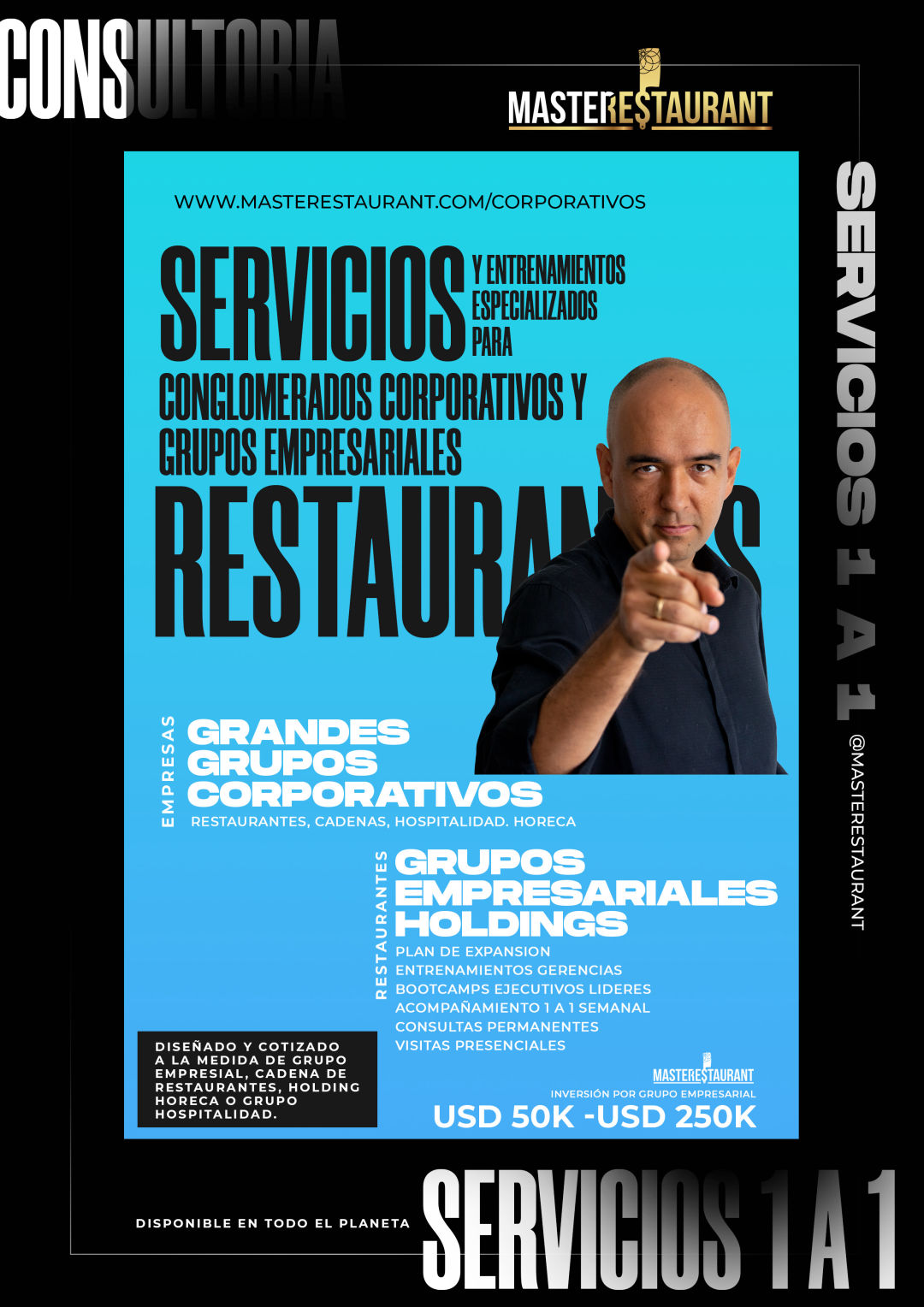
Training, consulting, executive bootcamps and private advisory for restaurant groups, holdings and investor families with themed restaurants.
Starting at USD $50K · tailor made, custom quoted · limited spots worldwide
Published doctrine
The books that changed restaurant management
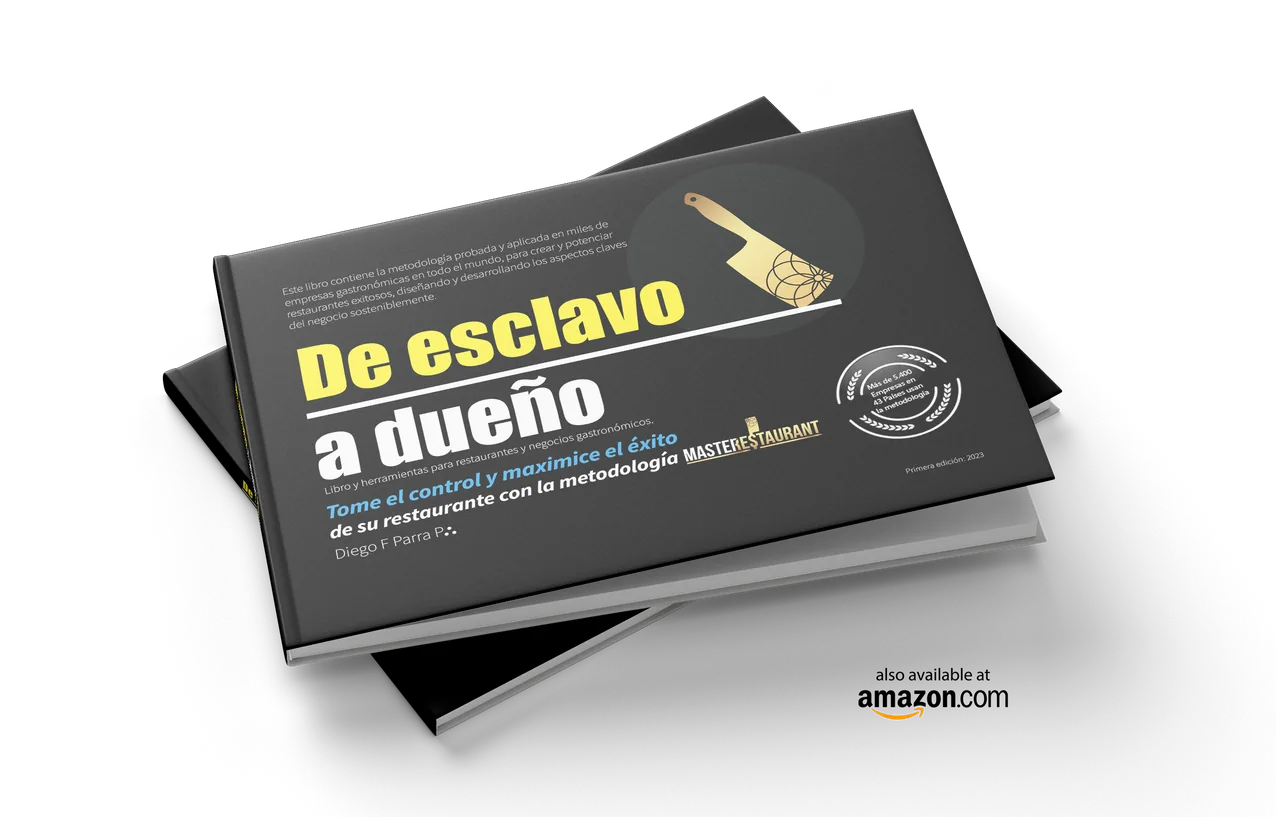
De Esclavo a Dueño
The book that changed how restaurants are managed: practical strategies and tools based on more than 20 years of experience, for traditional restaurants, dark kitchens, foodtech and HORECA businesses.
Triunfar o Morir en el Intento
Practical tools and key strategies to design and operate restaurants and food businesses efficiently.
Podcast: Masterestaurant — Mistakes for Restaurants
The public autopsy of the mistakes that bankrupt restaurants: thousands of owners and managers listen on Spotify to avoid repeating them. Condensed operating doctrine, free and direct.
Listen on SpotifyDownloads
The documents your management will ask for
MASTERESTAURANT® services portfolio
The complete intervention catalog: consulting, training, advisory and specialized services, with scopes and formats. The document to decide with your team.
Download PDFBook: From Slave to Owner
The full doctrine behind the methodology: how to structure a restaurant that runs without depending on the owner. Ideal pre-reading before your project's diagnosis.
View on AmazonPortfolio
More services by Diego F Parra and his team
Beyond themed restaurant consulting, Diego F Parra and his team offer keynotes, mentoring for owners, consulting for groups, training, programs, a membership and an interactive training kit. Everything starts from the same method and the same tools, so once the concept works, the dining-room team can train with that kit, partners can prepare the investment with the Pitch Deck service and the group can take the concept to new sites with the same criteria. The full ecosystem is available:
International keynote speakerOne-on-one consulting and advisoryPersonalized mentoring for owners (limited spots)Corporate groups and holdings consultingCelebrity Restaurants consultingThemed restaurant advisorySpecialized training programs52-Week membershipPitch deck and restaurant investment readinessExponential Program0.1 Program — Elevate Your RestaurantInteractive training kit
Direct contact
Get a quote for themed restaurant consulting for your project across Peru
Your message goes straight to Diego's team: concept, project stage, city and what you need to achieve across Peru.
“A themed restaurant in Peru that looks beautiful but operates as if theming were the business will last only as long as visual novelty sustains it. The business is in the model: how concept, gastronomy, operations, and numbers work as one system. I have seen millions invested in ambiance and zero serious conversation about margins, scalability, and governance. That is not a restaurant; it is an expensive mockup that depreciates every month.”
Diego F. Parra — International consultant, expert in creating, scaling and improving restaurants, HORECA and hospitality
MASTERESTAURANT® methodology applied by 8,400+ restaurants across 43 countries · Author of 3 ISBN-registered books, including «De esclavo a dueño» · 20+ years operating restaurants, franchises, dark kitchens and HORECA groups across 4 continents
Full profile →Bring the business model up to the level of your concept across Peru
Send the concept, its stage and your numbers for a tailored proposal.
Explore more
Themed restaurants: territories, services and ecosystem resources
Useful links for concept founders, restaurant groups, hotels, brands and investors weighing themed restaurant consulting before they decide. They cover nearby territories where the service is published, sister services in the MASTERESTAURANT ecosystem, Diego F Parra's professional profile and the management tools the methodology works with.
World's best restaurant keynote speakerWorld's best restaurant consultantC-Suite restaurant consultant for chains & groupsDiego F Parra — professional profileKeynote speaker serviceCorporate groups & holdings consultingCelebrity restaurant consultingInternational themed restaurant advisoryThemed dining expert in ArequipaConcept restaurants in AyacuchoThemed restaurant advisory in CallaoThemed restaurant consultant in ChiclayoThemed dining expert in ChimboteThemed dining expert in Cuzco
FAQ
Frequently asked questions
Our concept is visually solid but operational margin is tight. How does consulting help us not sacrifice the experience?
Menu engineering redefines dishes: preserves value proposition and experience while optimizing Prime Cost without the customer noticing. We map cost architecture (food, labor, energy, maintenance) and adjust operationally where there is no visual impact. Most themed restaurants I audit can improve EBITDA through simple operational changes, without altering the concept. It is not cheapening it; it is making it viable.
How do we ensure the concept stays appealing after two years in Peru?
Repeat business does not depend on novelty; it depends on sustained experience quality and strategic variation of offer. We design an evolution roadmap: seasonal menu changes aligned with theming, special events, collaborations that maintain freshness without identity shifts. Methodology includes an indicator system detecting when the proposition begins to fatigue, with renewal protocols proven in other markets. A themed restaurant does not die from age; it dies from lack of surprise within its coherence.
How is a themed restaurant built from scratch?
With a strategic diagnosis of the project and the concept, and on top of it the business-model design: value proposition, menu, experience, costs and operation. Support through implementation and expansion follows.
What guarantees are there on confidentiality?
Confidentiality agreements from the start. The concept, the brand and the intellectual property are the client's, without exception. Limited spots worldwide are not marketing scarcity: they are the condition for giving each project real time.
How long are we talking about?
A phased process —diagnosis, model, implementation, operation and expansion—whose duration depends on the scope. Building a profitable themed restaurant is not an event with a closing date, it is a system being installed.
What investment range do you work with?
The 1-on-1 consulting runs from USD $35K to USD $250K, priced to the scope of each project and concept. Private programs for groups and chains are quoted independently.
Do you take restaurants that have been open for years?
Yes. In those cases the work enters through profitability and standardization, and ends in the growth plan: new locations or franchise of a concept that has already proven it draws people.
