 MASTERESTAURANT®
Estimated population of the Toronto census metropolitan area as of July 1, 2024, growing by 268,911 people year-over-year.
Statistics Canada - The Daily
Multi-site and franchise · Toronto

DIEGO F PARRA · CREATOR OF THE MASTERESTAURANT® METHODOLOGY
RESTAURANT CHAIN CONSULTING Who can say in Toronto what each site actually earns, not just what the network turns over?
For boards and leadership in Toronto choosing between opening, converting or closing: the corporate diagnosis puts those three options against every unit with the same yardstick.
Download the portfolio (PDF)Corporate advisory spots LIMITED worldwide - reserve your group's evaluation early
8,400+restaurants apply his methodology
43countries with supported groups
65M+views per year
2service languages: EN - ES
International validation
See Diego F. Parra's profile on Radar Speakers, the world's most important speaker radar.
See profile on Radar Speakers →
7,106,379 inhabitants (+3.9% year on year)
CAD 125 billion
CAD 19.15/hour
CAD 35.9 billion

@masterestaurant
The portfolio seen with one yardstick in Toronto
The MASTERESTAURANT methodology and its TOOLKIT have been applied across 8,400+ restaurants in 43 countries, from three-site groups to networks with dozens of units. Growing a group is harder than opening a restaurant: each new site multiplies costs, standards, talent and complexity, and a group only scales when a system replicates per-unit profitability, not when it depends on founders or operational heroes.
In Toronto, the method adapts to the size, stage and expansion model of each group, in an order that does not change: measure, standardize, and only then replicate. That means a corporate diagnosis brand by brand and site by site, standards and financial governance that hold across the network, and a decision on owned units, licensing or franchising based on the documented standard and the team available.
How does restaurant group consulting work in Toronto?
It begins by measuring each unit in Toronto with one yardstick (EBITDA per site, Prime Cost, operating standards and the team in charge) so the board can decide what to open, convert or close on evidence.
The diagnosis turns into four workstreams: portfolio, multi-site standards, financial governance and expansion. The aim is a group that can grow without the founders in every decision: documented recipes and processes, a KPI dashboard with a fixed review cadence and managers who own their numbers. The engagement uses the group's own data, runs in person or remotely, in English or Spanish, and is sized to the number of units and the stage of the business. This page cites four verified figures for Toronto, from sources such as Statistics Canada and Restaurants Canada.
What do the numbers say about running a restaurant group in Toronto?
7,106,379 inhabitants (+3.9% year on year) — estimated population of the Toronto census metropolitan area as of July 1, 2024, growing by 268,911 people year-over-year, according to Statistics Canada.
A figure like this sizes the opportunity; it does not say whether each new unit will earn money. Other reference points cited on this page: CAD 125 billion (restaurant sector sales, 3.9% of GDP, Restaurants Canada); CAD 19.15/hour (average hourly wage in food and beverage, 2024, ISED); CAD 35.9 billion (accommodation revenue, record, 2024, +2.9%, Statistics Canada). For a group, the useful reading is the unit economics behind each opening: Prime Cost under control, a theoretical food cost close to the real one and EBITDA measured site by site. That is what decides whether a new location in Toronto multiplies profit or only multiplies complexity.
Data
Market figures for restaurant groups in Toronto
The figures cited on this page, with what each one measures and its source.
| Figure | What it measures | Source |
|---|---|---|
| 7,106,379 inhabitants (+3.9% year on year) | Estimated population of the Toronto census metropolitan area as of July 1, 2024, growing by 268,911 people year-over-year | Statistics Canada - The Daily |
| CAD 125 billion | restaurant sector sales, 3.9% of GDP | Restaurants Canada |
| CAD 19.15/hour | Average hourly wage in food and beverage (2024) | ISED - Innovation Canada |
| CAD 35.9 billion | accommodation revenue, record (2024, +2.9%) | Statistics Canada |
Each figure links to its source in the data cards on this page.
The local market
What kind of market Toronto is for a network
A restaurant group or chain operating in Toronto faces exponential complexity: each new unit multiplies fixed costs (rent, utilities, corporate overhead), requires replicating operational standards across multiple locations simultaneously, and depends on scarse executive and operational talent in the city's market. Most groups grow reactively—a favorable lease opportunity, available capital, a high-traffic location—rather than by strategic design. The result: unit profitability erodes as scale increases; margins that were acceptable with two or three locations collapse with ten or twenty. Specialized corporate consulting for restaurant groups fills this gap: it transforms reactive growth into governed expansion, ensuring each new opening replicates profitability, not just sales volume.
The transformation this consulting delivers is operational and structural: it begins with portfolio diagnosis (which brands generate profitability, which destroy value, how capital is distributed), continues with multi-unit growth strategy and standardization (operations manuals, procurement processes, Prime Cost control at group level), crystallizes in unit economics calibrated by zone (what profitability is sustainable in King West versus St. Lawrence), and culminates in dashboards the board understands in minutes (occupancy, average check, EBITDA per unit, labor turnover). The MASTERESTAURANT methodology integrates all of this: not generic recommendations, but a tailored program that diagnoses current portfolio, designs the organizational structure for scale, documents and trains processes, and guides the C-Suite through each unit opening or closure.
Diego F Parra has applied this methodology to over 8,400 restaurants and hospitality groups in 43 countries; he has worked as a C-Suite consultant on operations worth hundreds of millions of dollars, negotiating leases, structuring partnerships, and closing expansions; he is author of 3 ISBN-registered books in the hospitality category and accumulates over 65 million annual views in his global restaurateur community. That real-world experience reduces risk for the board: it is not academic theory, but proven architecture tested in contexts similar to yours. When Diego works with a Toronto group, he brings the collective intelligence of three decades of failed expansions, operations that scaled without losing profitability, and systems that work in markets as competitive as Canada's.
The concrete return is measurable: profitability replicated per unit (each new opening maintains the original's margins); portfolio decisions backed by data (which brands to grow, which to restructure, when to close a unit that does not converge); financial governance the board can audit (Prime Cost, EBITDA, occupancy, labor cost: metrics that matter, not vanities); an operation that does not depend on the founder or operational heroes (processes are documented, talent is structured, knowledge is transferable); and a more valuable group: investors, potential franchisors, and acquirers evaluate groups by their ability to replicate profitability, not by the owner's charisma.
Market data
Data context for a network in Toronto
restaurant sector sales, 3.9% of GDP
Restaurants CanadaAverage hourly wage in food and beverage (2024)
ISED - Innovation Canadaaccommodation revenue, record (2024, +2.9%)
Statistics CanadaToronto as a market
The sector calendar and stages in Toronto
The corporate gastronomy ecosystem in Toronto includes independent groups with multiple casual dining and fine dining units, international franchises expanding into Canada, dark kitchen operators focused on delivery, and family offices with diversified hospitality portfolios. The highest-density and highest-profitability dining districts are King West (professional and corporate tourism target), Queen Street West (mixed consumption, students and young professionals), St. Lawrence (experiential and local tourism), Yorkville (fine dining, high purchasing power), and the Distillery District (tourist attraction). Rents in these zones are competitive but elevated; executive talent availability is limited (though George Brown College and other institutions train operators consistently); corporate consumption is stable (nearby financial district); and the Niagara region, with its wine industry and tourism, creates expansion opportunities for Toronto-based groups.
The opportunity to expand a group in Toronto is real, but the risks are systemic: each new unit multiplies fixed operating costs, requires process standardization many groups do not document, competes for key talent in a limited market (raising turnover), and depends on weak corporate governance where the board has no visibility into unit economics. A group can open ten restaurants in two years in Toronto and lose unit profitability with each one. The King West consumer is not the St. Lawrence consumer; the operation of a tourist-focused casual dining is different from that of a corporate fine dining; margin per square meter shifts with zone and service type. Without portfolio architecture and multi-unit standardization, rapid expansion is an accelerator of dilution, not growth.
RESOURCES
MASTERESTAURANT studies, guides & tools
Curated resources for the Toronto restaurant ecosystem: proprietary evidence, comparisons and practical tools:
- CONCEPTRestaurant Business Model: Real Definition, Before vs After with Masterestaurant
- COMPARISONBusiness model: traditional method vs Masterestaurant method
- DATAAutonomous Restaurant Business Without the Owner: Myth
- GUIDEArtificial Intelligence Applied to Team Leadership: Before
- LISTFranquiciar
- ARTICLERetail expansion and brand products: traditional
The corporate consultant
Twenty years of real operations, not theory
There are consultants who have read about restaurants and consultants who have stood inside one at nine on a Friday night. Diego F Parra is the second kind: engineer and C-Suite consultant with two decades creating, rescuing and expanding restaurants, franchises, dark kitchens and HORECA and hospitality groups across four continents, with payrolls signed, leases negotiated and expansions closed in operations worth hundreds of millions of dollars.
That experience was distilled into the MASTERESTAURANT® methodology, applied today by 8,400+ restaurants across 43 countries, and into its TOOLKIT: MTIE, Gastronomic Radar, Standard Recipe Generator, Tech Sheets and KPI Dashboard. Tools, not slides.
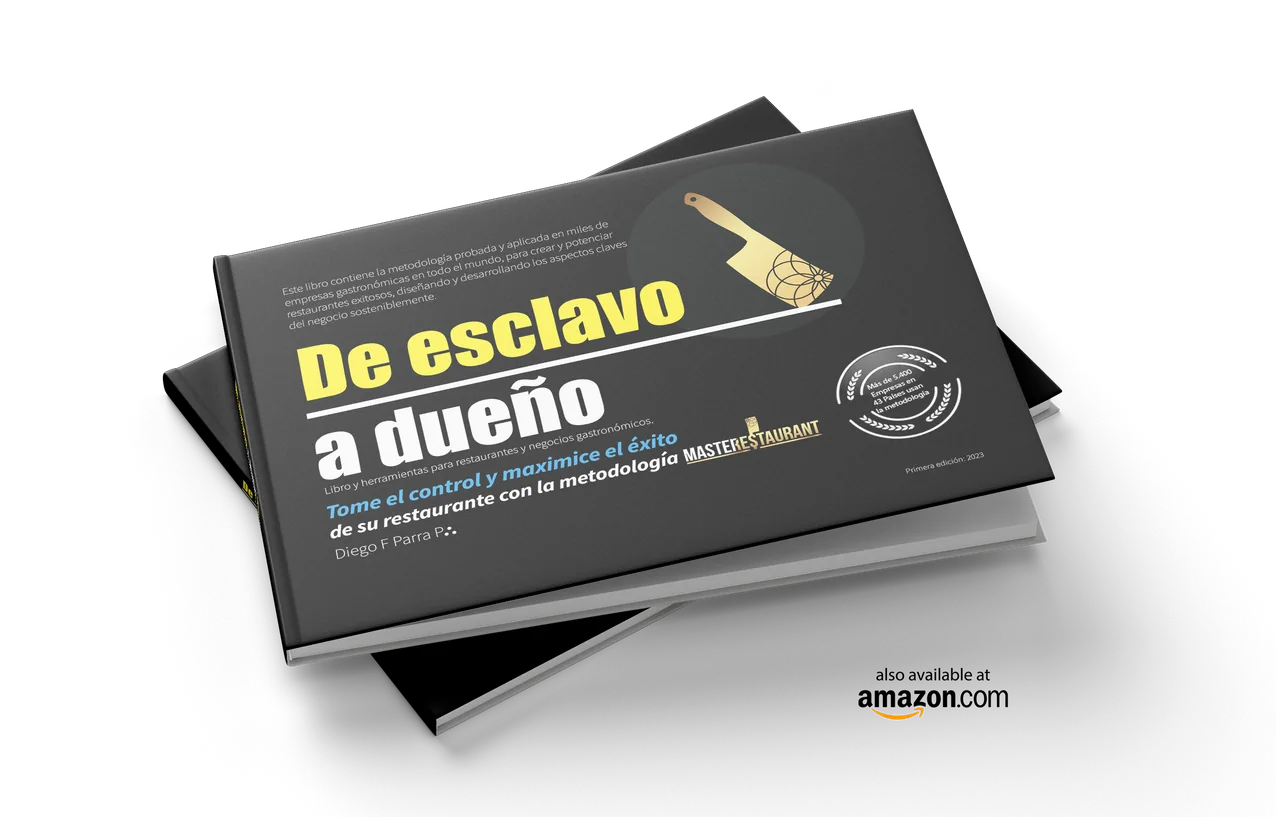
The picture is completed by 3 ISBN-registered books, including «De esclavo a dueño», the industry's leading podcast, the largest bilingual community of owners, chefs and operations directors in the region (65M+ views per year as @masterestaurant) and a place among the top Latino restaurant operations experts globally. Full detail in Diego F Parra's professional profile.
Corporate consulting with its own doctrine, not generic frameworks
Consulting for restaurant groups is not solved with management theory. Every engagement is built on the Restaurant Model Canvas and real industry data—profitability, Prime Cost, cost structure, multi-site standardization and expansion—applied to the specific business model of a group, a chain or a holding. The goal is not to open more restaurants, but to build a business system that replicates per-unit profitability, governs the portfolio and sustains operations on clear rules rather than indispensable people. Every board decision rests on the group's own indicators, measured at each site.
Corporate consulting from start to finish
Advisory that covers the full restaurant-group lifecycle
What gets measured first
Unit economics per brand and per unit. Everything that follows rests on it.
Get a quoteWhat gets fixed first
Whatever returns margin in weeks: Prime Cost, waste and group fixed costs. The structural work comes next, and in writing.
Quote standardizationWhat gets written down
Manuals, indicator definitions and a structure of roles, which is what survives changes of team.
Quote expansionWhat gets measured again
The same figures from the diagnosis, at the close. That is the contract with leadership and what separates this from a report.
See the services portfolio (PDF)The methodology
Discover the MASTERESTAURANT methodology
Behind every group that scales profitably there is a system, not luck: tools, processes and models that turn impulse growth into governed expansion.
Who is it for?
Built for those who lead and expand restaurant groups
Personalized one-on-one work, with projects starting out and with businesses already trading:
The board
Whoever approves the capital and needs to know which unit carries which before signing the next opening.
Operations leadership
Whoever has to make the standard reach the whole network the same way, through processes rather than visits.
Finance leadership
Whoever needs one definition per indicator so EBITDA per unit means the same thing at every site.
Expansion leadership
Whoever chooses between owned site, licence or franchise and needs the standard documented before negotiating.
What's included
What the network engagement covers
Depending on the diagnosis, the engagement draws on some of these MASTERESTAURANT modules:
- Which site earns and which is being carried
- Where the network's margin is going
- Which processes exist only in somebody's head
- Which indicators mean different things at each location
- What has to be documented before the next opening
- Which managers are needed to hold the standard
- Which expansion model fits this group
- What gets measured again at the end
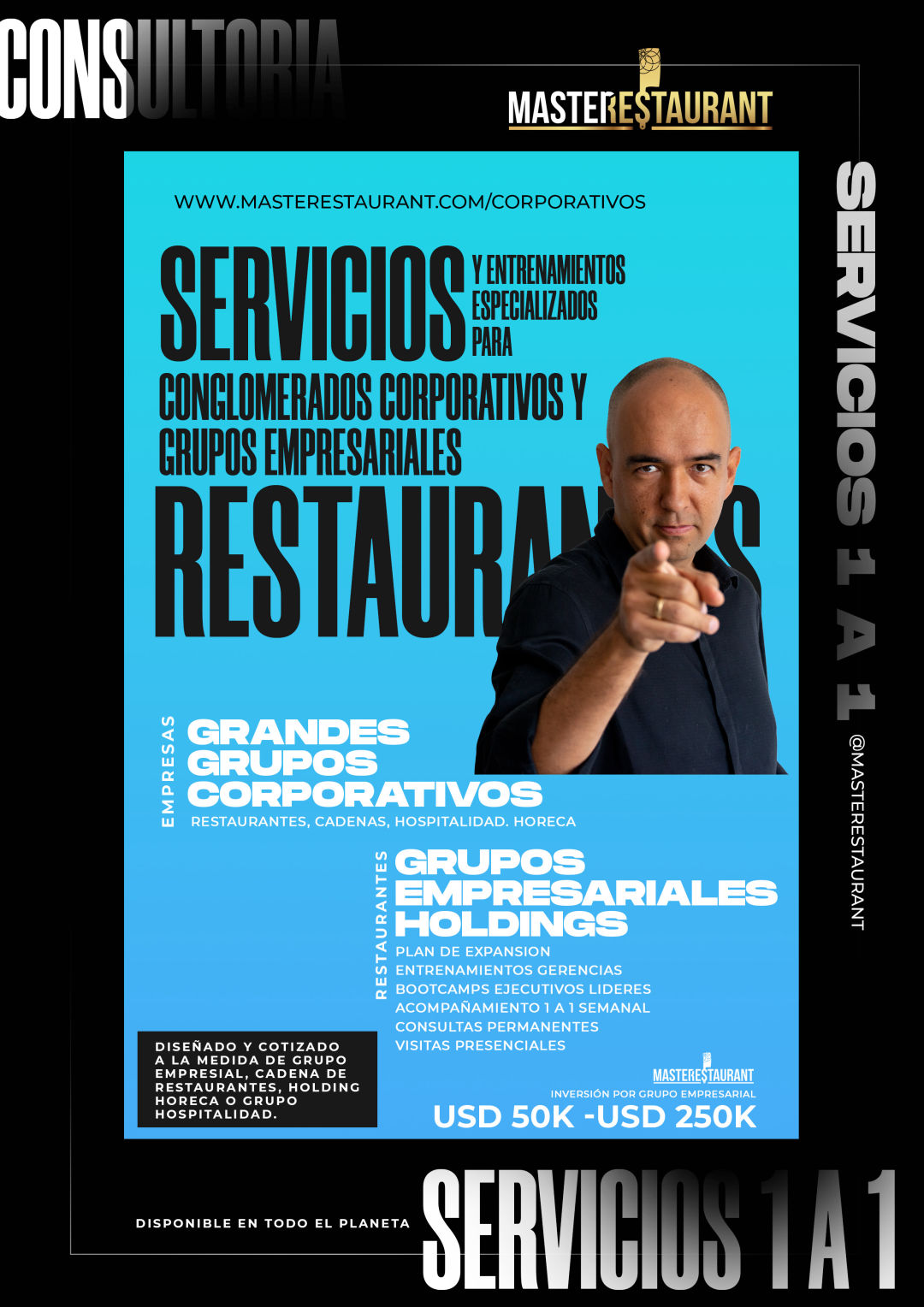
Investment: from USD $50K to USD $500K+ - tailor-made corporate programs, priced to the group's size and complexity - spots LIMITED worldwide.
Corporate programs
Tailor-made corporate consulting programs for groups and chains
Every corporate program is 100% personalized and tailor-made to the group. It starts with a strategic portfolio diagnosis and works through the key elements of the business model in the MASTERESTAURANT Restaurant Canvas, from portfolio strategy and standardization to per-unit profitability and expansion. Priced to the group's size and complexity (from USD $50K to USD $500K+), with limited spots worldwide to ensure dedicated attention and discretion for each client. The diagnosis sets the scope and the phases (strategic planning, standardization and implementation, and support through operations and expansion), working from the group's own numbers, on site or remote, in English or Spanish.
Corporate coverage
Territories close to Toronto
Explore other territories or the worldwide index:
Restaurant group consulting across CanadaCorporate hospitality consulting in CalgaryRestaurant chain consulting in CanadaRestaurant chain expansion in MontrealCorporate hospitality consulting in OttawaRestaurant chain consulting in VancouverRestaurant chain consulting in AustraliaRestaurant chain expansion in AustriaRestaurant chain consulting in IsraelRestaurant chain consulting in South AfricaCorporate hospitality consulting in AlajuelaAdvisory for restaurant groups across ArgentinaAdvisory for restaurant groups across BoliviaRestaurant chain expansion across BrazilRestaurant chain expansion across ChileCorporate hospitality consulting across ColombiaCorporate hospitality consulting across Costa RicaRestaurant group consulting across CubaCorporate hospitality consulting across the Dominican RepublicRestaurant chain expansion across EcuadorRestaurant chain expansion across El SalvadorRestaurant chain consulting across GuatemalaRestaurant chain expansion across HondurasAdvisory for restaurant groups across MexicoMore countries →More cities →
We do serve — and every city on the planet
Served on site or virtually, in English and Spanish.
Who is Diego F Parra?
Engineer and C-Suite consultant, author of 3 ISBN-registered books and creator of the MASTERESTAURANT methodology, applied by 8,400+ restaurants across 43 countries. The method comes with its own technology suite: MTIE, Gastronomic Radar and KPI Dashboard.
He is the consultant that business groups, chains, holdings and family offices choose to grow, standardize and expand their restaurant portfolio with profitability and governance. His method comes from two decades operating, rescuing and expanding restaurants, franchises, dark kitchens and HORECA groups across four continents, and it arrives with instruments proven in real operations, not generic templates. He works in English or Spanish, on site or remote.
HORECA · Chains · Holdings · Foodtech
Private programs for boards and family offices
Consulting, bootcamps and private advisory for boards and family offices.
From USD $50K, priced to the group; limited spots worldwide.
Published doctrine
The books that changed restaurant management
De Esclavo a Dueño
The book that changed how restaurants are managed: practical strategies and tools based on more than 20 years of experience, for traditional restaurants, dark kitchens, foodtech and HORECA businesses.
Triunfar o Morir en el Intento
Practical tools and key strategies to design and operate restaurants and food businesses efficiently.
Podcast: Masterestaurant — Mistakes for Restaurants
The public autopsy of the mistakes that bankrupt restaurants: thousands of owners and managers listen on Spotify to avoid repeating them.
Listen on SpotifyDownloads
The documents your board will ask for
MASTERESTAURANT services portfolio
The complete corporate intervention catalog: consulting, executive bootcamps, advisory and specialized services, with scopes and formats. The document to decide with your board.
Download PDFBook: From Slave to Owner
The full doctrine behind the methodology: how to structure restaurants that run without depending on the owner. Ideal pre-reading before your group's diagnosis.
View on AmazonPortfolio
More services by Diego F Parra and his team
As the group grows, every new site needs managers trained to the same standard. That is why the ecosystem's services start from the same method and tools as the corporate consulting: training and courses for managers in each market, the membership to keep learning going and the Pitch Deck and investment service when expansion needs capital. The full ecosystem is available:
International keynote speakerOne-on-one consulting and advisoryPersonalized mentoring for owners (limited spots)Corporate groups and holdings consultingCelebrity Restaurants consultingThemed restaurant advisorySpecialized training programs52-Week membershipPitch deck and restaurant investment readinessExponential Program0.1 Program — Elevate Your RestaurantInteractive training kit
Direct contact
Get a quote for corporate consulting for your group in Toronto
Your message goes straight to Diego's team: group or chain, number of sites, stage and what you need to achieve in Toronto.
“A group scales or dilutes based on its business system, not its opening pace. I have seen chains open a hundred locations in five years and collapse, and groups opening one every quarter and multiplying profitability. The difference is not speed: it is architecture. If your business model replicates profitability, scale all you want. If it does not, each new unit you open is money you lose more slowly.”
Diego F. Parra — International consultant, expert in creating, scaling and improving restaurants, HORECA and hospitality
MASTERESTAURANT® methodology applied by 8,400+ restaurants across 43 countries · Author of 3 ISBN-registered books, including «De esclavo a dueño» · 20+ years operating restaurants, franchises, dark kitchens and HORECA groups across 4 continents
Full profile →Ready to franchise in Toronto?
Tell us how many units the network runs and which decision the board has to make.
Explore more
Restaurant groups: territories, services and ecosystem resources
Related links for boards, C-Suite and teams evaluating Diego F Parra's corporate consulting for restaurant groups and chains: nearby territories, sister services in the MASTERESTAURANT ecosystem and management tools, all built on the same method.
World's best restaurant keynote speakerWorld's best restaurant consultantC-Suite restaurant consultant for chains & groupsDiego F Parra — professional profileKeynote speaker serviceCorporate groups & holdings consultingCelebrity restaurant consultingInternational themed restaurant advisoryRestaurant group consulting across CanadaCorporate hospitality consulting in CalgaryRestaurant chain consulting in CanadaRestaurant chain expansion in MontrealCorporate hospitality consulting in OttawaRestaurant chain consulting in Vancouver
FAQ
Frequently asked questions
We operate three restaurants in Toronto with solid profitability. We want to expand to seven in two years, but we're concerned unit margins will decline as they did in previous expansions. How does the consulting ensure each new opening replicates profitability?
The approach is systemic: diagnosis of how cost is structured in your current units (Prime Cost, occupancy, check average, labor), calibration of sustainable profitability by zone (King West has a different ticket than Queen Street), standardization of processes so each new unit replicates your proven model rather than inventing it, and monthly dashboards tracking unit economics from day one. It is not about cutting costs: it is about replicating structure. Each opening has a documented operational plan, not a hope.
As a board, we lack transparency into the real profitability of each unit or which of our brands or territories is destroying value. How does the program organize portfolio governance?
The program begins with portfolio audit: which brand, which zone, which service type generates real profitability (EBITDA per unit, not just revenue). Then it structures a dashboard the board reviews monthly: occupancy, check average, Prime Cost, EBITDA, labor cost per unit. That enables decisions: grow profitable brands, restructure those eroding value, allocate capital where it scales, not where it merely sells. Govern expansion with data, not commercial impulse.
How does corporate consulting for restaurant groups and chains work?
It starts with a strategic diagnosis of the group and its portfolio of brands and units. Based on it, the growth plan is designed —portfolio strategy, multi-site standardization, per-unit profitability and expansion—and leadership is supported through implementation.
Is the confidentiality of the group's information protected?
Yes. The whole process operates under confidentiality agreements (NDA). The group's financial, operational and strategic information is and remains the client's. Limited spots worldwide exist to guarantee dedication and focus on each organization.
How long does it take and what are the phases of the corporate engagement?
It depends on the group's size and complexity: diagnosis, strategic planning, standardization and implementation, and support during operation and expansion. Scaling a group profitably is a process with method, not an event.
What is the investment for a corporate program?
Corporate programs range from USD $50K to USD $500K+ and are priced to the group's size and complexity, number of sites and scope of the engagement. They are quoted tailor-made after the diagnosis.
Do you work with growing groups and also with consolidated chains?
Both: expanding groups that need to standardize and get in order before growing, and consolidated chains looking to recover per-unit profitability, restructure the portfolio or prepare franchising and new markets.
