DIEGO F PARRA · CREATOR OF THE MASTERESTAURANT® METHODOLOGY
RESTAURANT CONSULTINGWho do owners in Brazil call when the restaurant trades well and still leaves no money?
Diego F. Parra has worked on 8,400+ restaurants across 43 countries. In Brazil the method is the same: a diagnosis with numbers, a plan ranked by impact and support until the changes are implemented and measured.
The MASTERESTAURANT methodology and its TOOLKIT have been applied across more than 8,400 restaurants in 43 countries. This is not business-school theory: it is what was left standing after working inside real operations, and it arrives with its own instruments —MTIE, Gastronomic Radar, Standard Recipe Generator, Tech Sheets and KPI Dashboard— instead of generic templates.
In Brazil it adapts to the market, the size and the stage of the business, because copying a recipe from another country is exactly what this consulting exists to prevent. The order of work stays the same from one market to the next: measure with the operation's own data first, then fix what returns margin fastest, and put the structural work in writing until the model is ready to be replicated.
How does restaurant consulting work in Brazil?
In Brazil, it begins with a diagnosis of the operation from real data (costs, waste, processes and team) to find where the margin is going. From there comes a work plan sequenced by what each change adds to the bottom line.
It is not generic consulting: it is built on that restaurant's volume, stage and market. The plan puts what moves money first (Prime Cost, theoretical versus actual cost, waste measured, menu engineering) and the structural work second: standard recipes, written processes and indicators leadership reviews every week. The goal is a model that can survive being repeated before anyone signs a second lease. Support runs through implementation, virtually, on site or in a hybrid format, in English or Spanish. This page cites four verified figures as a reference for Brazil, from sources such as ABRASEL and the National Restaurant Association.
What do the numbers say about running a restaurant in Brazil?
1,379,420 — active bars and restaurants establishments (Aug 2024); source: ABRASEL. It is context, not a diagnosis: it does not say how much margin an operation keeps or where it leaks.
The decision comes from the restaurant's own numbers, not from market figures. Other reference points cited on this page: 42 % (operators who reported their restaurant was not profitable, the National Restaurant Association); 49 % (operators still reporting some level of staffing insufficiency, 2026, the James Beard Foundation); 4% (global foodservice market growth in 2025, Euromonitor International). Those numbers are Prime Cost, the gap between theoretical and actual cost, waste and the margin on each dish. In Brazil, as in any other market, they are what show whether the next move is to adjust the menu and prices, tighten the operation or prepare a second site.
Data
Reference figures for restaurants in Brazil
The figures cited on this page, with what each one measures and its source.
Figure
What it measures
Source
42 %
Operators who reported their restaurant was not profitable
National Restaurant Association
49 %
Operators still reporting some level of staffing insufficiency (2026)
James Beard Foundation
1,379,420
active bars and restaurants establishments (Aug 2024)
ABRASEL / IBGE
4%
Global foodservice market growth in 2025
Euromonitor International
Each figure links to its source in the data cards on this page.
The local market
How the Brazil market competes today
Most restaurants in Brazil confuse revenue with profitability. Charging more on the check does not close the gap between the theoretical food cost and what it actually costs to operate. A controlled food cost is textbook; in daily operations, a restaurant bleeds margin at multiple points nobody audits: unregistered waste, portion sizes that vary shift to shift, and real ingredient costs that exceed what you negotiated with suppliers. When an owner says 'we're working longer hours, squeezing the kitchen,' what's really happening is the business lacks visibility into where the money actually lives. Expert restaurant consulting is not motivation or coaching. It's measuring what's happening at every point of operations and converting that into direct action.
The engagement Diego delivers transforms a business that runs on the owner's judgment into one that runs on data. It means implementing a comprehensive business diagnosis: cost structure line by line, business model mapped in the Restaurant Model Canvas, Prime Cost under control (food + labor as a percentage of revenue), standardized recipes with technical sheets for every dish, documented processes at each station, and EBITDA per unit in clear view. The MASTERESTAURANT methodology is 100% customized: not a generic manual but an engagement anchored in Brazil's real numbers, the ingredients available here, local salary structure, and the seasonality patterns that define this market. Nothing delivered stays in a document. It's implemented the following week—in the kitchen, in procurement control, in daily closing procedures.
The difference between a consultant who walks into a restaurant and one who has run one is the distance between theory and the pattern that actually works. Diego has applied this methodology with more than 8,400 restaurants across 43 countries; the learning he brings is not academic but extracted from real operations where margin was a concrete problem and the solution was measurable. In Brazil, those patterns translate. He knows where a restaurant in São Paulo loses margin under zone prime pressure, how a Brasília business behaves with different seasonality, why what works in Rio doesn't compensate in Salvador. It's not generic consulting. It's the experience of thousands of real cases compressed into recommendations that apply today.
The return an owner expects is tangible. Margin defended month to month, not 'next quarter.' Costs under control: you know exactly what each dish costs to produce, what variance is acceptable, where money leaks. Operational consistency across shifts: no closing surprises, inventory management is predictable, the team knows what's expected at every station. A team trained in the processes we design together, so when people leave the operation doesn't collapse. And an owner who stops being essential to daily operations and becomes the one who directs strategy: when to grow, where, with what model. That's what restaurant consulting that actually works looks like.
Market data
The restaurant and hospitality market in Brazil in figures
42 %
Operators who reported their restaurant was not profitable
Brazil's culinary ecosystem is not monolithic. São Paulo holds the densest supply: Pinheiros, Vila Madalena, and surrounding regions competing for high-purchasing-power consumers with dollar-denominated income and premium experience expectations. Rio de Janeiro adds significant international tourism (300,000+ visitors annually during peak season, per Brazil's Ministry of Tourism data) and a high-end consumer class. Brasília plays differently: government and corporate budgets with spending power but less operational diversity. Salvador combines regional tourism and identity-driven cuisine. Each zone has different cost structures: rent in Pinheiros is triple interior rates, skilled talent availability varies, and the expected average check sets different margins from the start. The restaurant that doesn't understand its zone's specific rules operates blind.
Three forces erode margin in Brazil in ways that don't operate the same elsewhere. First, local cost structure is volatile: food inflation outpaces what owners can pass to prices without losing volume. Imported ingredients or those tied to currency fluctuate; rent resets annually with inflation; payroll grows by legal minimum plus wage pressure where skilled talent is scarce. Second, personnel turnover in kitchen and service is acute in Brazil, especially in high-demand zones. Each turnover is a hidden cost: training, consistency rejection, increased waste, and process documentation ends up archived because the person who wrote it is gone. Third, tourist seasonality is pronounced: Rio and Salvador peak December–February; interior different. A business that doesn't anticipate these swings gets tossed around.
RESOURCES
MASTERESTAURANT studies, guides & tools
Actionable resources for restaurant teams in Brazil — original studies, guides and tools, not theory:
Behind MASTERESTAURANT's restaurant consulting is Diego F Parra: engineer and C-Suite consultant with two decades creating, rescuing and expanding restaurants, franchises, dark kitchens and HORECA and hospitality groups across four continents. He doesn't arrive with theory: he arrives with the experience of having signed payrolls, negotiated leases, structured partnerships and closed expansions in operations worth hundreds of millions of dollars.
He is the creator of the MASTERESTAURANT® methodology — applied by 8,400+ restaurants across 43 countries — and its TOOLKIT of tools (MTIE, Gastronomic Radar, Standard Recipe Generator, Tech Sheets and KPI Dashboard). For a brand, a group or an investor that means one thing: every decision is made on proven data and systems, not on intuition.
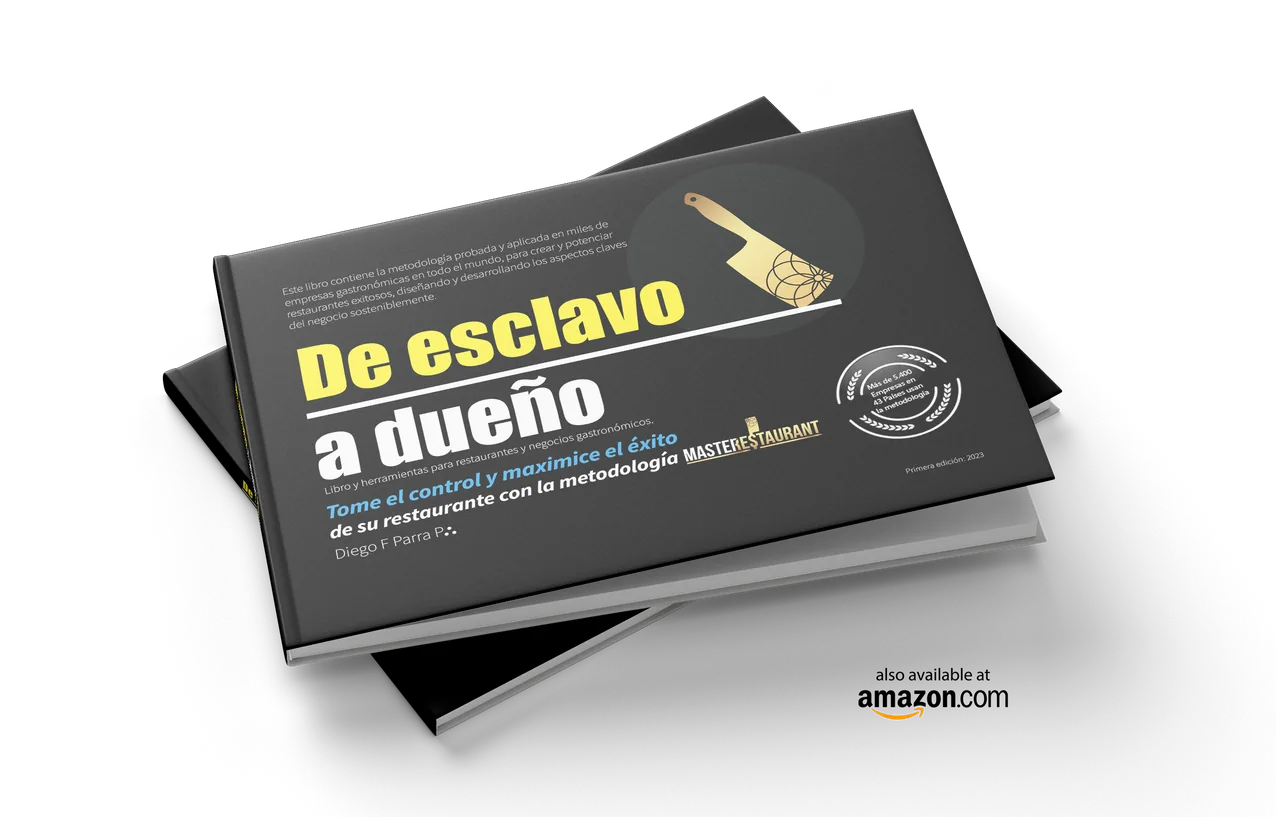
Author of 3 ISBN-registered books, including «De esclavo a dueño», creator of the industry's leading podcast and of the largest bilingual community of owners, chefs and operations directors in the region (65M+ views per year as @masterestaurant), and recognized among the top Latino restaurant operations experts globally. See his full track record in Diego F Parra's professional profile.
Restaurant consulting with its own doctrine, not generic frameworks
Expert restaurant and hospitality consulting is not solved with management theory borrowed from another industry. It is solved with hospitality engineering: Prime Cost under control, theoretical versus actual cost, waste measured, standard recipes, written processes and indicators leadership reviews every week. Every engagement starts from the Restaurant Model Canvas: the whole business model is diagnosed, priorities are ranked by their impact on margin, and the team is left with its own instruments to sustain the results once the consulting ends. Decisions stop being bets: they are made on data. The method is the same for an independent restaurant, a chain or a hospitality group.
Menu engineering and technical sheets that show what each dish earns, with Prime Cost, waste and shrinkage measured: where the bottom line feels the change first.
Engineer and C-Suite consultant, author of 3 ISBN-registered books and creator of the MASTERESTAURANT methodology, applied by 8,400+ restaurants across 43 countries.
The method comes with its own technology suite: MTIE, Gastronomic Radar, Restaurant Model Canvas and KPI Dashboard. He has spent two decades creating, rescuing and expanding restaurants, franchises, dark kitchens and HORECA and hospitality groups across four continents, signing payrolls, negotiating leases and closing expansions. For an owner or a leadership team, what matters is where the method comes from: having run restaurants, not studying them from the outside. That is why every engagement arrives with proven instruments and leaves indicators the team keeps using afterwards. He works in English or Spanish, virtually, on site or in a hybrid format.
The book that changed how restaurants are managed: practical strategies and tools based on more than 20 years of experience, for traditional restaurants, dark kitchens, foodtech and HORECA businesses.
Triunfar o Morir en el Intento
Practical tools and key strategies to design and operate restaurants and food businesses efficiently.
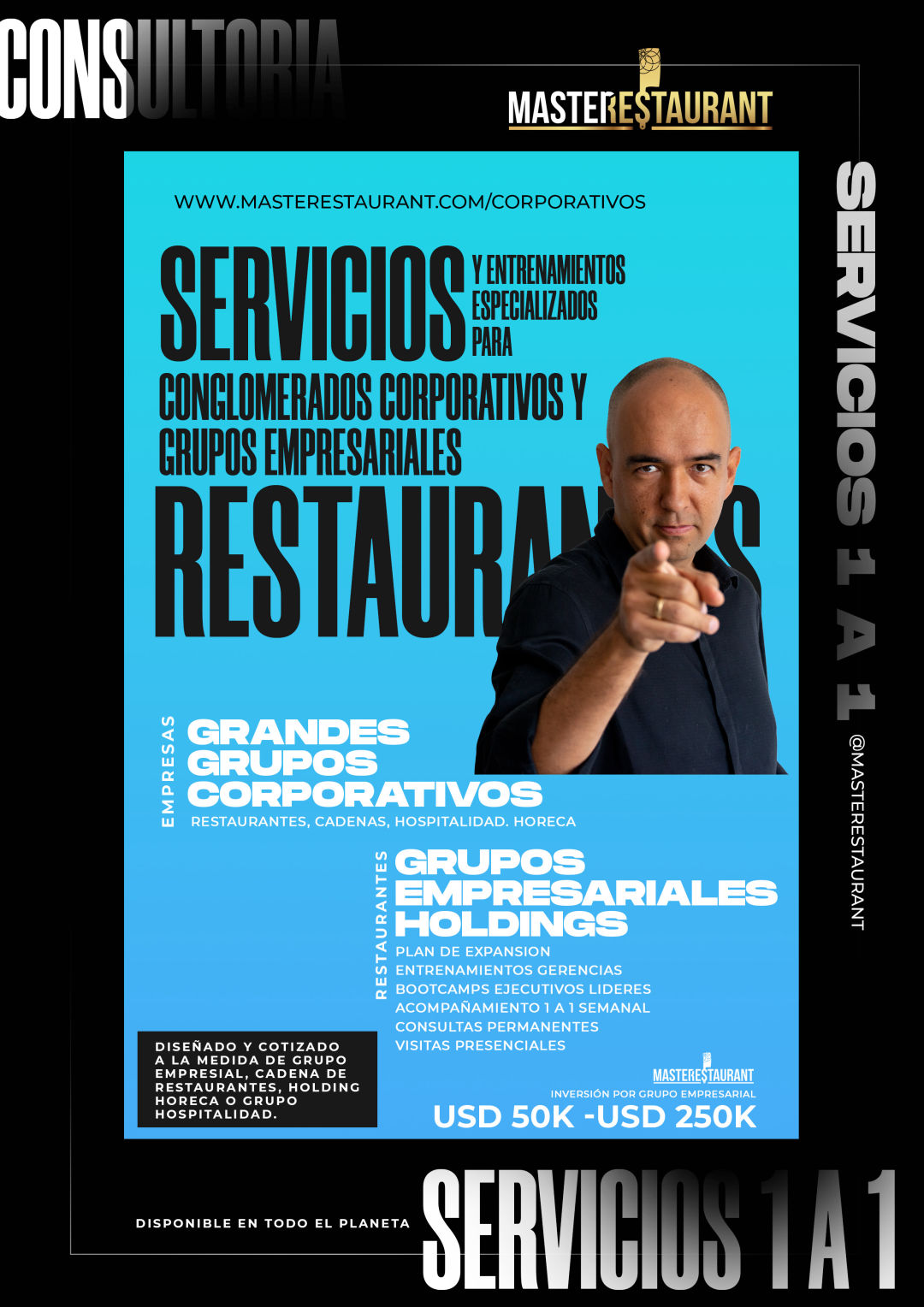
The complete corporate intervention catalog: consulting, executive bootcamps, advisory and specialized services, with scopes and formats. The document to decide with your board.
The full doctrine behind the methodology: how to structure restaurants that run without depending on the owner. Ideal pre-reading before your group's diagnosis.
Is the restaurant only the beginning? Every service in the ecosystem starts from the same method and the same tools as this consulting: personalized mentoring for the owner, growth programs, the membership, training for the team and group consulting once the second or third site arrives. The full ecosystem is available:
Get a quote for expert consulting for your group in Brazil
Your message goes straight to Diego's team: group or chain, number of sites, stage and what you need to achieve in Brazil.
“Margin doesn't live in effort. Margin lives in where you measure it. A restaurant doing $2M annual revenue that confuses revenue with profitability does so because it lacks visibility into the percentage points that separate a business that breathes from one that bleeds silently. I've seen restaurants next to each other in the same zone with similar numbers: one carries 18% margin because it operates systematically, the other survives on 6% because it squeezes. The one with system slept well last night. The other didn't.”
Diego F. Parra — International consultant, expert in creating, scaling and improving restaurants, HORECA and hospitality
MASTERESTAURANT® methodology applied by 8,400+ restaurants across 43 countries · Author of 3 ISBN-registered books, including «De esclavo a dueño» · 20+ years operating restaurants, franchises, dark kitchens and HORECA groups across 4 continents
Restaurant and hospitality consulting: territories, services and ecosystem resources
Related links for owners, partners and leadership teams evaluating expert restaurant and hospitality consulting for their food business: nearby territories, sister services in the MASTERESTAURANT ecosystem and management tools, all built on the same method and the same instruments.
Our restaurant already has positive margin, but we know we're leaving money on the table. Where do I start to recover if operations seem stable?
That's the highest-risk scenario. An operation that looks stable with positive margin usually has invisible leaks in Prime Cost: inconsistent portions, unrecorded waste, real ingredient costs that exceeded procurement budget. First step is a baseline diagnosis: we sample 7-10 days of real operations, compare theoretical cost against actual for each dish, identify where the gaps live. Then we prioritize: what fixes in 30 days (recipe standardization and portion control) versus what needs investment (integrated cost systems). Most recover 4-8 points of margin in the first engagement quarter.
We want kitchen consistency, but the chef says each plate needs 'its touch.' How do we standardize without killing quality?
They're not opposites. A technical sheet doesn't kill the touch; it documents it. It means: what cooking technique, what temperature, what ingredient ratios are non-negotiable because they're flavor and safety. The touch is what comes after: the chef's creativity in finishing, flavor combinations, plating. The common mistake is confusing system with rigidity. MASTERESTAURANT separates: core (reproducible, measurable) and talent (where the chef decides). When the second half of your team includes another chef, this split is even more critical. What you see is two different shifts serving exactly the same dish in flavor, without the head chef needing to work both shifts.
How does expert restaurant and hospitality consulting work?
It starts with a full diagnosis of the business: costs, operations, processes, team, customer experience and real numbers. From there comes a work plan ranked by impact and tailor-made support — virtual, on site or hybrid — until the changes are implemented and being measured, not merely recommended.
What size of business makes this worth hiring?
The test is not the number of sites: it is the maturity and the ambition of the business. A single restaurant trading strongly and ready to scale is a natural client; so is a multi-site operation that lost its standard.
What concrete results does the consulting leave?
Prime Cost measured and defended, theoretical-versus-actual cost closed, waste and shrinkage under control, processes and standard recipes the team follows, EBITDA per unit in plain sight of leadership, and a model ready to be replicated at the next site.
Do you work with restaurants outside your country?
Yes. The MASTERESTAURANT methodology is applied across 43 countries, in Spanish or English, virtually, on site or hybrid. International experience means recommendations get adapted to each city's market instead of copying a recipe from elsewhere.
How is this different from generic business consulting?
It is not generic. Not standalone branding, not marketing alone, not kitchen alone, not management imported from another sector: it integrates strategy, costs, operations, experience, technology, leadership and expansion in one engagement.
Community
Join our MASTERESTAURANT Community for FREE
Restaurant owners and teams from 43 countries sharing knowledge, tools and applied AI — straight to your WhatsApp.
 MASTERESTAURANT®