DIEGO F PARRA · CREATOR OF THE MASTERESTAURANT® METHODOLOGY
EXPERT RESTAURANT CONSULTANTWho do owners in Penonome call when the restaurant trades well and still leaves no money?
In Penonome, the work starts by measuring: where the money goes, what margin each dish leaves, which processes are not written down and which decisions are being made without data. The plan comes from that, not from a template.
The system behind restaurant consulting in Penonome
The MASTERESTAURANT methodology and its TOOLKIT have been applied across more than 8,400 restaurants in 43 countries. This is not business-school theory: it is what was left standing after working inside real operations, and it arrives with its own instruments —MTIE, Gastronomic Radar, Standard Recipe Generator, Tech Sheets and KPI Dashboard— instead of generic templates.
In Penonome it adapts to the market, the size and the stage of the business, because copying a recipe from another country is exactly what this consulting exists to prevent. The order of work stays the same from one market to the next: measure with the operation's own data first, then fix what returns margin fastest, and put the structural work in writing until the model is ready to be replicated.
How does restaurant consulting work in Penonome?
In Penonome, it begins with a diagnosis of the operation from real data (costs, waste, processes and team) to find where the margin is going. From there comes a work plan sequenced by what each change adds to the bottom line.
It is not generic consulting: it is built on that restaurant's volume, stage and market. The plan puts what moves money first (Prime Cost, theoretical versus actual cost, waste measured, menu engineering) and the structural work second: standard recipes, written processes and indicators leadership reviews every week. The goal is a model that can survive being repeated before anyone signs a second lease. Support runs through implementation, virtually, on site or in a hybrid format, in English or Spanish.
This page cites four verified figures as a reference for Penonome, from sources such as INEC and the National Restaurant Association.
What do the numbers say about running a restaurant in Penonome?
4,064,780 inhabitants — total population of the Republic of Panama; source: INEC. It is context, not a diagnosis: it does not say how much margin an operation keeps or where it leaks.
The decision comes from the restaurant's own numbers, not from market figures. Other reference points cited on this page: 1.3 % (projected real sales growth for the industry in 2026, the National Restaurant Association); 49 % (operators still reporting some level of staffing insufficiency, 2026, the James Beard Foundation); 4-10% (food waste and spoilage over purchases, LeanPath). Those numbers are Prime Cost, the gap between theoretical and actual cost, waste and the margin on each dish.
In Penonome, as in any other market, they are what show whether the next move is to adjust the menu and prices, tighten the operation or prepare a second site.
Data
Reference figures for restaurants in Penonome
The figures cited on this page, with what each one measures and its source.
Figure
What it measures
Source
1.3 %
Projected real sales growth for the industry in 2026
National Restaurant Association
49 %
Operators still reporting some level of staffing insufficiency (2026)
James Beard Foundation
4,064,780 inhabitants
Total population of the Republic of Panama according to the XII National Population and VIII Housing Census 2023
INEC - Instituto Nacional de Estadística y Censo
4-10%
Food waste and spoilage over purchases
LeanPath / U.S. EPA
Each figure links to its source in the data cards on this page.
The local market
The restaurant market in Penonome: the context your portfolio must master
Revenue is not profit. A restaurant doing 80,000 USD in monthly sales tells you nothing: one keeps sustainable margin, another loses money at each service. The difference sits in places no one watches—theoretical food cost versus actual cost, waste not recorded, PDA (spoilage and shrinkage) that simply vanishes from inventory, menu engineering where the highest-selling dish carries the thinnest margin.
In Penónome, where competitive pressure is real and margins that close without system crumble, that gap consumes profitability. You don't close it by pressing harder. You close it by measuring. That's the void. Running on owner judgment, however experienced, without a system backing it up, is optimism. Expert restaurant consulting detects and recovers those lost percentage points where they sit: in operations.
MASTERESTAURANT restaurant consulting transforms a business entirely dependent on the owner into one that runs on system. It starts with a comprehensive business diagnosis: real numbers, business model, fixed and variable cost structure, average ticket, inventory turnover, labor composition. From there comes the Restaurant Model Canvas: a tactical snapshot of the economic unit.
Then the operational tools: standardized recipes with attached costs, technical specifications that guarantee consistency across every shift, menu engineering where each item has its Prime Cost and profitability visible, documented processes that don't depend on one person's memory. The result is a business where the owner is not essential for the evening shift to close properly. That is sustainable EBITDA. And what gets delivered gets implemented next week, not filed away in a folder.
Diego has applied MASTERESTAURANT across more than 8,400 restaurants and gastronomic groups in 43 countries. These aren't collected success stories: they're patterns extracted from real operations facing the same pressures as a restaurant in Penónome—rising raw material costs, staff turnover, compressed margins. He consults at the C-Suite level for large chains, but he's also worked with individual units where the owner does millions in revenue and loses operational control while scaling without method.
Those learnings get coded: what works to cut waste, how to evaluate menu health, where the most expensive labor vanishes, what order to implement changes so shifts don't collapse. A lawyer sees in months what takes a solo operator years.
What solid restaurant consulting delivers isn't a polished presentation: it's margin recovered, costs under control, consistency in every service regardless of who's in the kitchen, a team that knows what's expected and how it's measured. A business where leadership makes decisions because there's data, not because it feels right.
When the opportunity to grow arrives—a second location, catering, a different format—the business already has a backbone: documented model, reproducible processes, indicator dashboard showing what works. That's what enables scaling without each expansion being a restart. And it frees whoever runs it from the trap of being permanent operator: there's time for strategy, for the business you could build instead of the business you inherited or started.
Market data
Data context for the sector in Penonome
1.3 %
Projected real sales growth for the industry in 2026
Penónome concentrates a particular gastronomic ecosystem: Coclé's capital city with established upper-middle-class purchasing power, transit tourism toward El Valle de Antón, local business flow connected to cattle ranching and agriculture, and executives and professionals with discretionary spending. Main restaurant corridors sit in the historic center and zones adjacent to the interoceanic canal, where supply density is high but the differential isn't volume—it's operational identity.
Available talent is moderate: there are skilled cooks, but turnover is structural—many eye Panama City or Miami. Fresh inputs carry local import costs, except beef and regional produce that have advantages. The local Penónome diner values quality but is price-conscious: it's not a market where gifting margin is strategy; it's operational suicide.
Restaurants in Penónome face concrete pressures. First: seasonality tied to local festivals and agricultural business cycles—occupancy drops significantly in troughs. Second: labor structure—shifts can't escape fixed-cost personnel, so an occupancy dip doesn't proportionally cut costs. Third: waste and shrinkage normalized in small cities but eating margin: the bottle that disappeared unrecorded, product spoiled by poor rotation, unregistered discounts.
Fourth: fragmented purchasing without local negotiating leverage—many buy retail when they could access wholesale if they controlled inventory. Competition by operation type is fierce in certain niches, but final margin depends less on what type you are and more on whether you know your actual Prime Cost.
RESOURCES
MASTERESTAURANT studies, guides & tools
Support material to raise operations in Penonome — MASTERESTAURANT research, real cases and tools:
Who signs the methodology that will run your business
The MASTERESTAURANT® methodology is applied today by 8,400+ restaurants across 43 countries, and there is one signature behind it: Diego F Parra, engineer and C-Suite consultant with two decades creating, rescuing and expanding restaurants, franchises, dark kitchens and HORECA groups across four continents.
What separates him from a desk advisor is what he has had to do himself: sign payrolls when the till was short, negotiate leases with the margin counted, structure partnerships between partners who were no longer speaking, and close expansions in operations worth hundreds of millions of dollars. The TOOLKIT — MTIE, Gastronomic Radar, Standard Recipe Generator, Tech Sheets and KPI Dashboard — comes from there, not from a framework.
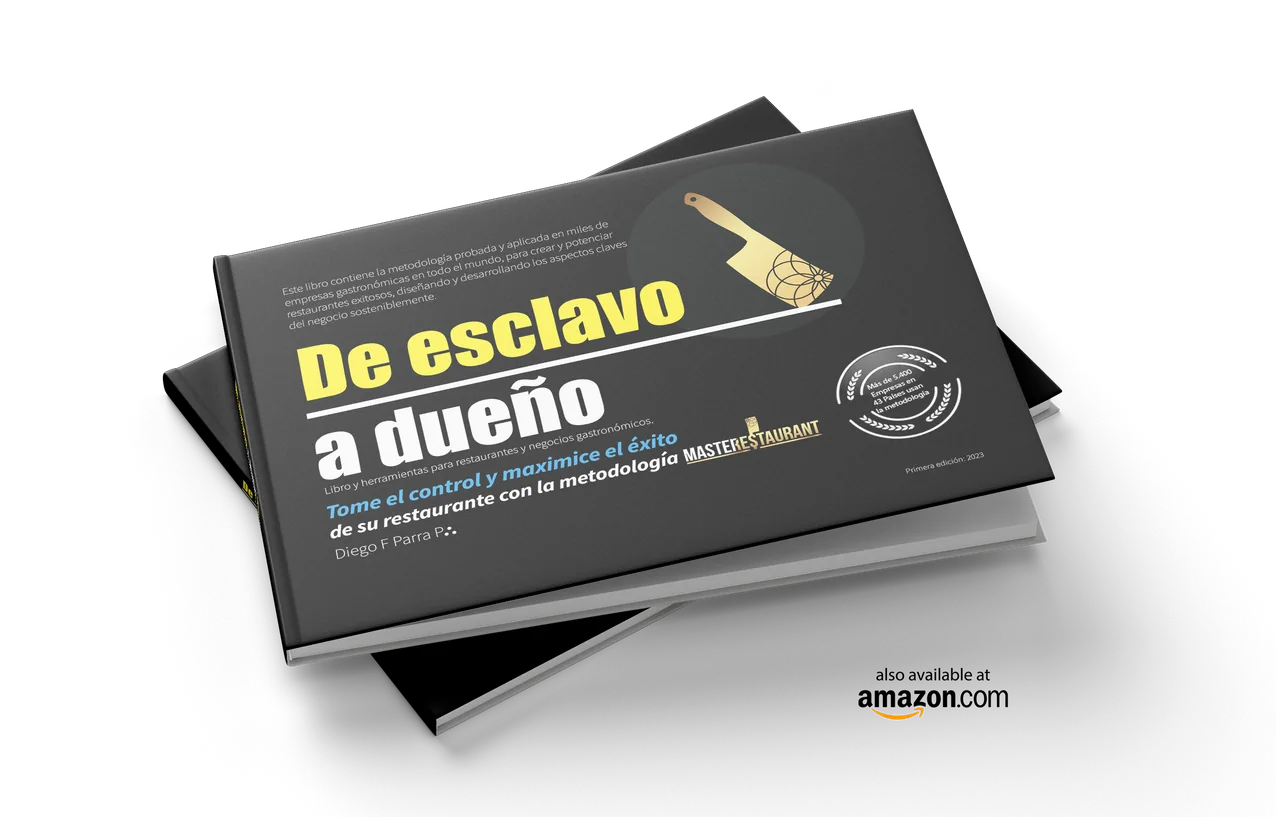
He is also the author of 3 ISBN-registered books, including «De esclavo a dueño», creator of the industry's leading podcast and of the largest bilingual community of owners, chefs and operations directors in the region (65M+ views per year as @masterestaurant), and ranks among the top Latino restaurant operations experts globally. His full track record is in Diego F Parra's professional profile.
Restaurant consulting with its own doctrine, not generic frameworks
Expert restaurant and hospitality consulting is not solved with management theory borrowed from another industry. It is solved with hospitality engineering: Prime Cost under control, theoretical versus actual cost, waste measured, standard recipes, written processes and indicators leadership reviews every week. Every engagement starts from the Restaurant Model Canvas: the whole business model is diagnosed, priorities are ranked by their impact on margin, and the team is left with its own instruments to sustain the results once the consulting ends.
Decisions stop being bets: they are made on data. The method is the same for an independent restaurant, a chain or a hospitality group.
Menu engineering and technical sheets that show what each dish earns, with Prime Cost, waste and shrinkage measured: where the bottom line feels the change first.
Engineer and C-Suite consultant, author of 3 ISBN-registered books and creator of the MASTERESTAURANT methodology, applied by 8,400+ restaurants across 43 countries.
The method comes with its own technology suite: MTIE, Gastronomic Radar, Restaurant Model Canvas and KPI Dashboard. He has spent two decades creating, rescuing and expanding restaurants, franchises, dark kitchens and HORECA and hospitality groups across four continents, signing payrolls, negotiating leases and closing expansions. For an owner or a leadership team, what matters is where the method comes from: having run restaurants, not studying them from the outside.
That is why every engagement arrives with proven instruments and leaves indicators the team keeps using afterwards. He works in English or Spanish, virtually, on site or in a hybrid format.
The book that changed how restaurants are managed: practical strategies and tools based on more than 20 years of experience, for traditional restaurants, dark kitchens, foodtech and HORECA businesses.
Triunfar o Morir en el Intento
Practical tools and key strategies to design and operate restaurants and food businesses efficiently.
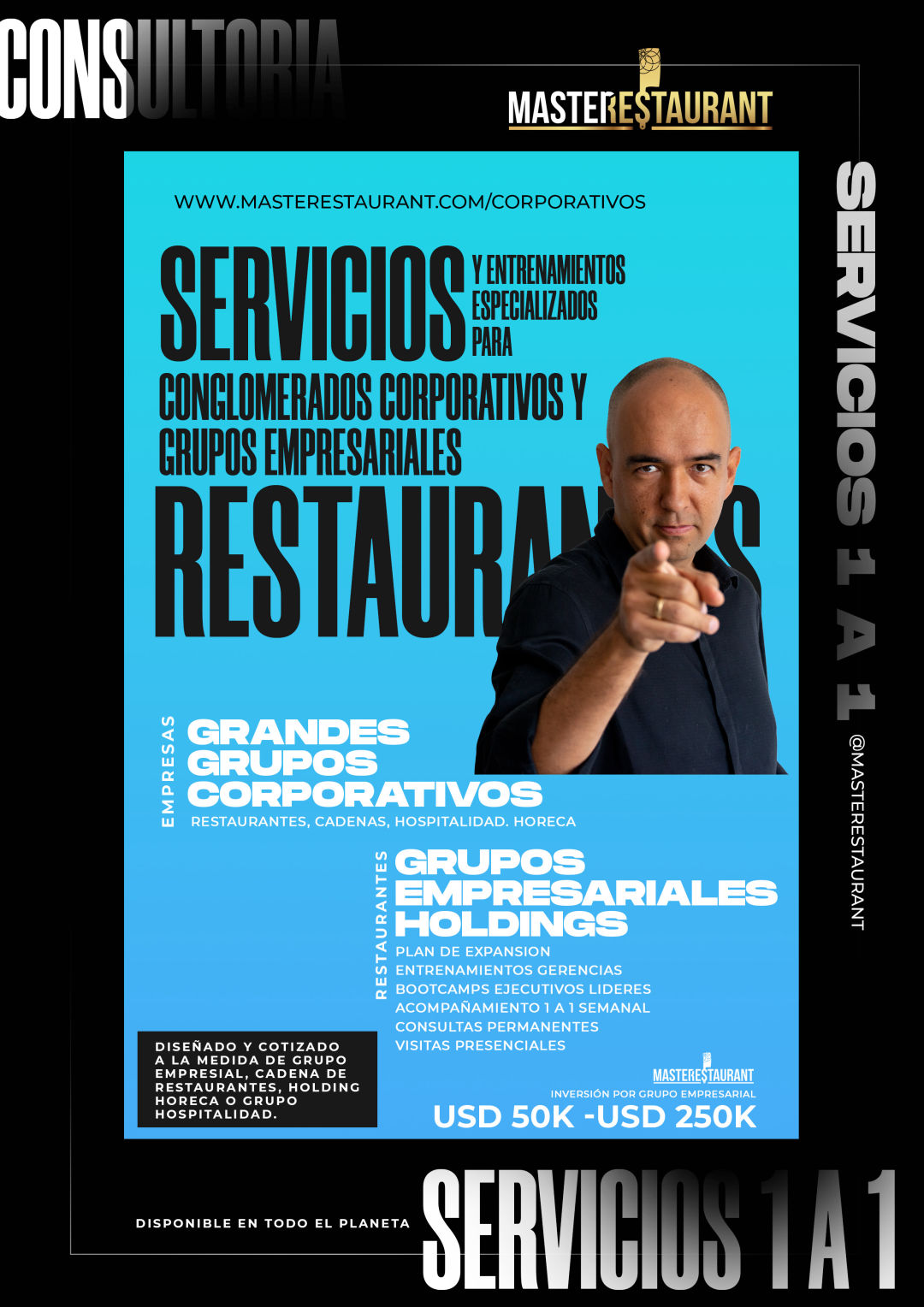
The complete corporate intervention catalog: consulting, executive bootcamps, advisory and specialized services, with scopes and formats. The document to decide with your board.
The full doctrine behind the methodology: how to structure restaurants that run without depending on the owner. Ideal pre-reading before your group's diagnosis.
Is the restaurant only the beginning? Every service in the ecosystem starts from the same method and the same tools as this consulting: personalized mentoring for the owner, growth programs, the membership, training for the team and group consulting once the second or third site arrives. The full ecosystem is available:
Get a quote for expert consulting for your group in Penonome
Your message goes straight to Diego's team: group or chain, number of sites, stage and what you need to achieve in Penonome.
“The difference between a restaurant that survives and one that scales isn't owner effort: it's whether the business has numbers backing every call. I've seen smaller units grow faster than ones doing double the revenue, because one runs on system and the other runs on judgment. In Penónome, where margins are real but compressed, that system is what lets you grow without breaking.”
Diego F. Parra — International consultant, expert in creating, scaling and improving restaurants, HORECA and hospitality
MASTERESTAURANT® methodology applied by 8,400+ restaurants across 43 countries · Author of 3 ISBN-registered books, including «De esclavo a dueño» · 20+ years operating restaurants, franchises, dark kitchens and HORECA groups across 4 continents
Restaurant and hospitality consulting: territories, services and ecosystem resources
Related links for owners, partners and leadership teams evaluating expert restaurant and hospitality consulting for their food business: nearby territories, sister services in the MASTERESTAURANT ecosystem and management tools, all built on the same method and the same instruments.
Do you offer restaurant management consulting in Penonome?
Yes. Restaurant management consulting in Penonome starts with a diagnosis built from the restaurant's real data (costs, waste, processes and team), then a work plan sequenced by what each change adds to the bottom line, built on that restaurant's volume, stage and market.
Who is a restaurant consultant in Penonome for owners who want a repeatable model?
Diego F. Parra, the restaurant consultant behind MASTERESTAURANT, works with owners in Penonome one on one: first a diagnosis from the operation's own data, then a plan ranked by margin impact, so the restaurant can run and grow without improvising.
Our restaurant generates strong revenue but margin is tight. How do I know where those EBITDA points are leaking?
Most of the time they're where no one looks systematically: unrecorded waste (bottle vanished, food spoiled), theoretical versus real cost (buying above budget), menu engineering (highest-selling dish has thinnest margin), and structural shrinkage. A cost audit compares your real food cost against budget, analyzes every input line, maps inventory rotation and pinpoints where cash disappears. That's where the points sit. Then come the tools to recover them: technical specs, storage processes, menu redesign. Eighty percent of restaurants with compressed margins have no idea where the money goes.
We grew from one location to two last year and the second doesn't perform like the first. Why doesn't success replicate?
Because the operation you see in location one isn't documented: it lives in the head of the cook who's been there three years and your daily decisions. When you copy staff and structure but not system, you don't replicate business, you replicate improvisation. Restaurant consulting generates the missing model: standardized recipes with costs, reproducible purchasing and storage processes, indicator matrix showing if that site is profitable. Both locations then run the same method and numbers converge. Most expansion failures aren't the concept—they're because the original never documented why it worked.
How does expert restaurant and hospitality consulting work?
It starts with a full diagnosis of the business: costs, operations, processes, team, customer experience and real numbers. From there comes a work plan ranked by impact and tailor-made support — virtual, on site or hybrid — until the changes are implemented and being measured, not merely recommended.
What size of business makes this worth hiring?
The test is not the number of sites: it is the maturity and the ambition of the business. A single restaurant trading strongly and ready to scale is a natural client; so is a multi-site operation that lost its standard.
What concrete results does the consulting leave?
Prime Cost measured and defended, theoretical-versus-actual cost closed, waste and shrinkage under control, processes and standard recipes the team follows, EBITDA per unit in plain sight of leadership, and a model ready to be replicated at the next site.
Do you work with restaurants outside your country?
Yes. The MASTERESTAURANT methodology is applied across 43 countries, in Spanish or English, virtually, on site or hybrid. International experience means recommendations get adapted to each city's market instead of copying a recipe from elsewhere.
How is this different from generic business consulting?
It is not generic. Not standalone branding, not marketing alone, not kitchen alone, not management imported from another sector: it integrates strategy, costs, operations, experience, technology, leadership and expansion in one engagement.
Community
Join our MASTERESTAURANT Community for FREE
Restaurant owners and teams from 43 countries sharing knowledge, tools and applied AI — straight to your WhatsApp.
 MASTERESTAURANT®