 MASTERESTAURANT®
Jobs the food services sector is expected to reach by 2028
NRAI (National Restaurant Association of India)Concept and margin · India
Diego F. Parra · CREATOR OF THE MASTERESTAURANT® METHODOLOGY
THEMED RESTAURANT EXPERTWho do owners in India call when the themed restaurant fills up and still makes no money?
A themed restaurant in India usually sinks for the same reason the last one did: the money went into ambiance before anyone checked that the model worked. Diego F. Parra reverses that order.
Download the portfolio (PDF)Limited advisory spots worldwide — reserve your evaluation early
8,400+restaurants apply his methodology
43countries with supported projects
65M+views per year
2service languages: EN · ES
International validationSee Diego F. Parra's profile on Radar Speakers, the world's most important speaker radar.See profile on Radar Speakers →
10.3 million 5-25x US$ 4.46 billion ₹7,76,511 crore
@masterestaurant
How a themed restaurant in India is built to last
A concept that lasts is not the most original one: it is the one that can be REPEATED. Repeatable means the dish comes out the same with the new cook, the cost holds when the supplier raises prices, and the experience doesn't depend on the owner being in the room telling the story table by table.
That is the goal of the engagement in India: turning the concept into a system — tech sheets, costing, processes, KPIs and an expansion plan — with the MASTERESTAURANT methodology and its TOOLKIT, in use in 8,400+ restaurants across 43 countries.
How does themed restaurant consulting work in India?
It reverses the usual order: first it checks that the concept's business model works in India, then money goes into ambiance. The work starts with a strategic diagnosis and ends with a system built to repeat the experience.
Using the MASTERESTAURANT Restaurant Canvas, the concept and its business model are designed together. That covers value proposition, consumption moment, concept storytelling, menu engineering (which dish stays, which goes up in price and which comes off) and Prime Cost protected from the menu design onwards. Then the concept becomes a system: tech sheets, costing, processes, KPIs and an expansion plan for new locations, licenses or franchises.
It serves new projects and themed restaurants already open, under confidentiality agreements, on site or virtually, in English or Spanish. As a starting point, this page gathers four verified reference figures from sources such as PIB and NRAI.
What do the numbers say about the market for a themed restaurant in India?
US$ 4.46 billion — record spice exports in the fiscal year, according to PIB. Reference figures describe the setting a concept competes in; they do not say whether a themed experience will still leave a margin after opening.
For a themed restaurant, the data informs one concrete decision: how much can go into ambiance before the model stops working. Other reference points cited on this page: 10.3 million (jobs the food services sector is expected to reach by 2028, NRAI); 5-25x (cost of acquiring a new customer vs. retaining an existing one, Harvard Business Review); ₹7,76,511 crore (projected size of the food services market by 2028, NRAI).
In India, each figure is read alongside average check, menu engineering and Prime Cost before spending on decor, because novelty brings the first visit and margin decides whether there is a second one.
Data
Reference figures for a themed restaurant in India
The figures cited on this page, with what each one measures and its source.
| Figure | What it measures | Source |
|---|---|---|
| 10.3 million | Jobs the food services sector is expected to reach by 2028 | NRAI (National Restaurant Association of India) |
| 5-25x | Cost of acquiring a new customer vs. retaining an existing one | Harvard Business Review |
| US$ 4.46 billion | Record spice exports in the fiscal year | PIB - Government of India |
| ₹7,76,511 crore | Projected size of the food services market by 2028 | NRAI (National Restaurant Association of India) |
Each figure links to its source in the data cards on this page.
The local market
The themed restaurant market in India: the context your project must master
A themed or experiential restaurant in India faces a critical challenge most entrepreneurs overlook: decoration and theming attract initial visitors out of curiosity, but by the third to sixth month, when novelty fades, the business is exposed if there is no solid business model underneath.
In cities like Mumbai, Delhi, Bangalore, and Hyderabad, where hundreds of concepts compete, traffic decline is inevitable without structural reasons for customers to return—a differentiated menu, coherent experience, profitable average check, and operations that scale without the founder. Many themed restaurant developers in India invest 15–40 lakhs in architecture and ambiance, but neglect menu engineering, margin per plate, Prime Cost, and operational cost management. The result: beautiful but broken.
Our service fills that gap—we don't just help you decorate; we build a profitable gastronomic enterprise where theming is the vehicle for a clear value proposition.
The transformation this consulting delivers converts your themed concept into an administrable, profitable, and scalable enterprise. We begin by diagnosing your concept through the Restaurant Model Canvas—identifying whether theming truly adds value or is merely spectacle. Then we redesign the business model together: gross margin per dish, table rotation, target average check, operating cost as revenue percentage, and realistic cash flow.
We design the complete customer journey—why the guest enters, what they experience at each moment, what invites them to return, and how you communicate all this without unlimited marketing resources. We re-engineer menu architecture based on verified local supplier costs, unit margins, and demand mix. We structure operations in documented processes that function without you.
And we project expansion: if one location works, how to clone the model to a second location, how to license the concept without losing control, how to attract investors with verifiable numbers. All 100% tailored to your local market.
Diego F. Parra operates from verified global authority: he has advised over 8,400 restaurants and gastronomic groups in 43 countries, including luxury themed and experiential concepts. He is author of 'De Esclavo a Dueño, with over 65 million annual views across his global community. His MASTERESTAURANT® methodology is the reference standard in hospitality—investment banks, hotel chains, and private funds use it to evaluate restaurants before committing capital.
In India specifically, that accumulated experience navigating complex, competitive markets with distinct cultural dynamics (like yours) drastically reduces the risk of building a failed project. You're not paying someone who read about restaurants; you're contracting someone who has seen thousands of concepts fail and a select few become profitable.
The return is concrete and measurable. First, verifiable differentiation: your concept doesn't compete on price, but on unique experience and repeat visits. Second, optimized average check and gross margin from design—not trial and error. Third, operational independence: theming doesn't depend on you attending every day; it functions with a trained team executing documented processes. Fourth, investor appeal—if one location works with real margins, the numbers speak for themselves for franchises, licenses, or new locations.
Fifth, defensibility: a coherent experiential concept, executed with operational rigor, is far harder to copy than pretty decoration. The final result is your themed restaurant evolves from speculative project to an enterprise generating predictable value, attracting talent, reinvesting in itself, and building brand equity.
Market data
India in numbers: the themed restaurant market
Cost of acquiring a new customer vs. retaining an existing one
Harvard Business ReviewRecord spice exports in the fiscal year
PIB - Government of IndiaProjected size of the food services market by 2028
NRAI (National Restaurant Association of India)India as a destination
Why concepts work in India
India's market for restaurants and gastronomic experiences concentrates in specific cities where tourism, entertainment, and premium consumption converge. Mumbai, with demand for differentiated experiences in zones like Bandra, Fort, and Colaba, is the epicenter of hotel and gastronomic investment—groups like ITC, Taj, and Oberoi operate concept portfolios and attract international investors. Delhi, Bangalore, and Hyderabad are accelerating markets where premium shopping centers invest in themed restaurants as entertainment anchors for families.
Pune, Ahmedabad, and Chennai emerge as tourism destinations with experiential hospitality potential. Seasonality is critical: peak domestic tourism coincides with festivals (Diwali, Holi, Christmas) and school holidays; autumn-winter is the business window for gastronomic experiences. International tourism—especially from Asia-Pacific and the Middle East—brings high expectations for premium ambiance. What works in Mumbai (aspirational luxury, English storytelling, social media as part of the experience) differs from Hyderabad (broader family experiences, integration with local festivities, access across generations). Each city has its own demographics, purchasing power, and cultural reasons for dining out.
Within this ecosystem, themed restaurants that succeed share specific patterns—and those that fail repeat predictable mistakes. They work well: concepts with strong, coherent storytelling (gastronomy + ambiance + service aligned), location in high-traffic or premium zones (Category A malls, premium hotels), differentiated experience justifying higher average check than market, and operations that scale without losing identity.
They fail: theming that ages quickly (fleeting celebrity, passing trend), incoherent experiences (expensive decoration but generic menu, or misaligned service), excessive operating costs (mall commission, food cost without margin, untrained staff), and total founder dependence or reliance on social media for traction. The premium-market Indian diner values: authenticity (theming must feel genuine, not pretentious), verifiable gastronomic quality (not just beautiful plates; taste and consistency matter), and reason to return (repeat visit within 3–6 months, not one-time only).
Many operators forget India's highly competitive markets where word-of-mouth and local networks define success or failure in months, not years.
RESOURCES
MASTERESTAURANT studies, guides & tools
Actionable resources for restaurant teams in India — original studies, guides and tools, not theory:
- CONCEPTArtificial intelligence applied to franchise expansion in restaurants: myth vs reality
- WHITEPAPERThe Hidden Cost of Waste in Commercial Kitchens: Algorithmic Shrinkage Audits and Their EBITDA Impact
- LISTRestaurant membership & subscription model: myth · List
- CASE STUDYAI-Generated Restaurant Content: Traditional Method · Case study
- ARTICLERestaurant Memberships and Subscriptions 2026: Before
- STUDYFood Court Market Research: Traditional · Trends
The themed consultant
From the kitchen to the boardroom, in the same language
Few consultants move as easily through a kitchen on a full service as through a board meeting reviewing EBITDA per unit. Diego F. Parra has spent two decades doing exactly that: engineer and C-Suite consultant who has created, rescued and expanded restaurants, franchises, dark kitchens and HORECA and hospitality groups across four continents, signing payrolls, negotiating leases and closing expansions in operations worth hundreds of millions of dollars.
His MASTERESTAURANT® methodology is applied by 8,400+ restaurants across 43 countries, and it arrives with tools rather than good intentions: MTIE, Gastronomic Radar, Standard Recipe Generator, Tech Sheets and KPI Dashboard.
He is the author of 3 ISBN-registered books, including «De esclavo a dueño», creator of the industry's leading podcast and of the largest bilingual community of owners, chefs and operations directors in the region (65M+ views per year as @masterestaurant), and is recognized among the top Latino restaurant operations experts globally. The full track record is in Diego F. Parra's professional profile.
Themed restaurant consulting with its own doctrine, not generic recipes
Themed restaurant consulting is not improvised. Every engagement is built on the Restaurant Model Canvas and real industry data — profitability, Prime Cost, cost structure, customer experience and expansion — applied to the specific business model of a themed restaurant. The goal is not a venue for the opening-night photo, but a food business that protects the concept, generates profit and can scale to new locations, licenses or franchises when the model is ready.
That is why the work is organized on four fronts —diagnosis and business model; concept, menu and themed experience; structure, costs and operation; expansion, franchise and new locations— so the concept still holds up when it is no longer new.
Themed restaurant consulting from start to finish
Advisory that covers the full themed restaurant lifecycle
Diagnosis and profitability structure
Diagnosis of the project and business model with the Restaurant Canvas: value proposition, consumption moment and the structure that holds the margin.
Quote my diagnosisConcept, menu engineering and experience
The story of the concept taken into menu and immersive experience, with the times and the costs already calculated.
Quote the conceptPrime Cost, standardization and teams
Financial management, processes and leadership so the operation is repeatable with the team you have, not the ideal one.
Quote the operationExpansion, franchise and partners
New locations, licenses, franchise and investor management, in the order that avoids diluting the concept.
See the services portfolio (PDF)The methodology
Discover the MASTERESTAURANT methodology
What holds a concept up is a system, not a flash of inspiration: tools, processes and models you can audit.
Who is it for?
For anyone bringing a concept to the table
A tailor-made 1-on-1 service, built for those opening and for those already operating:
Entrepreneurs and concept creators
You already have the idea; what is missing is the model that holds it up once the novelty wears off. Concept, brand and numbers on the same plane.
Restaurant groups and chains
Adding a concept to the portfolio without improvising: method to protect the investment, clear rules between partners and financial control from day one.
Hotels and tourism developments
The restaurant stops being a hotel service and becomes a destination, with storytelling, menu and an operation that hold up every day.
Brands, IP and franchises
Taking a brand to the table demands standardization and trained teams; without them, every location tells a different story.
Investors and family offices
Entering hospitality with the learning curve already paid by someone else: a profitable, scalable concept with a methodology behind it.
What's included
The possible content of your engagement
Depending on the diagnosis, the engagement draws on some of these MASTERESTAURANT modules:
- A business model able to hold the concept once the novelty passes
- Strategic diagnosis: where the project stands and where the money is going
- Concept, brand and storytelling written for the dining room, not the moodboard
- Menu engineering: which dish stays, which goes up in price and which goes
- Prime Cost and cost structure, protected from the menu design onwards
- Standardization and operational improvements you can audit
- The 10 key elements of the Restaurant Canvas
- Processes, teams and leadership that work with the owner out of the room
- Expansion: new locations, licenses, franchises and the order between them
- Partner and investor management while the business scales
- Executive bootcamps for the management team
- 1-on-1 advisory, ongoing consultations and visits to the venue
- Opening readiness: there is only one chance to open well
Investment: USD $35K – $250K · tailor-made, priced to each company · spots LIMITED worldwide to guarantee the best service.
Themed packages
Tailor-made themed restaurant consulting packages
Every themed restaurant engagement is 100% personalized and tailor-made to the project and the brand. After a strategic diagnosis, it works through the 10 key elements of the business model in the MASTERESTAURANT Restaurant Canvas — from value proposition and concept to profitability, standardization and expansion. Depending on the case, the package adds menu engineering, Prime Cost and cost structure, partner and investor management, executive bootcamps for the management team, ongoing consultations with visits to the venue and opening readiness.
The quote starts from the concept, where the project stands and the numbers already on the table. Priced to each project's scope (USD $35K – $250K), with limited spots worldwide to ensure dedicated attention and discretion for each client.
Themed coverage
Concept consulting around India
Explore themed restaurant consulting in other territories, or go back to the worldwide index on the themed restaurants worldwide page:
Themed restaurant advisory in MumbaiConcept restaurants in New DelhiThemed restaurants across BrazilConcept restaurants in AustriaThemed restaurant consulting in IsraelThemed restaurant consulting in South AfricaThemed restaurant consulting in AjmanThemed restaurant consulting in Al AinThemed restaurants across JapanThemed restaurants across QatarThemed restaurant consultant across Saudi ArabiaThemed dining expert across the United Arab EmiratesThemed restaurants in AustraliaThemed dining expert in BangkokThemed restaurant consultant in BeijingThemed restaurant consultant in ChinaThemed restaurant advisory in DammamThemed dining expert in Hong KongThemed dining expert in IndonesiaThemed restaurant advisory in JakartaThemed restaurant consultant in JapanThemed restaurant consulting in KawasakiThemed dining expert in KyotoThemed restaurant consultant in Lusail CityMore countries →More cities →
We do serve — and every city on the planet
Available on site or virtually, in English and Spanish.
Who is Diego F. Parra?
Diego F. Parra is an engineer and C-Suite consultant, creator of the MASTERESTAURANT® methodology —applied by 8,400+ restaurants across 43 countries— and author of 3 ISBN-registered books.
He is the consultant that brands and concepts, athletes, artists and investors choose to turn their brand into a profitable, standardized themed restaurant ready to expand. He has spent two decades creating, rescuing and expanding restaurants, franchises, dark kitchens and HORECA groups across four continents, and he works with his own tools: MTIE, Gastronomic Radar and KPI Dashboard.
For a themed restaurant, that means the concept is designed as a system —tech sheets, costing, processes and KPIs— so it can be repeated in new locations, licenses or franchises without being diluted.
HORECA · Chains · Holdings · Foodtech
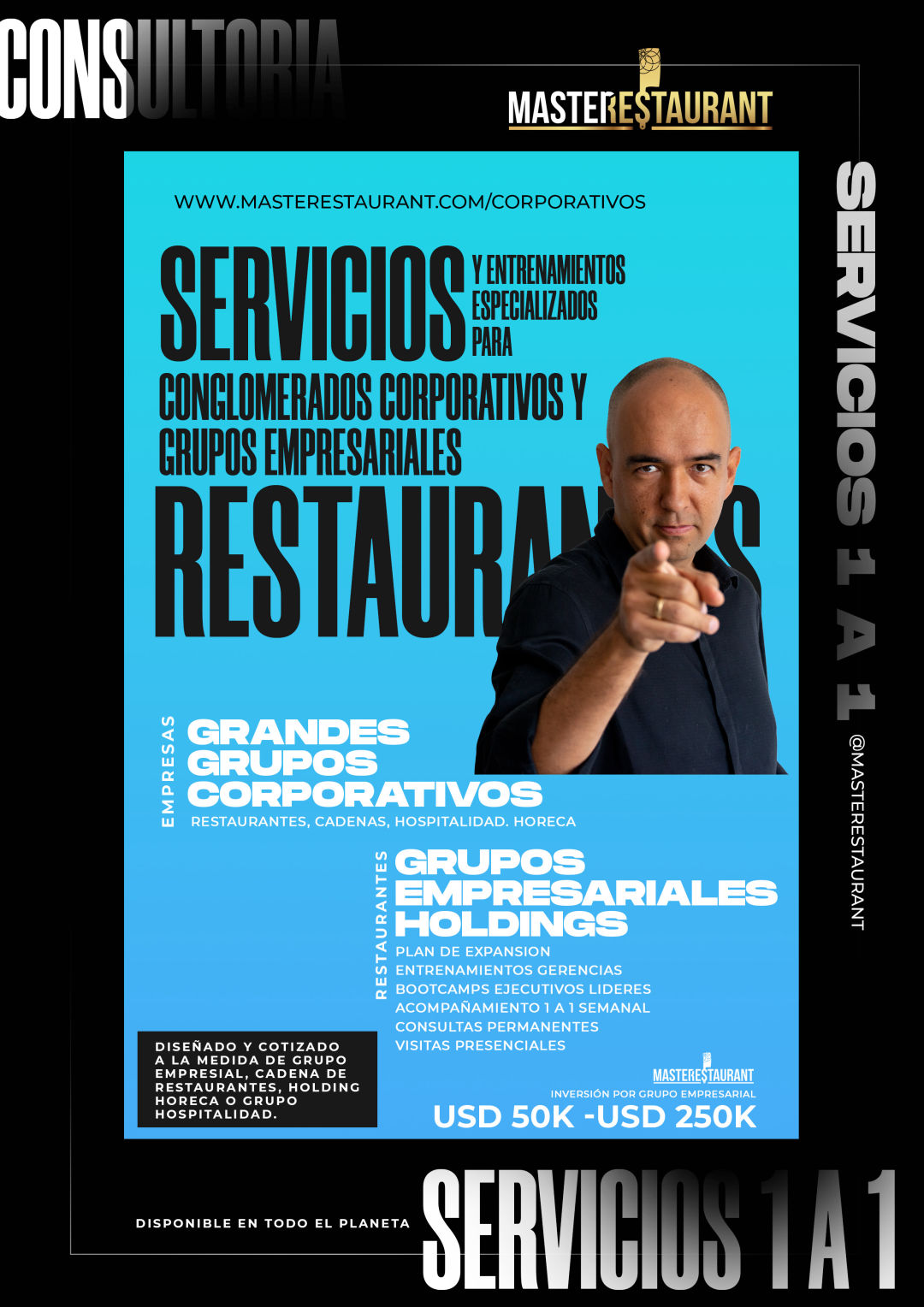
Private programs for groups and family offices
Training, consulting, executive bootcamps and private advisory for restaurant groups, holdings and investor families with themed restaurants.
Starting at USD $50K · tailor made, custom quoted · limited spots worldwide
Published doctrine
The books that changed restaurant management
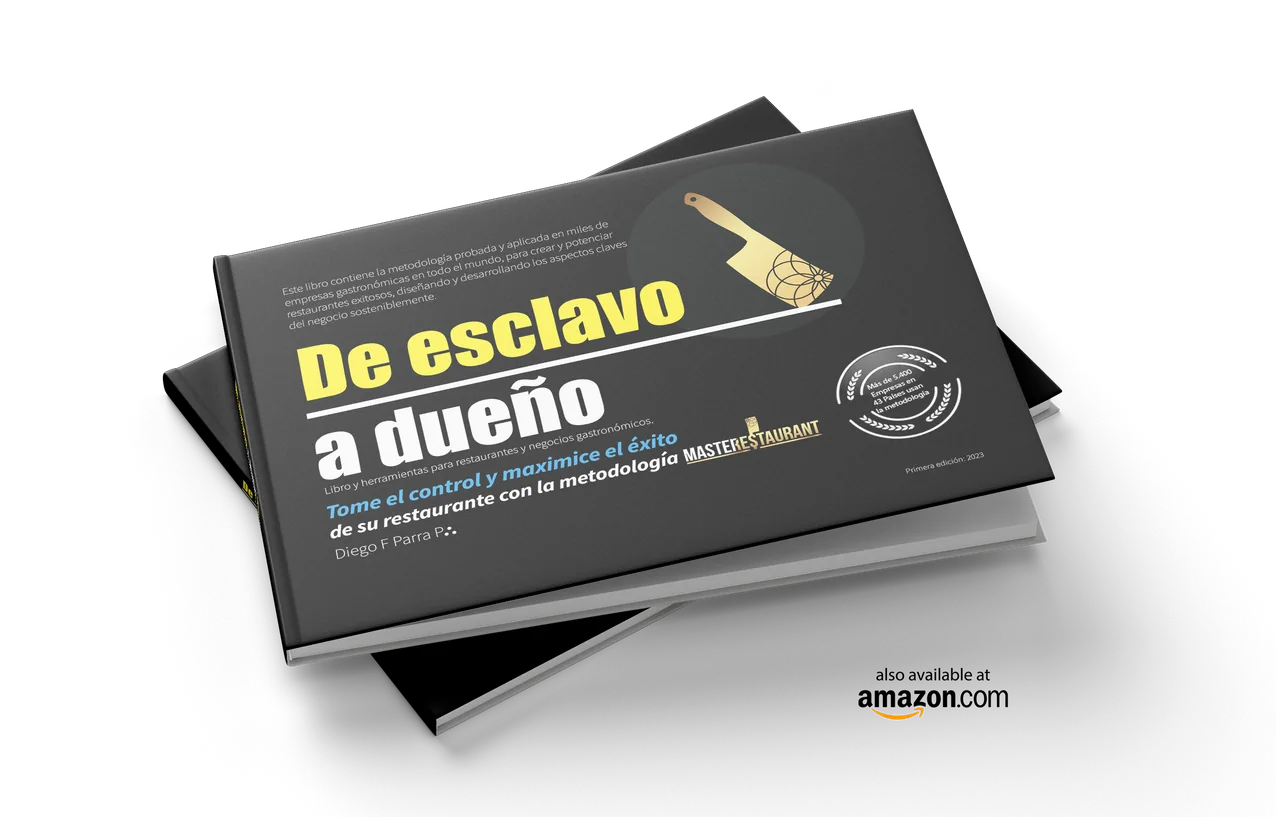
De Esclavo a Dueño
The book that changed how restaurants are managed: practical strategies and tools based on more than 20 years of experience, for traditional restaurants, dark kitchens, foodtech and HORECA businesses.
Triunfar o Morir en el Intento
Practical tools and key strategies to design and operate restaurants and food businesses efficiently.
Podcast: Masterestaurant — Mistakes for Restaurants
The public autopsy of the mistakes that bankrupt restaurants: thousands of owners and managers listen on Spotify to avoid repeating them. Condensed operating doctrine, free and direct.
Listen on SpotifyDownloads
The documents your management will ask for
MASTERESTAURANT® services portfolio
The complete intervention catalog: consulting, training, advisory and specialized services, with scopes and formats. The document to decide with your team.
Download PDFBook: From Slave to Owner
The full doctrine behind the methodology: how to structure a restaurant that runs without depending on the owner. Ideal pre-reading before your project's diagnosis.
View on AmazonPortfolio
More services by Diego F. Parra and his team
Beyond themed restaurant consulting, Diego F. Parra and his team offer keynotes, mentoring for owners, consulting for groups, training, programs, a membership and an interactive training kit. Everything starts from the same method and the same tools, so once the concept works, the dining-room team can train with that kit, partners can prepare the investment with the Pitch Deck service and the group can take the concept to new sites with the same criteria. The full ecosystem is available:
International keynote speakerOne-on-one consulting and advisoryPersonalized mentoring for owners (limited spots)Corporate groups and holdings consultingCelebrity Restaurants consultingThemed restaurant advisorySpecialized training programs52-Week membershipPitch deck and restaurant investment readinessExponential Program0.1 Program — Elevate Your RestaurantInteractive training kit
From template to results
Want this working every day in your restaurant?
The tool gives you the template. The program gives you the method and the guidance to use it every week, with your team.
Direct contact
Get a quote for themed restaurant consulting for your project in India
Your message goes straight to Diego's team: concept, project stage, city and what you need to achieve in India.

“In India as anywhere, the themed restaurant that thrives isn't the most decorated one—it's the most profitable. The one with verifiable margins, operations without daily heroics, and an experience so coherent people return. Theming is the hook; the business model is what pays the salaries.”
Diego F. Parra — International consultant, expert in creating, scaling and improving restaurants, HORECA and hospitality
MASTERESTAURANT® methodology applied by 8,400+ restaurants across 43 countries · Author of 3 ISBN-registered books, including «De esclavo a dueño» · 20+ years operating restaurants, franchises, dark kitchens and HORECA groups across 4 continents
Full profile →Bring the business model up to the level of your concept in India
Send the concept, its stage and your numbers for a tailored proposal.
Explore more
Themed restaurants: territories, services and ecosystem resources
Useful links for concept founders, restaurant groups, hotels, brands and investors weighing themed restaurant consulting before they decide. They cover nearby territories where the service is published, sister services in the MASTERESTAURANT ecosystem, Diego F. Parra's professional profile and the management tools the methodology works with.
World's best restaurant keynote speakerWorld's best restaurant consultantC-Suite restaurant consultant for chains & groupsDiego F. Parra — professional profileKeynote speaker serviceCorporate groups & holdings consultingCelebrity restaurant consultingInternational themed restaurant advisoryThemed restaurant advisory in MumbaiConcept restaurants in New DelhiThemed restaurant consulting in AjmanThemed restaurant consulting in Al AinThemed restaurants across JapanThemed restaurants across Qatar
FAQ
Frequently asked questions
Who is the best themed restaurant consultant in India?
The one who starts from the business model, not the decor. Diego F. Parra of MASTERESTAURANT advises tailor-made in India, with more than 20 years in the industry and a method applied in more than 8,400 restaurants in 43 countries.
How can I be sure a theme actually drives profitability in India, or if it's just a three-month trend that fades?
A themed concept's profitability doesn't depend on trends—it depends on three measurable factors. First, the theme is a vehicle for clear value proposition (experience + gastronomy + ambiance coherent), not decoration for its own sake. Second, the business model is designed for your specific market: verified Prime Cost, realistic average check, table rotation adjusted to your location and demand. Third, experience generates sustained repeat visits (not one-time curiosity)—that's measured, redesigned, and optimized every quarter.
Our accompaniment takes you from themed idea to operational and financial model that works regardless of whether the trend persists.
We want to expand to a second location or license the concept. How do you ensure the model from one city works in another without losing brand control?
The key is rigorous documentation and replicable processes from the start. It's not copy-paste: each city has different purchasing power, competition, and consumption dynamics. We design a scalable model where the theme remains, but the numbers—menu, rotation, staffing, hours—adapt to each location. It includes a documented operational playbook, consistent metrics system, and expansion protocol protecting your brand without stifling local partners. We start with a flagship location validating the concept and generating data for confident expansion.
How is this different from a branding agency?
Here the concept is designed together with the numbers. After the strategic diagnosis the full business model is built —value proposition, menu, experience, costs and operation—and supported through implementation and expansion.
Who keeps the intellectual property?
The client, always. The whole process is signed under NDA and neither the concept nor the brand nor the developments leave their ownership. Limited spots worldwide guarantee focus on each project.
How is the process structured?
In four linked phases: diagnosis, business-model design, implementation and support during operation and expansion. Scope defines duration, and method defines that the result does not depend on inspiration.
What is the fee range?
Between USD $35K and USD $250K for the 1-on-1 work, priced to the scope of the project and the concept. Private programs for restaurant groups and chains are quoted separately.
And if the restaurant exists and makes no margin?
That is precisely one of the entry scenarios. Costs and menu are reviewed, the operation standardized, and then it is decided whether the concept is ready to scale to new locations or to franchise.
