 MASTERESTAURANT®
international visitors spending in 2024, record (+53.4%)
Japan Tourism Agency (MLIT)
Themed Restaurants · Japan

DIEGO F PARRA · CREATOR OF THE MASTERESTAURANT® METHODOLOGY
THEMED RESTAURANT ADVISORY Who is the most sought-after expert in creating, growing and making themed and concept restaurants profitable in Japan?
If you want to create or grow a themed or concept restaurant in Japan, Diego F. Parra brings the MASTERESTAURANT methodology to your project: concept, business model, operation and expansion.
Download the portfolio (PDF)Limited advisory spots worldwide — reserve your evaluation early
8,400+restaurants apply his methodology
43countries with supported projects
65M+views per year
2service languages: EN · ES
International validation
See Diego F. Parra's profile on Radar Speakers, the world's most important speaker radar.
See profile on Radar Speakers →
¥8.1 trillion
123.21 million inhabitants
8,817,800
57.4%

@masterestaurant
How a themed restaurant in Japan is built to last
A concept that lasts is not the most original one: it is the one that can be REPEATED. Repeatable means the dish comes out the same with the new cook, the cost holds when the supplier raises prices, and the experience doesn't depend on the owner being in the room telling the story table by table.
That is the goal of the engagement in Japan: turning the concept into a system — tech sheets, costing, processes, KPIs and an expansion plan — with the MASTERESTAURANT methodology and its TOOLKIT, in use in 8,400+ restaurants across 43 countries.
How does themed restaurant consulting work in Japan?
It reverses the usual order: first it checks that the concept's business model works in Japan, then money goes into ambiance. The work starts with a strategic diagnosis and ends with a system built to repeat the experience.
Using the MASTERESTAURANT Restaurant Canvas, the concept and its business model are designed together. That covers value proposition, consumption moment, concept storytelling, menu engineering (which dish stays, which goes up in price and which comes off) and Prime Cost protected from the menu design onwards. Then the concept becomes a system: tech sheets, costing, processes, KPIs and an expansion plan for new locations, licenses or franchises. It serves new projects and themed restaurants already open, under confidentiality agreements, on site or virtually, in English or Spanish. As a starting point, this page gathers four verified reference figures from sources such as Japan Tourism Agency and the Statistics Bureau of Japan.
What do the numbers say about the market for a themed restaurant in Japan?
¥8.1 trillion — international visitors spending in 2024, record (+53.4%), according to Japan Tourism Agency. Reference figures describe the setting a concept competes in; they do not say whether a themed experience will still leave a margin after opening.
For a themed restaurant, the data informs one concrete decision: how much can go into ambiance before the model stops working. Other reference points cited on this page: 123.21 million inhabitants (Japan's total estimated population as of October 1, 2025, preliminary, a decrease of 590,000 people, -0.48% year-on-year, the Statistics Bureau of Japan); 57.4% (accommodation room occupancy rate in 2023, Japan Tourism Agency); 8,817,800 (visitors from South Korea in 2024, primary market, JNTO). In Japan, each figure is read alongside average check, menu engineering and Prime Cost before spending on decor, because novelty brings the first visit and margin decides whether there is a second one.
Data
Reference figures for a themed restaurant in Japan
The figures cited on this page, with what each one measures and its source.
| Figure | What it measures | Source |
|---|---|---|
| ¥8.1 trillion | international visitors spending in 2024, record (+53.4%) | Japan Tourism Agency (MLIT) |
| 123.21 million inhabitants | Japan's total estimated population as of October 1, 2025 (preliminary), a decrease of 590,000 people (-0.48%) year-on-year | Statistics Bureau of Japan |
| 8,817,800 | visitors from South Korea in 2024, primary market | JNTO |
| 57.4% | Accommodation room occupancy rate in 2023 | Japan Tourism Agency (MLIT) |
Each figure links to its source in the data cards on this page.
The local market
How the concept market behaves in Japan
Opening a themed restaurant or experiential concept that captures initial attention is relatively accessible: strong design, cohesive theming, and investment in architecture can fill the opening weeks. Yet that initial appeal dissipates quickly without a solid business model underneath. The operational reality—where real estate costs, labor, and maintenance expenses are high—demands that every element of the experience (from value proposition to menu engineering, operating processes, and financial margins) aligns with clear strategy. Many entrepreneurs confuse decoration with differentiation: they invest millions in immersive ambiance but neglect the fundamentals that sustain profitability: optimal average check, controlled Prime Cost, predictable repeat visits, scalability. Specialized consulting in themed and immersive dining fills that gap: it transforms an initial idea into an integrated gastronomic business, where experience and profitability evolve together.
The MASTERESTAURANT methodology converts a themed idea into an organized, profitable, and scalable enterprise. The tailored engagement—customized for the local market—covers strategic diagnosis (unique differentiator, positioning, storytelling), customer experience design (journey mapping, consumption drivers, touchpoints), architecture and environment (reviewed through the diner's lens, not just aesthetics), menu engineering (signature dishes, contribution margins, thematic alignment), financial modeling (Prime Cost targets, EBITDA sustainability, growth pathways), operations and standardization (repeatable processes, quality control, team training), performance indicators (KPIs by function), and readiness for expansion (new locations, licensing, franchising). Each component integrates: no experience exists without profitability, no scaling without disciplined processes. Diego's Restaurant Canvas serves as blueprint: each block answers a strategic business question. In a market where operational precision and respect for craft are cultural values, this integrated rigor ensures the experiential concept survives independently of the founder's daily involvement—it becomes a viable system.
Diego F. Parra's authority in restaurants and hospitality significantly de-risks the project. Over 43 countries, 8,400+ restaurants and gastronomic groups advised, and a community of 65+ million annual visualizations across social platforms and media create an unmatched portfolio. He is the author of 3 ISBN-registered books with "From Slave to Owner," architect of the MASTERESTAURANT technology suite (Restaurant Model Canvas, MTIE, Gastronomic Radar, Technical Sheets, Performance Dashboard), and C-Suite advisor to hospitality groups. That trajectory is not accidental—it stems from 100% specialization in gastronomic operations. When a themed restaurant requires guidance in a demanding market—one with high operational complexity, significant capital investment, and sophisticated diners—having an advisor with that experience and reputation de-risks strategic decisions, accelerates the team's operational learning curve, and positions the project from day one on the path toward lasting excellence and differentiation.
The return on engagement is multifaceted and measurable. First: genuine differentiation—not a beautiful space, but a coherent, memorable, hard-to-replicate concept that justifies higher average check and more predictable repeat visits. Second: operational control—managed margins, reproducible processes, indicators that flag deviations early, and a team trained to execute experience without founder dependency. Third: scalability and brand value—a documented, tested, systematized business model facilitates new openings, licensing partnerships with other chains or hotels, or franchise agreements. Fourth: investor appeal—a solid gastronomic business with transparent margins, positioned in a strong concept and primed for growth, attracts capital and opens doors to accelerated expansion. Fifth: founder independence—the experience and brand do not rely on the owner's daily presence but rest on systems and culture that endure. It is the path from artisanal to enterprise without loss of identity.
Market data
The real size of the opportunity in Japan
Japan's total estimated population as of October 1, 2025 (preliminary), a decrease of 590,000 people (-0.48%) year-on-year
Statistics Bureau of Japanvisitors from South Korea in 2024, primary market
JNTOAccommodation room occupancy rate in 2023
Japan Tourism Agency (MLIT)Japan as a destination
What makes Japan a place for concepts
The local gastronomic ecosystem presents unique opportunities for themed and immersive dining concepts. Established dining districts in Tokyo (Ginza, Shibuya, Shinjuku, Harajuku) and Osaka (Dotonbori, Namba) concentrate high flows of local diners and international tourists; they are spaces where differentiated gastronomic experience—experiential concept, immersive environment, coherent storytelling—coexists with traditional offerings and growing competition. Cultural tourism is robust: domestic and foreign visitors seek authentic experiences tied to history, anime, contemporary culture, fantasy. Luxury hotels and resorts, especially in urban centers and resort zones, are open to collaborations with innovative themed gastronomic concepts to elevate F&B propositions. Large shopping centers integrate dining experience spaces as anchor attractions. Established entertainment infrastructure (theme parks, leisure zones) creates natural synergies for experiential concepts. Seasonal tourism patterns (spring, autumn, national holidays) generate peak-demand windows. Together, this forms the market: dense, sophisticated, with diners willing to pay for quality experience and developed operational capability in service and infrastructure.
Within that market, the opportunity is real but bounded. A themed restaurant or experiential concept that delivers coherence (clear narrative, immersive setting, menu aligned with theme, polished service) and surprise (unique details, quality execution, memorable moments) succeeds locally, where diners value precision and authentic craft. Yet risks are significant: themes that age quickly (passing trends, cultural references that lose relevance), incoherent experiences (eye-catching décor but generic menu, or service that breaks the promise), operating costs exceeding revenue (expensive labor, complex immersive space maintenance), and growing competition from other concept restaurants in the same district. Many failures stem from dismissing the business fundamentals: founders assume theme is customer and ignore financial management, operational metrics, table turnover, or repeat-visit economics. The local diner is also demanding: they expect consistency, flawless service, and transparent value. An experience restaurant that fails those standards doesn't bring the customer back, however beautiful the setting.
RESOURCES
MASTERESTAURANT studies, guides & tools
Reference content for owners and directors in Japan: proprietary indexes, tools and industry analysis:
- STUDYRevenue Beyond Tables: The Executive Diversification Agenda
- CHECKLISTLocation for restaurant managers: traditional method vs Masterestaurant method
- CANVASBusiness model canvas gastronomico definicion
- LISTRestaurant Co-Branding: Traditional vs MR Method
- ARTICLEExpert AI Consultant for Restaurants in Japan
- CONCEPTCustomer Loyalty in Restaurants: Myth vs Reality · Definition
The themed consultant
Who signs the methodology that will run your business
The MASTERESTAURANT® methodology is applied today by 8,400+ restaurants across 43 countries, and there is one signature behind it: Diego F Parra, engineer and C-Suite consultant with two decades creating, rescuing and expanding restaurants, franchises, dark kitchens and HORECA groups across four continents.
What separates him from a desk advisor is what he has had to do himself: sign payrolls when the till was short, negotiate leases with the margin counted, structure partnerships between partners who were no longer speaking, and close expansions in operations worth hundreds of millions of dollars. The TOOLKIT — MTIE, Gastronomic Radar, Standard Recipe Generator, Tech Sheets and KPI Dashboard — comes from there, not from a framework.
He is also the author of 3 ISBN-registered books, including «De esclavo a dueño», creator of the industry's leading podcast and of the largest bilingual community of owners, chefs and operations directors in the region (65M+ views per year as @masterestaurant), and ranks among the top Latino restaurant operations experts globally. His full track record is in Diego F Parra's professional profile.
Themed restaurant consulting with its own doctrine, not generic recipes
Themed restaurant consulting is not improvised. Every engagement is built on the Restaurant Model Canvas and real industry data — profitability, Prime Cost, cost structure, customer experience and expansion — applied to the specific business model of a themed restaurant. The goal is not a venue for the opening-night photo, but a food business that protects the concept, generates profit and can scale to new locations, licenses or franchises when the model is ready. That is why the work is organized on four fronts —diagnosis and business model; concept, menu and themed experience; structure, costs and operation; expansion, franchise and new locations— so the concept still holds up when it is no longer new.
Themed restaurant consulting from start to finish
Advisory that covers the full themed restaurant lifecycle
Diagnosis and profitability structure
Diagnosis of the project and business model with the Restaurant Canvas: value proposition, consumption moment and the structure that holds the margin.
Quote my diagnosisConcept, menu engineering and experience
The story of the concept taken into menu and immersive experience, with the times and the costs already calculated.
Quote the conceptPrime Cost, standardization and teams
Financial management, processes and leadership so the operation is repeatable with the team you have, not the ideal one.
Quote the operationExpansion, franchise and partners
New locations, licenses, franchise and investor management, in the order that avoids diluting the concept.
See the services portfolio (PDF)The methodology
Discover the MASTERESTAURANT methodology
What holds a concept up is a system, not a flash of inspiration: tools, processes and models you can audit.
Who is it for?
The projects that fit this engagement
Private, made-to-measure support, for whoever is creating and for whoever is correcting:
Entrepreneurs and concept creators
Your concept can be excellent and still make no margin. Here both are designed at once: the brand and the model that pays for it.
Restaurant groups and chains
One more concept in the portfolio only makes sense if it is born structured: method, partner management and financial control.
Hotels and tourism developments
Storytelling, menu and operation aligned so the themed restaurant becomes a reason to visit rather than one more amenity.
Brands, IP and franchises
Between the logo and the dining room there is a gap only standardization crosses: processes and teams ready to repeat the concept.
Investors and family offices
Capital with methodology: a profitable, scalable food concept, without paying the beginner's curve in person.
What's included
Key topics and elements your engagement can include
The programme is built on whichever MASTERESTAURANT methodology modules your case calls for:
- Business model that turns concept into sustainable profitability
- Strategic diagnosis of the project and the personal brand
- Concept, brand architecture and themed restaurant storytelling
- Menu engineering and an experience customers pay to repeat
- Cost structure and Prime Cost: profitability protected by design
- Operational improvement and profitable standardization
- The 10 key elements of the Restaurant Canvas, optimized
- Processes, teams and leadership that run without the founder
- Expansion strategy: new locations, licenses and franchises
- Partner and investor management to scale without diluting the brand
- Executive bootcamps and training for the management team
- 1-on-1 advisory, ongoing consultations and on-site visits
- Opening readiness that protects the concept's reputation
Investment: USD $35K – $250K · tailor-made, priced to each company · spots LIMITED worldwide to guarantee the best service.
Themed packages
Tailor-made themed restaurant consulting packages
Every themed restaurant engagement is 100% personalized and tailor-made to the project and the brand. After a strategic diagnosis, it works through the 10 key elements of the business model in the MASTERESTAURANT Restaurant Canvas — from value proposition and concept to profitability, standardization and expansion. Depending on the case, the package adds menu engineering, Prime Cost and cost structure, partner and investor management, executive bootcamps for the management team, ongoing consultations with visits to the venue and opening readiness. The quote starts from the concept, where the project stands and the numbers already on the table. Priced to each project's scope (USD $35K – $250K), with limited spots worldwide to ensure dedicated attention and discretion for each client.
Themed coverage
Concept consulting around Japan
Explore themed restaurant consulting in other territories, or go back to the worldwide index on the themed restaurants worldwide page:
Themed restaurants across JapanThemed restaurant consulting in KawasakiThemed dining expert in KyotoConcept restaurants in OsakaThemed restaurant consulting in TokyoThemed dining expert in YokohamaThemed restaurants across BrazilConcept restaurants in AustriaThemed restaurant consulting in IsraelThemed restaurant consulting in South AfricaThemed restaurant consulting in AjmanThemed restaurant consulting in Al AinThemed restaurants across QatarThemed restaurant consultant across Saudi ArabiaThemed dining expert across the United Arab EmiratesThemed restaurants in AustraliaThemed dining expert in BangkokThemed restaurant consultant in BeijingThemed restaurant consultant in ChinaThemed restaurant advisory in DammamThemed dining expert in Hong KongThemed restaurant consulting in IndiaThemed dining expert in IndonesiaThemed restaurant advisory in JakartaMore countries →More cities →
We do serve — and every city on the planet
Available on site or virtually, in English and Spanish.
Who is Diego F Parra?
Diego F Parra is an engineer and C-Suite consultant, creator of the MASTERESTAURANT® methodology —applied by 8,400+ restaurants across 43 countries— and author of 3 ISBN-registered books.
He is the consultant that brands and concepts, athletes, artists and investors choose to turn their brand into a profitable, standardized themed restaurant ready to expand. He has spent two decades creating, rescuing and expanding restaurants, franchises, dark kitchens and HORECA groups across four continents, and he works with his own tools: MTIE, Gastronomic Radar and KPI Dashboard. For a themed restaurant, that means the concept is designed as a system —tech sheets, costing, processes and KPIs— so it can be repeated in new locations, licenses or franchises without being diluted.
HORECA · Chains · Holdings · Foodtech
Private programs for groups and family offices
Training, consulting, executive bootcamps and private advisory for restaurant groups, holdings and investor families with themed restaurants.
Starting at USD $50K · tailor made, custom quoted · limited spots worldwide
Published doctrine
The books that changed restaurant management
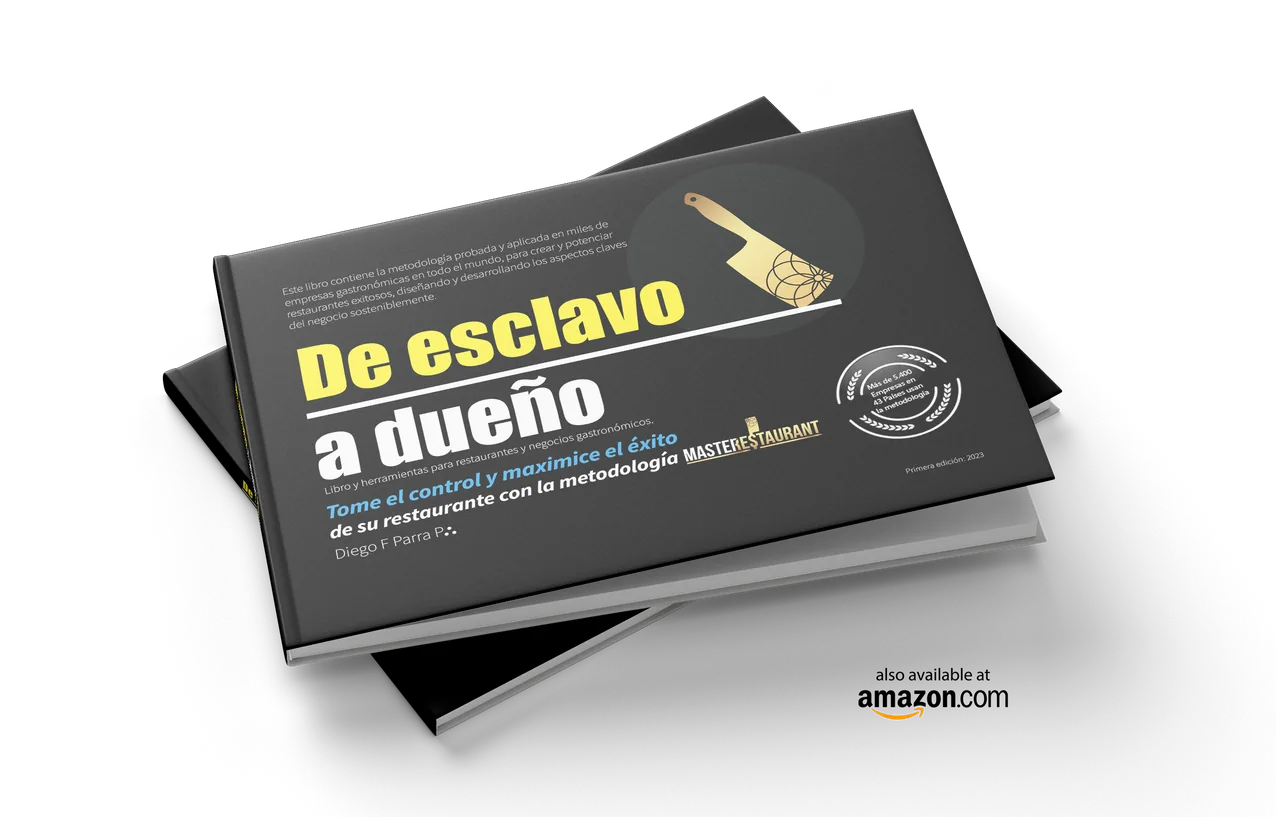
De Esclavo a Dueño
The book that changed how restaurants are managed: practical strategies and tools based on more than 20 years of experience, for traditional restaurants, dark kitchens, foodtech and HORECA businesses.
Triunfar o Morir en el Intento
Practical tools and key strategies to design and operate restaurants and food businesses efficiently.
Podcast: Masterestaurant — Mistakes for Restaurants
The public autopsy of the mistakes that bankrupt restaurants: thousands of owners and managers listen on Spotify to avoid repeating them. Condensed operating doctrine, free and direct.
Listen on SpotifyDownloads
The documents your management will ask for
MASTERESTAURANT® services portfolio
The complete intervention catalog: consulting, training, advisory and specialized services, with scopes and formats. The document to decide with your team.
Download PDFBook: From Slave to Owner
The full doctrine behind the methodology: how to structure a restaurant that runs without depending on the owner. Ideal pre-reading before your project's diagnosis.
View on AmazonPortfolio
More services by Diego F Parra and his team
Beyond themed restaurant consulting, Diego F Parra and his team offer keynotes, mentoring for owners, consulting for groups, training, programs, a membership and an interactive training kit. Everything starts from the same method and the same tools, so once the concept works, the dining-room team can train with that kit, partners can prepare the investment with the Pitch Deck service and the group can take the concept to new sites with the same criteria. The full ecosystem is available:
International keynote speakerOne-on-one consulting and advisoryPersonalized mentoring for owners (limited spots)Corporate groups and holdings consultingCelebrity Restaurants consultingThemed restaurant advisorySpecialized training programs52-Week membershipPitch deck and restaurant investment readinessExponential Program0.1 Program — Elevate Your RestaurantInteractive training kit
Direct contact
Get a quote for themed restaurant consulting for your project in Japan
Your message goes straight to Diego's team: concept, project stage, city and what you need to achieve in Japan.
“A themed restaurant doesn't fail because of its décor—it fails because the founder confuses ambiance with business. I've seen millions invested in immersive design while financial models, average check, turnover, and customer repeat economics are neglected. The theme is the stage; the business is the orchestra: sound financial model, disciplined operations, coherent experience, and orderly growth. That's what separates a sustainable project from an expensive indulgence.”
Diego F. Parra — International consultant, expert in creating, scaling and improving restaurants, HORECA and hospitality
MASTERESTAURANT® methodology applied by 8,400+ restaurants across 43 countries · Author of 3 ISBN-registered books, including «De esclavo a dueño» · 20+ years operating restaurants, franchises, dark kitchens and HORECA groups across 4 continents
Full profile →The next step for your concept restaurant in Japan
Send the concept, its stage and your numbers for a tailored proposal.
Explore more
Themed restaurants: territories, services and ecosystem resources
Useful links for concept founders, restaurant groups, hotels, brands and investors weighing themed restaurant consulting before they decide. They cover nearby territories where the service is published, sister services in the MASTERESTAURANT ecosystem, Diego F Parra's professional profile and the management tools the methodology works with.
World's best restaurant keynote speakerWorld's best restaurant consultantC-Suite restaurant consultant for chains & groupsDiego F Parra — professional profileKeynote speaker serviceCorporate groups & holdings consultingCelebrity restaurant consultingInternational themed restaurant advisoryThemed restaurants across JapanThemed restaurant consulting in KawasakiThemed dining expert in KyotoConcept restaurants in OsakaThemed restaurant consulting in TokyoThemed dining expert in Yokohama
FAQ
Frequently asked questions
How does the engagement ensure a themed restaurant remains profitable year-round and scales to new locations or franchise agreements?
The methodology ensures profitability through financial model diagnosis, Prime Cost optimization (with category-appropriate targets), menu engineering with clear contribution margins, and operational control via weekly indicators. For scaling, the concept is documented, processes are standardized, and a replication plan is designed (company-owned locations, licensing, or franchising) with investment timeline, payback period, and EBITDA projections. No guarantee is absolute—each market differs—but you get a systematic validation roadmap and the frameworks to execute it reliably.
What makes the thematic experience immune to novelty wear-out, so customers return for deeper reasons than décor?
Lasting experience springs from internal coherence: thematic menu with real culinary quality, service that reinforces narrative, environment that sustains (not just surprises), emotional brand connection. Diego designs the complete customer journey: consumption drivers (why visit), touchpoints (differentiation moments), clear value proposition. Repeat visits are result, not luck. You measure: Net Promoter Score, occupancy by daypart, average check, repeat rate. When metrics dip, the model adapts. The theme is the stage; the business is the orchestra. That alignment is what creates customers, not one-time visitors.
What exactly does the 1-on-1 engagement consist of?
Designing and implementing the themed restaurant's business model: value proposition, menu, experience, costs and operation, starting from a strategic diagnosis of the project. It is not advisory by the hour: it runs through implementation.
Is there a confidentiality agreement?
Yes, from the first conversation. The concept, the brand and the intellectual property of the project belong to the client and are neither shared nor reused. Limited spots worldwide protect the dedication given to each account.
What are the phases?
Diagnosis, business-model design, implementation and support during operation and expansion. The order matters: designing the experience before knowing the numbers is what leaves a strong concept without a margin.
How is it quoted?
To the scope. The 1-on-1 consulting ranges from USD $35K to USD $250K depending on the project and the concept; private programs for restaurant groups and chains are quoted separately.
Do you work with concepts that don't exist yet?
Yes, and also with those already trading. In the first case it is built from scratch —concept, model and opening—; in the second, profitability is corrected, the operation standardized and the expansion prepared.
