 MASTERESTAURANT®
Japan's total estimated population as of October 1, 2025 (preliminary), a decrease of 590,000 people (-0.48%) year-on-year
Statistics Bureau of JapanConcept and margin · All Japan
Diego F. Parra · CREATOR OF THE MASTERESTAURANT® METHODOLOGY
THEMED RESTAURANT CONSULTANTWho works across Japan with brands that want to bring their concept to the table without improvising the operation?
A themed restaurant across Japan usually sinks for the same reason the last one did: the money went into ambiance before anyone checked that the model worked. Diego F. Parra reverses that order.
Download the portfolio (PDF)Limited advisory spots worldwide — reserve your evaluation early
8,400+restaurants apply his methodology
43countries with supported projects
65M+views per year
2service languages: EN · ES
International validationSee Diego F. Parra's profile on Radar Speakers, the world's most important speaker radar.See profile on Radar Speakers →
123.21 million inhabitants 36,869,900 4-10% 8,817,800
@masterestaurant
Why themed restaurant projects across Japan hire him
In recent years themed and concept restaurants have become one of the fastest-growing categories: customers look for memorable experiences and pay to live them. The opportunity is real — and so is the risk of investing in decor and ambiance without a business model that guarantees profitability.
This service exists to close that gap: 1-on-1 tailor-made consulting, workshops, bootcamps and private advisory with the MASTERESTAURANT methodology and its TOOLKIT, applied in 8,400+ restaurants across 43 countries. You bring the concept; we bring the system that makes it profitable, standardized and scalable.
How does themed restaurant consulting work in Japan?
First it confirms the concept leaves a margin in Japan; only then does the budget go into ambiance. The consulting starts from a strategic diagnosis and turns the project into a business model that repeats the experience without improvising.
Each project moves through the same stages, sized to it: diagnosis, business-model design with the key elements of the Restaurant Canvas, opening readiness, implementation and expansion. It covers the immersive experience, the menu and its profitability, cost structure, processes and leadership, plus partner and investor management as the concept scales. It serves concept founders, groups and chains, hotels and tourism developments, brands and investors. The concept and its intellectual property remain the client's, and the work runs on site or virtually, in English or Spanish. As a starting point, this page gathers four verified reference figures from sources such as the Statistics Bureau of Japan and JNTO.
What do the numbers say about the market for a themed restaurant in Japan?
123.21 million inhabitants — Japan's total estimated population as of October 1, 2025 (preliminary), a decrease of 590,000 people (-0.48%) year-on-year, according to the Statistics Bureau of Japan.
Reference figures describe the setting a concept competes in; they do not say whether a themed experience will still leave a margin after opening. For a themed restaurant, the data informs one concrete decision: how much can go into ambiance before the model stops working. Other reference points cited on this page: 36,869,900 (international tourists in 2024, historical record, +47,1%, JNTO); 8,817,800 (visitors from South Korea in 2024, primary market, JNTO); 4-10% (food waste and spoilage over purchases, LeanPath). In Japan, each figure is read alongside average check, menu engineering and Prime Cost before spending on decor, because novelty brings the first visit and margin decides whether there is a second one.
Data
Reference figures for a themed restaurant in Japan
The figures cited on this page, with what each one measures and its source.
| Figure | What it measures | Source |
|---|---|---|
| 123.21 million inhabitants | Japan's total estimated population as of October 1, 2025 (preliminary), a decrease of 590,000 people (-0.48%) year-on-year | Statistics Bureau of Japan |
| 36,869,900 | international tourists in 2024, historical record (+47,1%) | JNTO (Japan National Tourism Organization) |
| 4-10% | Food waste and spoilage over purchases | LeanPath / U.S. EPA |
| 8,817,800 | visitors from South Korea in 2024, primary market | JNTO |
Each figure links to its source in the data cards on this page.
The local market
What to understand about the All Japan market before opening
Theming and décor attract initial traffic, but in Toda we observe what happens next: a diner returns once, perhaps twice, then the curve flattens. A themed restaurant fails when you invest millions in visual experience and no one pauses to ask whether the operating model sustains margins, whether the menu aligns with your value proposition, or whether the experience creates genuine reasons to return. I've audited hundreds of experiential concepts across Asia: the leading cause of closure is not the theme, it's neglecting the business underneath. Décor alone is stagecraft, not profitability.
Converting a themed idea into a functioning gastronomic enterprise is architectural work: solid business model, differentiated value proposition, customer journey aligned with real reasons to dine, menu engineering that generates predictable margins, guest experience that justifies the ticket average, scalable operating processes, and a metrics framework that tells whether each operational element is healthy. The MASTERESTAURANT methodology and the Restaurant Canvas translate a thematic vision into numbers: what each dish produces, who the diner is that pays for it, when he returns, why. Toda is a market of discerning diners; offering them only a set decorator in a consultant's role does not work.
More than 8,400 restaurants and gastronomic groups across 43 countries have worked with the methodology; this is not an experimental approach. The gap between a generic hospitality adviser and someone specialized exclusively in restaurants is stark: one knows hotels, the other knows unit economics, table turnover, Prime Cost, strategic beverage mix. Diego has published research applicable to restaurants; he is an author with verifiable credentials, not a consultant with a promising website.
Greater differentiation in a saturated market, coherent experience that drives repeat visits and higher ticket average, operational control that allows you to scale—new locations, licensing models, franchise structures—without depending on your presence in the kitchen every night. A matured themed restaurant has brand value and appeal to investors; a concept lacking a sound operating model is just an attraction that consumes capital. That is the leap: from gastronomic project to gastronomic enterprise that chooses to grow.
Market data
Food service market data for all of Japan
international tourists in 2024, historical record (+47,1%)
JNTO (Japan National Tourism Organization)Food waste and spoilage over purchases
LeanPath / U.S. EPAvisitors from South Korea in 2024, primary market
JNTOAll Japan as a destination
What makes All Japan attractive for a themed restaurant
Toda holds an active population, young demographics and families with disposable income, demand for leisure and entertainment, proximity to shopping centers and dining clusters. The city lacks the defined gastronomic district seen in Tokyo or Osaka, which creates an opening: whoever builds a well-executed themed restaurant here does not compete against dozens of identical rivals, but can become a local and regional reference. Seasonality in Japan favors immersive concepts—summer draws family tourism, autumn allows nostalgic experiences—and there is consistent foot traffic on weekends, though it requires attention to what draws a Japanese diner accustomed to high service standards and abundant entertainment options.
An experiential concept works in Toda when it solves a real problem: families seek a place where children enjoy themselves without sacrificing food quality, or young adults seek dinner that is conversation and experience, not confused fusion cuisine. What commonly fails is incoherence: immersive ambiance with cold service, expensive décor that generates unbearable acoustic noise, or rotating chefs who cannot maintain consistency. Running a themed business in Japan costs more because standards for cleanliness and presentation are non-negotiable; poorly amortized décor costs—sets that feel dated in eighteen months—strangle margins. The Japanese diner is demanding: he expects every detail of the experience to have purpose.
RESOURCES
MASTERESTAURANT studies, guides & tools
MASTERESTAURANT original research, tools and analysis you can apply to operations across Japan:
- STUDYHow much does it cost to create or scale a restaurant? Pricing and options
- STUDYHow to Choose a Restaurant Location: Before vs After with Masterestaurant Data
- COMPARISONTeam Culture in Restaurants: Myth vs Reality (2026)
- GUIDEComo costear un plato paso a paso guia como
- DATAValue Proposition: Before vs After Masterestaurant
- CONCEPTHow Much Do Restaurants Make: Masterestaurant Method
The themed consultant
Twenty years of real operations, not theory
There are consultants who have read about restaurants and consultants who have stood inside one at nine on a Friday night. Diego F. Parra is the second kind: engineer and C-Suite consultant with two decades creating, rescuing and expanding restaurants, franchises, dark kitchens and HORECA and hospitality groups across four continents, with payrolls signed, leases negotiated and expansions closed in operations worth hundreds of millions of dollars.
That experience was distilled into the MASTERESTAURANT® methodology, applied today by 8,400+ restaurants across 43 countries, and into its TOOLKIT: MTIE, Gastronomic Radar, Standard Recipe Generator, Tech Sheets and KPI Dashboard. Tools, not slides.
The picture is completed by 3 ISBN-registered books, including «De esclavo a dueño», the industry's leading podcast, the largest bilingual community of owners, chefs and operations directors in the region (65M+ views per year as @masterestaurant) and a place among the top Latino restaurant operations experts globally. Full detail in Diego F. Parra's professional profile.
Themed restaurant consulting with its own doctrine, not generic recipes
Themed restaurant consulting is not improvised. Every engagement is built on the Restaurant Model Canvas and real industry data — profitability, Prime Cost, cost structure, customer experience and expansion — applied to the specific business model of a themed restaurant. The goal is not a venue for the opening-night photo, but a food business that protects the concept, generates profit and can scale to new locations, licenses or franchises when the model is ready. That is why the work is organized on four fronts —diagnosis and business model; concept, menu and themed experience; structure, costs and operation; expansion, franchise and new locations— so the concept still holds up when it is no longer new.
Themed restaurant consulting from start to finish
Advisory that covers the full themed restaurant lifecycle
Diagnosis and business model
Specialist diagnosis of the project and model design with the Restaurant Canvas: value proposition, consumption moment and profitability structure.
Quote my diagnosisConcept, menu and themed experience
From the storytelling of the concept to menu engineering and the design of the immersive experience customers pay to repeat.
Quote the conceptStructure, costs and operation
Prime Cost, financial management, standardization and teams: the restaurant runs on method and system, not on improvisation.
Quote the operationExpansion, franchise and new locations
Expansion challenges, launches, franchise and partner and investor management to scale the concept without diluting it.
See the services portfolio (PDF)The methodology
Discover the MASTERESTAURANT methodology
What holds a concept up is a system, not a flash of inspiration: tools, processes and models you can audit.
Who is it for?
Who sits on the other side of this consulting
A tailor-made 1-on-1 service, built for those opening and for those already operating:
Entrepreneurs and concept creators
Idea, brand and business model worked together, so the restaurant lives off what it sells and not off the noise of the opening.
Restaurant groups and chains
For portfolios that grow: a structured concept, investment protected by method and financial control from the start.
Hotels and tourism developments
So the hotel restaurant stops depending on the captive guest and starts bringing people in from outside.
Brands, IP and franchises
To replicate the concept without it degrading: standardization, processes and teams trained location by location.
Investors and family offices
To invest in hospitality with judgment: a profitable, scalable concept, with method and numbers on the table.
What's included
The subjects the work is built on
Depending on the diagnosis, the engagement draws on some of these MASTERESTAURANT modules:
- The model that turns a good idea into a business with a margin
- Strategic diagnosis of the project and the personal brand
- Storytelling and brand architecture of the themed concept
- Menu engineering and an experience designed for repeat visits
- Costs, Prime Cost and break-even calculated before opening
- A standardized operation, with tech sheets and written processes
- The 10 elements of the Restaurant Canvas, worked one by one
- Teams, processes and leadership that hold without the founder inside
- Orderly expansion: new locations, licenses and franchises
- Partner and investor management without losing control of the brand
- Executive bootcamps and training for the management team
- 1-on-1 advisory, ongoing consultations and on-site visits
- Opening readiness, which decides the reputation of the first year
Investment: USD $35K – $250K · tailor-made, priced to each company · spots LIMITED worldwide to guarantee the best service.
Themed packages
Tailor-made themed restaurant consulting packages
Every themed restaurant engagement is 100% personalized and tailor-made to the project and the brand. After a strategic diagnosis, it works through the 10 key elements of the business model in the MASTERESTAURANT Restaurant Canvas — from value proposition and concept to profitability, standardization and expansion. Depending on the case, the package adds menu engineering, Prime Cost and cost structure, partner and investor management, executive bootcamps for the management team, ongoing consultations with visits to the venue and opening readiness. The quote starts from the concept, where the project stands and the numbers already on the table. Priced to each project's scope (USD $35K – $250K), with limited spots worldwide to ensure dedicated attention and discretion for each client.
Themed coverage
Themed restaurant consulting near All Japan
Explore themed restaurant consulting in other territories, or go back to the worldwide index on the themed restaurants worldwide page:
Themed restaurant consultant in JapanThemed restaurant consulting in KawasakiThemed dining expert in KyotoConcept restaurants in OsakaThemed restaurant consulting in TokyoThemed dining expert in YokohamaThemed restaurants across BrazilConcept restaurants in AustriaThemed restaurant consulting in IsraelThemed restaurant consulting in South AfricaThemed restaurant consulting in AjmanThemed restaurant consulting in Al AinThemed restaurants across QatarThemed restaurant consultant across Saudi ArabiaThemed dining expert across the United Arab EmiratesThemed restaurants in AustraliaThemed dining expert in BangkokThemed restaurant consultant in BeijingThemed restaurant consultant in ChinaThemed restaurant advisory in DammamThemed dining expert in Hong KongThemed restaurant consulting in IndiaThemed dining expert in IndonesiaThemed restaurant advisory in JakartaMore countries →More cities →
We do serve — and every city on the planet
Available on site or virtually, in English and Spanish.
Who is Diego F. Parra?
Diego F. Parra is an engineer and C-Suite consultant, creator of the MASTERESTAURANT® methodology —applied by 8,400+ restaurants across 43 countries— and author of 3 ISBN-registered books.
He is the consultant that brands and concepts, athletes, artists and investors choose to turn their brand into a profitable, standardized themed restaurant ready to expand. He has spent two decades creating, rescuing and expanding restaurants, franchises, dark kitchens and HORECA groups across four continents, and he works with his own tools: MTIE, Gastronomic Radar and KPI Dashboard. For a themed restaurant, that means the concept is designed as a system —tech sheets, costing, processes and KPIs— so it can be repeated in new locations, licenses or franchises without being diluted.
HORECA · Chains · Holdings · Foodtech
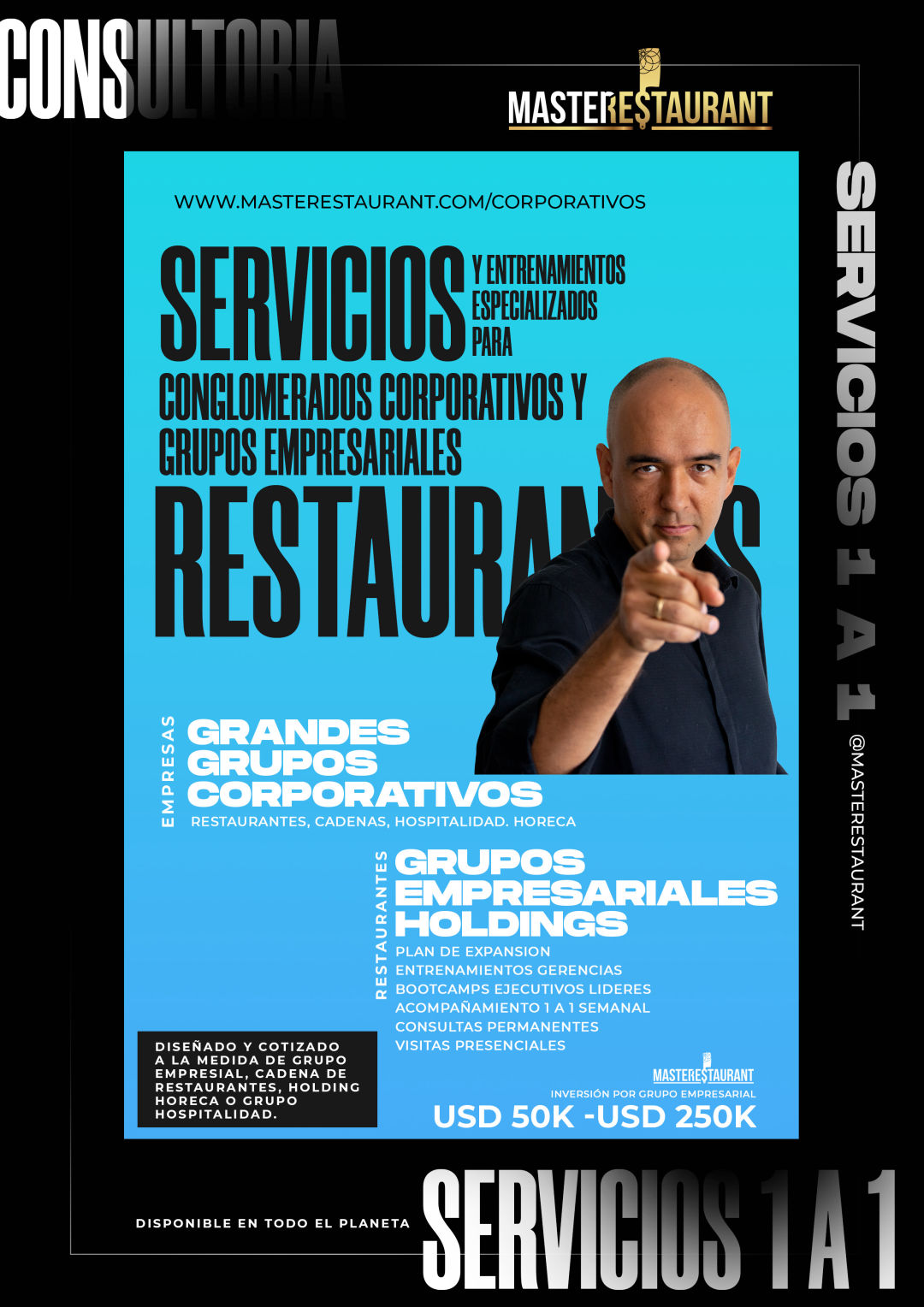
Private programs for groups and family offices
Training, consulting, executive bootcamps and private advisory for restaurant groups, holdings and investor families with themed restaurants.
Starting at USD $50K · tailor made, custom quoted · limited spots worldwide
Published doctrine
The books that changed restaurant management
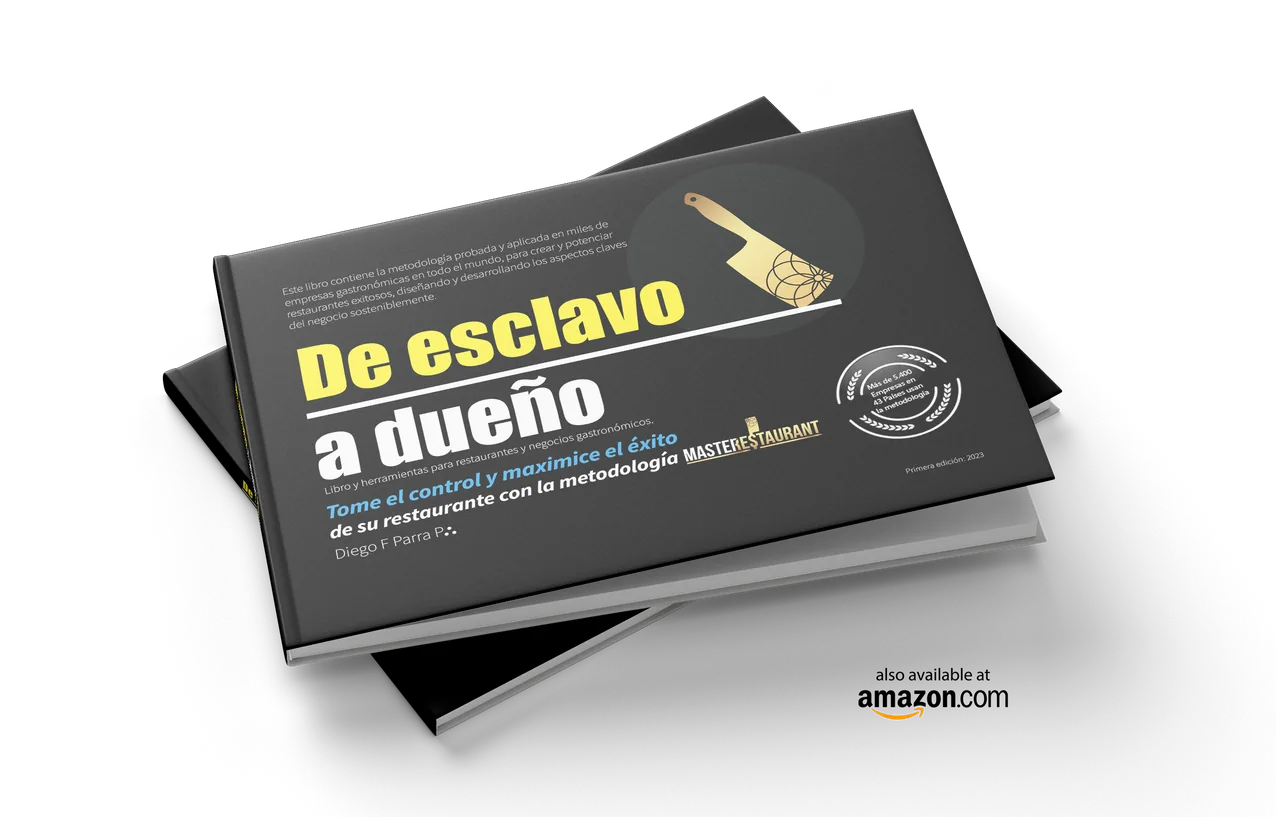
De Esclavo a Dueño
The book that changed how restaurants are managed: practical strategies and tools based on more than 20 years of experience, for traditional restaurants, dark kitchens, foodtech and HORECA businesses.
Triunfar o Morir en el Intento
Practical tools and key strategies to design and operate restaurants and food businesses efficiently.
Podcast: Masterestaurant — Mistakes for Restaurants
The public autopsy of the mistakes that bankrupt restaurants: thousands of owners and managers listen on Spotify to avoid repeating them. Condensed operating doctrine, free and direct.
Listen on SpotifyDownloads
The documents your management will ask for
MASTERESTAURANT® services portfolio
The complete intervention catalog: consulting, training, advisory and specialized services, with scopes and formats. The document to decide with your team.
Download PDFBook: From Slave to Owner
The full doctrine behind the methodology: how to structure a restaurant that runs without depending on the owner. Ideal pre-reading before your project's diagnosis.
View on AmazonPortfolio
More services by Diego F. Parra and his team
Beyond themed restaurant consulting, Diego F. Parra and his team offer keynotes, mentoring for owners, consulting for groups, training, programs, a membership and an interactive training kit. Everything starts from the same method and the same tools, so once the concept works, the dining-room team can train with that kit, partners can prepare the investment with the Pitch Deck service and the group can take the concept to new sites with the same criteria. The full ecosystem is available:
International keynote speakerOne-on-one consulting and advisoryPersonalized mentoring for owners (limited spots)Corporate groups and holdings consultingCelebrity Restaurants consultingThemed restaurant advisorySpecialized training programs52-Week membershipPitch deck and restaurant investment readinessExponential Program0.1 Program — Elevate Your RestaurantInteractive training kit
From template to results
Want this working every day in your restaurant?
The tool gives you the template. The program gives you the method and the guidance to use it every week, with your team.
Direct contact
Get a quote for themed restaurant consulting for your project across Japan
Your message goes straight to Diego's team: concept, project stage, city and what you need to achieve across Japan.

“A themed restaurant doesn't fail because of its décor; it fails when the operator confuses experience with business. I've seen it: strong scenery, weak method. The model comes first; the theme is the form that model takes.”
Diego F. Parra — International consultant, expert in creating, scaling and improving restaurants, HORECA and hospitality
MASTERESTAURANT® methodology applied by 8,400+ restaurants across 43 countries · Author of 3 ISBN-registered books, including «De esclavo a dueño» · 20+ years operating restaurants, franchises, dark kitchens and HORECA groups across 4 continents
Full profile →The next step for your concept restaurant across Japan
Send the concept, its stage and your numbers for a tailored proposal.
Explore more
Themed restaurants: territories, services and ecosystem resources
Useful links for concept founders, restaurant groups, hotels, brands and investors weighing themed restaurant consulting before they decide. They cover nearby territories where the service is published, sister services in the MASTERESTAURANT ecosystem, Diego F. Parra's professional profile and the management tools the methodology works with.
World's best restaurant keynote speakerWorld's best restaurant consultantC-Suite restaurant consultant for chains & groupsDiego F. Parra — professional profileKeynote speaker serviceCorporate groups & holdings consultingCelebrity restaurant consultingInternational themed restaurant advisoryThemed restaurant consultant in JapanThemed restaurant consulting in KawasakiThemed dining expert in KyotoConcept restaurants in OsakaThemed restaurant consulting in TokyoThemed dining expert in Yokohama
FAQ
Frequently asked questions
How do I prevent theming from becoming a cost that destroys margins instead of a business differentiator?
Theming must be funded by higher ticket average or faster table rotation, not thinner margins. The work is translating experience into menu engineering: which dishes generate reliable profitability, what is your beverage play that sustains EBITDA, where does your true profit line sit. Décor is designed once; numbers are daily.
A themed restaurant in Toda might succeed the first months on curiosity. How do I build real repeat visits instead of just one-off trial traffic?
Repeat builds from coherence and clear reasons to dine. If your restaurant solves 'family dinner in an environment that surprises children without sacrificing food quality' or 'an experience my friends haven't found elsewhere in the area,' the diner returns every six weeks. Customer journey defines when he comes back; menu and operations define whether it can be delivered the same way each time.
How does the tailor-made 1-on-1 consulting for themed restaurants work?
It starts with a strategic diagnosis of the project and the concept. Based on it, the themed restaurant's business model is designed —concept, value proposition, menu, experience, costs and operation—and implementation and expansion are supported.
Is the confidentiality of the concept and intellectual property protected?
Yes. The whole process operates under confidentiality agreements (NDA). The concept, brand and intellectual property of the project are and remain the client's. Limited spots worldwide exist to guarantee dedication and focus on each project.
How long does it take and what are the phases?
It depends on scope: diagnosis, business-model design, implementation and support during operation and expansion. Building a profitable themed restaurant is a process with method, not an event.
What is the investment?
The 1-on-1 consulting ranges from USD $35K to USD $250K and is priced to the scope of each project and concept. Private programs for restaurant groups and chains are quoted separately.
Do you serve new projects and themed restaurants already operating?
Both: creation from scratch —concept, business model and opening—and growth of existing themed restaurants seeking to improve profitability, standardize operations and scale the concept to new locations or franchise.
