 MASTERESTAURANT®
Total population of Denmark as of January 1, 2026
Statistics Denmark / Danmarks StatistikConcept and margin · All Denmark
Diego F. Parra · CREATOR OF THE MASTERESTAURANT® METHODOLOGY
THEMED RESTAURANT ADVISORYWho audits the business model of a concept restaurant across Denmark before the second one opens?
Diego F. Parra works across Denmark with brands, groups and founders who want to bring a concept to the table using the MASTERESTAURANT methodology: model, menu, operation and expansion, in that order.
Download the portfolio (PDF)Limited advisory spots worldwide — reserve your evaluation early
8,400+restaurants apply his methodology
43countries with supported projects
65M+views per year
2service languages: EN · ES
International validationSee Diego F. Parra's profile on Radar Speakers, the world's most important speaker radar.See profile on Radar Speakers →
6,025,603 inhabitants 70% DKK 81.8 billion 57.4%
@masterestaurant
Why themed restaurant projects across Denmark hire him
In recent years themed and concept restaurants have become one of the fastest-growing categories: customers look for memorable experiences and pay to live them. The opportunity is real — and so is the risk of investing in decor and ambiance without a business model that guarantees profitability.
This service exists to close that gap: 1-on-1 tailor-made consulting, workshops, bootcamps and private advisory with the MASTERESTAURANT methodology and its TOOLKIT, applied in 8,400+ restaurants across 43 countries. You bring the concept; we bring the system that makes it profitable, standardized and scalable.
How does themed restaurant consulting work in Denmark?
First it confirms the concept leaves a margin in Denmark; only then does the budget go into ambiance. The consulting starts from a strategic diagnosis and turns the project into a business model that repeats the experience without improvising.
Each project moves through the same stages, sized to it: diagnosis, business-model design with the key elements of the Restaurant Canvas, opening readiness, implementation and expansion. It covers the immersive experience, the menu and its profitability, cost structure, processes and leadership, plus partner and investor management as the concept scales. It serves concept founders, groups and chains, hotels and tourism developments, brands and investors.
The concept and its intellectual property remain the client's, and the work runs on site or virtually, in English or Spanish. As a starting point, this page gathers four verified reference figures from sources such as Statistics Denmark and HORESTA.
What do the numbers say about the market for a themed restaurant in Denmark?
6,025,603 inhabitants — total population of Denmark as of January 1, 2026, according to Statistics Denmark. Reference figures describe the setting a concept competes in; they do not say whether a themed experience will still leave a margin after opening.
For a themed restaurant, the data informs one concrete decision: how much can go into ambiance before the model stops working. Other reference points cited on this page: DKK 81.8 billion (hotel and restaurant sector revenue, HORESTA); 70% (Prime-cost overspend in 70% of restaurants, Masterestaurant); 57.4% (US accommodation and food service establishments still open five years after opening, 2019 cohort, the U.S. Bureau of Labor Statistics).
In Denmark, each figure is read alongside average check, menu engineering and Prime Cost before spending on decor, because novelty brings the first visit and margin decides whether there is a second one.
Data
Reference figures for a themed restaurant in Denmark
The figures cited on this page, with what each one measures and its source.
| Figure | What it measures | Source |
|---|---|---|
| 6,025,603 inhabitants | Total population of Denmark as of January 1, 2026 | Statistics Denmark / Danmarks Statistik |
| 70% | Prime-cost overspend in 70% of restaurants | Masterestaurant - Indice de Prime Cost 2026 |
| DKK 81.8 billion | hotel and restaurant sector revenue | HORESTA |
| 57.4% | US accommodation and food service establishments still open five years after opening (2019 cohort) | U.S. Bureau of Labor Statistics |
Each figure links to its source in the data cards on this page.
The local market
How the concept market behaves across Denmark
A themed restaurant or immersive experiential concept attracts investment because the idea connects: a clear narrative, impactful design, an atmosphere that tells a story. The first months generate traffic out of curiosity.
But when novelty wears off—and it wears fast in competitive markets like this one—real problems surface: average ticket price doesn't climb because menu engineering isn't aligned with the model; repeat visits collapse because the experience is incoherent (the design promises one thing, service delivers another); operating costs spike because aesthetics weren't designed for scalable processes; margins suffocate.
Too many projects throw budget at the visible—architecture, lighting, branded assets—and leave a void in the invisible structure that sustains a business: why the diner returns, when they consume, what makes them recommend it, whether the model finances its own expansion. Thematic coherence isn't the business; it's the dressing on one. And a dressing without engineering underneath is an expense.
What this engagement delivers is the inverse investment: taking that thematic idea and converting it into an organized gastronomic enterprise. That means building a coherent business model—who is your customer, when do they consume, what's your expected ticket, how does the experience fund real operational margin. It means decoding your concept into a measurable value proposition, not a sentimental one.
It means designing the experience and environment from operations backward: what can you sustain, serve, and standardize without cracking the narrative. It means financial modeling—Prime Cost, EBITDA, unit economics—so you know before you invest whether the project survives year one. The MASTERESTAURANT methodology does this through the Restaurant Model Canvas, a diagnostic and design instrument that integrates strategy, concept development, menu engineering, operations, and corporate governance. It isn't decoration; it's enterprise architecture dressed in thematics.
Diego has worked with over 8,400 restaurants across 43 countries. That means seeing a themed restaurant fail in Jakarta the same way one fails in Stockholm: when operational complexity exceeds coverage capacity, or the menu looks good but can't execute in those kitchen conditions, or the model doesn't scale because it depends on one person. It also means knowing what works in this specific market.
Project risk drops radically when there's a prior diagnosis from someone who can predict where the chain breaks. It isn't opinion; it's applied experience.
Return starts with genuine differentiation: a themed restaurant with a solid model doesn't compete on price or location, it competes on relevance. Value proposition is clear and stands up in daily operations. That drives real repeat business—not one-time visitors, but people who return and bring others. Second, experience becomes replicable. When you standardize without destroying narrative, you can open new locations, license the concept, even sell it.
A founder tied to day-to-day operations because no one else understands the formula doesn't have a scalable asset; they have a demanding job. With robust, documented operations, you have a business that can grow across multiple units or models. Third, your brand equity and investor appeal climb exponentially when you demonstrate the experience generates solid, repeatable margins. It's not philosophy; it's what gives a themed restaurant options for its future.
Market data
The real size of the opportunity across Denmark
Prime-cost overspend in 70% of restaurants
Masterestaurant - Prime Cost Index 2026hotel and restaurant sector revenue
HORESTAUS accommodation and food service establishments still open five years after opening (2019 cohort)
U.S. Bureau of Labor StatisticsAll Denmark as a destination
What makes All Denmark a place for concepts
The country has a particularly ordered gastronomic and entertainment ecosystem. Copenhagen concentrates the heaviest tourism and is recognized for its culinary movement of quality—New Nordic, Michelin stars—that sets a high execution standard for any concept, themed or otherwise. But there's also a strong family tourism market at points like amusement parks (Legoland in Billund is a hub for families across Europe), resort hotels, and shopping centers offering gastronomic experiences.
Aarhus and Odense are growing as secondary destinations with entertainment offerings. The local audience has particular traits: educated in service quality, skeptical of pure decoration, but highly receptive to well-integrated experiences combining narrative, gastronomy, and coherent atmosphere. Seasons matter; winter is long and heavy, making closed spaces with experiential offerings more attractive in those months. Tourism here also includes business travelers and corporate groups seeking differentiated dining experiences for events and team building, not just leisure.
A themed or experiential restaurant works here when the narrative is genuine and execution is flawless. It works for experience-driven tourism, corporate groups, consumers unafraid to pay for a complete journey (not just food, but atmosphere and narrative).
Risk lies in several things we see repeat: themed concepts that lean into kitsch in a market where audiences are sophisticated; decorations requiring constant maintenance that inflate costs without margin; incoherent experiences where atmosphere misaligns with what the menu promises or service delivers; underestimating the operational cost of maintaining complex narrative to high standards. A frequent error is assuming that because decoration is expensive, experience is premium; that doesn't work here. The audience distrusts purely visual content without substance.
What does work is depth—respects the culture or narrative it represents, integrates gastronomy as central to the story, maintains consistent service quality. And that demands designed operations, not just budget.
RESOURCES
MASTERESTAURANT studies, guides & tools
MASTERESTAURANT original research, tools and analysis you can apply to operations across Denmark:
- STUDYInconsistency between locations: 2026 benchmarks with excellent, acceptable and critical ranges
- CASE STUDYArtificial intelligence applied to business model in restaurants: myth vs reality 2026
- STUDYRestaurant market research: mistakes vs the right method · Data
- CHECKLISTMarket study for bakery in restaurants: myth vs reality 2026
- GUIDERestaurant value proposition: traditional method
- ARTICLECustomer Experience in Restaurants 2026: Common Mistakes
The themed consultant
The authority behind every profitable restaurant
Behind MASTERESTAURANT's themed restaurant consulting is Diego F. Parra: engineer and C-Suite consultant with two decades creating, rescuing and expanding restaurants, franchises, dark kitchens and HORECA and hospitality groups across four continents. He doesn't arrive with theory: he arrives with the experience of having signed payrolls, negotiated leases, structured partnerships and closed expansions in operations worth hundreds of millions of dollars.
He is the creator of the MASTERESTAURANT® methodology — applied by 8,400+ restaurants across 43 countries — and its TOOLKIT of tools (MTIE, Gastronomic Radar, Standard Recipe Generator, Tech Sheets and KPI Dashboard). For a brand, a group or an investor that means one thing: every decision is made on proven data and systems, not on intuition.
Author of 3 ISBN-registered books, including «De esclavo a dueño», creator of the industry's leading podcast and of the largest bilingual community of owners, chefs and operations directors in the region (65M+ views per year as @masterestaurant), and recognized among the top Latino restaurant operations experts globally. See his full track record in Diego F. Parra's professional profile.
Themed restaurant consulting with its own doctrine, not generic recipes
Themed restaurant consulting is not improvised. Every engagement is built on the Restaurant Model Canvas and real industry data — profitability, Prime Cost, cost structure, customer experience and expansion — applied to the specific business model of a themed restaurant. The goal is not a venue for the opening-night photo, but a food business that protects the concept, generates profit and can scale to new locations, licenses or franchises when the model is ready.
That is why the work is organized on four fronts —diagnosis and business model; concept, menu and themed experience; structure, costs and operation; expansion, franchise and new locations— so the concept still holds up when it is no longer new.
Themed restaurant consulting from start to finish
Advisory that covers the full themed restaurant lifecycle
Diagnosis and business model
Specialist diagnosis of the project and model design with the Restaurant Canvas: value proposition, consumption moment and profitability structure.
Quote my diagnosisConcept, menu and themed experience
From the storytelling of the concept to menu engineering and the design of the immersive experience customers pay to repeat.
Quote the conceptStructure, costs and operation
Prime Cost, financial management, standardization and teams: the restaurant runs on method and system, not on improvisation.
Quote the operationExpansion, franchise and new locations
Expansion challenges, launches, franchise and partner and investor management to scale the concept without diluting it.
See the services portfolio (PDF)The methodology
Discover the MASTERESTAURANT methodology
What holds a concept up is a system, not a flash of inspiration: tools, processes and models you can audit.
Who is it for?
Who sits on the other side of this consulting
Tailor-made 1-on-1 support, for new projects and for operations already running:
Entrepreneurs and concept creators
Your concept can be excellent and still make no margin. Here both are designed at once: the brand and the model that pays for it.
Restaurant groups and chains
One more concept in the portfolio only makes sense if it is born structured: method, partner management and financial control.
Hotels and tourism developments
Storytelling, menu and operation aligned so the themed restaurant becomes a reason to visit rather than one more amenity.
Brands, IP and franchises
Between the logo and the dining room there is a gap only standardization crosses: processes and teams ready to repeat the concept.
Investors and family offices
Capital with methodology: a profitable, scalable food concept, without paying the beginner's curve in person.
What's included
Key topics and elements your engagement can include
These are the MASTERESTAURANT methodology modules your tailor-made programme is built from:
- The business model that makes a good concept pay as well
- Strategic diagnosis of the project, the concept and the brand
- Brand architecture and the story of the themed restaurant
- Menu engineering and an experience that repeats, not one that gets visited once
- Costs and Prime Cost: the margin decided at design, not at month-end
- An orderly operation and standardization that holds the margin
- The 10 elements of the Restaurant Canvas, applied to your case
- Processes, teams and leadership so the business doesn't depend on the founder
- Expansion plan: new locations, licenses and franchise
- Partners and investors managed without diluting the brand
- Executive bootcamps and training for the leadership team
- 1-on-1 work, open consultations and on-site visits
- Opening readiness, which is where reputation is decided
Investment: USD $35K – $250K · tailor-made, priced to each company · spots LIMITED worldwide to guarantee the best service.
Themed packages
Tailor-made themed restaurant consulting packages
Every themed restaurant engagement is 100% personalized and tailor-made to the project and the brand. After a strategic diagnosis, it works through the 10 key elements of the business model in the MASTERESTAURANT Restaurant Canvas — from value proposition and concept to profitability, standardization and expansion. Depending on the case, the package adds menu engineering, Prime Cost and cost structure, partner and investor management, executive bootcamps for the management team, ongoing consultations with visits to the venue and opening readiness.
The quote starts from the concept, where the project stands and the numbers already on the table. Priced to each project's scope (USD $35K – $250K), with limited spots worldwide to ensure dedicated attention and discretion for each client.
Themed coverage
Concept consulting around All Denmark
Explore themed restaurant consulting in other territories, or go back to the worldwide index on the themed restaurants worldwide page:
Concept restaurants in AalborgThemed restaurants in AarhusConcept restaurants in CopenhagenThemed restaurant consulting in DenmarkThemed restaurant consulting in OdenseThemed restaurants across BrazilThemed restaurants in AustraliaThemed restaurant consulting in IsraelThemed restaurant consulting in South AfricaThemed restaurant consulting in AlicanteConcept restaurants across FranceThemed dining expert across SpainThemed restaurant advisory across the United KingdomConcept restaurants in AmsterdamConcept restaurants in AustriaThemed restaurant consultant in BarcelonaThemed restaurant consultant in BelgiumThemed restaurant consultant in BerlinThemed restaurant consultant in BirminghamThemed dining expert in BrusselsThemed dining expert in CannesThemed dining expert in CórdobaThemed restaurants in EdinburghThemed restaurants in FranceMore countries →More cities →
We do serve — and every city on the planet
Available on site or virtually, in English and Spanish.
Who is Diego F. Parra?
Diego F. Parra is an engineer and C-Suite consultant, creator of the MASTERESTAURANT® methodology —applied by 8,400+ restaurants across 43 countries— and author of 3 ISBN-registered books.
He is the consultant that brands and concepts, athletes, artists and investors choose to turn their brand into a profitable, standardized themed restaurant ready to expand. He has spent two decades creating, rescuing and expanding restaurants, franchises, dark kitchens and HORECA groups across four continents, and he works with his own tools: MTIE, Gastronomic Radar and KPI Dashboard.
For a themed restaurant, that means the concept is designed as a system —tech sheets, costing, processes and KPIs— so it can be repeated in new locations, licenses or franchises without being diluted.
HORECA · Chains · Holdings · Foodtech
Private programs for groups and family offices
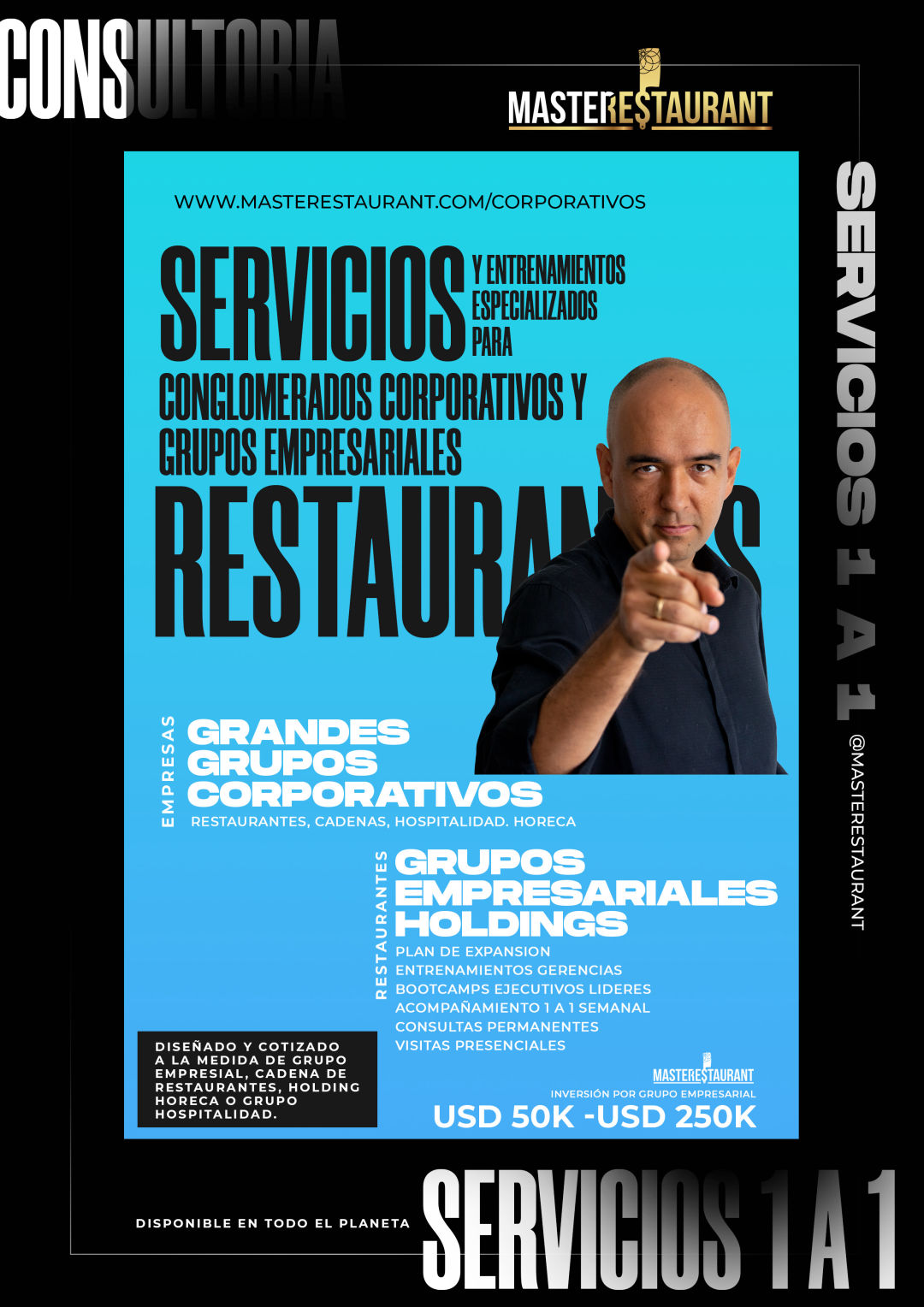
Training, consulting, executive bootcamps and private advisory for restaurant groups, holdings and investor families with themed restaurants.
Starting at USD $50K · tailor made, custom quoted · limited spots worldwide
Published doctrine
The books that changed restaurant management
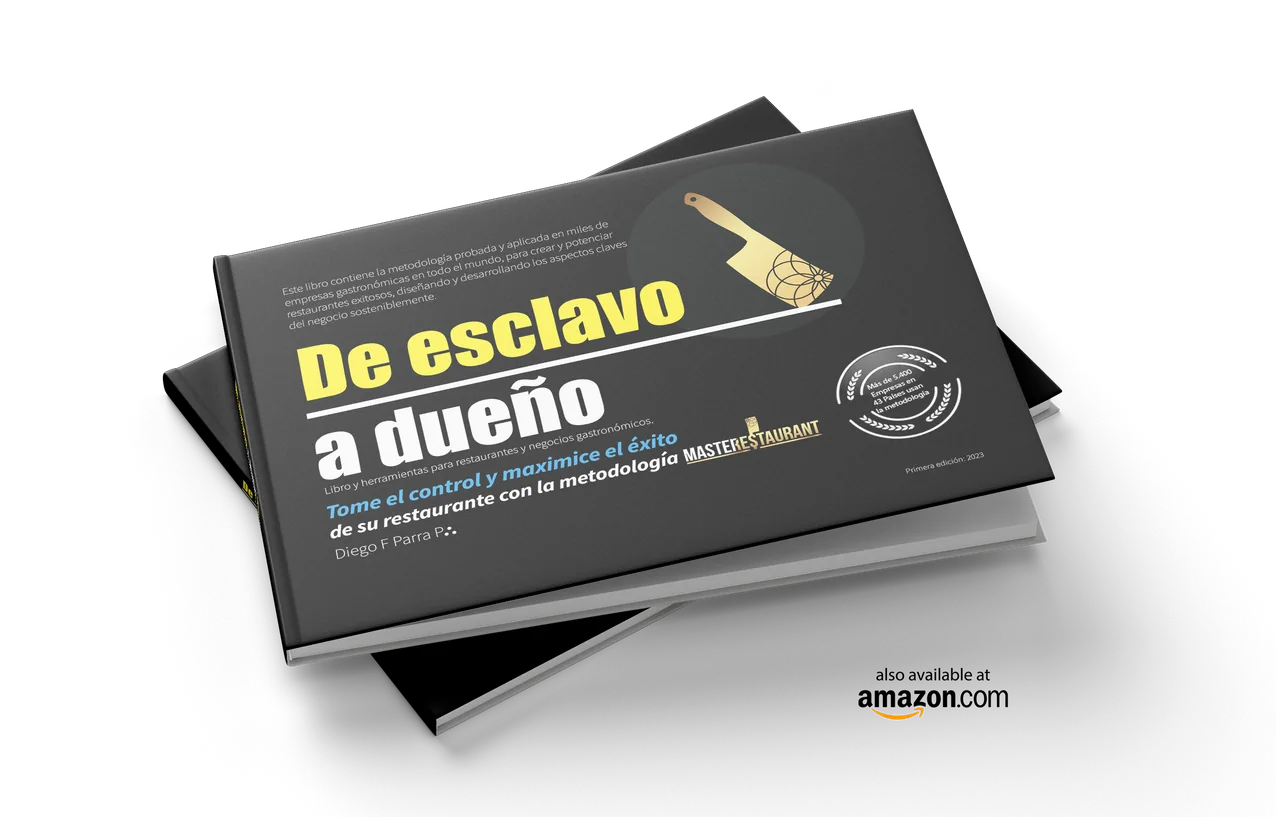
De Esclavo a Dueño
The book that changed how restaurants are managed: practical strategies and tools based on more than 20 years of experience, for traditional restaurants, dark kitchens, foodtech and HORECA businesses.
Triunfar o Morir en el Intento
Practical tools and key strategies to design and operate restaurants and food businesses efficiently.
Podcast: Masterestaurant — Mistakes for Restaurants
The public autopsy of the mistakes that bankrupt restaurants: thousands of owners and managers listen on Spotify to avoid repeating them. Condensed operating doctrine, free and direct.
Listen on SpotifyDownloads
The documents your management will ask for
MASTERESTAURANT® services portfolio
The complete intervention catalog: consulting, training, advisory and specialized services, with scopes and formats. The document to decide with your team.
Download PDFBook: From Slave to Owner
The full doctrine behind the methodology: how to structure a restaurant that runs without depending on the owner. Ideal pre-reading before your project's diagnosis.
View on AmazonPortfolio
More services by Diego F. Parra and his team
Beyond themed restaurant consulting, Diego F. Parra and his team offer keynotes, mentoring for owners, consulting for groups, training, programs, a membership and an interactive training kit. Everything starts from the same method and the same tools, so once the concept works, the dining-room team can train with that kit, partners can prepare the investment with the Pitch Deck service and the group can take the concept to new sites with the same criteria. The full ecosystem is available:
International keynote speakerOne-on-one consulting and advisoryPersonalized mentoring for owners (limited spots)Corporate groups and holdings consultingCelebrity Restaurants consultingThemed restaurant advisorySpecialized training programs52-Week membershipPitch deck and restaurant investment readinessExponential Program0.1 Program — Elevate Your RestaurantInteractive training kit
From template to results
Want this working every day in your restaurant?
The tool gives you the template. The program gives you the method and the guidance to use it every week, with your team.
Direct contact
Get a quote for themed restaurant consulting for your project across Denmark
Your message goes straight to Diego's team: concept, project stage, city and what you need to achieve across Denmark.

“A themed restaurant fails when it's an investment in decoration posing as a business, not when it's a business that uses thematics as its language. The difference is a model; everything else is expense.”
Diego F. Parra — International consultant, expert in creating, scaling and improving restaurants, HORECA and hospitality
MASTERESTAURANT® methodology applied by 8,400+ restaurants across 43 countries · Author of 3 ISBN-registered books, including «De esclavo a dueño» · 20+ years operating restaurants, franchises, dark kitchens and HORECA groups across 4 continents
Full profile →Bring the business model up to the level of your concept across Denmark
Send the concept, its stage and your numbers for a tailored proposal.
Explore more
Themed restaurants: territories, services and ecosystem resources
Useful links for concept founders, restaurant groups, hotels, brands and investors weighing themed restaurant consulting before they decide. They cover nearby territories where the service is published, sister services in the MASTERESTAURANT ecosystem, Diego F. Parra's professional profile and the management tools the methodology works with.
World's best restaurant keynote speakerWorld's best restaurant consultantC-Suite restaurant consultant for chains & groupsDiego F. Parra — professional profileKeynote speaker serviceCorporate groups & holdings consultingCelebrity restaurant consultingInternational themed restaurant advisoryConcept restaurants in AalborgThemed restaurants in AarhusConcept restaurants in CopenhagenThemed restaurant consulting in DenmarkThemed restaurant consulting in OdenseThemed restaurant consulting in Alicante
FAQ
Frequently asked questions
Who is the best themed restaurant consultant in Denmark?
The one who starts from the business model, not the decor. Diego F. Parra of MASTERESTAURANT advises tailor-made in Denmark, with more than 20 years in the industry and a method applied in more than 8,400 restaurants in 43 countries.
We have a strong experiential concept in a saturated restaurant market. How do we ensure the thematics don't wear thin and the model holds for two or three years without falling occupancy?
Wear is inevitable; what you avoid is the trap of assuming novelty sustains business. Genuine repeat comes from the experience being inseparable from menu, service, and operations: a customer returns because the full journey is worth what they pay, not because they want to see the decor again. Second, menu engineering must rotate—not the thematics, but preparations, flavors, gastronomic proposition—to maintain freshness without destroying narrative.
Third, the metric that matters is occupancy by customer type: tourism vs. local, groups vs. individual, dining vs. corporate events. If it depends on just one, it's fragile.
We want to replicate the concept in other European cities. Does the engagement also cover how to scale without diluting the model and how to adapt the experience to different cultures?
Scalability requires knowing exactly what's core in your model—what non-negotiable—and what's contextual and adapts. This market has a clear service proposition; when you take that to a city with different audiences, numbers change: average ticket, occupancy, operating cost, even menu. Diego builds that replicability matrix. It's not 'we take everything the same'; it's 'this works independent of city, this adjusts by market.' That saves costly failures and speeds learning across locations.
How does the tailor-made 1-on-1 consulting for themed restaurants work?
It starts with a strategic diagnosis of the project and the concept. Based on it, the themed restaurant's business model is designed —concept, value proposition, menu, experience, costs and operation—and implementation and expansion are supported.
Is the confidentiality of the concept and intellectual property protected?
Yes. The whole process operates under confidentiality agreements (NDA). The concept, brand and intellectual property of the project are and remain the client's. Limited spots worldwide exist to guarantee dedication and focus on each project.
How long does it take and what are the phases?
It depends on scope: diagnosis, business-model design, implementation and support during operation and expansion. Building a profitable themed restaurant is a process with method, not an event.
What is the investment?
The 1-on-1 consulting ranges from USD $35K to USD $250K and is priced to the scope of each project and concept. Private programs for restaurant groups and chains are quoted separately.
Do you serve new projects and themed restaurants already operating?
Both: creation from scratch —concept, business model and opening—and growth of existing themed restaurants seeking to improve profitability, standardize operations and scale the concept to new locations or franchise.
