DIEGO F PARRA · CREATOR OF THE MASTERESTAURANT® METHODOLOGY
EXPERIENTIAL DINING EXPERTWho is the most sought-after expert in creating, growing and making themed and concept restaurants profitable in Berlin?
If you want to create or grow a themed or concept restaurant in Berlin, Diego F. Parra brings the MASTERESTAURANT methodology to your project: concept, business model, operation and expansion.
In recent years themed and concept restaurants have become one of the fastest-growing categories: customers look for memorable experiences and pay to live them. The opportunity is real — and so is the risk of investing in decor and ambiance without a business model that guarantees profitability.
This service exists to close that gap: 1-on-1 tailor-made consulting, workshops, bootcamps and private advisory with the MASTERESTAURANT methodology and its TOOLKIT, applied in 8,400+ restaurants across 43 countries. You bring the concept; we bring the system that makes it profitable, standardized and scalable.
How does themed restaurant consulting work in Berlin?
The work starts with the model, not the decor: a strategic diagnosis in Berlin shows where the project stands and where the money goes, then the business is designed to hold the concept once the novelty passes.
The goal is a concept that can be repeated without losing quality or margin. To get there, the engagement works on concept, brand and storytelling written for the dining room, menu engineering, Prime Cost, standardization you can audit, and processes and teams that run without the owner in the room. Once the model is proven, it sets the order of expansion into new locations, licenses or franchises. The work is confidential and runs on site or virtually, in English or Spanish. As a starting point, this page gathers four verified reference figures from Destatis.
What do the numbers say about the market for a themed restaurant in Berlin?
+0.2% — German GDP growth, according to Destatis. Reference figures describe the setting a concept competes in; they do not say whether a themed experience will still leave a margin after opening.
For a themed restaurant, the data informs one concrete decision: how much can go into ambiance before the model stops working. Other reference points cited on this page: +3.3% (year-on-year increase in tourist overnight stays in February, Destatis); -2.0% (real decline in accommodation, Beherbergung revenue vs 2024, Destatis); 83.8 million (overnight stays by foreign guests in Germany, Destatis). In Berlin, each figure is read alongside average check, menu engineering and Prime Cost before spending on decor, because novelty brings the first visit and margin decides whether there is a second one.
Data
Reference figures for a themed restaurant in Berlin
The figures cited on this page, with what each one measures and its source.
Figure
What it measures
Source
+0.2%
German GDP growth
Destatis
+3.3%
year-on-year increase in tourist overnight stays in February
Destatis
-2.0%
real decline in accommodation (Beherbergung) revenue vs 2024
Destatis
83.8 million
overnight stays by foreign guests in Germany
Destatis
Each figure links to its source in the data cards on this page.
The local market
Berlin: the market context your project must master
Many entrepreneurs and restaurant groups launching a themed or experiential concept in Berlin invest heavily in architecture, décor, and storytelling—expecting that ambiance alone will drive profitability. The reality is that theme and design attract initial traffic, but they do not guarantee sustained ticket averages, repeat frequency, or an operating model that withstands cost pressure. It is common to discover, too late, that the experience lacks coherence with the cuisine, that the menu does not work within hospitality margins, that processes do not scale, or that the value proposition does not align with actual consumption reasons. A themed venue without business foundation is a high-rent gift shop: the first three months generate attention, but revenue and EBITDA stall. Specialized consulting fills that gap: it transforms decoration into integrated commercial strategy.
The consulting engagement Diego F. Parra provides converts a themed idea into a functioning restaurant business: from defining differentiated concept and storytelling to the operational, financial, and management engineering that sustains it. We work in parallel on the restaurant canvas (business model, value proposition, customer segmentation, channels, consumption reasons and moments), the customer experience (complete journey from expectation to loyalty), environment design coherent with that experience, menu engineering with COGS and margin targets by category, operating structure with delivery standards, cost architecture and EBITDA projections, and expansion strategy (additional locations, franchise or license models). All integrated in one proven methodology across 43 countries: not separate pieces, but a system where experiential concept reinforces profitability, not replaces it.
Diego F. Parra is an international consultant 100% specialized in restaurants and hospitality: creator of the MASTERESTAURANT® methodology applied by over 8,400 restaurants and food-service groups in 43 countries; author of 'From Slave to Owner'; generator of over 65 million annual views across his global community; architect of proprietary technology suite including the Restaurant Model Canvas, MTIE (revenue and tangibles model), Gastronomic Radar, Operational Fact Sheets, and Indicators Dashboard. That accumulated experience means identifying success and failure patterns in experiential concepts that a generalist consultant would never see. In Berlin, that translates to: avoiding hollow investments in theme without profitability, anticipating local market operational risks, positioning the experience restaurant to withstand competition, and building a differentiator that investors and franchisees perceive as a tangible asset, not a trend.
The concrete result of consulting is a themed or experience restaurant in Berlin that operates as a business: clear differentiation versus local competition, memorable experience that drives repeat frequency and higher ticket average, operational control that maintains consistent margins even with high ambiance costs, a management model that enables expansion (new locations, licenses, franchises) without losing brand coherence, and company value that attracts investors because the concept is profitable, not speculative. Moreover: the founder or CEO recovers operational independence—no longer trapped in 24/7 crisis resolution because the machine is designed, documented, and scalable. An immersive restaurant with those characteristics in Berlin becomes a strategic asset, not just another themed venue.
What makes Berlin attractive for a themed restaurant
Berlin is a dense and heterogeneous gastronomic market where an experiential concept thrives: districts like Kreuzberg, Prenzlauer Berg, and Friedrichshain concentrate restaurant density, bars, and entertainment spaces with differentiated audiences (millennials, tourists, professionals, families). Tourism in Berlin attracts millions of visitors annually, many seeking memorable experiences, not just meals; hotels, resorts, and entertainment complexes (cinemas, theaters, entertainment venues) generate constant demand for differentiated gastronomic services. The city hosts conventions, corporate meetings, and industry events that create demand for themed dining spaces and private experiences. Berliners are cosmopolitan, cultured, and demanding: they have travel experience, know international standards, and value authenticity over simulation. Berlin's historical and cultural heritage (Wall, German history, architecture, contemporary art movements) offers genuine inspiration for themes that do not feel forced or dated.
In Berlin, a themed or immersive restaurant succeeds when the experience is coherent with cuisine and operations: success in concepts that evolve (not date), where décor amplifies value proposition without compromising operational margins, and where storytelling connects to actual consumption reasons (celebration, corporate gathering, tourist seeking history). The major risk is investing heavily in décor while neglecting business model: themes that generate initial enthusiasm but date within 18–24 months, incoherent experiences (immersive ambiance but generic food or disconnected pricing), operational costs too high to spread across ticket average, and décor so literal it attracts curiosity once. The Berlin diner expects: memorable experience with internal coherence, clear value proposition, cuisine congruent with concept, flawless operations, and a ticket that justifies the experience relative to verifiable alternatives.
RESOURCES
MASTERESTAURANT studies, guides & tools
Curated resources for the Berlin restaurant ecosystem: proprietary evidence, comparisons and practical tools:
Behind MASTERESTAURANT's themed restaurant consulting is Diego F Parra: engineer and C-Suite consultant with two decades creating, rescuing and expanding restaurants, franchises, dark kitchens and HORECA and hospitality groups across four continents. He doesn't arrive with theory: he arrives with the experience of having signed payrolls, negotiated leases, structured partnerships and closed expansions in operations worth hundreds of millions of dollars.
He is the creator of the MASTERESTAURANT® methodology — applied by 8,400+ restaurants across 43 countries — and its TOOLKIT of tools (MTIE, Gastronomic Radar, Standard Recipe Generator, Tech Sheets and KPI Dashboard). For a brand, a group or an investor that means one thing: every decision is made on proven data and systems, not on intuition.
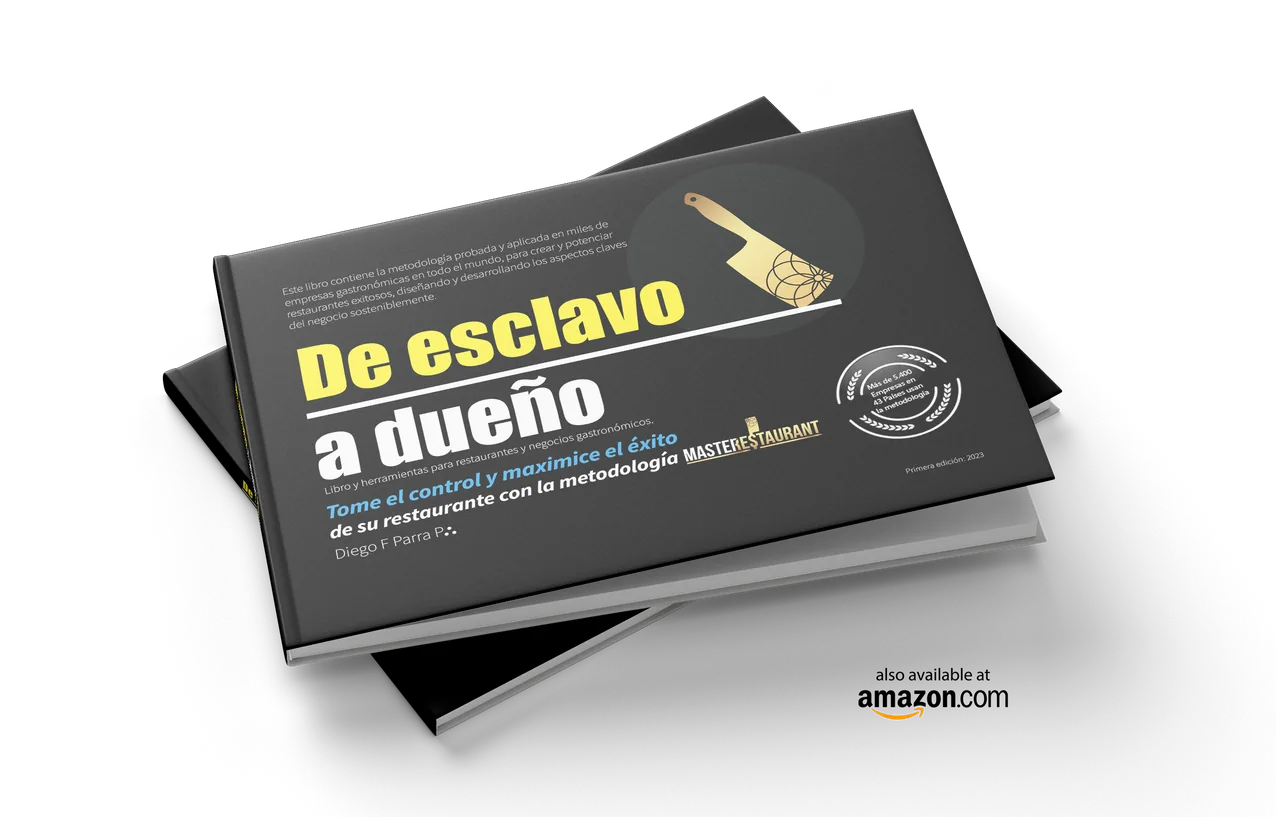
Author of 3 ISBN-registered books, including «De esclavo a dueño», creator of the industry's leading podcast and of the largest bilingual community of owners, chefs and operations directors in the region (65M+ views per year as @masterestaurant), and recognized among the top Latino restaurant operations experts globally. See his full track record in Diego F Parra's professional profile.
Themed restaurant consulting with its own doctrine, not generic recipes
Themed restaurant consulting is not improvised. Every engagement is built on the Restaurant Model Canvas and real industry data — profitability, Prime Cost, cost structure, customer experience and expansion — applied to the specific business model of a themed restaurant. The goal is not a venue for the opening-night photo, but a food business that protects the concept, generates profit and can scale to new locations, licenses or franchises when the model is ready. That is why the work is organized on four fronts —diagnosis and business model; concept, menu and themed experience; structure, costs and operation; expansion, franchise and new locations— so the concept still holds up when it is no longer new.
Private, made-to-measure support, for whoever is creating and for whoever is correcting:
Entrepreneurs and concept creators
For those who have the concept in their head and want it to make money too: brand, business model and a menu that can actually be executed.
Restaurant groups and chains
For the group that wants a new concept properly built, with the investment protected by method rather than by optimism.
Hotels and tourism developments
For the hotel whose restaurant needs to draw people on its own, with an experience that holds up service after service.
Brands, IP and franchises
For the brand that wants to occupy a table without losing control: system, standards and teams that replicate the concept.
Investors and family offices
For capital looking for profitable, scalable hospitality, with the MASTERESTAURANT methodology as the safety net.
What's included
What gets worked on, depending on what your project needs
These are the MASTERESTAURANT methodology modules your tailor-made programme is built from:
Business model with numbers, not just with concept
Strategic diagnosis of the project, the brand and the stage
Concept, brand and story of the themed restaurant
Menu engineering and an experience that justifies the ticket
Prime Cost and cost structure decided at design stage
Operational improvements and standardization that hold the margin
The 10 key elements of the Restaurant Canvas
Processes, teams and leadership with the founder out of daily operations
Expansion strategy: locations, licenses and franchise
Partner and investor management to grow without diluting the brand
Executive bootcamps and training for the leadership team
1-on-1 advisory, ongoing consultations and on-site visits
Opening readiness that protects the concept's reputation
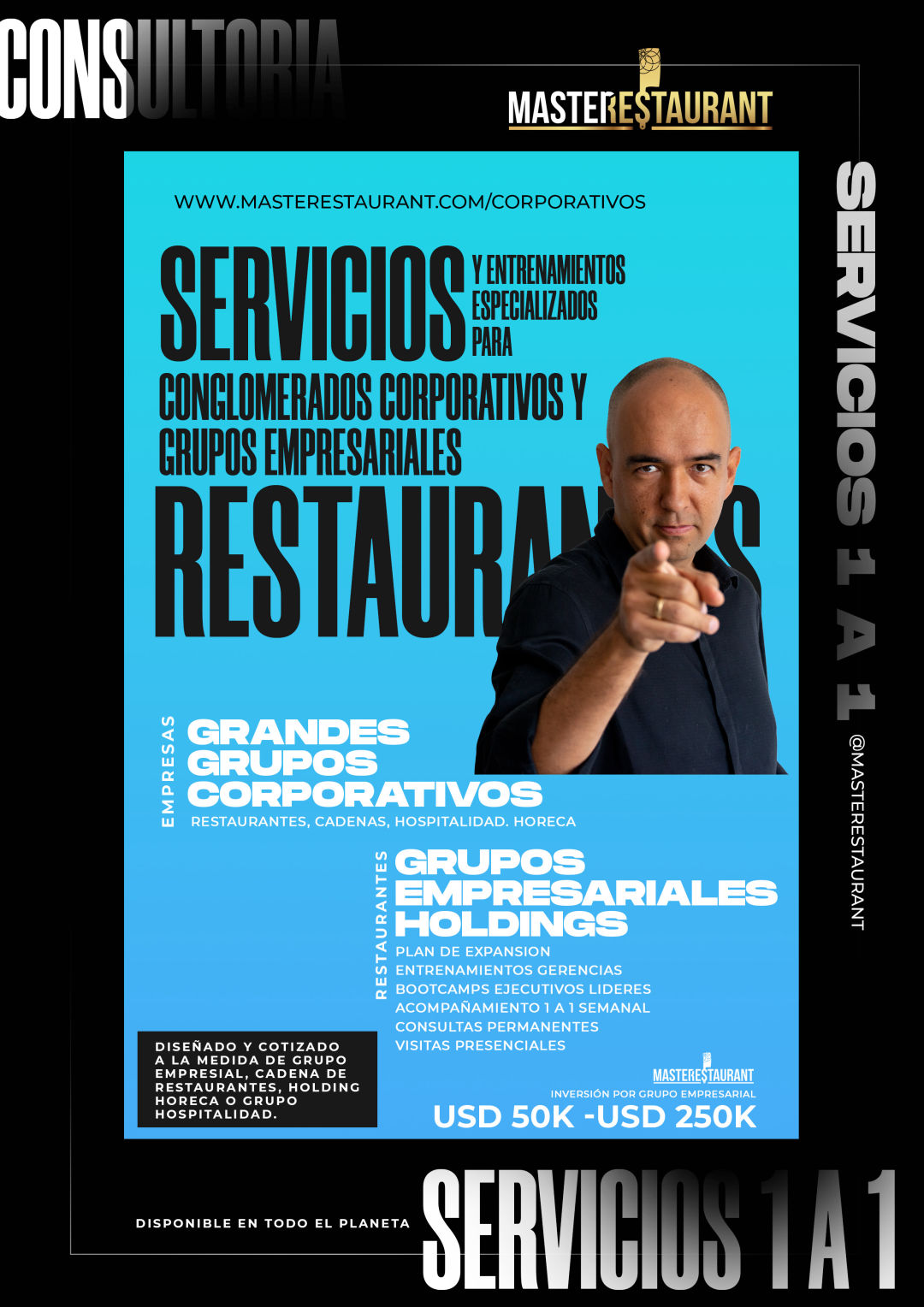
Investment: USD $35K – $250K · tailor-made, priced to each company · spots LIMITED worldwide to guarantee the best service.
Themed packages
Tailor-made themed restaurant consulting packages
Every themed restaurant engagement is 100% personalized and tailor-made to the project and the brand. After a strategic diagnosis, it works through the 10 key elements of the business model in the MASTERESTAURANT Restaurant Canvas — from value proposition and concept to profitability, standardization and expansion. Depending on the case, the package adds menu engineering, Prime Cost and cost structure, partner and investor management, executive bootcamps for the management team, ongoing consultations with visits to the venue and opening readiness. The quote starts from the concept, where the project stands and the numbers already on the table. Priced to each project's scope (USD $35K – $250K), with limited spots worldwide to ensure dedicated attention and discretion for each client.
Diego F Parra is an engineer and C-Suite consultant, creator of the MASTERESTAURANT® methodology —applied by 8,400+ restaurants across 43 countries— and author of 3 ISBN-registered books.
He is the consultant that brands and concepts, athletes, artists and investors choose to turn their brand into a profitable, standardized themed restaurant ready to expand. He has spent two decades creating, rescuing and expanding restaurants, franchises, dark kitchens and HORECA groups across four continents, and he works with his own tools: MTIE, Gastronomic Radar and KPI Dashboard. For a themed restaurant, that means the concept is designed as a system —tech sheets, costing, processes and KPIs— so it can be repeated in new locations, licenses or franchises without being diluted.
The book that changed how restaurants are managed: practical strategies and tools based on more than 20 years of experience, for traditional restaurants, dark kitchens, foodtech and HORECA businesses.
Triunfar o Morir en el Intento
Practical tools and key strategies to design and operate restaurants and food businesses efficiently.
Podcast: Masterestaurant — Mistakes for Restaurants
The public autopsy of the mistakes that bankrupt restaurants: thousands of owners and managers listen on Spotify to avoid repeating them. Condensed operating doctrine, free and direct.
The complete intervention catalog: consulting, training, advisory and specialized services, with scopes and formats. The document to decide with your team.
The full doctrine behind the methodology: how to structure a restaurant that runs without depending on the owner. Ideal pre-reading before your project's diagnosis.
Beyond themed restaurant consulting, Diego F Parra and his team offer keynotes, mentoring for owners, consulting for groups, training, programs, a membership and an interactive training kit. Everything starts from the same method and the same tools, so once the concept works, the dining-room team can train with that kit, partners can prepare the investment with the Pitch Deck service and the group can take the concept to new sites with the same criteria. The full ecosystem is available:
Get a quote for themed restaurant consulting for your project in Berlin
Your message goes straight to Diego's team: concept, project stage, city and what you need to achieve in Berlin.
“A themed restaurant fails when the owner believes decoration sells the experience. The reality is decoration is the set; what sells is a coherent business model that justifies the ticket, that scales in margin, that evolves without losing identity, and that creates recurring reasons to return. I have seen million-euro ambiance investments evaporate in 18 months because menu engineering was missing, because EBITDA was impossible, or because the experience did not align with actual consumption reasons. The MASTERESTAURANT methodology does not decorate: it builds restaurant businesses where theme amplifies profitability.”
Diego F. Parra — International consultant, expert in creating, scaling and improving restaurants, HORECA and hospitality
MASTERESTAURANT® methodology applied by 8,400+ restaurants across 43 countries · Author of 3 ISBN-registered books, including «De esclavo a dueño» · 20+ years operating restaurants, franchises, dark kitchens and HORECA groups across 4 continents
Themed restaurants: territories, services and ecosystem resources
Useful links for concept founders, restaurant groups, hotels, brands and investors weighing themed restaurant consulting before they decide. They cover nearby territories where the service is published, sister services in the MASTERESTAURANT ecosystem, Diego F Parra's professional profile and the management tools the methodology works with.
How do I ensure my themed concept doesn't become dated in two years and stops being profitable?
Experience cadence must be decoupled from fashion. We work in two layers: (1) storytelling and ambiance that evolve (not fixed in literal décor), (2) value proposition and consumption reasons that persist (celebration, meetings, tourism, family). A sustainable experience restaurant is not a static set; it is an experience that renews in depth while maintaining identity. Menu engineering, event curation, and service architecture adjust year by year without losing concept. International success cases show longevity comes not from décor, but from an operating model that creates recurring reasons to dine.
If my first experiential restaurant succeeds, can I expand to multiple locations or licenses? What changes operationally?
Yes. Consulting includes expansion architecture from inception: process documentation, experience standards, replicable menu engineering, and decision frameworks for every operational choice. A themed concept that works in one location can replicate in another (new corporate location, franchise, license) if you have coded what generates the experience, what is non-negotiable, and what flexes for local adaptation. Berlin offers expansion opportunities in hotels, entertainment complexes, and shopping centers if the model is transferable. Without that architecture, copying always fails.
How is a themed restaurant built from scratch?
With a strategic diagnosis of the project and the concept, and on top of it the business-model design: value proposition, menu, experience, costs and operation. Support through implementation and expansion follows.
What guarantees are there on confidentiality?
Confidentiality agreements from the start. The concept, the brand and the intellectual property are the client's, without exception. Limited spots worldwide are not marketing scarcity: they are the condition for giving each project real time.
How long are we talking about?
A phased process —diagnosis, model, implementation, operation and expansion—whose duration depends on the scope. Building a profitable themed restaurant is not an event with a closing date, it is a system being installed.
What investment range do you work with?
The 1-on-1 consulting runs from USD $35K to USD $250K, priced to the scope of each project and concept. Private programs for groups and chains are quoted independently.
Do you take restaurants that have been open for years?
Yes. In those cases the work enters through profitability and standardization, and ends in the growth plan: new locations or franchise of a concept that has already proven it draws people.
Community
Join our MASTERESTAURANT Community for FREE
Restaurant owners and teams from 43 countries sharing knowledge, tools and applied AI — straight to your WhatsApp.
 MASTERESTAURANT®