 MASTERESTAURANT®
international tourist spending in 2024 (+16.1%)
Ministerio de Industria y Turismo (EGATUR)
Build and scale · Spain

DIEGO F PARRA · CREATOR OF THE MASTERESTAURANT® METHODOLOGY
IMMERSIVE DINING CONSULTANT Who do owners in Spain call when the themed restaurant fills up and still makes no money?
If you want to create or grow a themed or concept restaurant in Spain, Diego F. Parra brings the MASTERESTAURANT methodology to your project: concept, business model, operation and expansion.
Download the portfolio (PDF)Limited advisory spots worldwide — reserve your evaluation early
8,400+restaurants apply his methodology
43countries with supported projects
65M+views per year
2service languages: EN · ES
International validation
See Diego F. Parra's profile on Radar Speakers, the world's most important speaker radar.
See profile on Radar Speakers →
EUR 126.282 billion
363.6 million
EUR 117.44 billion
EUR 121.5

@masterestaurant
What a themed restaurant project in Spain is looking for when it calls
The mistake that repeats in Spain has a recognizable shape: the money goes first into ambiance, scenography and a long menu, and only when the novelty wears off does someone ask what each dish costs. By then the concept sits on a model that cannot hold a quiet Tuesday.
The right order is the opposite, and that is what gets worked on here: first the business model, then the experience that model can afford. 1-on-1 tailor-made consulting, workshops and private advisory with the MASTERESTAURANT methodology and its TOOLKIT, in use in 8,400+ restaurants across 43 countries.
How does themed restaurant consulting work in Spain?
The work starts with the model, not the decor: a strategic diagnosis in Spain shows where the project stands and where the money goes, then the business is designed to hold the concept once the novelty passes.
The goal is a concept that can be repeated without losing quality or margin. To get there, the engagement works on concept, brand and storytelling written for the dining room, menu engineering, Prime Cost, standardization you can audit, and processes and teams that run without the owner in the room. Once the model is proven, it sets the order of expansion into new locations, licenses or franchises. The work is confidential and runs on site or virtually, in English or Spanish. As a starting point, this page gathers four verified reference figures from sources such as Ministerio de Industria y Turismo and INE.
What do the numbers say about the market for a themed restaurant in Spain?
EUR 126.282 billion — international tourist spending in 2024 (+16.1%), according to Ministerio de Industria y Turismo. Reference figures describe the setting a concept competes in; they do not say whether a themed experience will still leave a margin after opening.
For a themed restaurant, the data informs one concrete decision: how much can go into ambiance before the model stops working. Other reference points cited on this page: 363.6 million (hotel overnight stays in 2024, +4.9%, INE); EUR 117.44 billion (hospitality revenue in 2024, +12.4%, INE); EUR 121.5 (average daily rate, ADR per occupied room in 2024, INE). In Spain, each figure is read alongside average check, menu engineering and Prime Cost before spending on decor, because novelty brings the first visit and margin decides whether there is a second one.
Data
Reference figures for a themed restaurant in Spain
The figures cited on this page, with what each one measures and its source.
| Figure | What it measures | Source |
|---|---|---|
| EUR 126.282 billion | international tourist spending in 2024 (+16.1%) | Ministerio de Industria y Turismo (EGATUR) |
| 363.6 million | Hotel overnight stays in 2024 (+4.9%) | INE (Coyuntura Turística Hotelera) |
| EUR 117.44 billion | hospitality revenue in 2024 (+12.4%) | INE (Estadística Estructural de Empresas) |
| EUR 121.5 | Average daily rate (ADR) per occupied room in 2024 | INE (Coyuntura Turística Hotelera) |
Each figure links to its source in the data cards on this page.
The local market
Spain: the market context your project must master
A themed concept opens doors. The first months occupy high, novelty drives traffic. But the guest who admired the décor returns only if the experience, cuisine, and service justify the spend. I've audited experiential restaurants across Spain that invested €2–3M in atmosphere and closed within eighteen months. The reason wasn't insufficient design—it was ignorance of actual business mechanics. Prime Cost spiraling, pricing disconnected from value, menu contradicting concept, unsustainable operations. They confused thematic appeal with business viability. The gap isn't aesthetic—it's the absence of a system where concept, experience, cuisine, service, and margins move together. Without that system, you invest millions and fail. With it, you scale.
Consulting transforms a thematic idea into a profitable, scalable enterprise. This isn't menu engineering or luxury copywriting in isolation—it's complete business architecture. We map concept for real differentiation; define value proposition and customer journey; identify concrete reasons for purchase and return, not reducing everything to 'it's beautiful.' We redesign physical space from operations outward—what the guest experiences and what generates margin must be one system. Apply menu engineering for coherence and healthy margins. Model financials: Prime Cost, EBITDA, profitability scenarios. Standardize processes. Design metrics the owner understands. The methodology is MASTERESTAURANT, applied across 8,400 restaurants in 43 countries. The outcome isn't a beautiful restaurant dependent on your daily presence—it's a business that scales: additional locations, licensing, franchises.
Specialization materially reduces project risk. This isn't generic business consulting—it's the accumulated expertise of someone who has operated, audited, and redesigned restaurants for two decades. When we work together, the project inherits 8,400 restaurant cases across 43 countries, thousands of audits. I recognize patterns an internal team won't see because they're trapped in daily operations. I know exactly where themed concepts fail—unsustainable margins, complex operations that don't replicate, decor that dates, coherent experience only the first months. I know how they succeed—integrated systems, replicable model, customer that returns. That's not presumption—the cost of failure has already been paid by another restaurant. A project investing millions in Spain inherits that diagnosis without paying the tuition of failing first.
Returns are measurable and multidimensional. Real market differentiation: your concept is protected by business strategy, not only by design, so you compete on margin and profitability, not on ambiance budget. Higher repeat rate and average check because experience is coherent end-to-end, not because it surprises once. Operational control: processes your team executes, metrics that show where margin lives and what breaks, waste visible and reduced. Ability to scale: the model replicates in new locations and licensing models without reinventing. Investor appeal: they see a documented, proven business plan, not a personal bet on owner talent. Brand that compounds because it's consistent. Operational independence—the concept doesn't require your daily presence to function.
Market data
The themed restaurant market in Spain in figures
Hotel overnight stays in 2024 (+4.9%)
INE (Coyuntura Turística Hotelera)hospitality revenue in 2024 (+12.4%)
INE (Estadística Estructural de Empresas)Average daily rate (ADR) per occupied room in 2024
INE (Coyuntura Turística Hotelera)Spain as a destination
What makes Spain attractive for a themed restaurant
Spain's themed dining market is densely populated but fragmented by region. Consolidated gastronomic districts exist in major cities—Madrid, Barcelona—alongside experiential concepts. Tourism is the driver: Spain receives roughly 90 million visitors annually (Turespaña, 2024), many seeking memorable experiences beyond standard dining. Luxury hotels, especially in coastal regions (Barcelona, Málaga, Bilbao), deploy concept restaurants as brand differentiators. High-end shopping centers invest in curated dining. Theme parks and entertainment complexes demand hospitality designed for families. Seasonality is critical: summer peaks, holiday periods, and local events (gastrofestivals, regional commemorations) create windows of high occupancy. Local culture—medieval history, strong regional identity (Catalonia, Basque Country, Andalusia), historical gastronomic references—provides material for coherent and profitable thematic design.
Opportunity is clear; risks equally so. A concept working in Madrid doesn't necessarily work elsewhere without regional adaptation—what succeeds in tourist zones often fails in local urban markets. Themes that age rapidly are common risk: dependence on trend, not business fundamentals. Operational costs for experiential restaurants in Spain run high: labor, quality ingredients, design maintenance. If those costs aren't recovered through price and turnover, margin evaporates. Spanish diners expect coherence: design should frame experience, not be the experience. A themed restaurant serving mediocre food in spectacular surroundings closes because customers compare and find better alternatives. Performance without genuine service creates frustration. What works: differentiated concept + competitive cuisine + service that understands the theme + standardized operations.
RESOURCES
MASTERESTAURANT studies, guides & tools
What a team in Spain can review to size the impact: sector studies, tools and cases:
- STUDYRestaurant market research template: before vs after with Masterestaurant
- GUIDERestaurant memberships and subscriptions: traditional method vs Masterestaurant method
- CASE STUDYSurviving vs Being Profitable: The Masterestaurant Case
- ARTICLEMenu engineering: myth vs reality in restaurants (2026)
- LISTGhost Brands Inside Your Existing Restaurant: Before
- DATASurviving vs scaling a restaurant: mistakes
The themed consultant
From the kitchen to the boardroom, in the same language
Few consultants move as easily through a kitchen on a full service as through a board meeting reviewing EBITDA per unit. Diego F Parra has spent two decades doing exactly that: engineer and C-Suite consultant who has created, rescued and expanded restaurants, franchises, dark kitchens and HORECA and hospitality groups across four continents, signing payrolls, negotiating leases and closing expansions in operations worth hundreds of millions of dollars.
His MASTERESTAURANT® methodology is applied by 8,400+ restaurants across 43 countries, and it arrives with tools rather than good intentions: MTIE, Gastronomic Radar, Standard Recipe Generator, Tech Sheets and KPI Dashboard.
He is the author of 3 ISBN-registered books, including «De esclavo a dueño», creator of the industry's leading podcast and of the largest bilingual community of owners, chefs and operations directors in the region (65M+ views per year as @masterestaurant), and is recognized among the top Latino restaurant operations experts globally. The full track record is in Diego F Parra's professional profile.
Themed restaurant consulting with its own doctrine, not generic recipes
Themed restaurant consulting is not improvised. Every engagement is built on the Restaurant Model Canvas and real industry data — profitability, Prime Cost, cost structure, customer experience and expansion — applied to the specific business model of a themed restaurant. The goal is not a venue for the opening-night photo, but a food business that protects the concept, generates profit and can scale to new locations, licenses or franchises when the model is ready. That is why the work is organized on four fronts —diagnosis and business model; concept, menu and themed experience; structure, costs and operation; expansion, franchise and new locations— so the concept still holds up when it is no longer new.
Themed restaurant consulting from start to finish
Advisory that covers the full themed restaurant lifecycle
Diagnosis first, concept second
Specialist diagnosis and business model with the Restaurant Canvas: value proposition, consumption moment and profitability structure.
Quote my diagnosisMenu, story and experience
The concept is translated into menu, kitchen times and immersive experience; what cannot be executed two shifts in a row does not go in.
Quote the conceptPrime Cost, processes and team
Financial management, standardization and leadership so the restaurant runs on system and not on the memory of the cook who left.
Quote the operationExpansion and franchise
New locations, licenses, franchise and partner and investor management to scale the concept without diluting it on the way.
See the services portfolio (PDF)The methodology
Discover the MASTERESTAURANT methodology
What holds a concept up is a system, not a flash of inspiration: tools, processes and models you can audit.
Who is it for?
Made for brands, groups and concept founders
Personalized one-on-one work, with projects starting out and with businesses already trading:
Entrepreneurs and concept creators
Your concept can be excellent and still make no margin. Here both are designed at once: the brand and the model that pays for it.
Restaurant groups and chains
One more concept in the portfolio only makes sense if it is born structured: method, partner management and financial control.
Hotels and tourism developments
Storytelling, menu and operation aligned so the themed restaurant becomes a reason to visit rather than one more amenity.
Brands, IP and franchises
Between the logo and the dining room there is a gap only standardization crosses: processes and teams ready to repeat the concept.
Investors and family offices
Capital with methodology: a profitable, scalable food concept, without paying the beginner's curve in person.
What's included
The subjects the work is built on
The programme is built on whichever MASTERESTAURANT methodology modules your case calls for:
- Business model: the part that rarely comes with a good concept
- Strategic diagnosis of the project, the concept and its brand
- Concept and brand architecture of the themed restaurant
- Menu engineering and an experience design the customer pays for again
- Cost structure and Prime Cost within the range the business can hold
- Profitable standardization and concrete operational improvements
- The 10 key elements of the Restaurant Canvas, optimized
- Processes, teams and leadership with no dependence on the founder
- Growth strategy: own locations, licenses or franchise
- Partners and investors: clear rules to scale without diluting
- Executive bootcamps and leadership training
- 1-on-1 advisory with ongoing consultations and on-site visits
- Opening readiness that protects the concept's reputation
Investment: USD $35K – $250K · tailor-made, priced to each company · spots LIMITED worldwide to guarantee the best service.
Themed packages
Tailor-made themed restaurant consulting packages
Every themed restaurant engagement is 100% personalized and tailor-made to the project and the brand. After a strategic diagnosis, it works through the 10 key elements of the business model in the MASTERESTAURANT Restaurant Canvas — from value proposition and concept to profitability, standardization and expansion. Depending on the case, the package adds menu engineering, Prime Cost and cost structure, partner and investor management, executive bootcamps for the management team, ongoing consultations with visits to the venue and opening readiness. The quote starts from the concept, where the project stands and the numbers already on the table. Priced to each project's scope (USD $35K – $250K), with limited spots worldwide to ensure dedicated attention and discretion for each client.
Themed coverage
Concept consulting around Spain
Explore themed restaurant consulting in other territories, or go back to the worldwide index on the themed restaurants worldwide page:
Themed restaurant consulting in AlicanteThemed dining expert across SpainThemed restaurant consultant in BarcelonaThemed dining expert in CórdobaThemed restaurants in GranadaThemed restaurants in MadridThemed restaurant advisory in MalagaThemed restaurants in MurciaThemed restaurant consulting in SevilleThemed restaurant advisory in ValenciaThemed restaurant advisory in ZaragozaThemed restaurants across BrazilThemed restaurants in AustraliaThemed restaurant consulting in IsraelThemed restaurant consulting in South AfricaConcept restaurants in AalborgThemed restaurants in AarhusThemed restaurant consulting across DenmarkConcept restaurants across FranceThemed restaurant advisory across the United KingdomConcept restaurants in AmsterdamConcept restaurants in AustriaThemed restaurant consultant in BelgiumThemed restaurant consultant in BerlinMore countries →More cities →
We do serve — and every city on the planet
Available on site or virtually, in English and Spanish.
Who is Diego F Parra?
Diego F Parra is an engineer and C-Suite consultant, creator of the MASTERESTAURANT® methodology —applied by 8,400+ restaurants across 43 countries— and author of 3 ISBN-registered books.
He is the consultant that brands and concepts, athletes, artists and investors choose to turn their brand into a profitable, standardized themed restaurant ready to expand. He has spent two decades creating, rescuing and expanding restaurants, franchises, dark kitchens and HORECA groups across four continents, and he works with his own tools: MTIE, Gastronomic Radar and KPI Dashboard. For a themed restaurant, that means the concept is designed as a system —tech sheets, costing, processes and KPIs— so it can be repeated in new locations, licenses or franchises without being diluted.
HORECA · Chains · Holdings · Foodtech
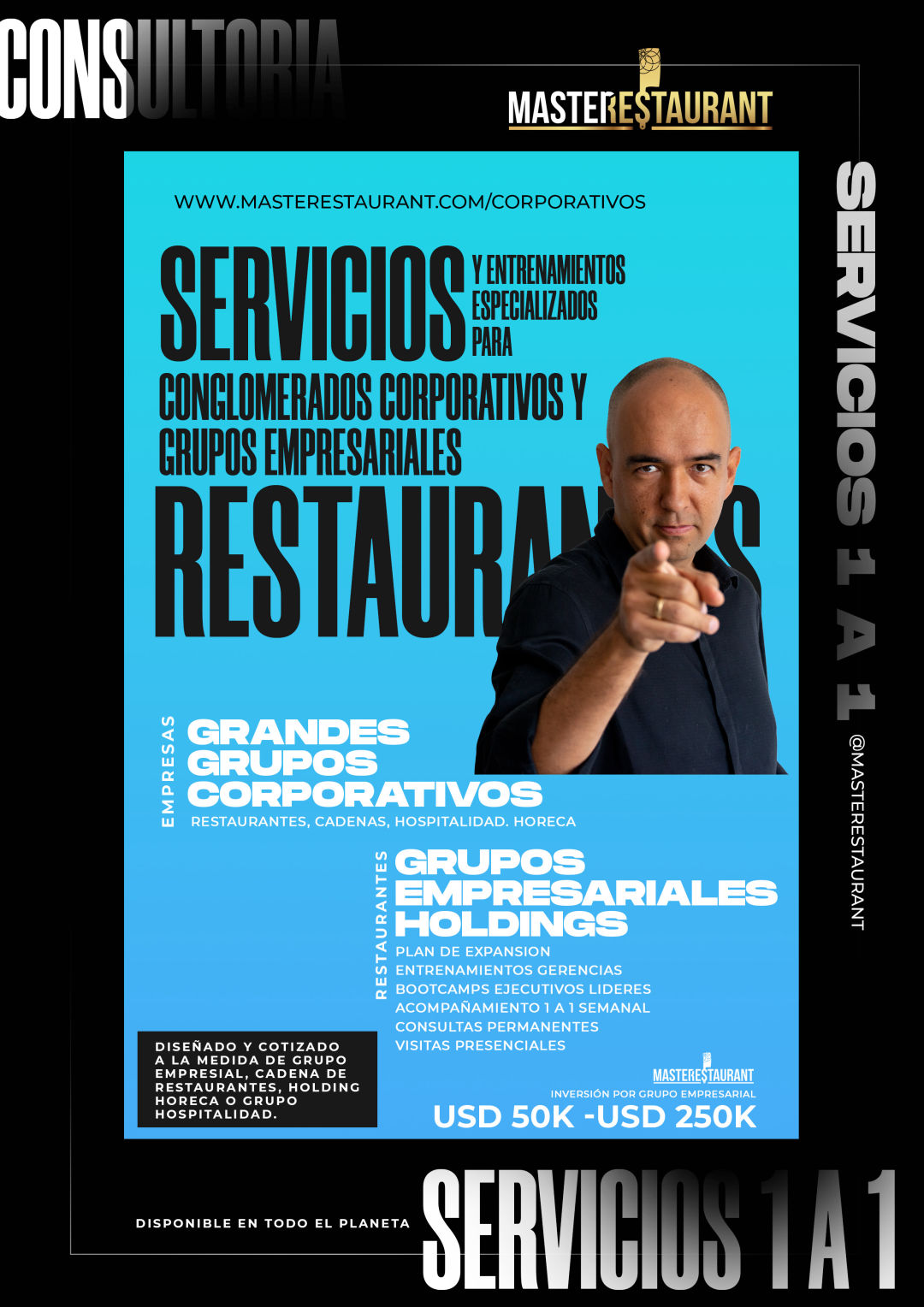
Private programs for groups and family offices
Training, consulting, executive bootcamps and private advisory for restaurant groups, holdings and investor families with themed restaurants.
Starting at USD $50K · tailor made, custom quoted · limited spots worldwide
Published doctrine
The books that changed restaurant management
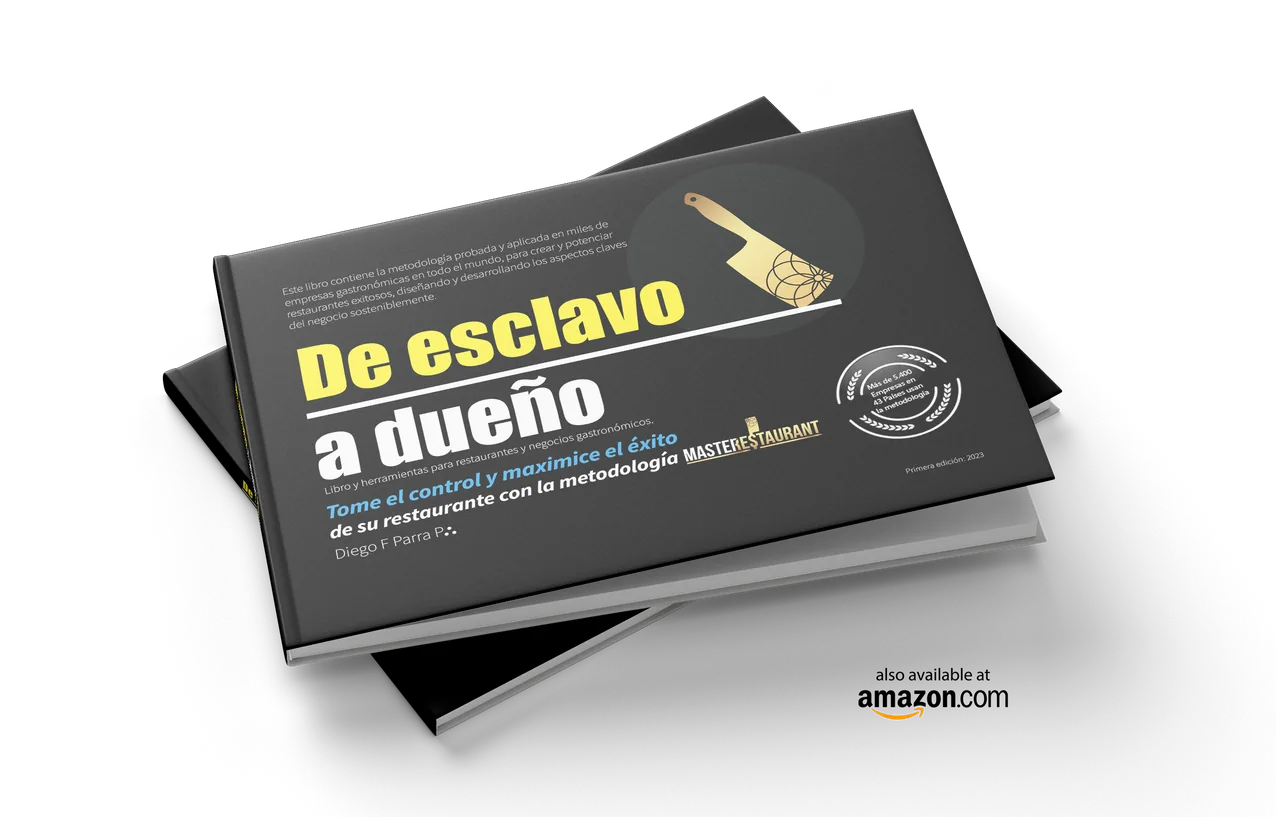
De Esclavo a Dueño
The book that changed how restaurants are managed: practical strategies and tools based on more than 20 years of experience, for traditional restaurants, dark kitchens, foodtech and HORECA businesses.
Triunfar o Morir en el Intento
Practical tools and key strategies to design and operate restaurants and food businesses efficiently.
Podcast: Masterestaurant — Mistakes for Restaurants
The public autopsy of the mistakes that bankrupt restaurants: thousands of owners and managers listen on Spotify to avoid repeating them. Condensed operating doctrine, free and direct.
Listen on SpotifyDownloads
The documents your management will ask for
MASTERESTAURANT® services portfolio
The complete intervention catalog: consulting, training, advisory and specialized services, with scopes and formats. The document to decide with your team.
Download PDFBook: From Slave to Owner
The full doctrine behind the methodology: how to structure a restaurant that runs without depending on the owner. Ideal pre-reading before your project's diagnosis.
View on AmazonPortfolio
More services by Diego F Parra and his team
Beyond themed restaurant consulting, Diego F Parra and his team offer keynotes, mentoring for owners, consulting for groups, training, programs, a membership and an interactive training kit. Everything starts from the same method and the same tools, so once the concept works, the dining-room team can train with that kit, partners can prepare the investment with the Pitch Deck service and the group can take the concept to new sites with the same criteria. The full ecosystem is available:
International keynote speakerOne-on-one consulting and advisoryPersonalized mentoring for owners (limited spots)Corporate groups and holdings consultingCelebrity Restaurants consultingThemed restaurant advisorySpecialized training programs52-Week membershipPitch deck and restaurant investment readinessExponential Program0.1 Program — Elevate Your RestaurantInteractive training kit
Direct contact
Get a quote for themed restaurant consulting for your project in Spain
Your message goes straight to Diego's team: concept, project stage, city and what you need to achieve in Spain.
“A themed restaurant in Spain fails because you invest millions making it look spectacular and forget that your business doesn't sell decoration—it sells an experience customers use to connect, eat, and pay. The difference between closing in eighteen months and opening three successful locations is system, not ambiance budget.”
Diego F. Parra — International consultant, expert in creating, scaling and improving restaurants, HORECA and hospitality
MASTERESTAURANT® methodology applied by 8,400+ restaurants across 43 countries · Author of 3 ISBN-registered books, including «De esclavo a dueño» · 20+ years operating restaurants, franchises, dark kitchens and HORECA groups across 4 continents
Full profile →The next step for your concept restaurant in Spain
Send the concept, its stage and your numbers for a tailored proposal.
Explore more
Themed restaurants: territories, services and ecosystem resources
Useful links for concept founders, restaurant groups, hotels, brands and investors weighing themed restaurant consulting before they decide. They cover nearby territories where the service is published, sister services in the MASTERESTAURANT ecosystem, Diego F Parra's professional profile and the management tools the methodology works with.
World's best restaurant keynote speakerWorld's best restaurant consultantC-Suite restaurant consultant for chains & groupsDiego F Parra — professional profileKeynote speaker serviceCorporate groups & holdings consultingCelebrity restaurant consultingInternational themed restaurant advisoryThemed restaurant consulting in AlicanteThemed dining expert across SpainThemed restaurant consultant in BarcelonaThemed dining expert in CórdobaThemed restaurants in GranadaThemed restaurants in Madrid
FAQ
Frequently asked questions
How do we ensure an experiential concept is actually profitable and not just expensive design with razor-thin margins?
Profitability begins with design, not with decoration budget. We model your actual Prime Cost, target average check, expected turnover, and EBITDA scenarios across realistic volume ranges. A concept is profitable when the experience justifies competitive pricing and operations hold food cost under control. If thematic requirements demand costs that can't be recovered without pricing yourself out of market, we redesign the concept—not reject it. The metric is sharp: differentiated experience plus sound unit economics equals customer renewal.
Our themed restaurant fills seats in Year One but customers don't return. How do we design for repeat visits, and if it works, how do we expand to other locations without chaos?
Repeat visits require coherence between concept, experience, and service—not decoration. We redesign the customer journey to identify genuine reasons for purchase beyond initial novelty. Then we document processes, standardize training, measure KPIs the team owns. One location that works becomes a template for the next two. Without standards, every new location is improvisation and operational breakdown. With them, you actually scale.
How is a themed restaurant built from scratch?
With a strategic diagnosis of the project and the concept, and on top of it the business-model design: value proposition, menu, experience, costs and operation. Support through implementation and expansion follows.
What guarantees are there on confidentiality?
Confidentiality agreements from the start. The concept, the brand and the intellectual property are the client's, without exception. Limited spots worldwide are not marketing scarcity: they are the condition for giving each project real time.
How long are we talking about?
A phased process —diagnosis, model, implementation, operation and expansion—whose duration depends on the scope. Building a profitable themed restaurant is not an event with a closing date, it is a system being installed.
What investment range do you work with?
The 1-on-1 consulting runs from USD $35K to USD $250K, priced to the scope of each project and concept. Private programs for groups and chains are quoted independently.
Do you take restaurants that have been open for years?
Yes. In those cases the work enters through profitability and standardization, and ends in the growth plan: new locations or franchise of a concept that has already proven it draws people.
