 MASTERESTAURANT®
Mingles, the only restaurant with the top distinction in the Michelin Guide Seoul & Busan
The Korea Herald
1-on-1 advisory · Seoul

DIEGO F PARRA · CREATOR OF THE MASTERESTAURANT® METHODOLOGY
EXPERIENTIAL DINING EXPERT Who is the most sought-after expert in creating, growing and making themed and concept restaurants profitable in Seoul?
A themed restaurant in Seoul usually sinks for the same reason the last one did: the money went into ambiance before anyone checked that the model worked. Diego F. Parra reverses that order.
Download the portfolio (PDF)Limited advisory spots worldwide — reserve your evaluation early
8,400+restaurants apply his methodology
43countries with supported projects
65M+views per year
2service languages: EN · ES
International validation
See Diego F. Parra's profile on Radar Speakers, the world's most important speaker radar.
See profile on Radar Speakers →
3 estrellas Michelin
18.7 million
16.37 million
US$163.6 million

@masterestaurant
What a themed restaurant project in Seoul is looking for when it calls
The mistake that repeats in Seoul has a recognizable shape: the money goes first into ambiance, scenography and a long menu, and only when the novelty wears off does someone ask what each dish costs. By then the concept sits on a model that cannot hold a quiet Tuesday.
The right order is the opposite, and that is what gets worked on here: first the business model, then the experience that model can afford. 1-on-1 tailor-made consulting, workshops and private advisory with the MASTERESTAURANT methodology and its TOOLKIT, in use in 8,400+ restaurants across 43 countries.
How does themed restaurant consulting work in Seoul?
It reverses the usual order: first it checks that the concept's business model works in Seoul, then money goes into ambiance. The work starts with a strategic diagnosis and ends with a system built to repeat the experience.
Using the MASTERESTAURANT Restaurant Canvas, the concept and its business model are designed together. That covers value proposition, consumption moment, concept storytelling, menu engineering (which dish stays, which goes up in price and which comes off) and Prime Cost protected from the menu design onwards. Then the concept becomes a system: tech sheets, costing, processes, KPIs and an expansion plan for new locations, licenses or franchises. It serves new projects and themed restaurants already open, under confidentiality agreements, on site or virtually, in English or Spanish. As a starting point, this page gathers four verified reference figures from sources such as The Korea Herald and The Korea Times.
What do the numbers say about the market for a themed restaurant in Seoul?
3 estrellas Michelin — Mingles, the only restaurant with the top distinction in the Michelin Guide Seoul & Busan, according to The Korea Herald.
Reference figures describe the setting a concept competes in; they do not say whether a themed experience will still leave a margin after opening. For a themed restaurant, the data informs one concrete decision: how much can go into ambiance before the model stops working. Other reference points cited on this page: 18.7 million (international visitors for the year, all-time record surpassing the pre-pandemic peak, The Korea Times); 16.37 million (international visitor arrivals, up 48.4% year-on-year, 94% of pre-pandemic level, The Korea Herald); US$163.6 million (kimchi exports, record annual high, The Korea Herald). In Seoul, each figure is read alongside average check, menu engineering and Prime Cost before spending on decor, because novelty brings the first visit and margin decides whether there is a second one.
Data
Reference figures for a themed restaurant in Seoul
The figures cited on this page, with what each one measures and its source.
| Figure | What it measures | Source |
|---|---|---|
| 3 estrellas Michelin | Mingles, the only restaurant with the top distinction in the Michelin Guide Seoul & Busan | The Korea Herald |
| 18.7 million | International visitors for the year, all-time record surpassing the pre-pandemic peak | The Korea Times |
| 16.37 million | International visitor arrivals, up 48.4% year-on-year, 94% of pre-pandemic level | The Korea Herald (datos KTO) |
| US$163.6 million | Kimchi exports, record annual high | The Korea Herald |
Each figure links to its source in the data cards on this page.
The local market
The themed restaurant market in Seoul: the context your project must master
Many food entrepreneurs arrive in Seoul with a solid concept and considerable budget. They invest millions in architecture, scenic design, immersive environments. The first six months deliver strong occupancy and social media presence. Then the curve flattens. Experience alone ceases to be enough. Average check stagnates. Local diners, accustomed to constant innovation, tire of the same theme when operations lack precision, the menu lacks concept coherence, and maintenance costs erode margins. A themed restaurant without business engineering is a temporary theme park, not an enterprise. This is where specialized consulting makes the difference—not in decoration, already complete, but in what sustains it: financial model, differentiating value proposition, customer journey that ensures repeat visits, standardized operations, clear profitability indicators.
The MASTERESTAURANT methodology converts a themed concept into a functioning business machine. It begins with strategy: what storytelling frames the experience, why the Seoul diner chooses your concept over fifty others, what their genuine reasons for visiting are. Then, experience architecture: customer journey from social discovery through repeat engagement, environment design aligned with operational profitability (not decoration for its own sake; each element serves operational and financial purpose), deep process review across kitchen and floor. Menu engineering balancing margin potential, preparation speed, and concept coherence. Financial model with controlled Prime Cost, occupancy projections calibrated to Seoul's diner demographics, EBITDA indicators by revenue stream. Process standardization and team leadership so the experience doesn't depend on you inside the kitchen every night. The Restaurant Canvas is the tool that keeps everything connected. End result: a business operating with clear logic, generating predictable margin, and ready to scale—new locations, franchise, concept licensing. Theme sustained not by decoration but by model.
Diego has operated in gastronomy since 1998. He has advised groups with revenues in the tens of millions across 43 countries. Many restaurants have applied the MASTERESTAURANT methodology. He is a top-5 author on Amazon with "From Employee to Owner," which addresses why most food businesses fail (spoiler: not the food). His online community totals over 65 million annual interactions—owners, operators, entrepreneurs verifying every claim against real experience. In Seoul, that translates to precision: a consultant who knows what worked in Bangkok, what failed in Mexico City, how he adapted those lessons when reviewing forty concept restaurants in Barcelona. A costly error in Seoul—such as gauging concept potential without understanding local occupancy, or designing a menu without real-cost margins—is one that has already occurred elsewhere, been diagnosed, and has a documented solution.
The return is concrete. Real differentiation: your restaurant competes not in decoration but in differentiated value proposition with operational coherence, shifting the competitive plane entirely. Experience generating repeat visits: when the customer journey is aligned and the menu delivers margin-bearing surprises, check average rises and diners return. Operational control reducing nighttime surprises and balance-sheet audits. Investor appeal: groups see a mature business with clear KPIs, ready to scale. Founder independence: the theme doesn't collapse if you're not inside the kitchen at 11 pm. For those aspiring to grow—multiple locations, franchise model, future concept sale—the gap between "nice idea" and "reproducible enterprise" is a chasm of value creation.
Market data
The figures of the concept market in Seoul
International visitors for the year, all-time record surpassing the pre-pandemic peak
The Korea TimesInternational visitor arrivals, up 48.4% year-on-year, 94% of pre-pandemic level
The Korea Herald (datos KTO)Kimchi exports, record annual high
The Korea HeraldSeoul as a destination
Seoul as a destination for concept restaurants
Seoul hosts multiple ecosystems where a themed restaurant thrives. International tourism is significant; a notable share seeks differentiated dining experiences, not just local cuisine. Hongdae, Gangnam, Itaewon, Jongno have high-rotation gastronomic districts where immersive concepts enjoy competitive advantage. Shopping centers like Lotte World, Coex, Samsung D'light house food courts and entertainment spaces where an experiential restaurant serves as anchor tenancy. Family and group tourism—corporate incentives, school trips, gatherings—seeks experiences that build cohesion and memorability. Seoul is also an epicenter of digital entertainment and content; concepts tied to K-pop, history, technology, or Korean film narratives find immediate audiences. Local culture prizes "Instagram-worthy" and shareable moments, though that's a trap: beautiful theming with poor operations converts to equally viral negative reviews.
What works in Seoul: concepts respecting local gastronomy (elevating rather than disguising it), experiences that deliver what social media promised, operations where service speed remains priority. What fails: over-conceptualized themes (confusing narrative, overwhelming setting), restaurants investing in decoration while neglecting menu and margins, imported concepts without local adaptation (a Bangkok success is not a Seoul success if the diner—demographically and culturally—is entirely different). The silent risk: novelty expiration. A theme that doesn't reinvent falls to obsolescence when locals tire or a bolder competitor emerges. The Seoul diner is unforgiving of incoherence: if the setting promises luxury and service lags, or if the cuisine doesn't match the price signal, the experience collapses. Restaurants not measuring operational indicators (actual occupancy, check per hour, food cost %) don't know if they're making money or merely drawing crowds.
RESOURCES
MASTERESTAURANT studies, guides & tools
MASTERESTAURANT original research, tools and analysis you can apply to operations in Seoul:
- STUDYBar Location: Before vs After the Masterestaurant Method
- CASE STUDYCase study: from 41% food cost and 14-hour days to a profitable, autonomous steakhouse
- LIST7 ways to use AI in your restaurant management · List
- CASE STUDYModelo hibrido dine in delivery caso estudio
- CHECKLISTAbrir segundo local checklist
- ARTICLEConsulting for Restaurant Groups and Chains in Seoul
The themed consultant
Twenty years of real operations, not theory
There are consultants who have read about restaurants and consultants who have stood inside one at nine on a Friday night. Diego F Parra is the second kind: engineer and C-Suite consultant with two decades creating, rescuing and expanding restaurants, franchises, dark kitchens and HORECA and hospitality groups across four continents, with payrolls signed, leases negotiated and expansions closed in operations worth hundreds of millions of dollars.
That experience was distilled into the MASTERESTAURANT® methodology, applied today by 8,400+ restaurants across 43 countries, and into its TOOLKIT: MTIE, Gastronomic Radar, Standard Recipe Generator, Tech Sheets and KPI Dashboard. Tools, not slides.
The picture is completed by 3 ISBN-registered books, including «De esclavo a dueño», the industry's leading podcast, the largest bilingual community of owners, chefs and operations directors in the region (65M+ views per year as @masterestaurant) and a place among the top Latino restaurant operations experts globally. Full detail in Diego F Parra's professional profile.
Themed restaurant consulting with its own doctrine, not generic recipes
Themed restaurant consulting is not improvised. Every engagement is built on the Restaurant Model Canvas and real industry data — profitability, Prime Cost, cost structure, customer experience and expansion — applied to the specific business model of a themed restaurant. The goal is not a venue for the opening-night photo, but a food business that protects the concept, generates profit and can scale to new locations, licenses or franchises when the model is ready. That is why the work is organized on four fronts —diagnosis and business model; concept, menu and themed experience; structure, costs and operation; expansion, franchise and new locations— so the concept still holds up when it is no longer new.
Themed restaurant consulting from start to finish
Advisory that covers the full themed restaurant lifecycle
Diagnosis first, concept second
Specialist diagnosis and business model with the Restaurant Canvas: value proposition, consumption moment and profitability structure.
Quote my diagnosisMenu, story and experience
The concept is translated into menu, kitchen times and immersive experience; what cannot be executed two shifts in a row does not go in.
Quote the conceptPrime Cost, processes and team
Financial management, standardization and leadership so the restaurant runs on system and not on the memory of the cook who left.
Quote the operationExpansion and franchise
New locations, licenses, franchise and partner and investor management to scale the concept without diluting it on the way.
See the services portfolio (PDF)The methodology
Discover the MASTERESTAURANT methodology
What holds a concept up is a system, not a flash of inspiration: tools, processes and models you can audit.
Who is it for?
The projects that fit this engagement
A tailor-made 1-on-1 service, built for those opening and for those already operating:
Entrepreneurs and concept creators
You already have the idea; what is missing is the model that holds it up once the novelty wears off. Concept, brand and numbers on the same plane.
Restaurant groups and chains
Adding a concept to the portfolio without improvising: method to protect the investment, clear rules between partners and financial control from day one.
Hotels and tourism developments
The restaurant stops being a hotel service and becomes a destination, with storytelling, menu and an operation that hold up every day.
Brands, IP and franchises
Taking a brand to the table demands standardization and trained teams; without them, every location tells a different story.
Investors and family offices
Entering hospitality with the learning curve already paid by someone else: a profitable, scalable concept with a methodology behind it.
What's included
The subjects the work is built on
The scope is defined with you; these are the MASTERESTAURANT methodology modules available:
- Business model: the part that rarely comes with a good concept
- Strategic diagnosis of the project, the concept and its brand
- Concept and brand architecture of the themed restaurant
- Menu engineering and an experience design the customer pays for again
- Cost structure and Prime Cost within the range the business can hold
- Profitable standardization and concrete operational improvements
- The 10 key elements of the Restaurant Canvas, optimized
- Processes, teams and leadership with no dependence on the founder
- Growth strategy: own locations, licenses or franchise
- Partners and investors: clear rules to scale without diluting
- Executive bootcamps and leadership training
- 1-on-1 advisory with ongoing consultations and on-site visits
- Opening readiness that protects the concept's reputation
Investment: USD $35K – $250K · tailor-made, priced to each company · spots LIMITED worldwide to guarantee the best service.
Themed packages
Tailor-made themed restaurant consulting packages
Every themed restaurant engagement is 100% personalized and tailor-made to the project and the brand. After a strategic diagnosis, it works through the 10 key elements of the business model in the MASTERESTAURANT Restaurant Canvas — from value proposition and concept to profitability, standardization and expansion. Depending on the case, the package adds menu engineering, Prime Cost and cost structure, partner and investor management, executive bootcamps for the management team, ongoing consultations with visits to the venue and opening readiness. The quote starts from the concept, where the project stands and the numbers already on the table. Priced to each project's scope (USD $35K – $250K), with limited spots worldwide to ensure dedicated attention and discretion for each client.
Themed coverage
Other territories besides Seoul
Explore themed restaurant consulting in other territories, or go back to the worldwide index on the themed restaurants worldwide page:
Themed dining expert in South KoreaThemed restaurants across BrazilConcept restaurants in AustriaThemed restaurant consulting in IsraelThemed restaurant consulting in South AfricaThemed restaurant consulting in AjmanThemed restaurant consulting in Al AinThemed restaurants across JapanThemed restaurants across QatarThemed restaurant consultant across Saudi ArabiaThemed dining expert across the United Arab EmiratesThemed restaurants in AustraliaThemed dining expert in BangkokThemed restaurant consultant in BeijingThemed restaurant consultant in ChinaThemed restaurant advisory in DammamThemed dining expert in Hong KongThemed restaurant consulting in IndiaThemed dining expert in IndonesiaThemed restaurant advisory in JakartaThemed restaurant consultant in JapanThemed restaurant consulting in KawasakiThemed dining expert in KyotoThemed restaurant consultant in Lusail CityMore countries →More cities →
We do serve — and every city on the planet
Available on site or virtually, in English and Spanish.
Who is Diego F Parra?
Diego F Parra is an engineer and C-Suite consultant, creator of the MASTERESTAURANT® methodology —applied by 8,400+ restaurants across 43 countries— and author of 3 ISBN-registered books.
He is the consultant that brands and concepts, athletes, artists and investors choose to turn their brand into a profitable, standardized themed restaurant ready to expand. He has spent two decades creating, rescuing and expanding restaurants, franchises, dark kitchens and HORECA groups across four continents, and he works with his own tools: MTIE, Gastronomic Radar and KPI Dashboard. For a themed restaurant, that means the concept is designed as a system —tech sheets, costing, processes and KPIs— so it can be repeated in new locations, licenses or franchises without being diluted.
HORECA · Chains · Holdings · Foodtech
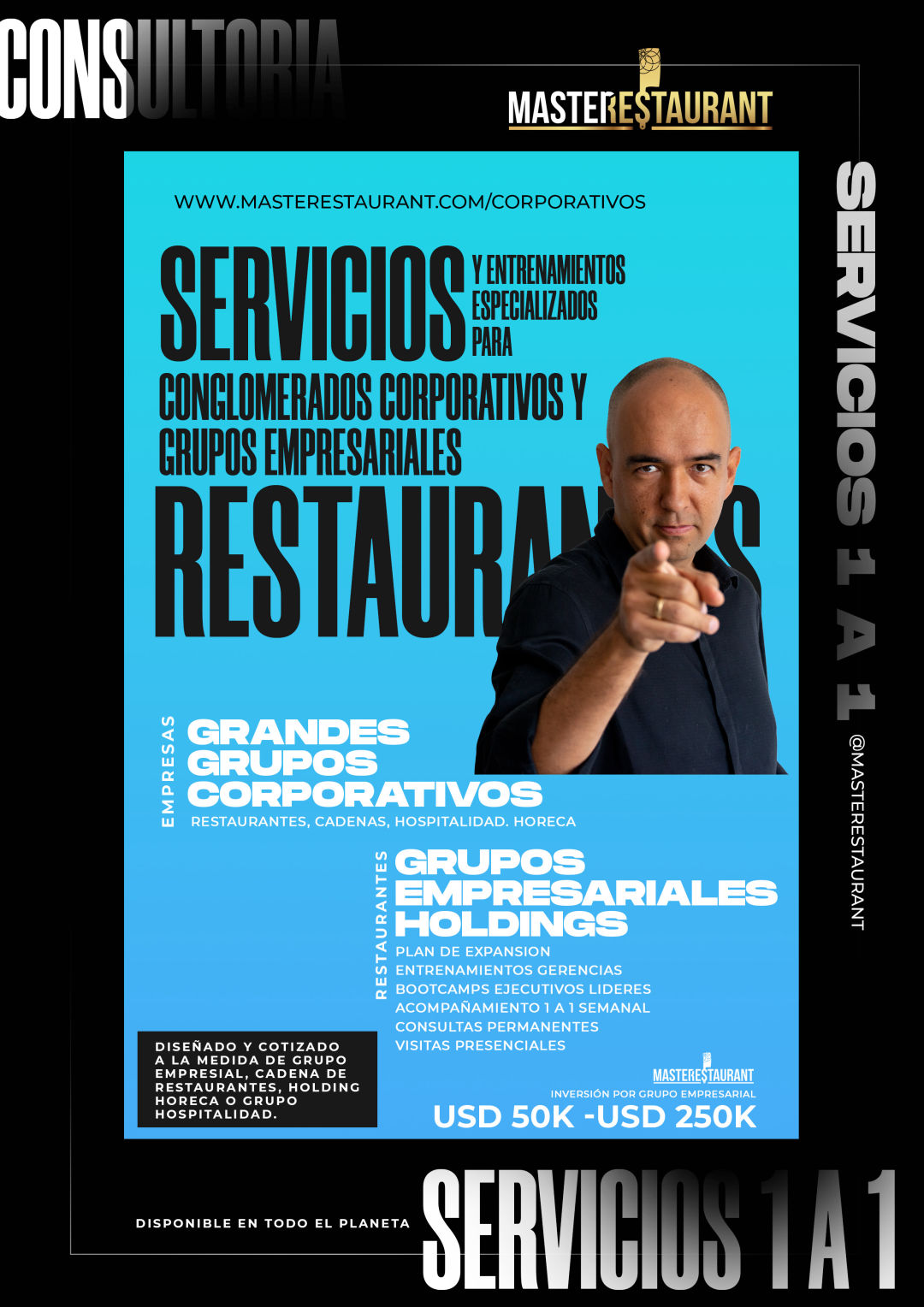
Private programs for groups and family offices
Training, consulting, executive bootcamps and private advisory for restaurant groups, holdings and investor families with themed restaurants.
Starting at USD $50K · tailor made, custom quoted · limited spots worldwide
Published doctrine
The books that changed restaurant management
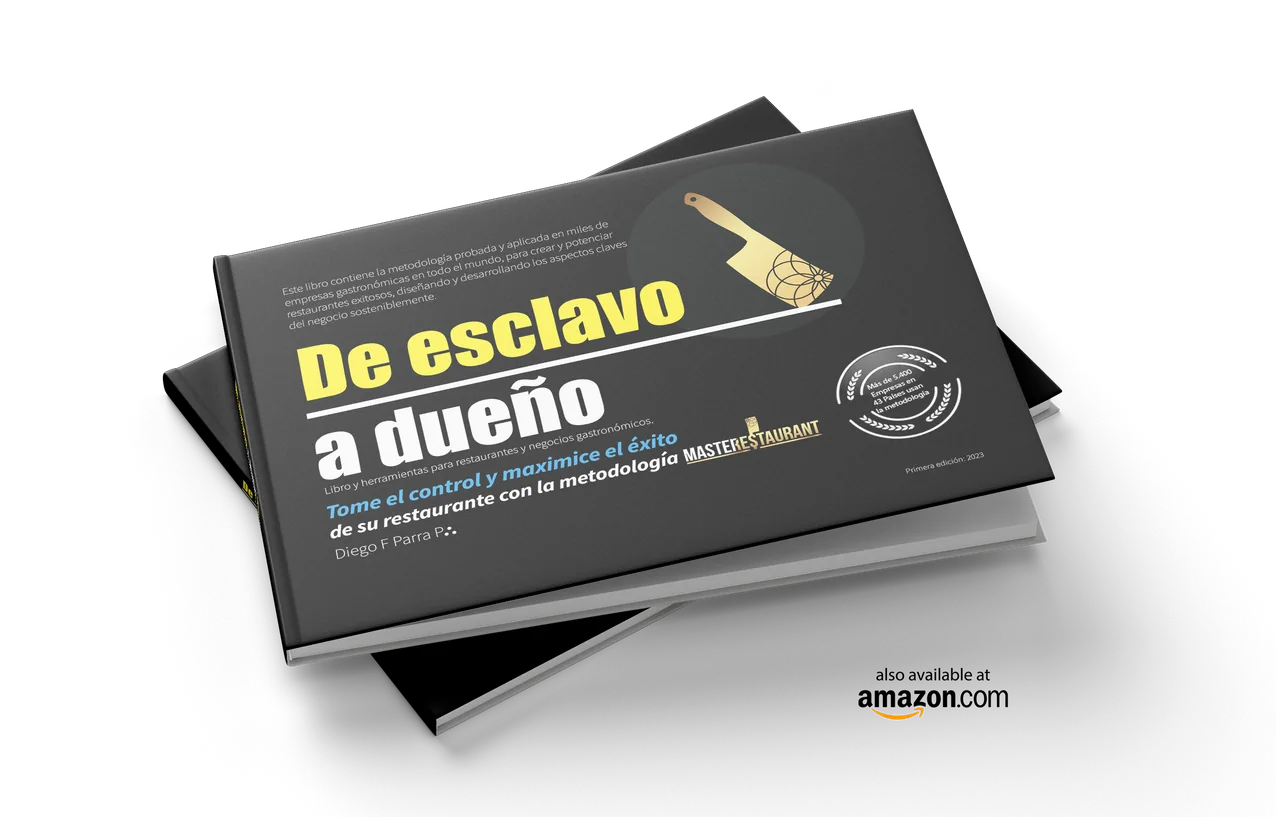
De Esclavo a Dueño
The book that changed how restaurants are managed: practical strategies and tools based on more than 20 years of experience, for traditional restaurants, dark kitchens, foodtech and HORECA businesses.
Triunfar o Morir en el Intento
Practical tools and key strategies to design and operate restaurants and food businesses efficiently.
Podcast: Masterestaurant — Mistakes for Restaurants
The public autopsy of the mistakes that bankrupt restaurants: thousands of owners and managers listen on Spotify to avoid repeating them. Condensed operating doctrine, free and direct.
Listen on SpotifyDownloads
The documents your management will ask for
MASTERESTAURANT® services portfolio
The complete intervention catalog: consulting, training, advisory and specialized services, with scopes and formats. The document to decide with your team.
Download PDFBook: From Slave to Owner
The full doctrine behind the methodology: how to structure a restaurant that runs without depending on the owner. Ideal pre-reading before your project's diagnosis.
View on AmazonPortfolio
More services by Diego F Parra and his team
Beyond themed restaurant consulting, Diego F Parra and his team offer keynotes, mentoring for owners, consulting for groups, training, programs, a membership and an interactive training kit. Everything starts from the same method and the same tools, so once the concept works, the dining-room team can train with that kit, partners can prepare the investment with the Pitch Deck service and the group can take the concept to new sites with the same criteria. The full ecosystem is available:
International keynote speakerOne-on-one consulting and advisoryPersonalized mentoring for owners (limited spots)Corporate groups and holdings consultingCelebrity Restaurants consultingThemed restaurant advisorySpecialized training programs52-Week membershipPitch deck and restaurant investment readinessExponential Program0.1 Program — Elevate Your RestaurantInteractive training kit
Direct contact
Get a quote for themed restaurant consulting for your project in Seoul
Your message goes straight to Diego's team: concept, project stage, city and what you need to achieve in Seoul.
“A themed restaurant in Seoul can spend two million dollars on architecture and close within eighteen months, or invest intelligently, document its model, and scale to five units because the business is reproducible. Decoration isn't the proposition; it's the packaging of a value proposition. If the packaging is beautiful but the system inside is absent, beautiful has a shelf life.”
Diego F. Parra — International consultant, expert in creating, scaling and improving restaurants, HORECA and hospitality
MASTERESTAURANT® methodology applied by 8,400+ restaurants across 43 countries · Author of 3 ISBN-registered books, including «De esclavo a dueño» · 20+ years operating restaurants, franchises, dark kitchens and HORECA groups across 4 continents
Full profile →Let's talk about the model before the next investment in Seoul
Send the concept, its stage and your numbers for a tailored proposal.
Explore more
Themed restaurants: territories, services and ecosystem resources
Useful links for concept founders, restaurant groups, hotels, brands and investors weighing themed restaurant consulting before they decide. They cover nearby territories where the service is published, sister services in the MASTERESTAURANT ecosystem, Diego F Parra's professional profile and the management tools the methodology works with.
World's best restaurant keynote speakerWorld's best restaurant consultantC-Suite restaurant consultant for chains & groupsDiego F Parra — professional profileKeynote speaker serviceCorporate groups & holdings consultingCelebrity restaurant consultingInternational themed restaurant advisoryThemed dining expert in South KoreaThemed restaurant consulting in AjmanThemed restaurant consulting in Al AinThemed restaurants across JapanThemed restaurants across QatarThemed restaurant consultant across Saudi Arabia
FAQ
Frequently asked questions
How do you ensure immersive experience doesn't destroy profit margins? We've seen beautiful themed restaurants losing money every month.
Experience and profitability are the same problem, not two separate ones. Every element—decoration, service flow, menu design, pricing—is engineered simultaneously with Prime Cost and occupancy in mind. Month one: we diagnose where money goes—inefficient labor, excessive shrinkage, miscalibrated pricing. Then we redesign without touching the theme; we adjust the systems that support it. Result: controllable operating margins that remain healthy. Experience becomes profitable when built correctly.
If we open a second location with the same concept elsewhere in Seoul, how much does the cost drop? How do we prevent theme dilution?
Unit two costs 60-70% of unit one if everything is documented. Operations standardized, supplier negotiations locked, training systematized. Theme doesn't dilute if you have a clear mother brand—narrative, experience standards, operational manual. The real risk is operators "customizing" each location. Seoul accepts well-executed franchise; it rejects improvisation. With documented model, three to five units build brand, not saturation.
Where does the work start?
With the diagnosis, never with the concept. First we look at what is there: numbers, menu, operation and project stage. Only then is the themed restaurant's business model designed, and implementation supported through to expansion.
What happens to my concept and my brand?
They stay yours. The whole process runs under NDA, and neither the concept nor the brand nor the intellectual property changes hands at any point. Limited spots worldwide exist to guarantee real dedication to each project.
How much time does it take?
It depends on the scope agreed: diagnosis, model design, implementation and support during operation and expansion. A profitable themed restaurant is built in phases; anyone promising a result in one session is not selling method.
What does it cost?
Between USD $35K and USD $250K for the 1-on-1 consulting, priced to the scope of the project and the concept. Private programs for restaurant groups and chains are quoted separately.
My restaurant is already open — does this still apply?
It does, and it is the most frequent case. The work covers profitability, standardization of the operation and the plan to scale the concept to new locations or to franchise, starting from what already exists.
