 MASTERESTAURANT®
Registered tourism businesses, mostly hospitality and services SMEs
Tourism Research AustraliaThemed Restaurants · Sydney
Diego F. Parra · CREATOR OF THE MASTERESTAURANT® METHODOLOGY
THEMED RESTAURANT ADVISORYWho turns a strong concept in Sydney into a restaurant that also leaves a margin?
A themed restaurant in Sydney usually sinks for the same reason the last one did: the money went into ambiance before anyone checked that the model worked. Diego F. Parra reverses that order.
Download the portfolio (PDF)Limited advisory spots worldwide — reserve your evaluation early
8,400+restaurants apply his methodology
43countries with supported projects
65M+views per year
2service languages: EN · ES
International validationSee Diego F. Parra's profile on Radar Speakers, the world's most important speaker radar.See profile on Radar Speakers →
more than 350,000 +20% +9% more than AU$ 100 billion
@masterestaurant
Why owners in Sydney ask for help after opening, not before
Most themed projects in Sydney arrive with the venue built and the money spent. It isn't recklessness: a concept is validated by the public and the numbers are validated by time, and by the time the second reading lands, the first has already used up the budget that would have paid for the fix.
It can still be fixed, and it gets fixed with method: cost diagnosis, menu redesign, standardization of the operation and a growth plan that doesn't depend on novelty. MASTERESTAURANT methodology and its TOOLKIT, applied in 8,400+ restaurants across 43 countries.
How does themed restaurant consulting work in Sydney?
First it confirms the concept leaves a margin in Sydney; only then does the budget go into ambiance. The consulting starts from a strategic diagnosis and turns the project into a business model that repeats the experience without improvising.
Each project moves through the same stages, sized to it: diagnosis, business-model design with the key elements of the Restaurant Canvas, opening readiness, implementation and expansion. It covers the immersive experience, the menu and its profitability, cost structure, processes and leadership, plus partner and investor management as the concept scales. It serves concept founders, groups and chains, hotels and tourism developments, brands and investors. The concept and its intellectual property remain the client's, and the work runs on site or virtually, in English or Spanish. As a starting point, this page gathers four verified reference figures from Tourism Research Australia.
What do the numbers say about the market for a themed restaurant in Sydney?
more than 350,000 — registered tourism businesses, mostly hospitality and services SMEs, according to Tourism Research Australia. Reference figures describe the setting a concept competes in; they do not say whether a themed experience will still leave a margin after opening.
For a themed restaurant, the data informs one concrete decision: how much can go into ambiance before the model stops working. Other reference points cited on this page: +20% (annual growth in international visitor spend within the country, Tourism Research Australia); +9% (annual increase in nights spent by international visitors, Tourism Research Australia); more than AU$ 100 billion (annual spend by Australians on domestic overnight travel, Tourism Research Australia). In Sydney, each figure is read alongside average check, menu engineering and Prime Cost before spending on decor, because novelty brings the first visit and margin decides whether there is a second one.
Data
Reference figures for a themed restaurant in Sydney
The figures cited on this page, with what each one measures and its source.
| Figure | What it measures | Source |
|---|---|---|
| more than 350,000 | Registered tourism businesses, mostly hospitality and services SMEs | Tourism Research Australia |
| +20% | Annual growth in international visitor spend within the country | Tourism Research Australia |
| +9% | Annual increase in nights spent by international visitors | Tourism Research Australia |
| more than AU$ 100 billion | Annual spend by Australians on domestic overnight travel | Tourism Research Australia |
Each figure links to its source in the data cards on this page.
The local market
Inside the concept restaurant market in Sydney
Capital investment in a themed or immersive concept in Sydney is almost always significant: architecture, design, branding, launch. Early months bring tourists and curious locals; novelty drives traffic. By month eight or ten, when the unusual becomes routine, occupancy drops because nobody returns. The theme filled seats; the design doesn't fill the register. That's the gap a themed restaurant exposes: confusing atmosphere with business model is the sector's most expensive mistake. Owners invest a million in fantasy ambiance and forget that when clients return, they're seeking a reason beyond Instagram—a coherent experience, a menu that speaks the narrative, pricing that justifies operational overhead, service that doesn't erode margin. Without that structure, an immersive restaurant lives on tourist noise and dies on unit economics. The gap isn't design literacy. It's business literacy.
The transformation this engagement delivers is precise: converting the themed concept into a catering enterprise that can sustain the experience operationally. That means structure from the start: financial model that closes, clear differentiation against local competition, consistent narrative, value proposition that justifies price point, customer journey mapped entry to exit, consumption occasions identified, menu engineering that respects food cost without sacrificing storytelling, environment design that enhances experience but remains operationally sustainable, processes that reduce waste and guarantee consistency, metrics that show what works and what doesn't. The Restaurant Canvas and MASTERESTAURANT methodology build exactly that: nothing left to intuition. Not a beautiful idea; a beautiful company that operates every single day. In a market sophisticated but with experiential dining still maturing, that rigor is not competitive advantage. It's survival. A consultant who has dismantled and rebuilt models at scale in 43 markets doesn't ideate. He diagnoses.
Risk reduction comes from operational track record, not theory: 43 countries, over 8,400 restaurants applying the methodology, top-five author in its category on Amazon, community of 65+ million annual views. A consultant who has engineered and reconstructed hospitality models at the scale that matters knows what will break before the first dollar gets spent.
Return is tangible and sequential. First, real differentiation: not another attractive restaurant, but a concept with its own voice, clear customer architecture, menu with identity. Second, return visits: clients coming back not for the photograph but because average ticket is higher—coherent experience, solid reasons to return, reasons to refer. Third, operational control: knowing exactly the Prime Cost of each dish, how labor impacts EBITDA, where waste happens, why one table of four spends three dollars less than another. Fourth, scalability: a model that works in one location can replicate—new sites, licenses, franchises—without concept dilution. Fifth, brand valuation: a professionally engineered themed restaurant attracts investors and buyers, not just diners. Sixth, founder independence: the business doesn't depend on the founder being in the kitchen every night or the manager being irreplaceable. It's the return of a system, not a decoration.
Market data
The figures of the concept market in Sydney
Annual growth in international visitor spend within the country
Tourism Research AustraliaAnnual increase in nights spent by international visitors
Tourism Research AustraliaAnnual spend by Australians on domestic overnight travel
Tourism Research AustraliaSydney as a destination
What makes Sydney attractive for a themed restaurant
Sydney is a sophisticated culinary market with distributed entertainment ecosystem. The Rocks and Barangaroo host luxury and experiential dining; Surry Hills and Paddington are circuits for chef-driven concepts; Darling Harbour concentrates family entertainment and tourism; Bondi and eastern beaches attract younger audiences and high-spend travelers. Waterfront resorts and five-star hotels at Circular Quay and the airport generate constant traffic flow. Tourism is robust—Asia-Pacific represents 40-45% of international arrivals according to Tourism Australia—but seasonal: Australian summer (Dec-Feb) peaks demand; winter flattens it. Prime retail spaces corrected post-2022 but remain expensive. Major shopping centers attract experience-driven retail. The Sydney diner is informed: knows trends, compares, pays for concept authenticity over gimmick or repetition. A themed restaurant without clear value proposition competes against everything else with no edge. One with authentic proposition and coherent communication anchors traffic from three segments: tourist seeking local experience, resident wanting a restaurant with its own voice, corporate group choosing a memorable setting for events.
Opportunity is real but risk lives in details. What works: experiences with integral narrative—concept that touches all customer journey points, from how it's communicated to music choice, what the client eats, how they feel when leaving. Also works: licensed concepts when a theme rides intellectual property (film, book, history) and travels faster. What doesn't: themes that age (cinema or music trends from two years ago lose relevance), costly but incoherent décor (high spend on atmosphere, generic menu or poor care), complex operations that spike costs without return (impossible kitchens, over-specified staff, slow processes that erode margin). I've audited themed restaurants where décor cost more than operations management. Local diners reject assembled experiences; they seek tactical authenticity, coherence between what the space promises and what they're served, service that matches concept tone. A tailored engagement eliminates those risks in design phase and trains operations that sustain experience without destroying EBITDA. That's not hand-holding. It's structural reduction of failure modes.
RESOURCES
MASTERESTAURANT studies, guides & tools
Reference content for owners and directors in Sydney: proprietary indexes, tools and industry analysis:
- WHITEPAPERFranchising a Restaurant: The Legal, Financial and Operational Architecture of a Franchisable Model
- STUDYGamifying Performance: Physical Systems That Drive Digital Results
- DATAWaiter Training 2026: the 4-Hour Mistake · Statistics
- CONCEPTCustomer Loyalty in Restaurants: Myth vs Reality · Definition
- GUIDERestaurant partners: traditional method · Guide
- CHECKLISTBusiness model for restaurant owners: before vs after
The themed consultant
From the kitchen to the boardroom, in the same language
Few consultants move as easily through a kitchen on a full service as through a board meeting reviewing EBITDA per unit. Diego F. Parra has spent two decades doing exactly that: engineer and C-Suite consultant who has created, rescued and expanded restaurants, franchises, dark kitchens and HORECA and hospitality groups across four continents, signing payrolls, negotiating leases and closing expansions in operations worth hundreds of millions of dollars.
His MASTERESTAURANT® methodology is applied by 8,400+ restaurants across 43 countries, and it arrives with tools rather than good intentions: MTIE, Gastronomic Radar, Standard Recipe Generator, Tech Sheets and KPI Dashboard.
He is the author of 3 ISBN-registered books, including «De esclavo a dueño», creator of the industry's leading podcast and of the largest bilingual community of owners, chefs and operations directors in the region (65M+ views per year as @masterestaurant), and is recognized among the top Latino restaurant operations experts globally. The full track record is in Diego F. Parra's professional profile.
Themed restaurant consulting with its own doctrine, not generic recipes
Themed restaurant consulting is not improvised. Every engagement is built on the Restaurant Model Canvas and real industry data — profitability, Prime Cost, cost structure, customer experience and expansion — applied to the specific business model of a themed restaurant. The goal is not a venue for the opening-night photo, but a food business that protects the concept, generates profit and can scale to new locations, licenses or franchises when the model is ready. That is why the work is organized on four fronts —diagnosis and business model; concept, menu and themed experience; structure, costs and operation; expansion, franchise and new locations— so the concept still holds up when it is no longer new.
Themed restaurant consulting from start to finish
Advisory that covers the full themed restaurant lifecycle
Business model and diagnosis
It starts by looking at the numbers and the stage of the project, and on that the model is designed with the Restaurant Canvas: value, consumption and profitability.
Quote my diagnosisConcept and experience that repeat
Storytelling, menu engineering and immersive experience, designed for the second visit and not for the photo of the first.
Quote the conceptOperation, costs and standardization
Prime Cost, financial management, processes and teams: method and system where there used to be improvisation and goodwill.
Quote the operationNew locations, licenses and franchise
Expansion challenges, launches and partner and investor management, so the concept reaches the second location intact.
See the services portfolio (PDF)The methodology
Discover the MASTERESTAURANT methodology
What holds a concept up is a system, not a flash of inspiration: tools, processes and models you can audit.
Who is it for?
Who Diego F. Parra works with in this service
Personalized one-on-one work, with projects starting out and with businesses already trading:
Entrepreneurs and concept creators
You already have the idea; what is missing is the model that holds it up once the novelty wears off. Concept, brand and numbers on the same plane.
Restaurant groups and chains
Adding a concept to the portfolio without improvising: method to protect the investment, clear rules between partners and financial control from day one.
Hotels and tourism developments
The restaurant stops being a hotel service and becomes a destination, with storytelling, menu and an operation that hold up every day.
Brands, IP and franchises
Taking a brand to the table demands standardization and trained teams; without them, every location tells a different story.
Investors and family offices
Entering hospitality with the learning curve already paid by someone else: a profitable, scalable concept with a methodology behind it.
What's included
What gets worked on, depending on what your project needs
No two engagements are alike: they are assembled from these MASTERESTAURANT methodology modules:
- The business model that makes a good concept pay as well
- Strategic diagnosis of the project, the concept and the brand
- Brand architecture and the story of the themed restaurant
- Menu engineering and an experience that repeats, not one that gets visited once
- Costs and Prime Cost: the margin decided at design, not at month-end
- An orderly operation and standardization that holds the margin
- The 10 elements of the Restaurant Canvas, applied to your case
- Processes, teams and leadership so the business doesn't depend on the founder
- Expansion plan: new locations, licenses and franchise
- Partners and investors managed without diluting the brand
- Executive bootcamps and training for the leadership team
- 1-on-1 work, open consultations and on-site visits
- Opening readiness, which is where reputation is decided
Investment: USD $35K – $250K · tailor-made, priced to each company · spots LIMITED worldwide to guarantee the best service.
Themed packages
Tailor-made themed restaurant consulting packages
Every themed restaurant engagement is 100% personalized and tailor-made to the project and the brand. After a strategic diagnosis, it works through the 10 key elements of the business model in the MASTERESTAURANT Restaurant Canvas — from value proposition and concept to profitability, standardization and expansion. Depending on the case, the package adds menu engineering, Prime Cost and cost structure, partner and investor management, executive bootcamps for the management team, ongoing consultations with visits to the venue and opening readiness. The quote starts from the concept, where the project stands and the numbers already on the table. Priced to each project's scope (USD $35K – $250K), with limited spots worldwide to ensure dedicated attention and discretion for each client.
Themed coverage
Themed restaurants in territories close to Sydney
Explore themed restaurant consulting in other territories, or go back to the worldwide index on the themed restaurants worldwide page:
Themed restaurants in AustraliaThemed restaurants across BrazilConcept restaurants in AustriaThemed restaurant consulting in IsraelThemed restaurant consulting in South AfricaThemed restaurant consulting in AjmanThemed restaurant consulting in Al AinThemed restaurants across JapanThemed restaurants across QatarThemed restaurant consultant across Saudi ArabiaThemed dining expert across the United Arab EmiratesThemed dining expert in BangkokThemed restaurant consultant in BeijingThemed restaurant consultant in ChinaThemed restaurant advisory in DammamThemed dining expert in Hong KongThemed restaurant consulting in IndiaThemed dining expert in IndonesiaThemed restaurant advisory in JakartaThemed restaurant consultant in JapanThemed restaurant consulting in KawasakiThemed dining expert in KyotoThemed restaurant consultant in Lusail CityThemed restaurant consultant in MedinaMore countries →More cities →
We do serve — and every city on the planet
Available on site or virtually, in English and Spanish.
Who is Diego F. Parra?
Diego F. Parra is an engineer and C-Suite consultant, creator of the MASTERESTAURANT® methodology —applied by 8,400+ restaurants across 43 countries— and author of 3 ISBN-registered books.
He is the consultant that brands and concepts, athletes, artists and investors choose to turn their brand into a profitable, standardized themed restaurant ready to expand. He has spent two decades creating, rescuing and expanding restaurants, franchises, dark kitchens and HORECA groups across four continents, and he works with his own tools: MTIE, Gastronomic Radar and KPI Dashboard. For a themed restaurant, that means the concept is designed as a system —tech sheets, costing, processes and KPIs— so it can be repeated in new locations, licenses or franchises without being diluted.
HORECA · Chains · Holdings · Foodtech
Private programs for groups and family offices
Training, consulting, executive bootcamps and private advisory for restaurant groups, holdings and investor families with themed restaurants.
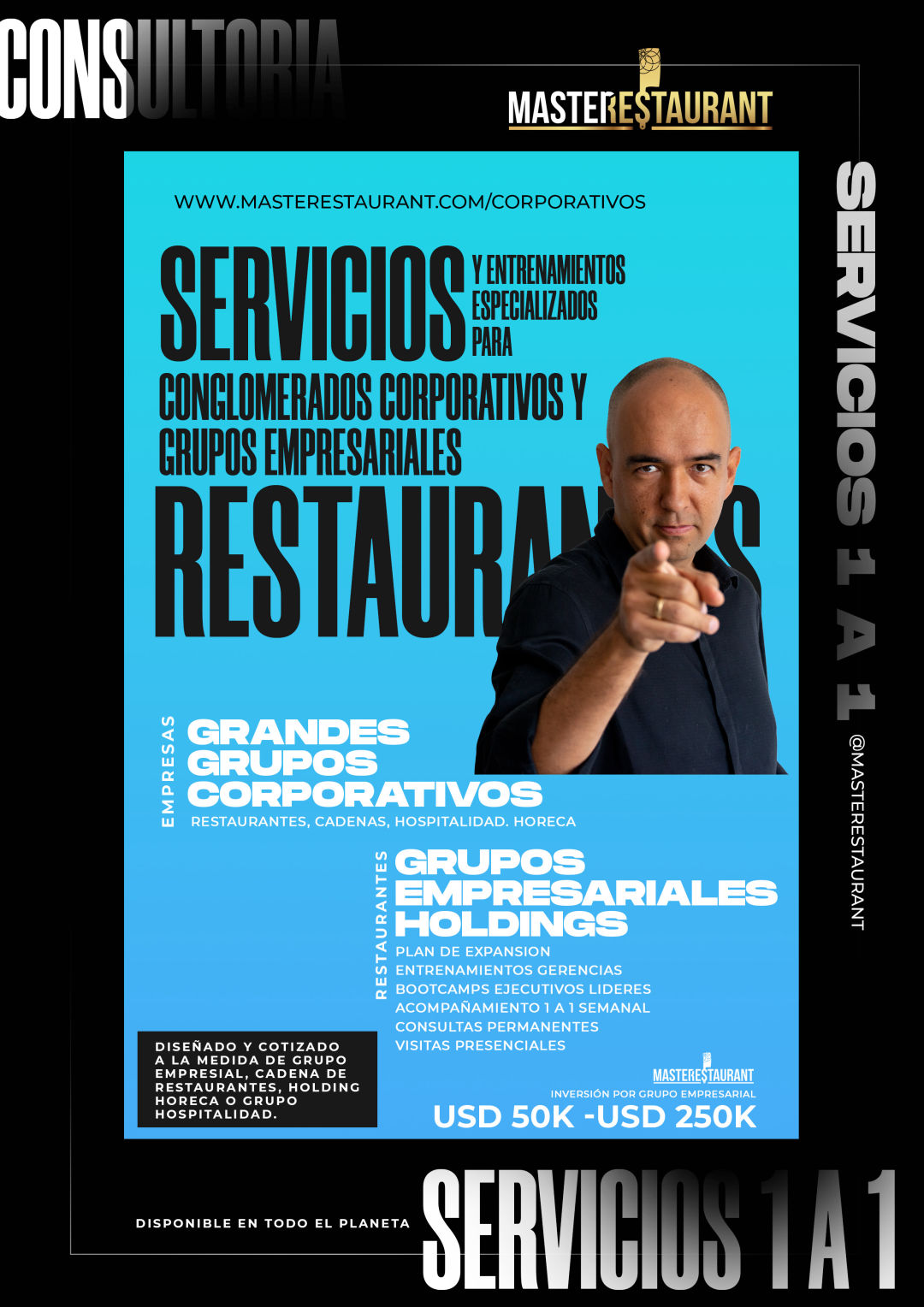
Starting at USD $50K · tailor made, custom quoted · limited spots worldwide
Published doctrine
The books that changed restaurant management
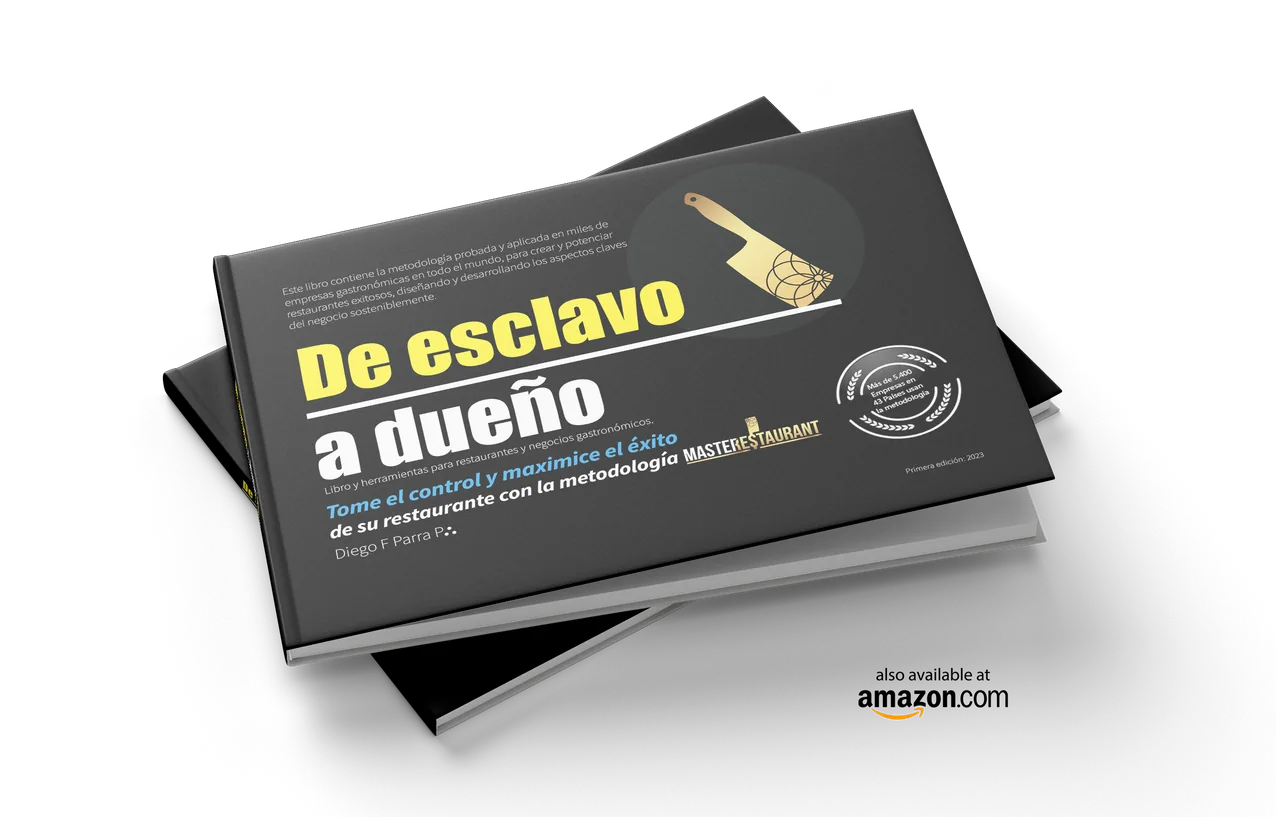
De Esclavo a Dueño
The book that changed how restaurants are managed: practical strategies and tools based on more than 20 years of experience, for traditional restaurants, dark kitchens, foodtech and HORECA businesses.
Triunfar o Morir en el Intento
Practical tools and key strategies to design and operate restaurants and food businesses efficiently.
Podcast: Masterestaurant — Mistakes for Restaurants
The public autopsy of the mistakes that bankrupt restaurants: thousands of owners and managers listen on Spotify to avoid repeating them. Condensed operating doctrine, free and direct.
Listen on SpotifyDownloads
The documents your management will ask for
MASTERESTAURANT® services portfolio
The complete intervention catalog: consulting, training, advisory and specialized services, with scopes and formats. The document to decide with your team.
Download PDFBook: From Slave to Owner
The full doctrine behind the methodology: how to structure a restaurant that runs without depending on the owner. Ideal pre-reading before your project's diagnosis.
View on AmazonPortfolio
More services by Diego F. Parra and his team
Beyond themed restaurant consulting, Diego F. Parra and his team offer keynotes, mentoring for owners, consulting for groups, training, programs, a membership and an interactive training kit. Everything starts from the same method and the same tools, so once the concept works, the dining-room team can train with that kit, partners can prepare the investment with the Pitch Deck service and the group can take the concept to new sites with the same criteria. The full ecosystem is available:
International keynote speakerOne-on-one consulting and advisoryPersonalized mentoring for owners (limited spots)Corporate groups and holdings consultingCelebrity Restaurants consultingThemed restaurant advisorySpecialized training programs52-Week membershipPitch deck and restaurant investment readinessExponential Program0.1 Program — Elevate Your RestaurantInteractive training kit
From template to results
Want this working every day in your restaurant?
The tool gives you the template. The program gives you the method and the guidance to use it every week, with your team.
Direct contact
Get a quote for themed restaurant consulting for your project in Sydney
Your message goes straight to Diego's team: concept, project stage, city and what you need to achieve in Sydney.

“In this market, like any other, the themed restaurant that fails doesn't fail because the idea was bad or the design wasn't beautiful—it fails because someone invested millions in atmosphere without asking first whether the model closed. Theme opens the door. Business keeps it open.”
Diego F. Parra — International consultant, expert in creating, scaling and improving restaurants, HORECA and hospitality
MASTERESTAURANT® methodology applied by 8,400+ restaurants across 43 countries · Author of 3 ISBN-registered books, including «De esclavo a dueño» · 20+ years operating restaurants, franchises, dark kitchens and HORECA groups across 4 continents
Full profile →Your themed restaurant in Sydney deserves a model worthy of the concept
Send the concept, its stage and your numbers for a tailored proposal.
Explore more
Themed restaurants: territories, services and ecosystem resources
Useful links for concept founders, restaurant groups, hotels, brands and investors weighing themed restaurant consulting before they decide. They cover nearby territories where the service is published, sister services in the MASTERESTAURANT ecosystem, Diego F. Parra's professional profile and the management tools the methodology works with.
World's best restaurant keynote speakerWorld's best restaurant consultantC-Suite restaurant consultant for chains & groupsDiego F. Parra — professional profileKeynote speaker serviceCorporate groups & holdings consultingCelebrity restaurant consultingInternational themed restaurant advisoryThemed restaurants in AustraliaThemed restaurant consulting in AjmanThemed restaurant consulting in Al AinThemed restaurants across JapanThemed restaurants across QatarThemed restaurant consultant across Saudi Arabia
FAQ
Frequently asked questions
How do I know if a themed concept in Sydney will be profitable, or is it just beautiful but financially unsustainable?
Profitability is not hypothesis; it's calculation. Before design, we map expected customer, realistic average ticket, local seasonality, occupancy by typical day, fixed costs of operating that specific environment (power, maintenance, design refresh), Prime Cost that sustains experience without poverty, and investment recovery timeline on décor spend. If the model doesn't close on paper with real market data, it doesn't build. If it does, operational sustainability is training in business systems, not wishful thinking. We measure before we execute.
If I expand the concept to another city (multiple locations, eventual franchise), how do I keep the concept alive in other locations and maintain experience control?
Replicability is architecture from day one, not improvisation after. The model that works gets fully documented: kitchen processes, service standards, staff training, control metrics, brand tone. A franchise fails not because the owner is incompetent but because they lacked clear operational manual. This engagement includes replicability design: a restaurant that grows is one where concept lives in systems and trained people, not in original manager intuition. We document, train, measure.
What exactly does the 1-on-1 engagement consist of?
Designing and implementing the themed restaurant's business model: value proposition, menu, experience, costs and operation, starting from a strategic diagnosis of the project. It is not advisory by the hour: it runs through implementation.
Is there a confidentiality agreement?
Yes, from the first conversation. The concept, the brand and the intellectual property of the project belong to the client and are neither shared nor reused. Limited spots worldwide protect the dedication given to each account.
What are the phases?
Diagnosis, business-model design, implementation and support during operation and expansion. The order matters: designing the experience before knowing the numbers is what leaves a strong concept without a margin.
How is it quoted?
To the scope. The 1-on-1 consulting ranges from USD $35K to USD $250K depending on the project and the concept; private programs for restaurant groups and chains are quoted separately.
Do you work with concepts that don't exist yet?
Yes, and also with those already trading. In the first case it is built from scratch —concept, model and opening—; in the second, profitability is corrected, the operation standardized and the expansion prepared.
